rifanmuazin
The landscape of digital search is undergoing a profound transformation, driven by the pervasive integration of Artificial Intelligence. This paradigm shift is rewriting the fundamental rules of brand visibility, trust, and customer acquisition. Brands that fail to adapt their strategies to this AI-first environment risk more than just a dip in organic traffic; they face an existential threat to their credibility and market presence as consumers increasingly rely on AI-generated answers and recommendations.
The Shifting Tides of Digital Discovery: From Links to Curated Answers
For decades, Search Engine Optimization (SEO) was primarily focused on achieving high rankings in traditional search engine results pages (SERPs), a realm dominated by organic links. Success was measured by click-through rates and page one positions. However, the advent and rapid proliferation of Large Language Models (LLMs) like OpenAI’s ChatGPT, Google Gemini, and Perplexity AI have fundamentally altered user behavior. Consumers are no longer content with a list of links; they expect concise, context-aware, and personalized answers, often treating these AI responses as trusted personal advice.
This shift began to accelerate in late 2022 with the public release of advanced LLMs, quickly followed by major search engines integrating AI directly into their core functionalities, such as Google’s Search Generative Experience (SGE). This integration blurs the lines between traditional search and AI-generated content, creating a new digital frontier where brands must strive for visibility. The implications are far-reaching: if a brand is not present in these AI-curated answers, it effectively becomes invisible to a growing segment of the audience, losing out on critical touchpoints for building trust and driving conversions. Industry projections suggest that by 2026, a significant percentage of online searches will involve AI-generated summaries or direct answers, making AI visibility a non-negotiable aspect of modern digital strategy.
The Emerging Visibility Gap: Why Traditional SEO Falls Short
Traditional SEO tools, while still valuable for link-based search, are proving increasingly inadequate for measuring and influencing AI visibility. They meticulously track keyword rankings, backlinks, and organic traffic, but they possess a significant blind spot when it comes to how a brand is perceived and presented within AI-generated responses. This creates a critical “visibility gap” where brands might appear to be performing well in traditional metrics, yet remain entirely absent or negatively portrayed in the AI answers that consumers are now actively seeking.
This discrepancy poses several risks. Competitors who actively manage their AI presence might dominate recommendations, even if their traditional SEO footprint is weaker. Furthermore, negative sentiment or misinformation about a brand, amplified by AI systems drawing from various online sources, can significantly damage reputation without the brand’s immediate awareness or ability to intervene. For example, a brand might rank #1 for a specific product query on Google, but if an AI assistant, synthesizing information from reviews and forum discussions, characterizes that product as “overpriced” or “unreliable,” the initial search ranking becomes largely moot. This highlights the urgent need for a new class of tools designed specifically to monitor and manage a brand’s narrative within the AI ecosystem.
Introducing Yoast AI Brand Insights: A New Standard for AI Visibility
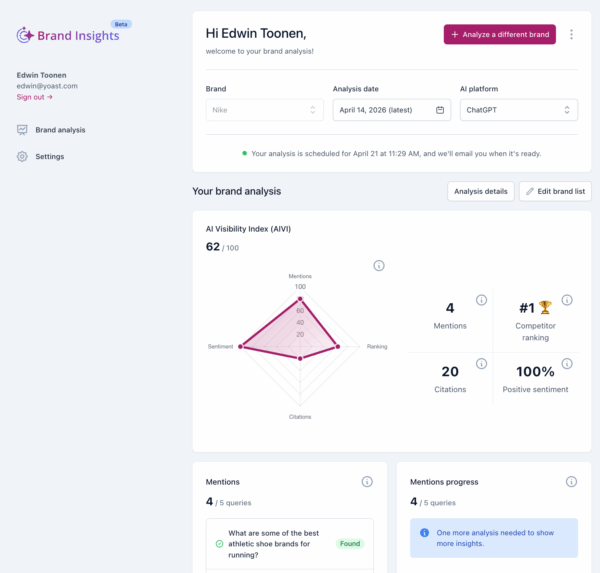
Recognizing this critical market need, Yoast, a long-standing leader in SEO tools, has launched Yoast AI Brand Insights. This innovative tool provides businesses with a comprehensive solution to understand and enhance their brand’s appearance in AI-generated answers across major LLMs like ChatGPT, Perplexity, and Google Gemini. It moves beyond traditional ranking metrics, offering actionable insights into how a brand is truly perceived by these intelligent systems.
Yoast AI Brand Insights is engineered to:
- Track brand mentions: Identify specific queries for which a brand appears in AI responses.
- Analyze sentiment: Measure the positive or negative tone associated with a brand in AI-generated content.
- Monitor citations: Understand which authoritative sources AI platforms reference when discussing a brand.
- Benchmark against competitors: Provide comparative analysis of AI visibility and sentiment against key market rivals.
- Control brand narrative: Offer guidance on shaping a consistent and favorable brand story for AI comprehension.
This tool aims to transform the “AI black box” into a transparent, actionable dashboard, allowing marketers to proactively manage their brand’s digital identity in the age of generative AI.
Understanding the Core Metrics of AI Visibility
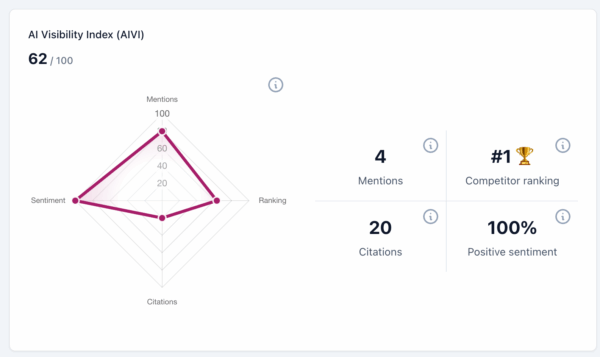
To effectively navigate this new landscape, Yoast AI Brand Insights introduces a suite of specialized metrics, central to which is the AI Visibility Index (AIVI). The AIVI provides a holistic score (on a scale of 0-100) reflecting a brand’s overall presence and perception within AI platforms for tracked terms. A higher AIVI score indicates stronger visibility, positive sentiment, and greater relevance. The index is composed of several crucial factors:
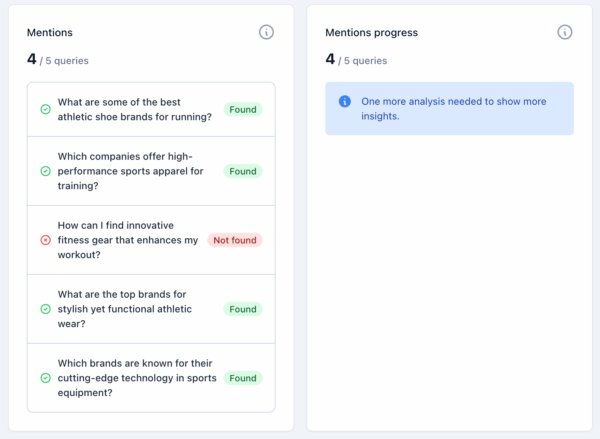
- Mentions: This metric tracks the frequency with which a brand is explicitly referenced in AI-generated answers for specific queries. For instance, if a user asks, “What are the best cloud storage solutions for small businesses?” and a brand’s name appears in the AI’s curated response, that constitutes a mention. More mentions generally correlate with greater overall visibility and brand recognition in the AI space. Analyzing mentions helps identify which conversational queries a brand is currently visible for and where opportunities for improvement lie.
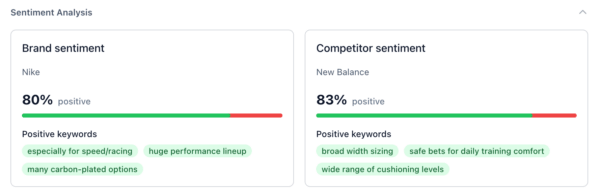
- Sentiment: Sentiment analysis measures the emotional tone (positive, negative, or neutral) associated with a brand in AI responses. If an AI describes a brand as “innovative” or “reliable,” it contributes to positive sentiment. Conversely, terms like “overpriced” or “poor customer service” indicate negative sentiment. Positive sentiment is crucial for building trust and influencing purchase decisions, while negative sentiment can significantly deter potential customers. Continuous monitoring allows brands to address issues promptly and amplify positive perceptions.
- Citations: Citations refer to the external sources that AI platforms explicitly reference to validate their answers. Unlike mentions, which focus on the brand itself, citations highlight the authority of the information source. For example, if an AI cites a report from “TechCrunch” or “The Wall Street Journal” when discussing a specific industry trend, those publications receive the citation credit. While a brand may not directly receive a citation for its own mention within that article, being consistently featured in highly cited, authoritative publications significantly increases the likelihood of the brand being surfaced in AI responses over time. This metric underscores the importance of earned media, thought leadership, and appearing in trusted industry voices.
By understanding and optimizing these metrics, brands can strategically build their relevance, authority, and positive perception within the AI ecosystem.
Strategies for Influencing AI and Enhancing Brand Visibility
Achieving high AI visibility requires a multi-faceted approach that goes beyond traditional SEO tactics. Brands must proactively shape their digital footprint to be easily discoverable, accurately represented, and favorably perceived by LLMs.
-
Publish Authoritative and Structured Content:
LLMs prioritize content that is factually accurate, well-structured, and provides unique insights. Brands should invest in original research, case studies, and industry reports that offer novel data or expert opinions. Employing the “inverted pyramid” structure, where the most crucial information is presented first, facilitates AI comprehension and extraction. Integrating statistics, expert quotes, and actionable insights strengthens content authority. For example, a software company might publish “The 2025 State of SaaS Security Report,” positioning itself as a thought leader and providing AI with a credible source to cite. Furthermore, using clear, hierarchical headings, bullet points, and robust schema markup (e.g., FAQ schema, How-To schema) helps AI crawlers understand the content’s context and key takeaways. Regularly updating existing content ensures its freshness and continued relevance to AI systems.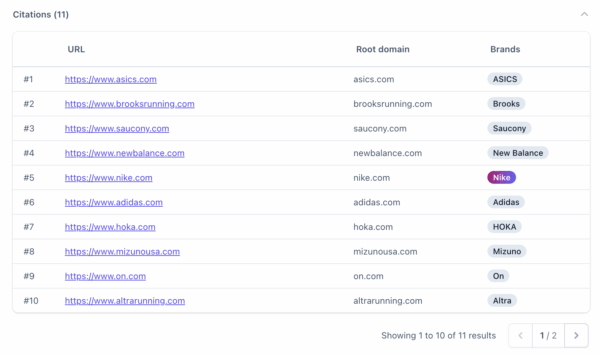
-
Cultivate High-Authority Mentions and Citations:
The more a brand is mentioned on relevant, reputable sites—industry publications, news outlets, academic journals, and credible review platforms—the more likely LLMs are to surface it. The key is relevance; a mention in a niche industry blog might be more valuable than one in a general lifestyle magazine if the former is highly trusted by AI in a specific domain. Strategies include:- Public Relations: Actively pitching stories, product launches, and expert commentary to journalists in relevant industry media.
- Guest Posting/Collaborations: Publishing content on authoritative industry blogs or collaborating with influencers.
- Customer Reviews: Encouraging customers to leave detailed reviews on platforms like G2, Capterra, Trustpilot, and Google Reviews, and actively responding to feedback.
- Earned Media: Creating linkable assets (ultimate guides, free tools, comprehensive templates) that other sites naturally want to reference and link to.
-
Optimize for Conversational Queries:
AI platforms excel at understanding and responding to natural language questions. Brands must tailor their content to address these conversational queries directly. This involves:- Question-Focused Headings: Structuring content around common user questions (e.g., “Is [Your Brand] suitable for startups?”).
- Direct Answers: Providing clear, concise answers to these questions early in the content.
- Long-Tail Keywords: Targeting longer, more specific phrases that reflect how users speak to AI (e.g., “best project management software for remote teams under 50 employees”).
- FAQ Pages: Creating dedicated FAQ sections or pages, enhanced with FAQ schema, to provide a structured repository of common questions and answers.
-
Ensure Technical AI Crawlability:
For AI to discover and utilize brand content, the underlying website must be technically sound and accessible to AI crawlers. This includes: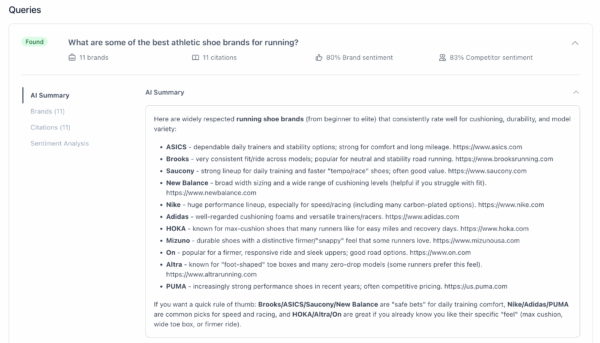
- Website Performance: Fast loading speeds, mobile-friendliness, and a robust user experience.
- Clean URLs and Metadata: Well-structured URLs, compelling meta titles, and descriptions.
- Structured Data (Schema Markup): Implementing comprehensive schema markup across the site to provide AI with explicit semantic context about products, services, organization, and content types.
llms.txtFile: Leveraging emerging standards likellms.txt(as supported by Yoast SEO) to guide AI crawlers to the most important and relevant content while potentially restricting access to less critical or sensitive areas.- Robots.txt Audit: Regularly checking
robots.txtto ensure AI crawlers are not inadvertently blocked from valuable content.
-
Engage Actively in Online Communities:
LLMs learn from and synthesize information across a vast array of online sources, including forums, social media, and community platforms like Reddit, Quora, and LinkedIn. Active and constructive participation in these communities can enhance a brand’s AI visibility.- Value-Driven Contributions: Answering questions on platforms like Quora and Reddit with informative, non-promotional responses that naturally incorporate brand expertise.
- Thought Leadership: Sharing insights, industry trends, and valuable content on professional networks like LinkedIn.
- Brand Advocacy: Participating in discussions where the brand’s solutions are relevant, subtly reinforcing its value proposition.
Benchmarking and Continuous Improvement
The AI-driven search landscape is dynamic, necessitating continuous monitoring and adaptation. Yoast AI Brand Insights facilitates this through weekly scans and historical data views, allowing brands to:
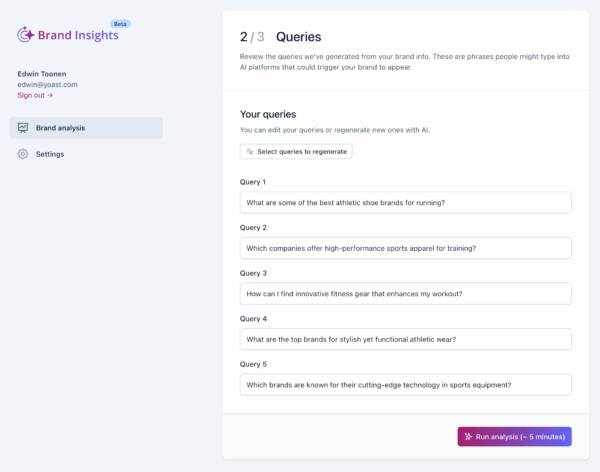
- Establish Baselines: Run initial scans to understand current AI visibility, identifying strengths and weaknesses in mentions, sentiment, and citations.
- Track Progress: Monitor weekly shifts in the AIVI score and its components to gauge the effectiveness of implemented strategies.
- Competitor Analysis: Utilize the competitor ranking tab to understand how rivals are performing in AI recommendations, identifying their content strategies and areas of dominance. This intelligence can inform a brand’s own unique selling proposition and messaging to stand out. For instance, if a competitor is consistently labeled as “the most affordable” by AI, a brand might emphasize its “premium quality” or “innovative features” to carve out a distinct identity.
- Iterate and Refine: Based on insights, revisit and refine content strategies, public relations efforts, and community engagement to optimize for improved AI visibility.
The Future of Brand Visibility is AI-Driven
The shift towards AI-powered search is not a fleeting trend but a fundamental evolution in how consumers discover and interact with brands. Brands that recognize this early and proactively adapt their strategies will gain a significant competitive advantage, building trust and credibility in an increasingly AI-mediated world. Those that cling solely to traditional SEO risk becoming digital ghosts, invisible to an ever-growing segment of the market.
Tools like Yoast AI Brand Insights represent the new frontier in digital marketing, providing the necessary intelligence to navigate this complex environment. By understanding AI visibility metrics, strategically optimizing content, cultivating authoritative mentions, and actively managing brand sentiment, businesses can ensure their narrative is accurately and positively represented by the AI systems that are shaping consumer perceptions. The time for action is now; securing a strong AI presence is no longer optional but imperative for future brand success.