rifanmuazin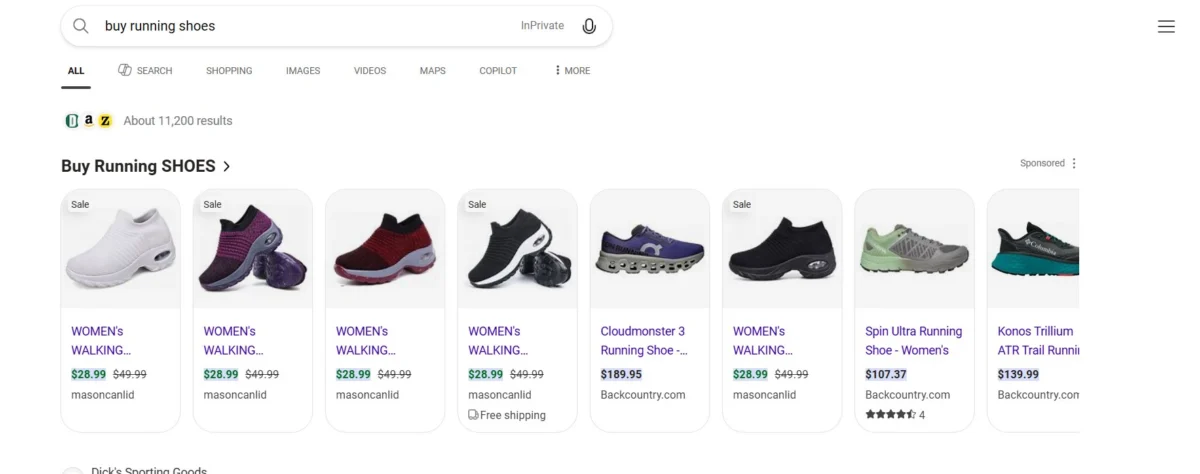
Microsoft Bing has initiated an experimental phase for its shopping advertisements, introducing a feature that displays sale prices directly within the search results. This development, first identified by astute observers in the digital marketing community, marks a potential enhancement to the user experience and a strategic move in the highly competitive e-commerce search landscape. The test visually highlights the discounted price in a distinct green color, simultaneously striking through the original, higher price. An additional element, a blue-highlighted price, has also been noted, though its specific function or categorization remains an object of speculation within the industry.
The initial spotting of this feature was attributed to Sachin Patel, who disseminated screenshots illustrating the new display format on the social media platform X. These visual examples quickly circulated, providing the first concrete evidence of Bing’s ongoing efforts to refine its advertising offerings. The visual presentation of sale prices is a well-established tactic in retail, designed to immediately convey value and urgency to potential buyers. Its integration into search advertising reflects a broader trend among search engines to make product listings more informative and appealing, directly addressing consumer motivations for seeking out deals and savings.
The Evolving Landscape of Online Shopping Ads
The realm of online shopping advertisements has undergone significant transformation since its nascent stages. Initially, search ads primarily consisted of text-based links, with advertisers bidding on keywords to direct traffic to their websites. However, with the exponential growth of e-commerce and the increasing sophistication of online retail, the need for more visually rich and product-centric ad formats became apparent. This led to the advent of Product Listing Ads (PLAs), which display product images, prices, and merchant names directly in search results, fundamentally changing how consumers discover and engage with products online.
Google, with its dominant market share in search, pioneered many of these innovations, establishing Google Shopping as a powerful platform for both consumers and advertisers. Features like price drop annotations, sale badges, and shipping information have become standard elements that influence user click-through rates and conversion metrics. Bing, while holding a smaller but significant portion of the global search market, has consistently sought to innovate and differentiate its offerings, particularly in areas where it can leverage Microsoft’s broader technological ecosystem, including AI and cloud computing. This current test of displaying sale prices is a clear indication of Bing’s continued investment in making its shopping ad experience more robust and competitive.
The timing of such a test is also pertinent, as global e-commerce continues its upward trajectory. Data from various market research firms consistently indicates that online retail sales are projected to grow significantly in the coming years, driven by factors such as increased digital literacy, mobile shopping proliferation, and evolving consumer behaviors. In this environment, any feature that can enhance the visibility and attractiveness of a product listing holds considerable strategic value for both the platform hosting the ad and the retailers leveraging it.
Visual Mechanics and the “Blue Highlight” Enigma
The core of Bing’s new feature lies in its visual presentation. The prominent display of a sale price in green, coupled with a strikethrough of the original price, is a universally recognized symbol of a discount or special offer. This color coding is not arbitrary; green is often associated with positive connotations, growth, and savings, subtly influencing user perception. The strikethrough price effectively communicates the magnitude of the discount, providing a clear reference point for the perceived value. This psychological anchoring can make the sale price appear even more attractive, prompting a higher propensity to click and explore the product further.
However, the inclusion of a “blue highlight” for an additional price point has introduced an element of intrigue. The precise meaning of this blue highlight remains unconfirmed by Microsoft. Several hypotheses have emerged within the digital advertising community:
- Special Offer Delineation: It could signify a specific type of special offer, perhaps a limited-time deal, a bulk discount, or a price exclusive to certain user groups (e.g., Bing users, Microsoft account holders).
- Tiered Pricing: The blue highlight might represent a secondary discount, or a price that applies under specific conditions, such as minimum purchase requirements or membership benefits.
- Algorithmic Pricing: It could be an dynamically generated price, potentially influenced by user browsing history, location, or other personalization factors, aiming to present the most relevant price point.
- Early Stage UI Element: Given that this is a test, it’s also plausible that the blue highlight is an experimental user interface element that may be refined, removed, or assigned a clearer meaning in future iterations. Its current ambiguity underscores the iterative nature of product development in search engines.
Understanding the function of this blue highlight will be crucial for advertisers seeking to optimize their product feeds and leverage this feature effectively. For consumers, clarity on such visual cues can enhance trust and reduce potential confusion, contributing to a smoother shopping experience.

Implications for Advertisers and Retailers
The introduction of prominently displayed sale prices carries significant implications for advertisers and retailers utilizing Bing Shopping Ads.
- Enhanced Visibility and Click-Through Rates (CTR): Products showcasing a clear discount are inherently more eye-catching. This visual differentiation can lead to higher CTRs, as users are naturally drawn to opportunities for savings. For advertisers, this translates to more qualified traffic to their product pages.
- Improved Conversion Rates: Shoppers who click on an ad explicitly advertising a sale price are often further along in their purchase journey, actively seeking deals. This intent can lead to higher conversion rates once they land on the retailer’s site, resulting in a better return on ad spend (ROAS).
- Competitive Edge: Retailers who consistently offer competitive pricing and accurately reflect these discounts in their product feeds stand to gain a significant advantage. In a crowded marketplace, even marginal improvements in ad appeal can translate into substantial gains in market share.
- Data and Analytics Requirements: Advertisers will need to meticulously track the performance of these new ad formats. Analyzing CTR, conversion rates, and ROAS for products with and without sale price annotations will be vital for optimizing campaigns and budget allocation. This necessitates robust analytics capabilities and A/B testing frameworks.
- Product Feed Optimization: The feature underscores the critical importance of accurate and up-to-date product feeds. Retailers must ensure that their product data, including original prices, sale prices, and any conditions for special offers (potentially linked to the blue highlight), are meticulously maintained and submitted to Bing. Inaccurate pricing can lead to consumer frustration and wasted ad spend. Managing dynamic pricing strategies across vast inventories poses a technical challenge that many retailers continually address.
- Ethical Considerations and Trust: The prominence of sale prices also places a greater onus on retailers to ensure pricing integrity. “Fake” sales or misleading discounts can erode consumer trust and potentially lead to penalties from platforms or regulatory bodies. Transparency and honesty in pricing will be paramount.
Broader Market Impact and Bing’s Competitive Strategy
Bing’s foray into more visually compelling sale price displays is not an isolated development but rather a calculated move within a larger competitive landscape.
- Challenging Google’s Dominance: While Google remains the undisputed leader in search and shopping ads, Bing’s consistent innovation serves to chip away at its competitor’s market share. Each new feature, however incremental, contributes to making Bing a more viable and attractive alternative for both users and advertisers. This competitive pressure often benefits the end-user through continuous feature enhancements across platforms.
- User Acquisition and Retention: A more robust and user-friendly shopping experience can attract new users to Bing and retain existing ones. If Bing becomes known as a reliable platform for discovering deals, it could cultivate a loyal user base specifically for shopping-related queries. This is crucial for Bing, which has historically struggled to significantly increase its overall search market share against Google.
- Monetization Strategy: Improved ad performance directly translates to higher revenue for Microsoft. If shopping ads become more effective at driving clicks and conversions, advertisers are likely to increase their spend on the platform. This reinforces Bing’s role as a significant revenue generator within Microsoft’s diverse portfolio.
- Leveraging Microsoft Ecosystem: This initiative could also be seen in the context of Microsoft’s broader strategy to integrate its various services. Features like this could potentially be tied into Microsoft Rewards, Edge browser features, or even future AI-driven shopping assistants (like Copilot), creating a more cohesive and personalized shopping ecosystem. Imagine an AI assistant that not only finds products but also alerts users to real-time sales displayed prominently in Bing.
Timeline and Chronology of Shopping Ad Evolution
The history of shopping ads has been a journey of increasing visual appeal and data integration:
- Early 2000s: Text-based search ads dominate.
- Mid-2000s: Emergence of comparison shopping engines.
- Late 2000s – Early 2010s: Google introduces Product Listing Ads (PLAs), revolutionizing product discovery in search. Bing follows suit with its own shopping ad formats.
- Mid-2010s onwards: Continuous refinement of PLAs with features like local inventory ads, merchant promotions, and enhanced product details (reviews, shipping info). Emphasis on mobile-first shopping experiences.
- Late 2010s – Early 2020s: Integration of AI for better ad targeting, personalization, and visual search capabilities. Growing importance of video and interactive ad formats.
- May 20, 2026 (Reported): Sachin Patel observes and shares screenshots of Bing testing green-highlighted sale prices and a mysterious blue-highlighted price in shopping ads. This specific observation marks a new point in Bing’s evolution of its ad displays.
- Future Outlook: Further A/B testing, wider rollout, potential integration with AI-powered shopping assistants, and continuous adaptation to evolving consumer behaviors and technological advancements. The “blue highlight” feature will likely either be clarified, integrated into a specific program, or removed based on performance data.
Supporting Data and Market Context
The context for Bing’s innovation is underpinned by several key market trends:
- E-commerce Growth: Global e-commerce sales reached approximately $5.7 trillion in 2022 and are projected to exceed $8 trillion by 2027, according to Statista. This massive market provides ample opportunity for platforms that can effectively connect buyers and sellers.
- Influence of Discounts: Studies by various marketing research firms consistently show that discounts and promotions significantly influence consumer purchasing decisions. For instance, a report by RetailMeNot indicated that 93% of consumers use a coupon or discount code throughout the year. The visual prominence of a sale price directly taps into this consumer behavior.
- Bing’s Market Share: While Google commands over 90% of the global search engine market, Bing maintains a consistent presence, particularly in desktop search, often ranging between 5-10% in various markets. This translates to billions of search queries monthly, representing a substantial audience for advertisers. For specific demographics or enterprise users (given Bing’s integration with Windows and Microsoft 365), its market share can be even higher.
- Shopping Ad Revenue: Advertising revenue generated from shopping ads constitutes a significant portion of overall search ad revenue for platforms. Enhancements that improve the efficacy of these ads directly contribute to financial growth.
Inferred Statements and Industry Reactions
While Microsoft has not issued a formal statement regarding this specific test, a hypothetical response, consistent with corporate communication strategies, might be:
“Microsoft Bing is continuously exploring new ways to enhance the user experience and provide valuable tools for advertisers. We regularly conduct tests and gather feedback to refine our products and ensure we are delivering the most relevant and effective solutions for our users and partners in the dynamic e-commerce landscape. Further details regarding specific features will be shared as they become widely available.”
Industry analysts would likely view this development positively, recognizing it as a logical step for Bing to remain competitive. An analyst might state, “This move by Bing is strategically sound. In a market where every click counts, clearly communicating value through sale prices can be a powerful differentiator. It puts Bing in closer alignment with consumer expectations forged by years of online shopping, and it signals their continued commitment to improving their advertising platform.”
Retailers, on their part, would likely welcome features that increase the visibility and attractiveness of their products. A hypothetical retailer’s perspective might be, “Any feature that helps us highlight our competitive pricing directly in search results is a win. We’re eager to see how this impacts our click-through and conversion rates on Bing, and we’ll be ready to optimize our product feeds to take full advantage.”
Conclusion: The Road Ahead for Bing Shopping Ads
The experimental display of sale prices in Bing Shopping Ads represents a tangible effort by Microsoft to enhance its e-commerce advertising capabilities. By visually emphasizing discounts through green highlights and strikethrough pricing, Bing aims to capture user attention, drive higher engagement, and ultimately deliver better results for advertisers. The intriguing “blue highlight” adds a layer of mystery and suggests potential for further sophisticated pricing or promotional features.
This initiative is more than just a cosmetic change; it is a strategic maneuver in the intensely competitive search and e-commerce arena. It underscores Bing’s commitment to innovation, its desire to offer a compelling alternative to dominant players, and its understanding of consumer psychology in online shopping. As this test progresses, its performance will undoubtedly inform Bing’s future product development, potentially leading to a wider rollout and further refinements. For advertisers and consumers alike, the evolution of shopping ads on platforms like Bing promises a more dynamic, informative, and value-driven online retail experience.