rifanmuazin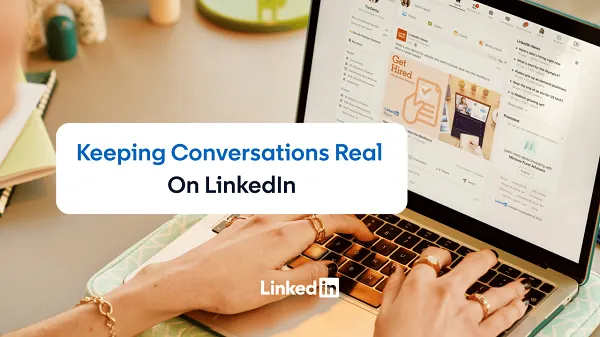
In a significant development reflecting the ongoing challenges posed by generative artificial intelligence, LinkedIn has recently announced a series of new measures aimed at curbing the overuse of AI tools and policing misrepresentations within its professional networking feed. This move highlights a growing paradox for social media platforms: on one hand, enthusiastically integrating AI to enhance user experience and efficiency, and on the other, grappling with the subsequent deluge of AI-generated content that threatens to dilute authenticity and valuable human interaction.
The Core Dilemma: Balancing Innovation with Authenticity
The announcement came via a Wednesday post within the LinkedIn app by Laura Lorenzetti, Global Editorial VP, who outlined the platform’s latest initiatives to combat the escalating presence of AI-generated content and profiles. While specific detailed measures were not exhaustively listed, Lorenzetti emphasized their overarching goal: to curb the “AI-generated junk that crowds out insights from real, human users.” This proactive stance signals LinkedIn’s recognition of a critical tipping point, where the volume of unoriginal or overly automated content could undermine the platform’s foundational value proposition as a hub for genuine professional insights and networking.
Lorenzetti articulated the platform’s position clearly, stating, “When AI is overused, especially at scale and in an automated way, it dilutes the valuable insights that real human conversations can spark. It’s ok to use AI to help you write, but your posts and comments need to represent your voice and your perspectives. The ultimate value comes from the human behind the tool.” This statement encapsulates the fine line LinkedIn is attempting to walk: embracing AI as an assistive technology while simultaneously safeguarding the human element that drives meaningful engagement.
However, LinkedIn’s position is complicated by its own aggressive integration of AI assistant tools across nearly every facet of its ecosystem. The platform has, over the past year and beyond, rolled out AI-powered functionalities for profile creation, suggesting summaries and optimizing language; generative AI prompts for post creation, aiding users in crafting engaging updates; AI-powered assistance for job applications, helping tailor resumes and cover letters; and even tools for candidate vetting, streamlining the recruitment process for employers. This comprehensive deployment of AI has made it easier than ever for users to leverage generative capabilities, creating an inherent tension between encouragement and restriction.
A Chronology of AI Integration and Policy Response
The journey of AI integration on LinkedIn can be traced back several years, accelerating significantly with the mainstream adoption of large language models (LLMs) in late 2022 and throughout 2023. Initially, LinkedIn’s foray into AI was framed as a productivity enhancer, designed to remove friction from common professional tasks.
- Early 2023: LinkedIn began experimenting with AI-generated profile summaries, offering users quick drafts to articulate their professional brand. This was followed by the introduction of generative AI prompts for post creation, allowing users to brainstorm ideas or refine their messages with AI assistance. The goal was to empower users to create more compelling content and profiles with less effort.
- Mid-2023: The platform extended AI capabilities to the job application process, providing tools to help job seekers customize their applications, highlight relevant skills, and even draft initial outreach messages to recruiters. Similarly, recruiters gained AI-powered features for screening candidates and drafting initial communications, aiming to optimize the hiring pipeline.
- Late 2023 – Early 2024: LinkedIn continued to embed AI deeper, offering features like “Rewrite with AI” directly within its content composer. This omnipresent encouragement for AI use across various functionalities solidified the platform’s image as an AI-forward professional network.
Against this backdrop of enthusiastic AI adoption, the recent announcement by Laura Lorenzetti marks a pivotal shift. It signifies a realization that while AI can enhance productivity, its unbridled use risks eroding the very authenticity and human connection that professional networks thrive on. This policy response, therefore, is not a rejection of AI, but rather an attempt to define acceptable boundaries for its use, born out of necessity as the platform observes the practical consequences of its widespread deployment.
The Data Behind the Dilemma: The Proliferation of AI Content
The challenge LinkedIn faces is not isolated; it mirrors a broader trend across the digital landscape. The explosion of generative AI tools has led to an unprecedented surge in automated content creation. Reports from various analytics firms indicate a significant increase in AI-generated text, images, and even audio across the internet. For instance, some studies suggest that a substantial percentage of online content, particularly short-form text, could be partially or fully AI-generated. While precise figures for LinkedIn are not publicly available, the platform’s editorial team would undoubtedly have internal metrics demonstrating the rise in AI-assisted or fully AI-generated posts and profiles.
This proliferation raises several concerns:
- Content Dilution: A flood of generic, algorithmically optimized content can make it harder for genuinely original, human-authored insights to stand out. This diminishes the “signal-to-noise” ratio, impacting user experience.
- Misrepresentation and Deception: While LinkedIn’s focus is on “overuse” and “misrepresentations,” the underlying risk includes the potential for deceptive profiles or content designed to manipulate engagement or spread misinformation.
- Erosion of Trust: If users perceive a significant portion of content to be inauthentic, their trust in the platform as a reliable source of professional information and networking opportunities can erode. A 2023 survey by the Pew Research Center, while not specific to LinkedIn, found that a majority of Americans expressed concern about the potential for AI to create misleading content.
- “Lazy” Content Creation: The ease of generating content with AI tempts users to bypass the critical thinking and effort required for producing truly valuable insights. As the article states, “While AI tools are supposed to help rather than take on all the workload, a lot of people are inherently lazy. If they can reduce manual work by just asking some bot to do it, they will.” This behavioral shift, inadvertently encouraged by features like “Rewrite with AI,” creates a reliance on automation over original thought.
Official Responses and the Broader Industry Context
Laura Lorenzetti’s statement serves as LinkedIn’s primary official response to the emerging challenge. It underscores a commitment to preserving the platform’s core value: human connection and authentic professional exchange. Her emphasis on the “human behind the tool” is a crucial clarification of LinkedIn’s intent – AI as an augmentative force, not a replacement for human intellect and perspective.
This stance places LinkedIn among a growing number of platforms and content creators grappling with the implications of AI. Other social media giants like Meta (Facebook, Instagram) and X (formerly Twitter) have also invested heavily in AI for content moderation, personalization, and creation. Concurrently, they face increasing pressure to combat AI-generated spam, deepfakes, and misinformation. The common thread is the search for a sustainable model where AI can serve as a powerful utility without compromising the integrity and trustworthiness of the digital environment.
The challenge for these platforms lies in developing sophisticated detection mechanisms that can differentiate between AI-assisted content that still embodies human thought and fully AI-generated content lacking original insight. This is a technically complex endeavor, as generative AI models are constantly evolving to produce more human-like outputs.
Implications for Content Creators, Recruiters, and the Future of Professional Networking
LinkedIn’s AI crackdown, while seemingly contradictory given its prior embrace of AI tools, carries significant implications for various stakeholders:
- For Content Creators and Thought Leaders: The policy shift will likely necessitate a re-evaluation of content creation strategies. While AI can still be used for brainstorming, outlining, or refining language, the emphasis will be on injecting genuine human perspective, unique insights, and personal voice. Those who rely solely on AI to generate posts risk having their content deprioritized or flagged. This could lead to a renewed appreciation for original thought and authentic storytelling. It also pushes creators to develop a more nuanced understanding of AI as a co-pilot rather than an autopilot.
- For Job Seekers: While AI tools for resume optimization and cover letter drafting remain valuable, the underlying message is that the ultimate authenticity of the application, and the candidate’s genuine skills and personality, must shine through. Over-reliance on generic AI-generated responses in interviews or application essays could be counterproductive if employers begin to detect a lack of individual voice.
- For Recruiters and Hiring Managers: The increased presence of AI-generated profiles and application materials complicates the vetting process. Recruiters may need to develop more sophisticated methods for identifying genuine candidates and assessing their authentic communication skills, moving beyond surface-level keywords that AI can easily generate. This might involve more emphasis on video interviews, skill assessments, and deeper dives into professional portfolios.
- For LinkedIn’s Platform Integrity: The success of these new measures will be crucial for maintaining LinkedIn’s reputation as a trusted professional network. If the platform can effectively manage AI overuse, it will reinforce its value proposition, attracting users who seek genuine professional connections and insights. Failure to do so could lead to a degradation of content quality, user disengagement, and a potential exodus to platforms that offer a more curated and authentic experience.
- Ethical Considerations and “AI Washing”: The paradox also highlights ethical considerations. “AI washing” – presenting AI-generated content as purely human-created – could become a concern. LinkedIn’s policy is a step towards mitigating this, encouraging transparency and responsibility in AI use. The long-term implication is a push towards clear guidelines for disclosing AI assistance, similar to how platforms handle sponsored content or advertising.
The Path Forward: Navigating the AI Frontier
LinkedIn’s current position represents a pivotal moment in the evolution of professional networking platforms. It acknowledges the undeniable power of AI to enhance productivity and creativity, while simultaneously recognizing its potential to undermine authenticity and trust if left unchecked. The challenge lies not in rejecting AI, but in intelligently governing its use.
This will likely involve a multi-pronged approach:
- Enhanced Detection: Continuous investment in sophisticated AI models to detect patterns indicative of AI-generated content that lacks human input or misrepresents user identity.
- Clearer Guidelines and Education: Providing users with explicit guidelines on what constitutes acceptable and unacceptable AI use, coupled with educational resources on how to leverage AI responsibly.
- User Reporting Mechanisms: Empowering the community to report suspicious or overly automated content, leveraging collective intelligence in moderation efforts.
- Incentivizing Authenticity: Potentially implementing algorithms that reward original, human-centric content, thereby shaping user behavior towards genuine engagement.
- Transparency: Exploring features that allow users to disclose when AI has been used in their content, fostering an environment of honesty.
As the big tech firms that own social platforms continue to invest heavily in AI tools, this conflicted approach—promoting AI use on one hand, and limiting its overuse on the other—will undoubtedly continue to spark mixed messaging across the digital ecosystem. Users will increasingly find themselves with the option to easily generate AI content, but will simultaneously be advised, or even mandated, to ensure that their human voice and perspective remain at the core. LinkedIn’s dilemma is a microcosm of a larger societal challenge: how to harness the immense power of artificial intelligence to augment human capability without diminishing the unique value of human creativity, authenticity, and connection. The resolution of this paradox will define the future landscape of professional interaction online.