rifanmuazin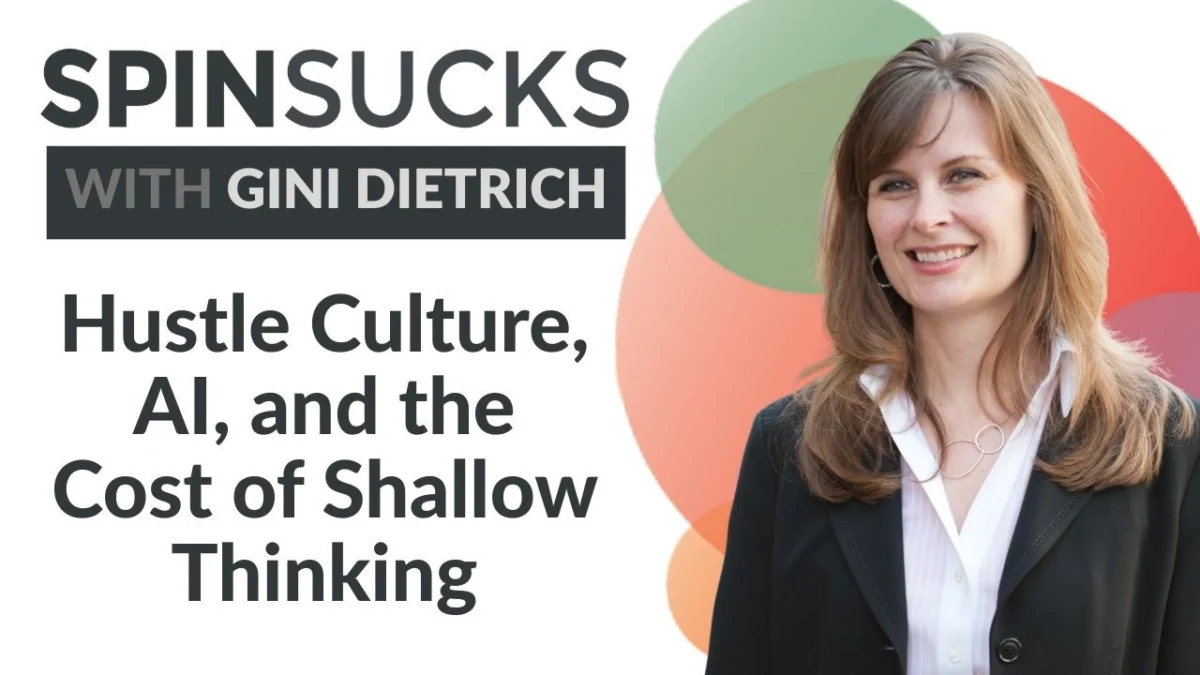
The modern professional landscape is currently grappling with a paradox where the tools designed to enhance productivity are instead facilitating a decline in substantive discourse. While generative artificial intelligence (AI) has been identified as the primary driver of automated, shallow interactions on social media platforms, industry analysts suggest that the root of the issue lies in a pre-existing professional ethos: hustle culture. The rise of “non-comment comments”—automated summaries of posts that offer no unique insight—serves as a visible symptom of a broader systemic preference for volume and speed over depth and original thought. This trend, while accelerated by AI, is the logical conclusion of a decade-long shift toward prioritizing visible activity as a proxy for professional competence.
The Automation of Professional Interaction
In recent months, digital platforms, particularly LinkedIn and professional forums, have seen an influx of AI-generated engagement. These interactions typically involve a user deploying an AI tool to summarize an original post and then publishing that summary as a comment. The result is a “technically present” interaction that contributes no new perspective, evidence of comprehension, or human opinion. Communication experts note that while these tools make faking engagement easier, they do not create the desire to do so; rather, they satisfy a cultural demand for constant presence.
The phenomenon is increasingly referred to as “performative engagement.” In this environment, the objective is not to foster a conversation but to satisfy algorithmic requirements for activity. By appearing to have read and responded to content, users attempt to maintain visibility within their networks without investing the cognitive labor required for deep reading or reflection.
A Historical Context: From Hustle Culture to AI Integration
To understand the current state of digital discourse, one must look at the trajectory of workplace norms over the last fifteen years. The “hustle culture” of the 2010s established a framework where busyness was equated with status. During this period, workaholism transitioned from a critique of poor work-life balance to a celebrated personality trait, often showcased on social media as evidence of ambition.
The chronology of this shift can be traced through several key phases:
- The Rise of the “Always-On” Economy (2008–2012): The proliferation of smartphones and Slack-style communication tools began to blur the lines between professional and personal time, rewarding those who responded fastest.
- The Content Explosion (2013–2018): As digital marketing shifted toward “content is king,” the volume of articles, podcasts, and videos grew exponentially, leading to “content fatigue.”
- The Optimization Era (2019–2022): Professionals began seeking “hacks” to consume this volume, leading to the popularity of book-summary apps and speed-reading techniques.
- The Generative AI Breakthrough (2023–Present): The release of large language models (LLMs) provided the ultimate tool for a culture already obsessed with throughput, allowing for the total automation of the “performance” of being informed.
AI did not invent shallow thinking; it merely optimized the existing professional mandate to move as quickly as possible through an overwhelming “ocean” of information.
The Data Behind Digital Overload and Synthetic Engagement
Supporting data suggests that the pressure to perform engagement is a reaction to genuine digital overwhelm. According to Microsoft’s 2023 Work Trend Index, approximately 68% of workers reported struggling with the pace of work, and 62% struggled with the time spent searching for information. The report highlighted a “digital debt” where the volume of data and communication has outpaced the human ability to process it.
Furthermore, research into the “Dead Internet Theory”—the idea that a significant portion of internet activity is now bot-generated or AI-automated—has gained traction as engagement metrics on major platforms show signs of inflation without a corresponding increase in real-world business outcomes. A study by the University of California, Irvine, found that it takes an average of 23 minutes and 15 seconds to return to a deep task after an interruption. In a culture that rewards instant responsiveness, the opportunity cost of “deep work” has become too high for many professionals to pay, leading them to rely on AI to maintain their digital presence.
The Performance of Consumption: Metrics Over Meaning
A significant aspect of this cultural shift is the “performance of consumption.” This is most visible in the annual trend of professionals sharing the number of books read or podcasts consumed. When consumption becomes a metric, the goal shifts from being changed by the material to simply finishing it.
The original source material for this analysis highlights a poignant example: the “non-comment” on social media. This act mirrors the way many professionals now approach learning. Instead of wrestling with a complex argument or sitting with a challenging idea, the modern professional often seeks the “gist.” However, industry leaders argue that “the gist” is insufficient for high-level decision-making, brand strategy, or creative leadership. The value in reading a book or a long-form analysis is not just the information gathered, but the cognitive process of integration and the development of a unique point of view.
Institutional Responses and the Devaluation of Originality
As AI-generated noise increases, some organizations and thought leaders are beginning to push back. Gini Dietrich, creator of the PESO Model (Paid, Earned, Shared, Owned) for communication, has noted that the “Shared” component of the model—which relies on social engagement—is being undermined by synthetic interactions. If engagement is faked, the data derived from it is useless for brand sentiment analysis or lead qualification.
Logically inferred reactions from the broader industry suggest a growing divide:
- Platform Developers: Social media companies are under pressure to develop filters that can distinguish between human-authored comments and AI-generated summaries to preserve the value of their advertising ecosystems.
- Human Resources: There is a nascent movement toward “slow productivity,” a term coined by author Cal Newport, which advocates for fewer tasks and higher quality to combat the “efficient panic” that AI-assisted hustle culture produces.
- Education: Educators are reporting a need to return to multi-modal, long-term projects to retrain students in deep research. For example, a five-month history project requiring multiple sources—books, documentaries, and archives—is seen as a necessary antidote to the “one-article” research habit that AI tools encourage.
The Strategic Cost of Speed-First Cultures
The broader implications of this trend are economic and strategic. When an entire industry or company prioritizes speed and volume, it creates a “sea of sameness.” AI-generated content and comments are, by definition, derivative; they are based on existing patterns and averages. Therefore, a culture that relies on AI to “get through the ocean” of information will inevitably lack original insight.
In a competitive market, discernment is a primary asset. For marketers, leaders, and communicators, the ability to identify what is noise and what is signal is the core of their value proposition. If everyone is using the same tools to generate the same “instant takes,” the premium on actual perspective increases. Those who take the time to read, reflect, and synthesize information will possess a point of view that cannot be replicated by an LLM summarizing a LinkedIn post.
The “efficient panic” mentioned in the source material describes a state where an organization is highly active but strategically stagnant. In such environments, the person who responds fastest is rewarded, even if their response is shallow or incorrect. This incentivizes a cycle of superficiality that can lead to catastrophic failures in judgment at the leadership level.
Future Outlook: The Re-emergence of Discernment as a Competitive Asset
The solution to the erosion of deep thought is not a wholesale rejection of AI or efficiency tools, but a more deliberate application of them. Experts suggest that professionals must categorize information into that which requires “the gist” and that which requires “the depth.”
Strategic recommendations for professionals and organizations include:
- Adding Friction to the Process: Instead of seeking the fastest way to respond, individuals should commit to taking notes or allowing a 24-hour “cooling period” before commenting on complex topics.
- Rewarding Reflection Over Responsiveness: Leadership must change the “gold star” criteria. Instead of rewarding the first person to reply to an email or thread, they should reward the person who provides the most context or identifies a missed nuance.
- Auditing Engagement: Companies should look beyond raw engagement metrics (likes/comments) and analyze the quality of the discourse. High volumes of “great post” or “thanks for the summary” comments should be viewed as a sign of low-value engagement.
- Prioritizing Primary Sources: Moving away from summaries and back to original texts, full-length podcasts, and raw data to ensure that the “first contact” with an idea is not filtered through an algorithm.
While AI has made it easier to fake the appearance of an informed professional, it has simultaneously made the genuine article more valuable. As the digital space becomes increasingly clogged with synthetic noise, the distinction between “processed” content and “considered” thought will become the new benchmark for professional authority. The goal is no longer to get through the ocean as fast as possible, but to be one of the few who knows what is actually beneath the surface.