rifanmuazin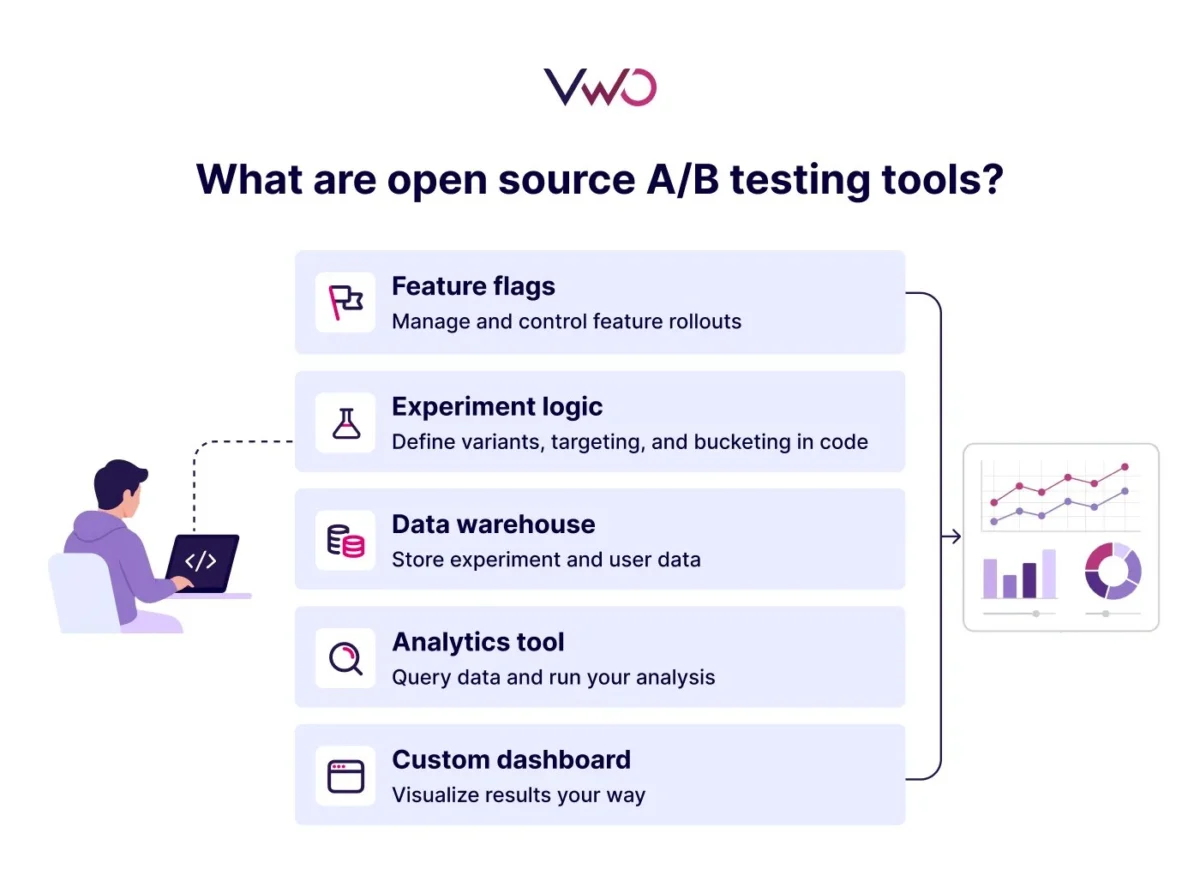
The fundamental decision facing modern product and growth teams in the digital landscape is no longer whether to conduct A/B testing, but rather which architectural framework will support their experimentation at scale. As organizations move toward data-driven decision-making, the choice between open-source frameworks and commercial platforms has become a strategic inflection point that impacts engineering resources, speed to market, and the ultimate return on investment. The core of this debate centers on a single trade-off: the total ownership and flexibility provided by open-source code versus the managed convenience and accelerated velocity offered by commercial software-as-a-service (SaaS) solutions.
The Evolution of Digital Experimentation
To understand the current divide, one must look at the chronology of digital testing. In the early 2000s, A/B testing was a manual, labor-intensive process reserved for tech giants like Google and Amazon, who built proprietary internal tools. The 2010s saw the rise of the first wave of commercial tools, such as VWO and Optimizely, which democratized testing for non-technical marketers through visual editors. However, as data privacy concerns grew and engineering teams demanded more control over their tech stacks, a new wave of open-source libraries and “warehouse-native” tools emerged in the 2020s.
Today, the market is bifurcated. On one side, open-source tools like GrowthBook, Unleash, and PostHog offer publicly available source code that allows for deep integration into a company’s existing infrastructure. On the other, commercial platforms like VWO, Optimizely, and AB Tasty provide comprehensive, end-to-end ecosystems that manage everything from traffic allocation to sophisticated statistical analysis.
Open Source Tools: The Architecture of Ownership
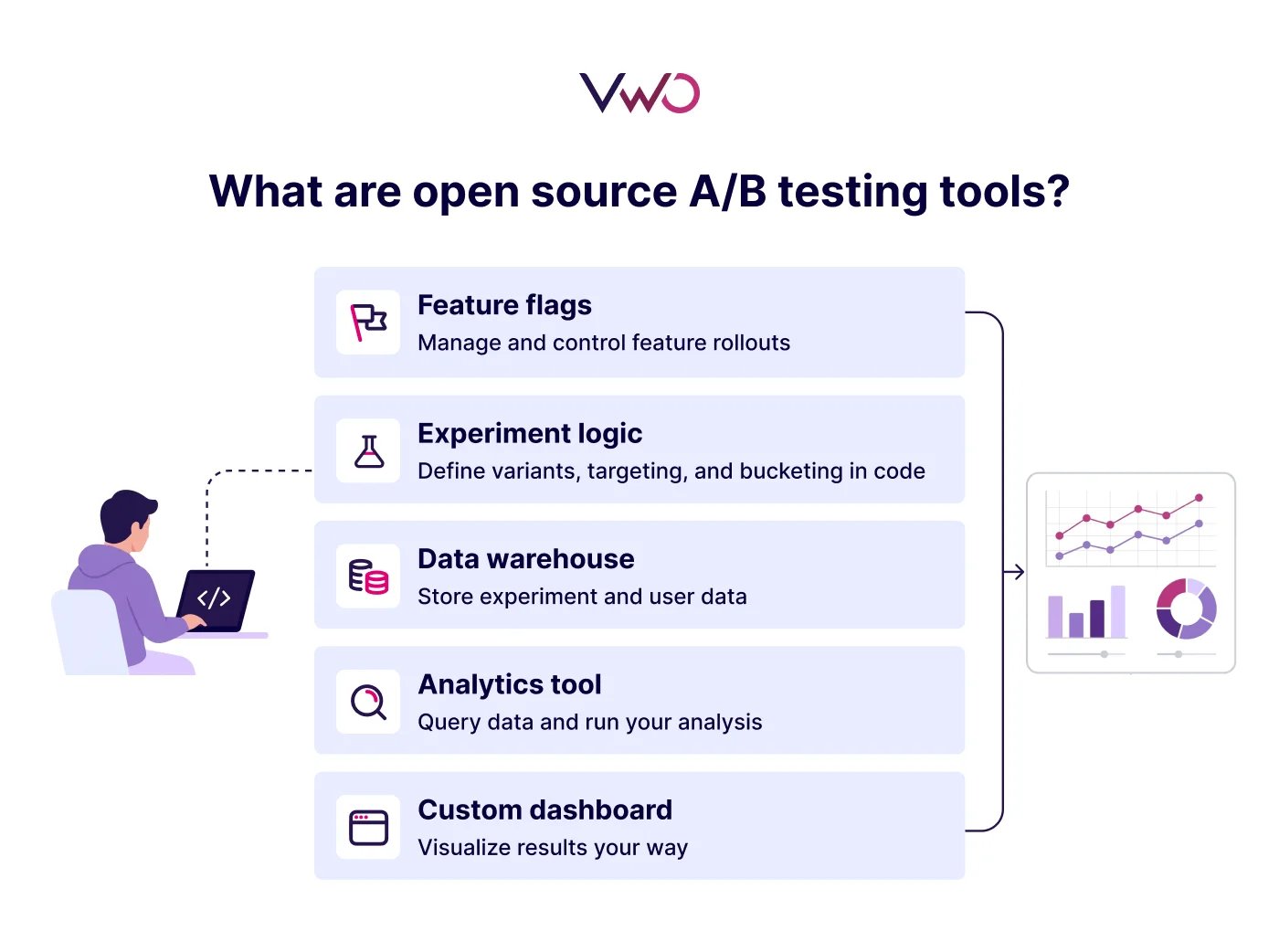
Open-source A/B testing tools are essentially frameworks or libraries that developers integrate directly into a web or mobile application’s codebase via a Software Development Kit (SDK). These tools function by utilizing feature flags or conditional logic to bucket users into different variations based on specific attributes like device type, geographic location, or historical behavior.
The Strategic Advantages of Open Source
The primary appeal of open source is the elimination of upfront licensing fees and the avoidance of vendor lock-in. Because the organization owns the infrastructure, they have total control over data residency—a critical factor for industries like banking or healthcare that must comply with strict GDPR or HIPAA regulations. Furthermore, open-source tools allow for limitless customization; if a specific statistical model or integration is required, the engineering team can build it directly into the source code.
The Hidden Costs of “Free” Software
While the software itself may be free, the total cost of ownership (TCO) for open-source tools is often higher than it appears. Organizations must account for the “engineering tax”—the high-salary hours spent on setup, server maintenance, security patching, and scaling. Furthermore, open-source tools rarely include a visual editor, meaning every experiment requires a developer to write and deploy code. This creates a “developer bottleneck,” where marketing and product teams must wait for sprint cycles to launch even the simplest UI changes.
Commercial Platforms: The Engine of Velocity
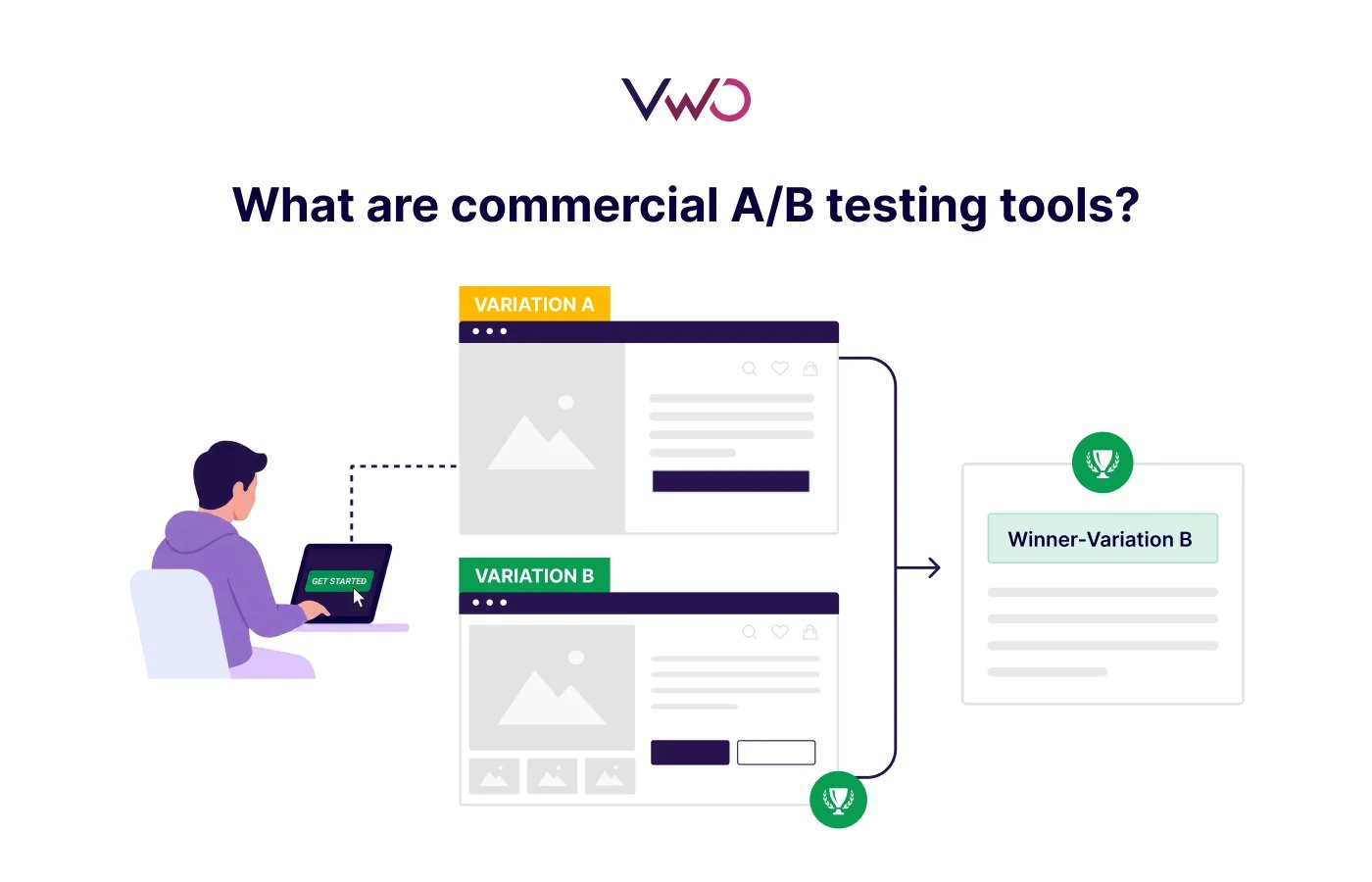
Commercial A/B testing tools are fully managed experimentation platforms. They are designed to be “plug-and-play,” often requiring nothing more than a single JavaScript snippet added to the website header to begin functioning. These platforms bundle experimentation, advanced targeting, automated reporting, and often behavioral analytics into a single interface.

The Strategic Advantages of Commercial Solutions
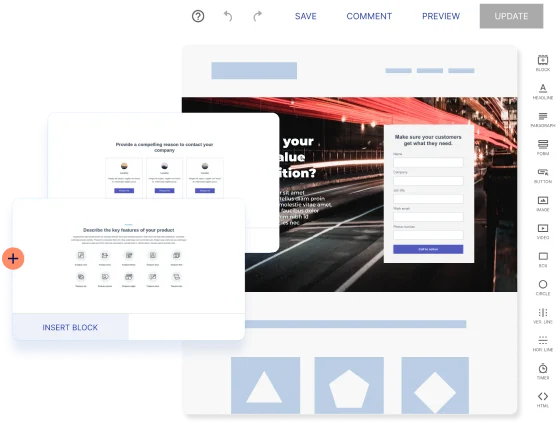
The most significant benefit of a commercial platform is “time to value.” Because these tools come with built-in statistical engines—often utilizing Bayesian or Frequentist models—they provide automated insights into when a test has reached statistical significance. Features like Visual Editors (WYSIWYG) allow non-technical team members to modify headlines, images, and layouts without touching the codebase.
Additionally, commercial vendors provide Service Level Agreements (SLAs), dedicated account management, and 24/7 technical support. For an enterprise where an experiment error could result in millions of dollars in lost revenue, this level of professional accountability is often viewed as a necessary insurance policy.
The Constraints of Managed Services
The primary drawbacks of commercial tools are the subscription costs and the potential for “vendor lock-in,” where moving data and historical experiments to a different platform becomes a complex migration project. Some organizations also express concerns about “flicker effect” (the momentary flash of original content before the variation loads) and the impact of external scripts on page load speeds, though modern edge-computing integrations have largely mitigated these issues.
Comparative Analysis: Key Decision Factors
When choosing between these two paths, organizations typically evaluate seven critical factors:
- Pricing Models: Open source has low upfront costs but high internal labor costs. Commercial tools have predictable subscription fees that scale with traffic or experiment volume.
- Engineering Dependency: Open source requires high engineering involvement for every test. Commercial tools enable “self-serve” experimentation for product managers and marketers.
- Time to Value: Commercial tools can be operational in hours, whereas open-source setups may take weeks of configuration.
- Maintenance: Open source requires internal DevOps for updates and security. Commercial vendors handle all backend maintenance and infrastructure scaling.
- Integrations: Commercial tools offer “one-click” integrations with popular CRMs (Salesforce), Analytics (Google Analytics 4), and CDPs (Segment). Open source usually requires custom-built API connections.
- Experimentation Speed: The ability to iterate quickly is higher in commercial platforms due to visual tools and automated workflows.
- Reporting and Insights: Commercial tools often integrate “qualitative” data, such as heatmaps and session recordings, directly with “quantitative” A/B test results, providing a holistic view of user behavior.
The Hybrid Approach: A Growing Industry Trend
In recent years, a hybrid model has emerged among sophisticated tech organizations. These companies use open-source tools or internal feature flagging systems for backend “server-side” testing—such as testing new search algorithms or database configurations—while simultaneously employing a commercial platform for “client-side” frontend experimentation.
Industry analysts suggest that while this provides the “best of both worlds,” it introduces the risk of experiment contamination. If two different systems are tracking the same user journey without a unified data layer, the results can become “poisoned,” leading to false positives. To avoid this, experts recommend using a unified platform like VWO that offers both server-side and client-side capabilities within a single statistical framework.
The Impact of Choice on Corporate Culture
The choice of tool often dictates the “culture of experimentation” within a company. Organizations that rely solely on open-source, developer-heavy tools often find that experimentation becomes a technical chore, leading to a lower volume of tests. Conversely, organizations using commercial tools tend to see a “democratization of data,” where team members across various departments feel empowered to propose and run hypotheses.
As Dom Light, an industry expert in experimentation, famously noted: “It doesn’t get easier, it just gets faster.” This sentiment underscores the value of commercial platforms. The goal of an experimentation program is not to manage infrastructure, but to generate insights that drive growth. By reducing the friction between an idea and a live test, commercial tools allow companies to stay ahead of competitors who are bogged down by technical debt.
Conclusion and Future Outlook
As we move toward 2026, the gap between open-source and commercial tools is narrowing in some areas while widening in others. Open-source tools are becoming more user-friendly, but commercial platforms are integrating advanced Artificial Intelligence (AI) to automatically suggest experiment variations and predict outcomes.
For most Conversion Rate Optimization (CRO) teams and growth-focused startups, the speed, support, and integrated insights of a commercial platform like VWO provide a superior return on investment. However, for a high-security enterprise with a massive engineering team and a desire for total code-level control, the open-source path remains a viable alternative.
Ultimately, the decision should be based on the organization’s primary objective: Is the goal to build an experimentation infrastructure, or is the goal to run experiments? For those who view testing as a means to an end—growth, revenue, and better user experiences—the convenience of a managed commercial platform is increasingly becoming the industry standard.