rifanmuazin
In the modern digital landscape, where the global advertising market is projected to exceed $700 billion by 2025, the margin for error in marketing campaigns has narrowed significantly. Businesses no longer rely on creative intuition alone; instead, they lean heavily on rigorous experimentation to decode consumer behavior. At the heart of this data-driven revolution are two primary methodologies: A/B testing and multivariate testing (MVT). While both serve the ultimate goal of conversion rate optimization (CRO), they operate on different scales of complexity and require distinct strategic approaches to yield actionable insights.

The fundamental premise of marketing experimentation is to understand what resonates with an audience and what hinders their journey toward a conversion. While A/B testing has long been the industry standard for comparing two distinct versions of a webpage, it often falls short when marketers need to understand the interplay between multiple on-page elements. For complex optimization tasks, multivariate testing emerges as the more sophisticated alternative, allowing for the simultaneous validation of multiple hypotheses.
Understanding the Foundations: A/B Testing vs. Multivariate Testing
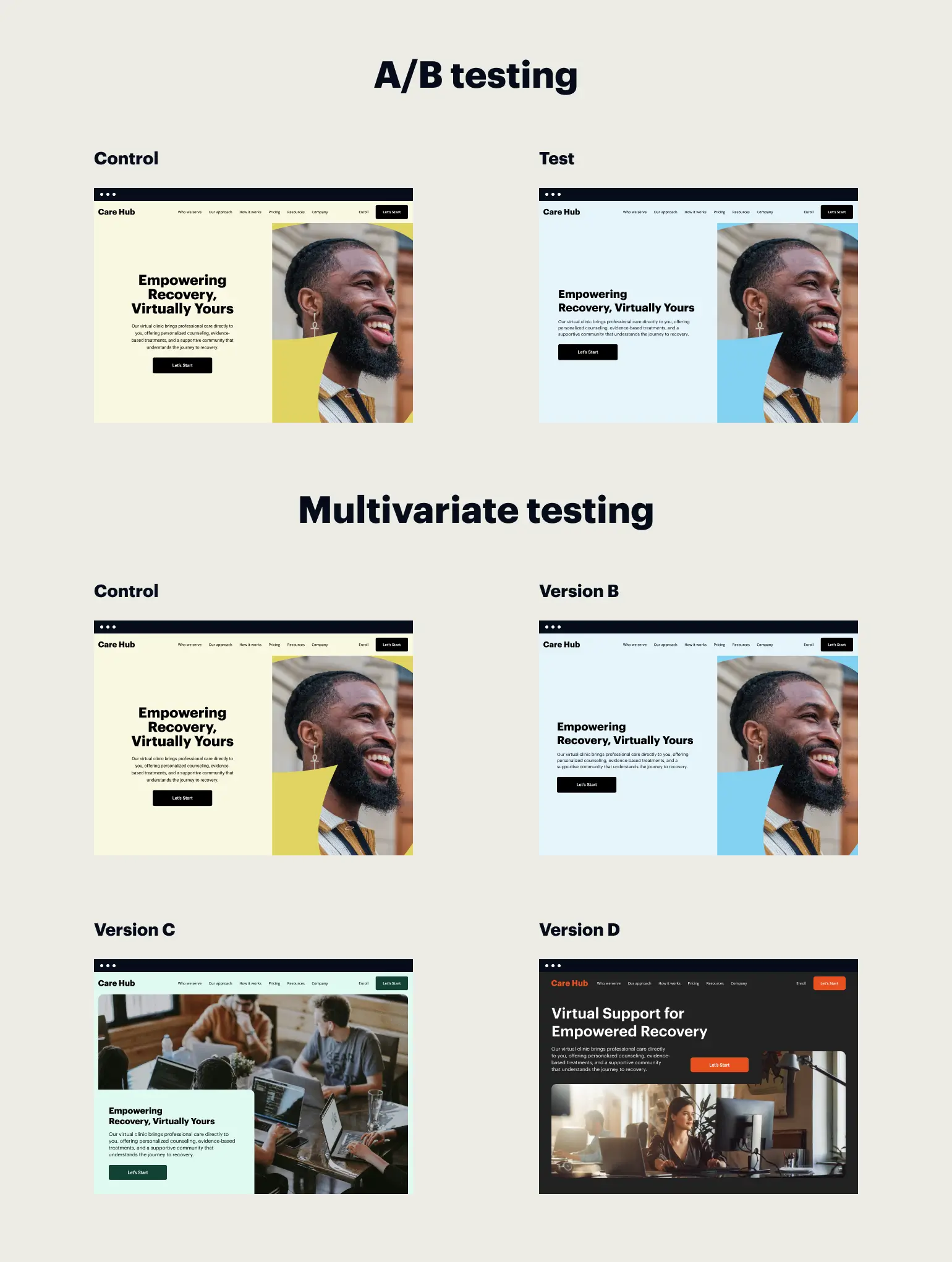
To navigate the complexities of CRO, one must first distinguish between the two primary testing architectures. A/B testing, frequently referred to as split testing, is a linear process. It involves comparing a control version (A) against a single variation (B) to measure the impact of one specific change. For instance, a marketer might test whether a “Sign Up Now” button performs better in blue or green. By isolating a single variable, the marketer can attribute any change in performance directly to that modification.
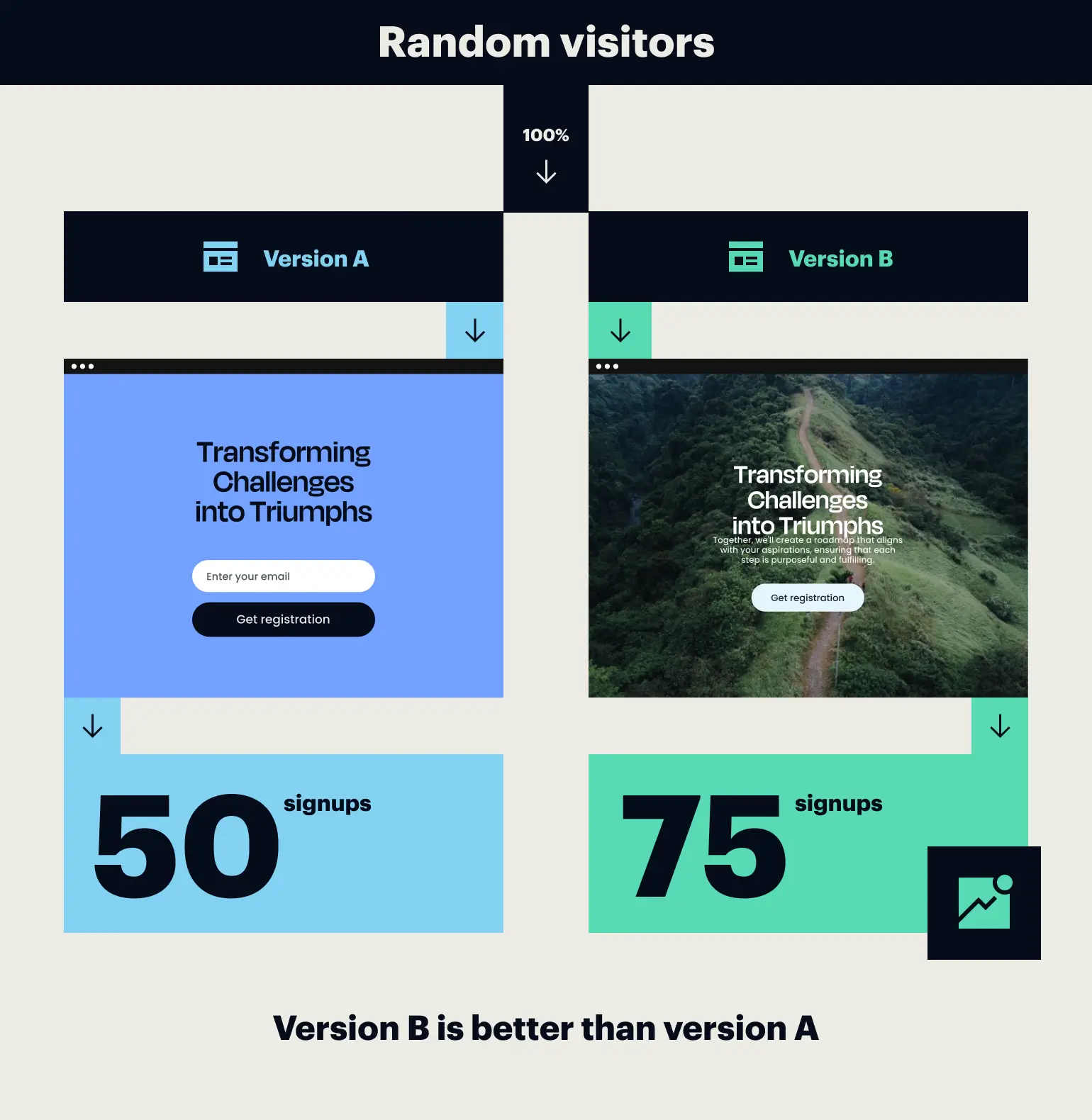
In contrast, multivariate testing (MVT) is a non-linear, multi-dimensional approach. Rather than testing one element at a time, MVT examines how multiple variables—such as headlines, hero images, call-to-action (CTA) button colors, and form placements—interact with one another. The primary objective of MVT is not just to find the best individual element, but to identify the “winning combination” of elements that maximizes user engagement and conversion rates.
Industry data suggests that while A/B testing is excellent for making “radical” changes (such as testing two completely different page layouts), MVT is the preferred tool for “refining” an existing page structure. By systematically modifying selected variables, marketers can analyze the synergy between components, uncovering insights that a series of isolated A/B tests might miss.
The Mathematical Framework of Multivariate Testing
The complexity of a multivariate test is determined by the number of variables and the variations within those variables. Marketers use a specific formula to calculate the number of unique page versions required for an experiment: (Number of Variations of Element A) × (Number of Variations of Element B) × (Number of Variations of Element C) = Total Combinations.
For example, if a digital strategist decides to test three different headlines and two distinct hero images, the formula yields six total combinations. If the test is expanded to include two CTA button colors and two different wording options for those buttons, the number of combinations jumps to 24.

There are three primary scientific approaches to executing these tests:
- Full Factorial Testing: This is the most comprehensive method, where every possible combination of variables is tested against a portion of the traffic. It provides the most accurate data regarding element interaction but requires the highest volume of traffic.
- Fractional Factorial Testing: This method tests only a subset of the possible combinations. It uses mathematical models to predict how the untested combinations would have performed, making it suitable for websites with moderate traffic.
- Taguchi Method: Originally derived from manufacturing quality control, this is a highly specialized form of fractional testing that is less common in digital marketing but remains a theoretical option for complex experimental designs.
Comparative Analysis: Strategic Pros and Cons
Choosing between A/B testing and MVT requires an assessment of resources, goals, and statistical requirements.

A/B Testing Strengths:
- Speed to Result: Because there are fewer variations, statistical significance is reached much faster.
- Lower Traffic Requirements: Small-to-medium businesses (SMBs) can run effective A/B tests even with limited monthly visitors.
- Clarity: It provides a clear “yes/no” answer to whether a specific change improved performance.
Multivariate Testing Strengths:

- Interaction Insights: It reveals if a specific headline only works when paired with a specific image.
- Efficiency: It allows for the testing of multiple hypotheses in a single experimental window, saving the time it would take to run multiple consecutive A/B tests.
- Deep Optimization: It moves beyond “which button color is best” to “which entire page ecosystem is best.”
However, the primary drawback of MVT is the “traffic tax.” Because the audience must be split into many more groups (one for each combination), a significantly larger sample size is required to ensure that the results are not due to random chance. Marketing analysts warn that running an MVT on a low-traffic site can lead to “inconclusive” results, wasting weeks of testing time.
Case Studies in Optimization: AliveCor and Groove
The efficacy of these methods is best illustrated through real-world applications. Medical technology company AliveCor recently utilized experimentation to launch its KardiaMobile Card. The company hypothesized that visitors would interact more with products that featured prominent visual cues.

In their experiment, they introduced a “New” badge on the product detail and listing pages. The results were definitive: the variation featuring the badge saw a 25.17% increase in conversion rates and a 29.58% increase in revenue per user across both desktop and mobile platforms. While this began as a hypothesis suited for A/B testing, the implications for future MVT are clear—AliveCor can now test how that “New” badge interacts with different promotional pricing or font styles.
Similarly, the customer support platform Groove utilized a “copy-first” redesign to overhaul its landing pages. By moving away from feature-heavy descriptions toward benefit-driven narratives, and testing different headline-to-body-copy combinations, Groove successfully increased its conversion rate from 2.3% to 4.3%. This holistic approach to testing entire page structures demonstrates the power of analyzing how narratives and layouts work in tandem.

The Role of Technology in Modern Testing
As the demand for optimization grows, software platforms have evolved to lower the barrier to entry for marketers. Tools like Instapage have streamlined the process, allowing teams to set up experiments without deep coding knowledge. The standard workflow for modern experimentation typically follows a five-step chronology:
- Hypothesis Generation: Identifying a problem and proposing a data-backed solution.
- Experiment Configuration: Naming the test and defining the variables within a testing suite.
- Experience Selection: Choosing the specific landing pages or ad sets to be modified.
- Traffic Splitting: Assigning percentages of incoming traffic to different variations.
- Data Analysis: Monitoring metrics such as click-through rates (CTR) and bounce rates to determine a winner.
Industry experts emphasize that the “set it and forget it” mentality is the enemy of CRO. Continuous monitoring is required to ensure that external factors—such as a holiday shopping season or a competitor’s sale—do not skew the experimental data.

Broader Implications and the Future of CRO
The shift toward multivariate testing signals a broader trend in the marketing industry: the move toward hyper-personalization. As artificial intelligence (AI) and machine learning (ML) become integrated into testing platforms, the future of MVT may involve “predictive testing.” In this scenario, AI models could simulate thousands of multivariate combinations before a single real visitor ever sees the page, narrowing down the most likely winners and drastically reducing the traffic requirements.
Furthermore, the data harvested from MVT does more than just improve a single landing page; it informs the entire brand strategy. If a test reveals that users respond better to minimalist designs and authoritative headlines, that insight can be applied to email marketing, social media assets, and even physical advertisements.

In conclusion, while A/B testing remains a vital tool for making bold, structural changes, multivariate testing is the precision instrument required for sophisticated brand refinement. By understanding the interaction between elements, marketers can move beyond superficial tweaks and create digital experiences that are mathematically optimized for success. As competition for consumer attention continues to intensify, the ability to execute and interpret these complex experiments will remain a defining characteristic of high-performing marketing teams.