rifanmuazin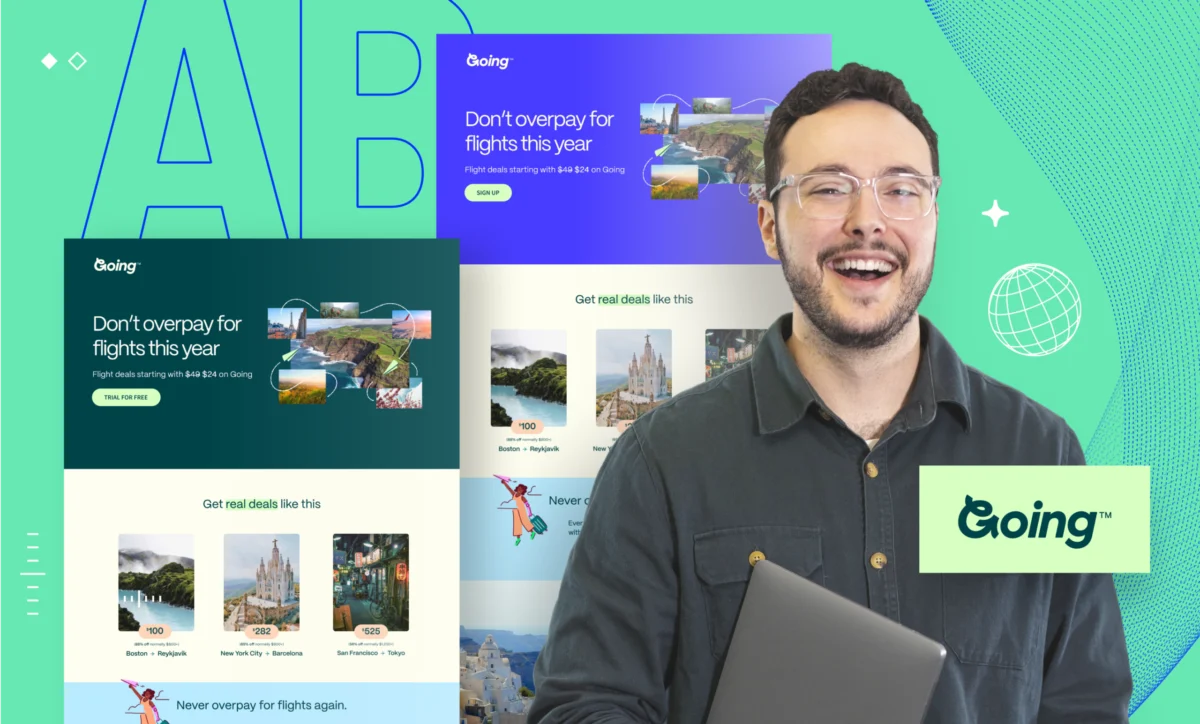
The digital marketing landscape has undergone a fundamental shift as rising customer acquisition costs (CAC) force businesses to pivot from broad traffic acquisition to the precision-based discipline of conversion marketing. In an era where digital advertising expenditures are under unprecedented scrutiny, the focus has moved toward maximizing the value of existing web traffic rather than simply increasing visitor volume. Conversion marketing, defined as the strategic practice of optimizing digital touchpoints to encourage specific user actions, has emerged as a critical driver of profitability. By focusing on conversion rate optimization (CRO), companies are finding that incremental improvements in user experience can yield higher returns than traditional, high-cost top-of-funnel campaigns.
The Strategic Pivot: Why Conversion Marketing Now
For much of the last decade, the prevailing wisdom in digital growth was centered on “more.” More traffic, more clicks, and more impressions were viewed as the primary indicators of success. However, as platforms like Google and Meta have seen significant increases in cost-per-click (CPC) rates, the “more traffic” strategy has become unsustainable for many small-to-medium enterprises (SMEs) and even large corporations.
Industry data suggests that the average cost of digital advertising has risen by nearly 20% year-over-year in certain sectors. This inflationary environment has created a “leaky bucket” problem: businesses spend heavily to drive traffic to websites that are not optimized to convert those visitors into leads or customers. Conversion marketing addresses this by focusing on the “bottom of the funnel,” ensuring that every dollar spent on acquisition has the highest possible chance of resulting in a tangible business outcome.
The logic is mathematically undeniable. A website receiving 10,000 monthly visitors with a 2% conversion rate generates 200 conversions. To double that output through acquisition, a company must double its traffic—and its budget. Conversely, by utilizing conversion marketing tactics to raise the conversion rate to 4%, the company achieves the same 400 conversions without increasing its advertising spend.
A Chronology of Digital Optimization
The transition to modern conversion marketing has occurred in several distinct phases over the last twenty years:
- The Acquisition Era (2000–2010): The early days of the commercial internet were defined by search engine optimization (SEO) and the birth of PPC. The goal was simply to be found. Websites were often static brochures, and “conversion” was a term rarely used outside of direct mail circles.
- The Analytics Era (2010–2015): The widespread adoption of tools like Google Analytics allowed marketers to see what happened after the click. For the first time, “bounce rate” became a key performance indicator (KPI), and businesses began to realize that traffic alone did not equal revenue.
- The UX and Personalization Era (2015–2020): Marketers began focusing on user experience (UX) and mobile responsiveness. The rise of landing page builders allowed for the creation of campaign-specific pages, moving away from the “one-size-fits-all” homepage approach.
- The Conversion Marketing Era (2020–Present): Today, optimization is fueled by artificial intelligence, real-time data, and behavioral psychology. Conversion marketing is now a holistic discipline that integrates design, copywriting, data science, and psychological triggers to create seamless “pathways to purchase.”
Key Success Metrics and Benchmarks
To execute a successful conversion marketing strategy, organizations must first define their “Macro” and “Micro” conversions.
- Macro Conversions: These are primary business goals, such as a completed e-commerce purchase, a signed contract, or a paid subscription.
- Micro Conversions: These are smaller actions that indicate interest and move a user closer to a macro conversion. Examples include signing up for a newsletter, downloading a whitepaper, or adding an item to a cart.
According to recent industry benchmarks, conversion rates vary significantly by sector. The average e-commerce conversion rate typically hovers between 2% and 3%, while legal and professional services may see lead generation rates as high as 5% to 10% on dedicated landing pages. SaaS companies often target a 3% to 7% conversion rate for free trial sign-ups. Understanding these benchmarks allows companies to set realistic goals and identify underperforming assets.
The Psychology of the Click: Value Propositions and Trust
At its core, conversion marketing is the application of behavioral psychology to digital interfaces. Experts identify four primary pillars that influence a visitor’s decision to convert:
1. The Value Proposition
The value proposition is the singular reason why a customer should buy from a specific brand rather than a competitor. In a high-speed digital environment, this must be communicated in seconds. A successful value proposition is clear, avoids jargon, and focuses on the “end-state”—the solution to the customer’s problem—rather than just list features.
2. Usability and Friction Reduction
Technical performance is a non-negotiable component of conversion. Data indicates that a one-second delay in page load time can result in a 7% reduction in conversions. Furthermore, “friction”—any element that makes it difficult for a user to complete an action—must be eliminated. This includes overly long forms, confusing navigation, or lack of mobile optimization. Research shows that reducing the number of form fields from six to three can increase conversion rates by up to 66%.
3. Trust Signals and Social Proof
In an era of increasing digital skepticism, trust is a prerequisite for conversion. Social proof—including customer testimonials, case studies, industry awards, and security badges—serves as the digital equivalent of a personal recommendation. Specificity is key; a testimonial that mentions a 15-hour-per-week time saving is significantly more effective than generic praise.
4. Urgency and Incentives
Human psychology is naturally loss-averse. Marketers use “ethical urgency”—such as limited-time offers or stock countdowns—to encourage immediate action. When combined with incentives like free shipping, a discount code, or a “bonus” resource, these tactics can provide the final push a hesitant visitor needs to commit.
High-Impact Tactics and Technical Implementation
Modern conversion marketing relies on a suite of sophisticated tactics that go beyond basic web design.
Landing Page Optimization: Sending paid traffic to a homepage is increasingly viewed as a strategic error. Dedicated landing pages, which remove the main site navigation and focus entirely on a single offer, typically convert at a much higher rate. These pages allow for “message match,” where the headline of the ad perfectly mirrors the headline of the page, reducing cognitive load for the visitor.
A/B Testing and Experimentation: The most successful marketers do not guess; they test. A/B testing involves showing two versions of a page to different segments of the audience to see which performs better. Elements frequently tested include headlines, Call-to-Action (CTA) button colors, imagery, and form placements.

Interactive and Visual Content: The integration of short-form video (60–90 seconds) has been shown to increase time-on-page and boost conversion rates by up to 80% in some contexts. Interactive tools, such as calculators or quizzes, also serve to engage users more deeply than static text.
Behavioral Triggers: Smart pop-ups and sticky bars, when used judiciously, can capture leads that would otherwise bounce. Exit-intent overlays, which appear only when a user moves their cursor to close the tab, offer a “last-chance” incentive to stay engaged.
Data Integration and Official Responses
Data analysts emphasize that conversion marketing must be a “closed-loop” system. This involves integrating site analytics (like Google Analytics 4) with qualitative data from heatmaps (like Hotjar) and direct feedback from sales and support teams.
“Our support and sales teams are on the front lines,” says one industry strategist. “They hear the specific objections that aren’t visible in the data. If customers keep asking about a specific feature that isn’t mentioned on the landing page, that’s a clear signal that our conversion content has a gap.”
The shift toward AI-driven optimization is also gaining momentum. Platforms are now using machine learning to automatically route traffic to the page variant most likely to convert a specific user based on their browsing history, location, and device type. This “smart traffic” approach represents the next frontier in conversion marketing.
Broader Impact and Industry Implications
The implications of the conversion marketing revolution extend beyond marketing departments. For business owners, it represents a shift toward more sustainable growth. By focusing on conversion, companies can achieve higher profitability with the same overhead, making them more resilient to economic downturns and fluctuations in ad pricing.
Furthermore, the emphasis on user experience and clear communication benefits the consumer. When businesses focus on conversion marketing, they are essentially focusing on making their websites easier to use, their offers easier to understand, and their value easier to realize.
As we move toward 2025 and beyond, the companies that thrive will not necessarily be those with the largest advertising budgets, but those with the most sophisticated conversion engines. The ability to transform a stranger into a customer through a series of optimized digital interactions is no longer a “nice-to-have” skill—it is the cornerstone of modern business survival.