
 rifanmuazin
In the fiercely competitive digital landscape, the initial interaction with a new subscriber often dictates the trajectory of their engagement with a brand. A welcome email, defined as the first automated message a new subscriber receives upon joining an email list, stands out as an exceptionally high-return-on-investment (ROI) tool for small businesses. Data consistently reveals that welcome emails generate nearly four times more opens and over five times more clicks than standard promotional emails, underscoring their critical role in cultivating trust and fostering long-term subscriber enthusiasm. This immediate, personalized outreach is not merely a formality but a strategic necessity, laying the groundwork for enduring customer relationships and improved business outcomes.
Understanding the Welcome Email Ecosystem

At its core, a welcome email is an automated communication dispatched instantly when an individual opts into an email list. While some marketers deploy a singular welcome message, a more prevalent and effective strategy involves a welcome series, typically comprising three to five emails distributed over several days. This sequence allows for a more nuanced and comprehensive introduction, gradually unfolding the brand’s value proposition without overwhelming the new subscriber. The automation inherent in this process ensures consistency and timeliness, crucial elements for capitalizing on peak subscriber interest.
The journey of a new subscriber extends beyond just the welcome email. It often begins with a “thank you” page displayed immediately after sign-up, which can be strategically designed to provide additional information, introduce key resources, or even feature a welcome video. Furthermore, if a “double opt-in” process is employed—where subscribers must confirm their subscription via a confirmation email—this adds another layer of engagement and list hygiene, ensuring that only genuinely interested individuals are added to the mailing list. It is crucial to distinguish between a welcome email, which introduces the brand and delivers promised content, and a confirmation email, which solely validates the subscription intent. Both, however, contribute to a cohesive and professional onboarding experience.
The Unparalleled ROI and Strategic Imperative
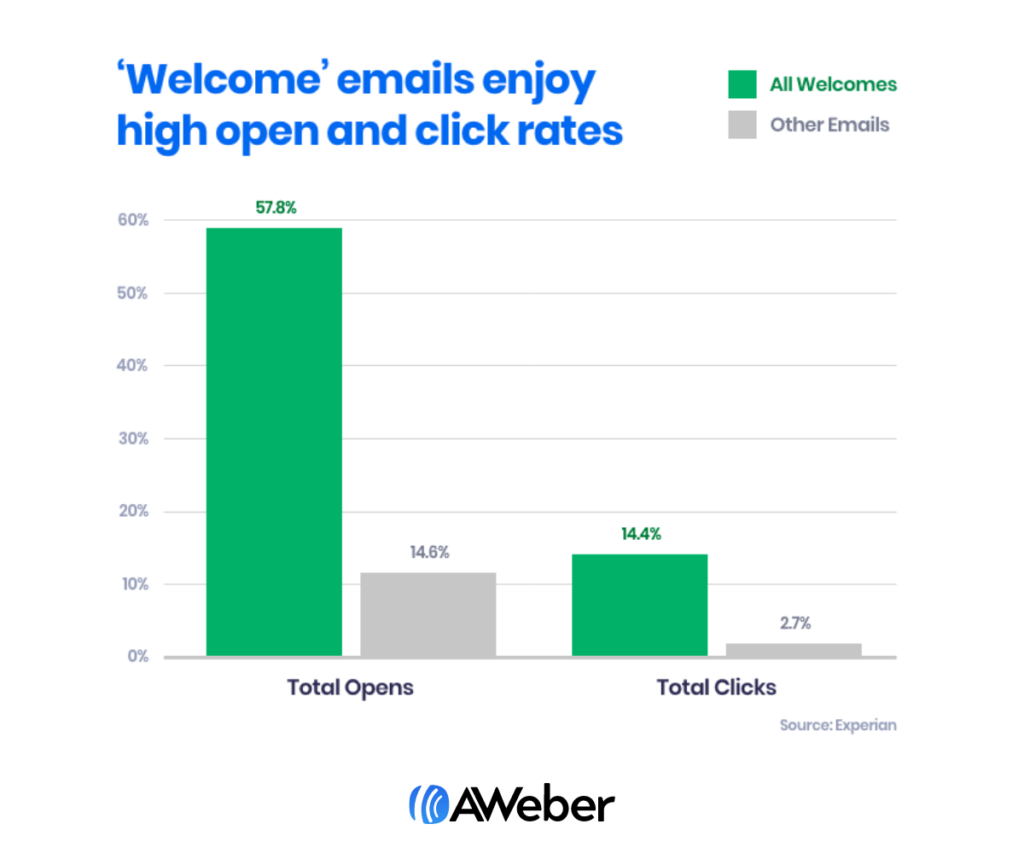
The remarkable performance metrics of welcome emails are not coincidental; they stem from a fundamental principle of human psychology: peak interest. A new subscriber is never more attentive or receptive to a brand’s message than in the immediate moments following their decision to sign up. This brief window of heightened engagement represents a golden opportunity that, if missed, can lead to diminished future interaction.
Email marketing experts emphasize that the initial moments after subscription are pivotal for establishing a positive brand perception and setting clear expectations. A well-crafted welcome email capitalizes on this peak interest to solidify the nascent relationship. Beyond the impressive open and click rates, welcome emails have a direct impact on customer lifetime value (CLTV). Subscribers who receive and engage with welcome messages are statistically more likely to make a purchase, remain subscribed for longer periods, and exhibit greater loyalty to the brand. This is because the welcome phase effectively filters out less interested parties and nurtures those with genuine intent, leading to a higher quality, more engaged subscriber base.
Furthermore, a robust welcome strategy significantly contributes to email deliverability. When subscribers actively open, click, and reply to initial emails, it signals to email service providers (ESPs) that the sender is reputable and their content is valued, thus improving the likelihood of future emails landing in the primary inbox rather than spam folders. Industry data consistently shows that businesses neglecting welcome emails suffer from higher churn rates and lower overall engagement across their email campaigns.
Anatomy of an Effective Welcome Email: Key Components
For small businesses, a single welcome email, or the initial message in a series, should meticulously cover five essential elements to maximize its impact:
- A Genuine Expression of Gratitude: Begin by thanking the new subscriber for joining. This simple act of appreciation acknowledges their trust and validates their decision.
- Immediate Delivery of Promised Value: If a lead magnet, discount code, or exclusive resource was promised during sign-up, it must be delivered promptly and prominently in the email’s opening. Burying this content diminishes trust and subscriber satisfaction.
- Clear Expectation Setting: Outline what subscribers can anticipate from future communications, including the type of content, frequency of emails, and the overarching value they will receive. This proactive communication manages expectations and reduces unsubscribe rates.
- Accessible Contact Information: Provide clear ways for subscribers to reach the business, fostering a sense of accessibility and transparency. Encouraging subscribers to add the sender’s email to their contacts list also improves deliverability.
- A Concise Brand Introduction: Offer a brief, compelling overview of who the business is, what it does, and whom it serves. This humanizes the brand and begins to build a personal connection. A full biography can be reserved for subsequent emails in a series.
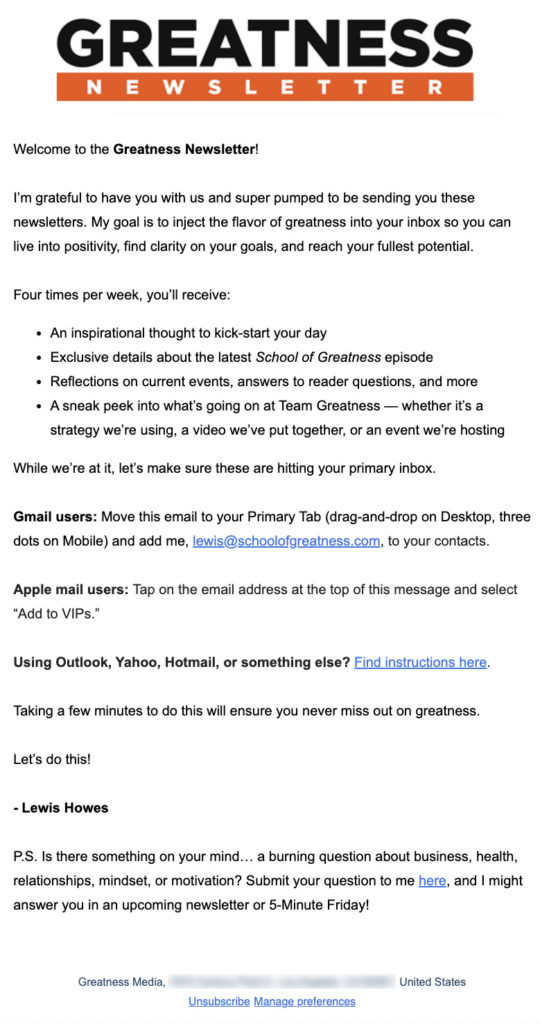
For instance, Lewis Howes of “The School of Greatness” employs a highly effective welcome message that encapsulates these points, often including a postscript invitation for new subscribers to submit questions. This proactive engagement not only provides valuable audience insights but also reinforces accessibility and a genuine interest in subscriber needs.
Crafting Compelling Subject Lines
The subject line is the gatekeeper of the inbox, and for welcome emails, its importance is amplified. It must be clear, concise, and immediately convey value or purpose. Effective welcome email subject lines often include:
- “Welcome to [Your Brand Name]!”
- “Your [Promised Freebie/Discount] is Inside!”
- “Thanks for Subscribing! Here’s What’s Next…”
- “You’re In! Let’s Get Started.”
- “A Warm Welcome from [Your Name/Brand].”
The key is to avoid ambiguity and directly address the subscriber’s recent action and the immediate benefit they will receive. Tools like AWeber’s Subject Line Assistant leverage extensive data to help generate optimized subject lines, aligning with best practices to maximize open rates.

The Power of a Conversational Tone and Clear Call to Action
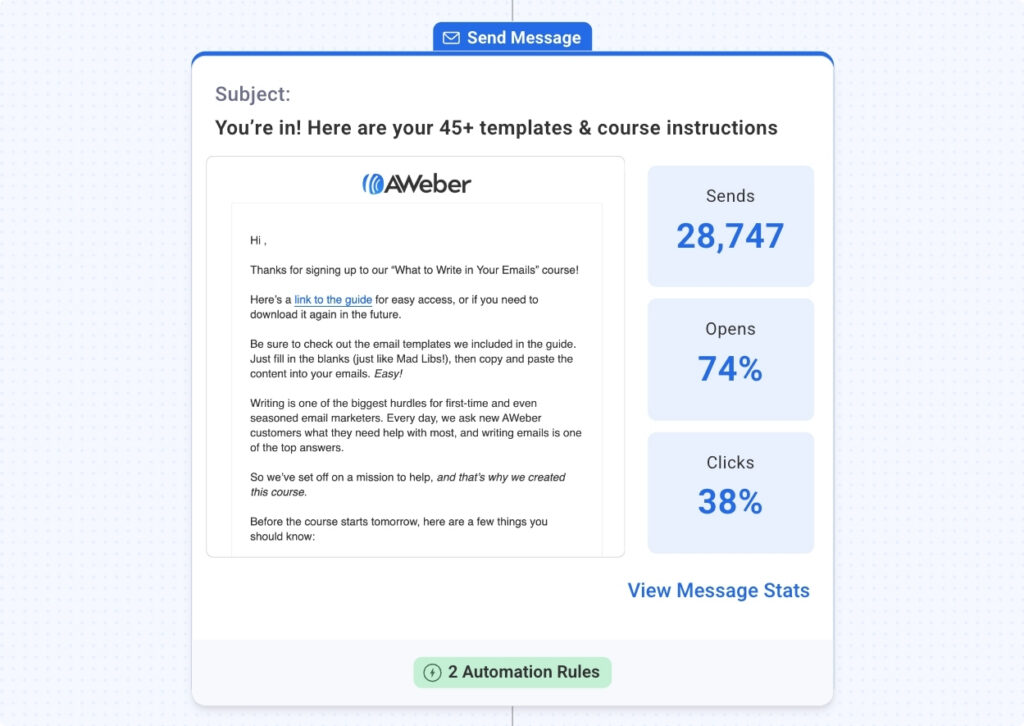
The most successful welcome emails often shed the formality of traditional marketing and adopt a conversational, friendly tone. They feel less like a broadcast and more like a direct message from a helpful individual. AWeber’s welcome email for its “What to Write in Your Emails” course exemplifies this approach. Its direct subject line, “You’re in! Here are your 45+ templates & course instructions,” immediately delivers on the promise. Inside, it not only provides the promised resources but also includes a simple, yet powerful, call to action: “What’s the biggest challenge you’re facing with your emails right now?” This question serves multiple strategic purposes: it initiates a genuine dialogue, provides invaluable feedback for content creation, and signals to ESPs that the emails are engaging, thereby boosting deliverability.
Diverse Applications: Types of Welcome Emails for Various Business Models
The content and focus of a welcome email should be tailored to the specific context of the subscriber’s sign-up and the business model.
- Contest Entry Welcome: For subscribers acquired through a contest, the welcome email should reiterate contest terms, confirm entry, and outline next steps, while also gently reminding them of their subscription to the general list, as seen with Bootprints.
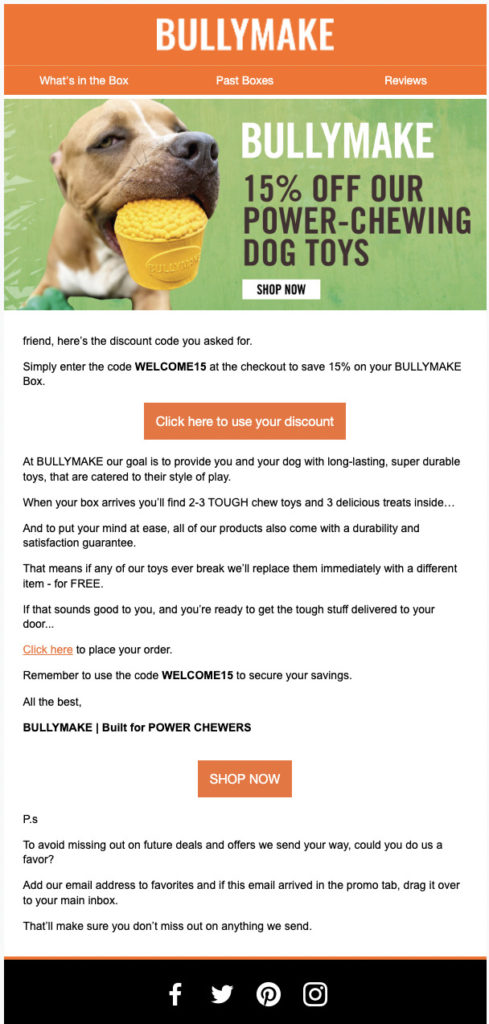
- Incentive-Based Welcome: When a sign-up incentive (e.g., a discount, free gift) is offered, the welcome email’s primary function is to deliver that incentive immediately. Bullymake’s approach of delivering coupons right away is a prime example of fulfilling the opt-in promise without delay.
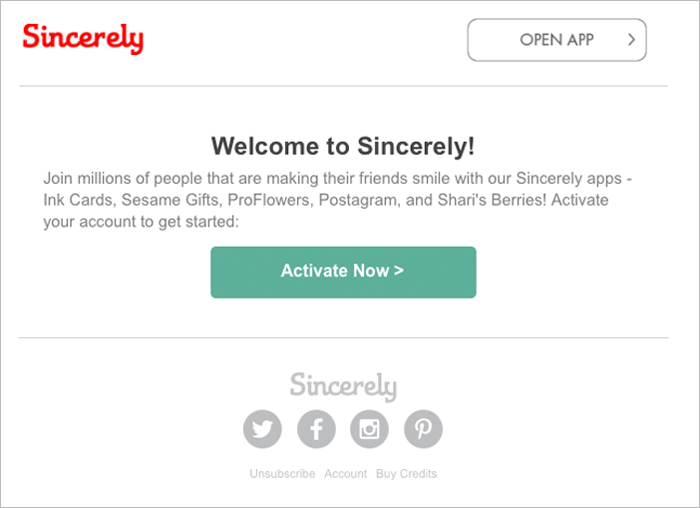
- “Log In to Get Started” Welcome: For SaaS products, membership sites, or trial offers, the welcome email should provide direct links and clear instructions for logging in and beginning the user experience. This minimizes friction and encourages immediate engagement with the product or service.
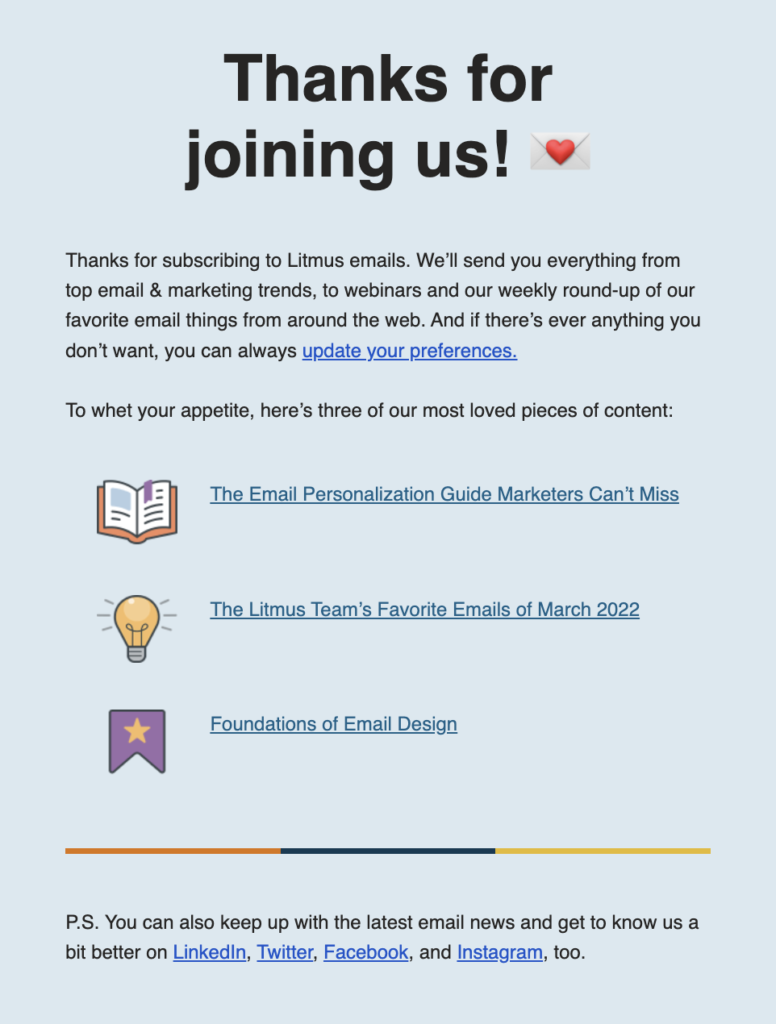
- “Steps to Getting Started” Welcome: Businesses with a wealth of existing content, upcoming events, or special offers can use the welcome email to curate a selection of initial resources. Litmus, for instance, provides a beautifully designed welcome email that highlights key content without overwhelming the new subscriber, saving further resources for later emails in the series.
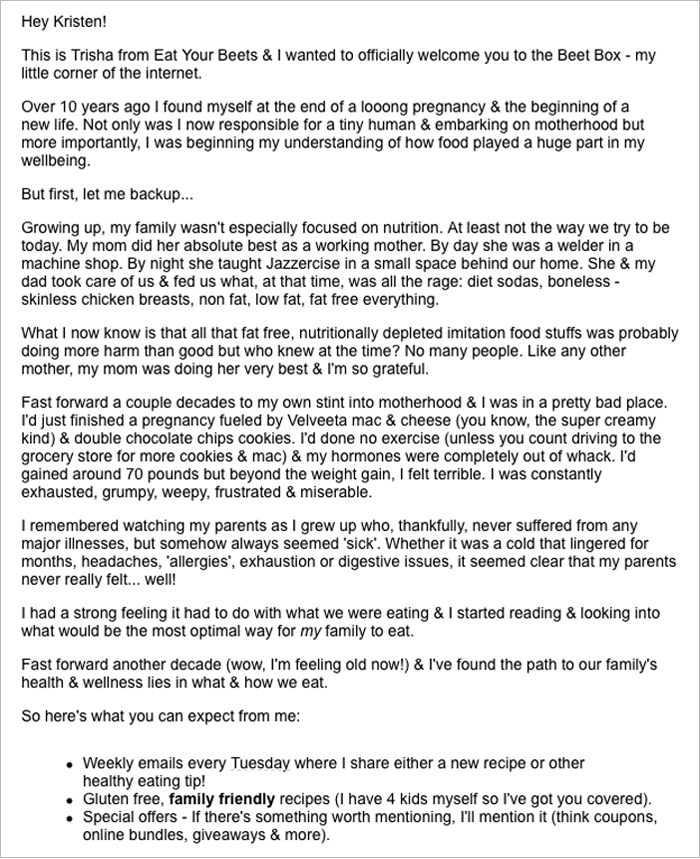
- Personal Connection Welcome: Coaches, trainers, or personal brands often benefit from a welcome email that shares a brief, authentic personal story. Trisha from Go Eat Your Beets effectively uses her welcome message to establish a deeper, more human connection with her audience, demonstrating that a real person with relatable experiences is behind the brand. This approach builds empathy and trust.
Optimizing the Welcome Series: How Many Emails and When?
While a single welcome email is better than none, email marketing strategists overwhelmingly advocate for a welcome series, typically spanning three to five emails over the first week. A single message simply cannot adequately fulfill all the relationship-building objectives. A series allows for a structured delivery of value, storytelling, and a gradual introduction to offerings without appearing rushed or overly promotional.
A widely adopted framework for small businesses is the “value-value-story-offer” sequence:
- Email 1 (Immediate): Focus on delivering the promised lead magnet or incentive and clearly setting expectations for future communications (what, how often, why).
- Email 2 (24 hours later): Provide additional value. This could be a top piece of content, a valuable tip, or an explanation of the company’s “why” and mission statement. This email can also invite subscribers to connect on social media.
- Email 3 (48-72 hours later): Continue to deliver value, perhaps by sharing customer testimonials, links to evergreen content, or addressing common pain points the audience faces. Wine Awesomeness, for example, shares engaging content about wine topics.
- Email 4 (Day 4-5, “Story”): This email is dedicated to building emotional connection. Share a personal anecdote about the business’s origin, a customer success story, or the challenges overcome. Storytelling is a powerful mechanism for fostering loyalty.
- Email 5 (Day 6-7, “Soft Offer”): Conclude the series with a gentle introduction to the core offerings. This is not a hard sell but rather an explanation of how the business solves problems or provides solutions, aligning with the value established in previous emails.
The timing is critical: the first email must be sent immediately after sign-up to leverage peak interest. Subsequent emails can be spaced out, typically daily or every other day, to maintain momentum without feeling intrusive. This methodical approach ensures that the brand remains top-of-mind and continues to deliver value, gradually guiding the subscriber towards deeper engagement. AWeber offers prebuilt welcome series automation, allowing businesses to implement and customize this framework efficiently.
The Broader Onboarding Ecosystem: Confirmation Emails and Thank You Pages
The welcome email is part of a larger onboarding sequence designed to seamlessly integrate new subscribers into the brand’s community. As discussed, a crucial distinction exists between welcome emails and confirmation emails. Confirmation emails are specifically for verifying a subscriber’s intent, particularly in a double opt-in process. This extra step, while adding a slight barrier, significantly enhances list quality by reducing spam traps and unengaged subscribers, ultimately leading to higher long-term engagement rates and improved sender reputation.
Equally important is the thank you page that subscribers encounter immediately after submitting their sign-up form. Savvy marketers leverage this page as an extension of the welcome experience. Instead of a generic message, a custom thank you page can be a powerful engagement tool. Tim Ferriss, for example, utilizes a thank you page featuring a short, engaging welcome video. This video explains his newsletter’s purpose, what subscribers can expect, and reinforces the brand’s personality, creating a rich, multi-media introduction before the first email even lands in the inbox. This integrated approach ensures a cohesive and impactful first impression across all touchpoints.
Beyond the Welcome: Cultivating Long-Term Subscriber Relationships
The conclusion of the welcome series marks not an end, but a transition. Having established trust, delivered value, and set expectations, the business is now poised to integrate the new subscriber into its regular communication stream. This could involve adding them to a weekly newsletter, segmenting them for specific product announcements based on their expressed interests, or inviting them to participate in community forums. The foundations laid by a meticulously crafted welcome campaign significantly enhance the likelihood of continued engagement, repeat purchases, and ultimately, the conversion of subscribers into loyal brand advocates.
In an era of information overload, where inboxes are perpetually cluttered, the strategic deployment of a well-executed welcome email sequence is no longer an optional luxury but a fundamental component of effective digital marketing. It is the initial handshake, the first impression, and the critical first step in transforming a fleeting interest into a lasting and profitable relationship.









