rifanmuazin
Lead generation serves as the primary engine for business scalability, functioning as the critical first stage of the sales funnel where prospective interest is converted into actionable data. In an increasingly competitive digital landscape, the ability to attract, engage, and capture the contact information of potential customers has transitioned from a supplementary marketing activity to a core business requirement. According to recent industry reports, approximately 61% of marketers identify generating high-quality leads as their most significant challenge, highlighting the necessity for a diversified and well-executed strategic approach. The fundamental objective of lead generation is to establish a connection with individuals who demonstrate an initial interest in a product or service, thereby creating a pipeline for potential revenue and long-term customer relationships.
The Strategic Framework: Inbound versus Outbound Methodology
To implement a successful lead generation engine, organizations must first navigate the dichotomy between inbound and outbound methodologies. Inbound marketing focuses on the creation of value-driven content designed to draw customers toward a brand. This "pull" strategy utilizes blog posts, social media engagement, search engine optimization (SEO), and email marketing to foster organic interest. The primary advantages of inbound marketing include cost-effectiveness over the long term, the building of brand authority, and the cultivation of higher-trust relationships. However, analysts note that inbound strategies often require a significant time investment before yielding measurable results, necessitating patience and consistent content production.

Conversely, outbound marketing involves a "push" strategy, where the brand initiates contact with potential customers. This includes cold outreach via email or telephone, direct mail, and paid advertising. Outbound strategies are characterized by their ability to produce rapid results and target highly specific demographics. The trade-off, however, often involves higher costs per lead and a lower initial trust level, as the communication is unsolicited. Modern marketing experts suggest that the most resilient businesses utilize a hybrid model, leveraging the immediate reach of outbound tactics to supplement the sustainable growth provided by inbound channels.
The Evolution of Lead Generation: A Chronological Context
The methodology of lead generation has undergone a radical transformation over the last two decades. In the early 2000s, lead generation was heavily reliant on traditional media, such as trade shows, print advertising, and mass cold-calling. The mid-2010s saw the rise of the "Inbound Revolution," popularized by platforms like HubSpot, which shifted the focus to content-led growth and SEO.
By 2020, the landscape shifted again toward hyper-personalization and data-driven targeting. The current era, defined by the post-pandemic digital acceleration, emphasizes the "Quality over Quantity" metric. With the impending deprecation of third-party cookies and the rise of strict privacy regulations like GDPR and CCPA, businesses are now forced to focus on capturing first-party data through direct interactions. This historical shift underscores the importance of the 13 strategies outlined below, which represent the current gold standard for lead acquisition in 2024.

1. Conversion-Optimized Landing Pages
The landing page remains the cornerstone of digital lead generation. Unlike a general website homepage, a landing page is designed with a singular focus: conversion. By removing distractions and providing a clear value proposition, companies can funnel traffic from various sources—such as ads or social media—directly into a lead capture form. Data from Unbounce indicates that businesses with over 40 landing pages generate 12 times more leads than those with only five or fewer. Effective optimization involves a compelling headline, a clear call-to-action (CTA), and social proof, such as testimonials or industry certifications, to reduce friction.
2. The Inbound Content Marketing System
Content marketing involves the strategic creation of educational or entertaining material that addresses the pain points of a specific audience. This system functions by providing value before asking for anything in return. By integrating conversion mechanisms—such as gated whitepapers or newsletter sign-ups—within blog posts and videos, businesses can transform passive readers into active leads. Industry benchmarks suggest that content marketing costs 62% less than traditional marketing while generating three times as many leads.
3. Search Engine Optimization (SEO) for Lead Capture
SEO is the practice of optimizing digital assets to rank higher in search engine results pages (SERPs). This strategy targets "high-intent" users who are actively searching for solutions. While SEO is often viewed as a long-term play, its impact is compounding. By ranking for specific long-tail keywords, a business can secure a steady stream of "free" traffic. Analysts observe that organic search often results in the highest lead-to-customer conversion rate compared to other digital channels.

4. Targeted Cold Email Outreach
Despite the rise of social media, email remains a highly effective tool for B2B lead generation. Modern cold outreach has moved away from "spray and pray" tactics toward highly personalized, intent-based communication. By identifying "trigger events"—such as a prospect company receiving funding or posting a new job opening—marketers can reach out with a relevant solution at the exact moment it is needed. Success in this area requires meticulous attention to deliverability and compliance with anti-spam legislation.
5. Tactical Use of Popups and Sticky Bars
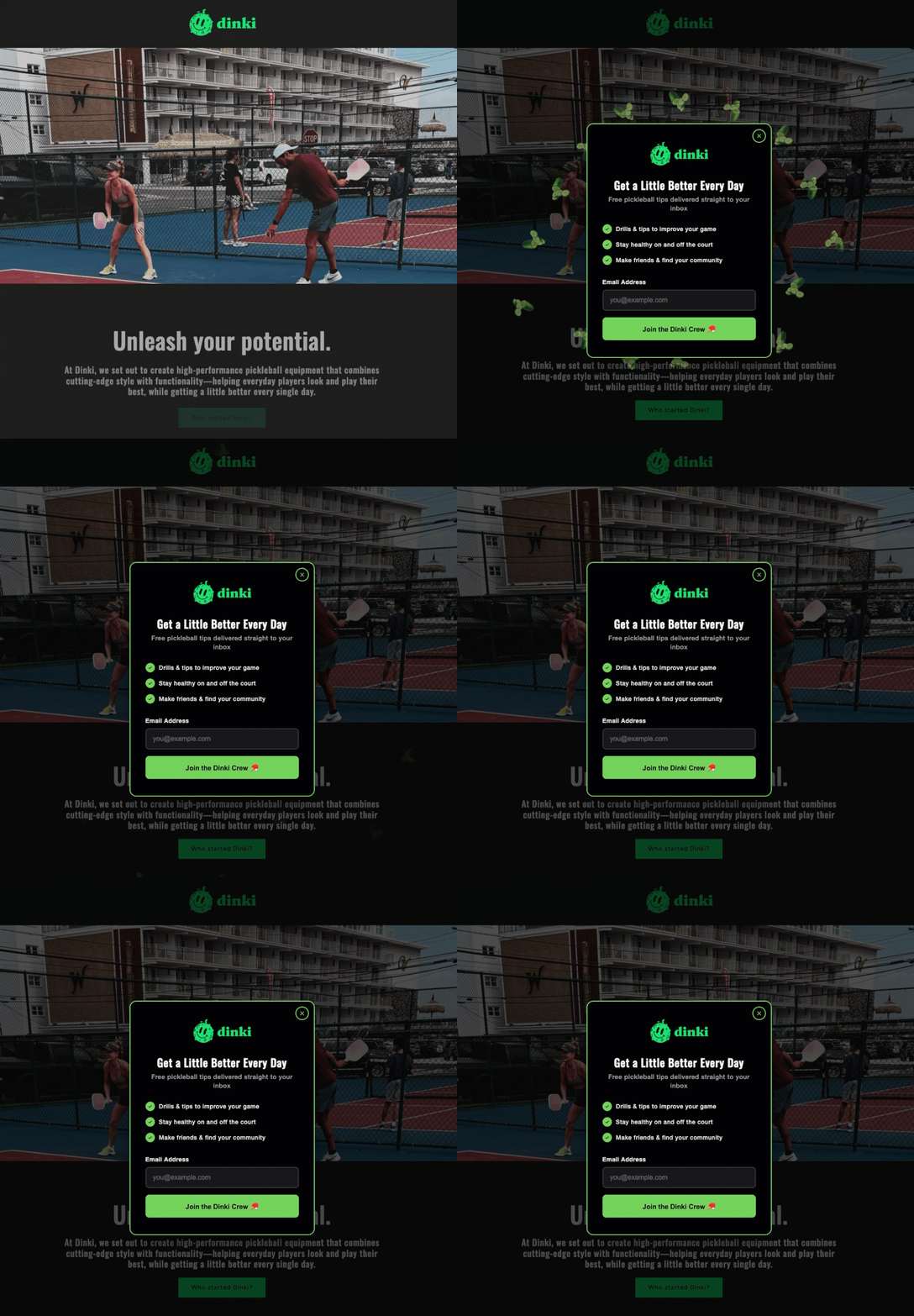
While often maligned, well-timed popups and sticky bars are proven tools for capturing attention. Exit-intent popups, which appear when a user is about to leave a site, provide a "last chance" offer that can recover up to 15% of abandoning visitors. The key to success lies in the offer’s relevance; providing a discount or a free resource that aligns with the content the user was viewing significantly increases the likelihood of conversion.
6. Social Media Marketing and Discovery
Social media has evolved from a branding tool into a discovery engine. Platforms like LinkedIn, TikTok, and Instagram allow brands to reach massive audiences through both organic content and paid amplification. The current trend toward "Social Search" means that users are increasingly using these platforms to find product recommendations. By maintaining a consistent presence and engaging directly with followers, brands can humanize their identity and drive traffic to lead-capture destinations.

7. Pay-Per-Click (PPC) Advertising
PPC campaigns, primarily through Google Ads and Meta Ads, offer the fastest route to lead generation. By bidding on specific keywords or demographic segments, businesses can achieve immediate visibility at the top of search results. While PPC requires a direct financial investment, it provides unparalleled control over targeting and allows for rapid testing of different value propositions.
8. Webinars and Live Digital Events
Webinars serve as high-intent lead magnets. If a prospect is willing to dedicate 30 to 60 minutes to a live session, they are demonstrating a significant level of interest in the topic. This format allows for real-time engagement, Q&A sessions, and the demonstration of expertise. Statistics show that between 20% and 40% of webinar attendees eventually turn into qualified leads.
9. Referral Programs and Word-of-Mouth
Referral marketing leverages the existing customer base to acquire new leads. Because these leads come with a built-in level of trust from a friend or colleague, they often have a higher lifetime value (LTV) and a shorter sales cycle. Offering incentives, such as discounts or cash bonuses, encourages satisfied customers to act as brand advocates.

10. Influencer and Creator Partnerships
The "Creator Economy" has redefined how brands reach niche audiences. Partnering with industry influencers allows businesses to tap into an established, trusting community. Unlike traditional celebrity endorsements, modern influencer marketing focuses on authenticity and alignment with the creator’s specific expertise, making it a powerful tool for generating highly relevant leads.
11. Retargeting and Re-engagement Campaigns
The "Rule of Seven" in marketing suggests that a prospect needs to see a brand at least seven times before making a purchase decision. Retargeting ads follow users who have visited a site but did not convert, keeping the brand top-of-mind as they browse other parts of the internet. This strategy is essential for maximizing the ROI of initial traffic-driving efforts.
12. Free Trials and Product Demos
The "Product-Led Growth" (PLG) model relies on giving prospects a hands-on experience. By offering a free trial or a live demo, companies reduce the perceived risk of a purchase. This "try-before-you-buy" approach is particularly effective in the SaaS (Software as a Service) sector, as it allows the product’s value to speak for itself.

13. Interactive Tools, Quizzes, and Calculators
Interactive content, such as ROI calculators or personality quizzes, offers immediate, personalized value to the user. These tools are highly engaging and have a high completion rate. In exchange for the results, users are typically willing to provide their contact information, giving the business valuable data about the prospect’s specific needs and challenges.
Analysis of Implications and Broader Impact
The shift toward diversified lead generation strategies reflects a broader change in consumer behavior. Modern buyers are more informed and more skeptical of traditional advertising than ever before. Consequently, the most successful strategies are those that prioritize transparency, education, and mutual value.
Furthermore, the integration of Artificial Intelligence (AI) is beginning to revolutionize these 13 strategies. AI-driven chatbots can now handle initial lead qualification, while predictive analytics can identify which leads are most likely to convert, allowing sales teams to prioritize their efforts more effectively.

In conclusion, lead generation is not a static process but a dynamic ecosystem. Businesses that fail to adapt to the nuances of both inbound and outbound channels risk stagnation. Conversely, those that build a robust, multi-channel engine—grounded in a deep understanding of their target audience—will find themselves well-positioned for sustainable growth in an ever-evolving marketplace. The data is clear: an effective lead generation strategy is no longer a luxury; it is the fundamental prerequisite for commercial survival in the digital age.