rifanmuazin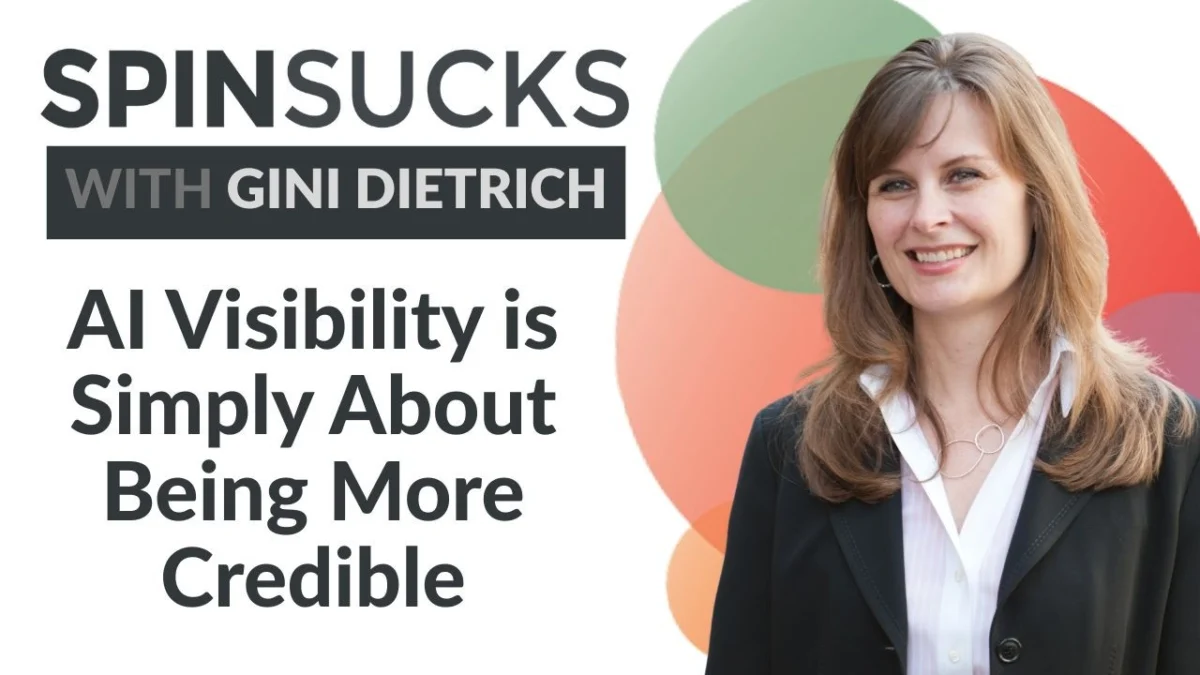
The digital marketing landscape is undergoing a fundamental shift as artificial intelligence (AI) begins to dominate the way information is discovered, synthesized, and delivered to users. For over two decades, the prevailing wisdom in search engine optimization (SEO) focused on content volume and keyword density. However, as generative AI tools like ChatGPT, Perplexity, and Google’s Search Generative Experience (SGE) become the primary interfaces for information retrieval, the "volume game" is being replaced by a "credibility game." In this new era, visibility is no longer a matter of who publishes the most words, but rather whose expertise is clear, consistent, and structured enough to be trusted by both humans and large language models (LLMs).
The Fallacy of the Content Volume Strategy
For years, marketing departments operated under the assumption that more content equated to more visibility. This led to a "hustle culture" within digital communications where speed was treated as a virtue and visible activity was mistaken for strategic substance. The advent of generative AI tools has only accelerated this trend, allowing teams to produce generic blog posts, newsletters, and social media updates at an unprecedented scale.
However, industry data suggests that this flood of "perfectly fine" content is yielding diminishing returns. As AI tools summarize web information, they increasingly bypass low-value, repetitive content. If a brand’s digital footprint consists of 47 mediocre assets derived from a single mediocre idea, it fails to establish the authority required for an AI to recommend it as a definitive source. The pressure to "get more done with less" has resulted in a market saturated with interchangeable text that lacks the strategic value necessary to cut through the noise.
The Evolution of Search: From Keywords to Answer Engines
To understand the shift in visibility, one must examine the chronology of search technology. In the early 2010s, visibility was driven by technical SEO and backlink quantity. By the early 2020s, Google’s E-E-A-T (Experience, Expertise, Authoritativeness, and Trustworthiness) guidelines began prioritizing the quality of the source. Today, we are in the era of Answer Engine Optimization (AEO) and Generative Engine Optimization (GEO).
AI systems do not simply count keywords; they look for patterns of authority. They seek a "source of truth" that provides:
- Clear Definitions: Unambiguous explanations of concepts.
- Consistent Claims: The same core message repeated across multiple platforms.
- Structured Evidence: Data and frameworks that are easy for machines to parse.
- Third-Party Validation: Corroboration from external, high-authority sources.
When a brand’s website says one thing, its leadership team says another on social media, and its earned media coverage focuses on unrelated topics, the AI perceives a lack of authority. This "authority problem" prevents the brand from becoming the "obvious answer" in an AI-generated summary.
The Framework of Visibility Engineering
In response to these changes, communications professionals are adopting a discipline known as "visibility engineering." This approach treats visibility not as a series of disconnected blog posts, but as a holistic system of structured expertise.
Visibility engineering requires a brand to identify specific "authority anchors"—core themes and proprietary insights that the organization can defend. These anchors must be reinforced across every channel. For a system to be effective, it must be built on a foundation of "level-three FAQs." While level-one FAQs answer basic "what is" questions and level-two FAQs handle "how to" scenarios, level-three FAQs address the nuances of implementation, risk mitigation, and critical judgment. These are the questions prospective buyers ask when they are evaluating the viability of a solution. Because these answers require human judgment and real-world experience, they are highly valued by AI engines seeking to provide sophisticated recommendations.
The Synergy of Owned and Earned Media
A critical component of modern AI visibility is the "corroboration loop" between owned and earned media. Owned media—such as a company’s website and white papers—serves as the definitive narrative. It is the evidence library that analysts and AI tools cite for deep dives. However, owned media has an inherent credibility ceiling because it is self-published.
Earned media—coverage in trade publications, mentions by analysts, and appearances on reputable podcasts—provides the necessary third-party validation. When an external source reinforces the themes established on a brand’s owned channels, it creates a signal of trust that AI systems prioritize.
Industry analysts note that AI models are trained on massive datasets that include news archives, academic journals, and reputable trade media. Therefore, a brand that earns a mention in a respected industry outlet is not just gaining a temporary PR win; it is embedding its expertise into the very datasets that future AI models will use to generate answers. This makes the integration of PR, communications, and marketing more vital than ever.
Supporting Data and Market Reactions
Recent surveys of B2B buyers indicate a growing skepticism toward generic marketing content. According to recent industry reports on buyer behavior, nearly 70% of decision-makers state that most thought leadership content fails to provide valuable insights. Conversely, content that includes proprietary data or unique frameworks is 50% more likely to be shared and cited.
In the realm of AI performance, researchers have found that LLMs are more likely to cite sources that use "structured data" (such as Schema.org markup) and those that provide clear, bulleted summaries of complex topics. This confirms that the "Thor’s dissertation" approach—providing overly long, rambling explanations—is less effective than the "disciplined communicator" approach, which offers clear, supported, and repeatable answers.
Strategic Implications for Communications Professionals
The shift toward AI-driven visibility is putting immense pressure on traditional content roles. As AI becomes capable of handling "perfectly fine" text, the value of a professional communicator shifts from production to "meaning-making."
The role now involves:
- Defining Truth: Deciding which claims are defensible and what the organization’s definitive stance is on industry issues.
- Framing Expertise: Organizing information so that it is not only readable for humans but also indexable for machines.
- Building Evidence Libraries: Moving away from generic "how-to" articles toward proprietary data storytelling, customer benchmarks, and real-world frameworks.
Organizations that continue to prioritize volume over credibility risk being categorized as "noise" by AI filters. In contrast, those that invest in fewer, stronger assets—such as deep-dive "anchor hubs" and citable research—will find themselves more frequently cited in the snippets and summaries that now define the first page of search results.
Chronology of Content Strategy Evolution
- The Keyword Era (2000–2010): Focus on volume, density, and technical backlinking. Success was measured by ranking for specific terms.
- The Quality Era (2011–2022): Focus on "content is king," long-form blogging, and social media engagement. Google’s Panda and Penguin updates penalized low-quality volume.
- The Generative Era (2023–Present): Focus on "credibility and structure." AI summaries reduce click-through rates to websites, making citation and recommendation the primary goals of visibility.
Conclusion: Becoming the Obvious Answer
The objective of modern visibility is to ensure that when a buyer asks an AI tool for a recommendation, your brand is the only logical response. This cannot be achieved through a busier content calendar. It requires a disciplined audit of all brand signals to ensure they are aligned and supported by evidence.
Strategic communications must move beyond "pitching whatever feels timely" to a model where every media win and every blog post reinforces a central authority anchor. By building a system of structured expertise and earning third-party validation, brands can transcend the limitations of the volume game. In an AI-shaped market, the winners will not be the loudest or the fastest; they will be the most credible, the most consistent, and the most corroborated across the digital ecosystem. The question for leaders is no longer "how much can we publish?" but rather "have we made it unmistakably clear why we should be trusted?"