
 rifanmuazin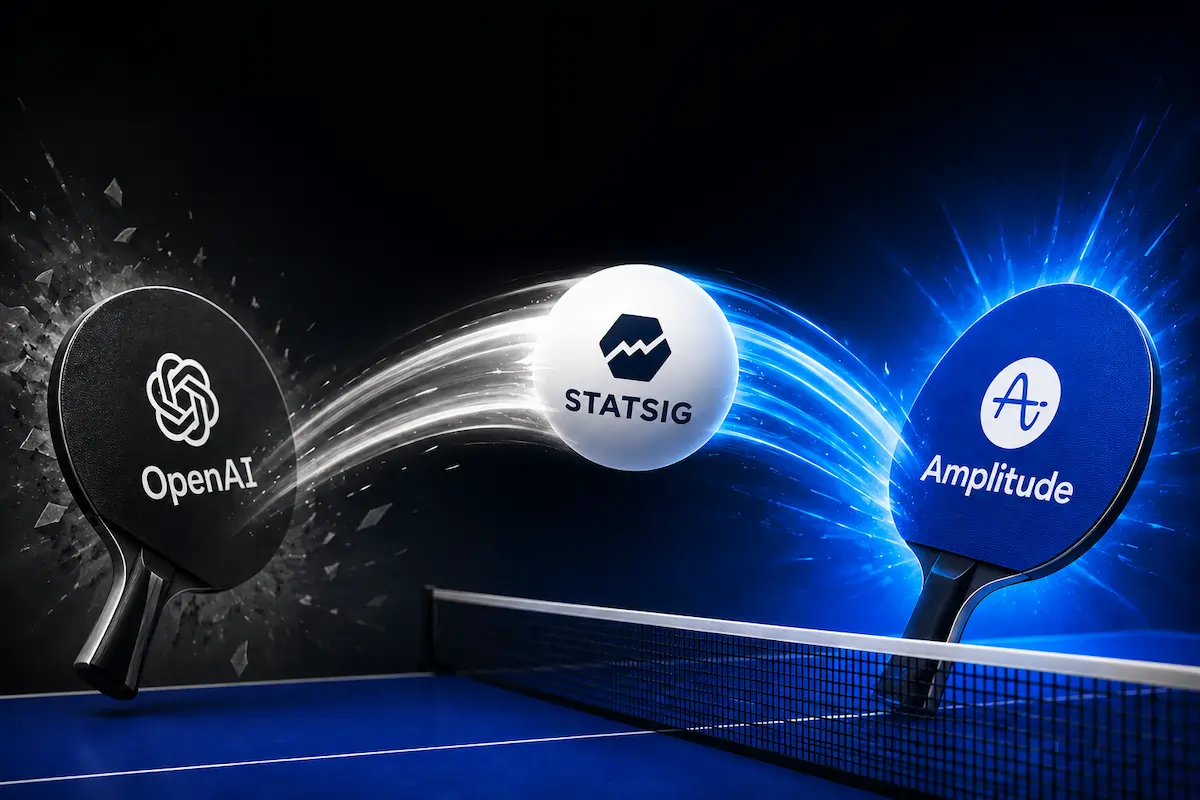
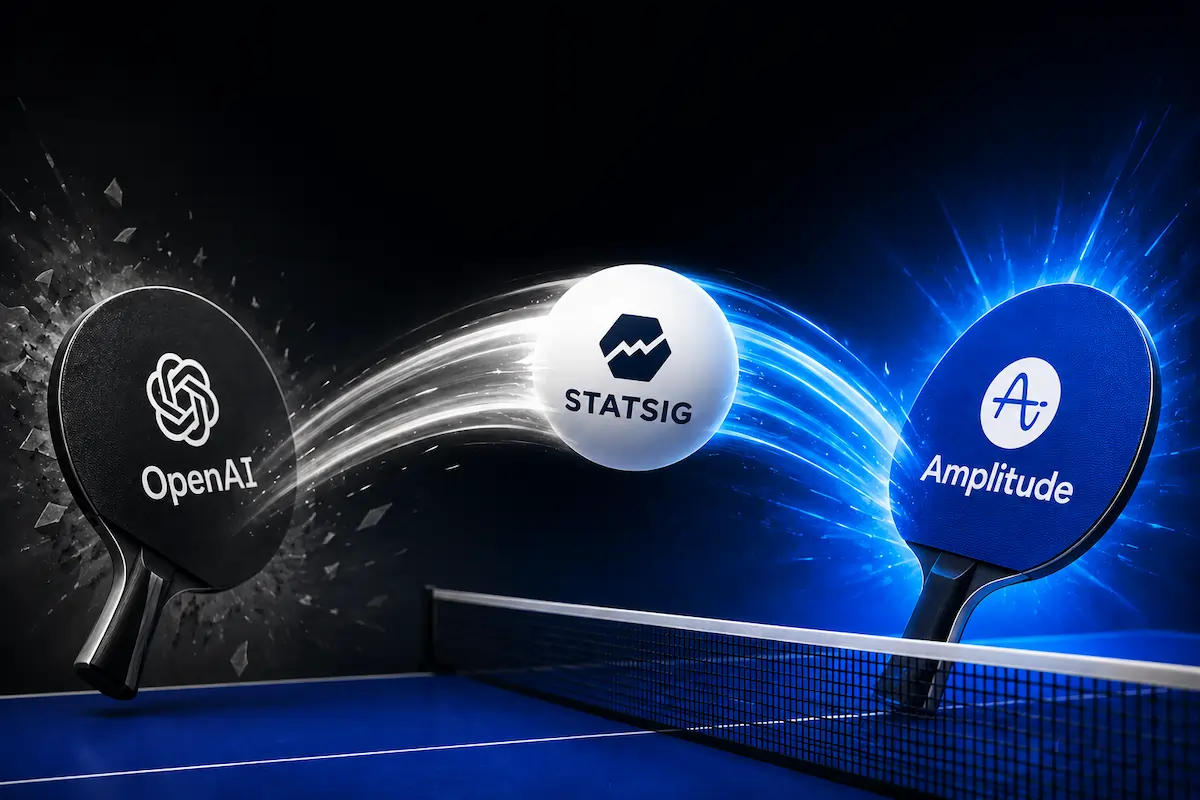
On May 5, 2026, Amplitude CEO Spencer Skates announced a definitive strategic partnership with Statsig, the experimentation platform recently acquired by OpenAI, marking a significant realignment in the software-as-a-service (SaaS) and product analytics landscape. Under the terms of the agreement, Amplitude will assume responsibility for Statsig’s brand and its extensive customer base, effectively integrating the platform’s experimentation capabilities into the Amplitude ecosystem. This move follows an eight-month period of uncertainty regarding the future of Statsig’s commercial operations after it was absorbed by OpenAI in late 2025. The transaction represents a rare "bifurcated acquisition" model, where the original acquirer, OpenAI, retains the core engineering talent and intellectual property for internal development, while transferring the external commercial business to a partner better equipped to manage a global SaaS enterprise.
The partnership aims to reconcile two distinct architectural philosophies: Amplitude’s traditional strength in event-stream product analytics and Statsig’s "warehouse-native" approach to experimentation. As part of the transition, Amplitude has committed to maintaining the existing Statsig platform across both cloud and data warehouse deployments. This ensures that current Statsig customers—ranging from high-growth startups to enterprise-level organizations—will have a stable roadmap as their contracts move toward renewal cycles under Amplitude’s management.
Chronology of the Statsig Transition
The evolution of Statsig from a standalone startup to an integrated component of the Amplitude suite began in earnest on September 2, 2025. On that date, OpenAI announced its acquisition of Statsig in an all-stock deal valued at approximately $1.1 billion. This acquisition was one of the largest in OpenAI’s history and signaled the AI giant’s intent to bolster its internal product engineering capabilities. At the time of the deal, Statsig founder and CEO Vijaye Raji, a former Facebook engineering executive, was appointed as OpenAI’s CTO of Applications.
The initial mandate for Statsig under OpenAI was operational independence. OpenAI’s public stance in late 2025 suggested that Statsig would continue to serve its external customer base from its Seattle headquarters. However, industry analysts speculated that OpenAI’s primary interest lay in Statsig’s "runtime control plane"—the infrastructure necessary to close the feedback loop between AI-generated code and production performance. By May 2026, this internal focus became the priority, leading to the handover of the commercial SaaS business to Amplitude.
Market Context and Economic Drivers
The consolidation of Statsig into Amplitude is not an isolated event but rather the latest in a series of high-profile mergers and acquisitions within the experimentation and observability sectors. Over the past 18 to 24 months, the market has seen a rapid contraction of independent vendors as larger platforms seek to offer "all-in-one" solutions.
Key historical precedents include:
- Datadog’s acquisition of Eppo: A move designed to embed experimentation directly into the observability stack.
- Harness’s acquisition of Split: An integration of feature flagging and experimentation into the continuous delivery (CI/CD) pipeline.
- The merger of VWO and AB Tasty: A private-equity-backed consolidation of two major web-testing players to achieve scale.
- Optimizely’s acquisition by Episerver: A foundational deal that signaled the shift from standalone testing tools to comprehensive digital experience platforms (DXP).
According to current market analysis, the total addressable market (TAM) for web-only experimentation tools is estimated at $1 billion, with annual growth slowing to approximately 10%. This maturation of the market has made it increasingly difficult for independent vendors to defend high valuation multiples. Consequently, companies are pursuing three primary paths: moving upmarket into enterprise consolidation, embedding into broader categories like analytics or observability, or—as in the case of Statsig—transitioning the team to a major technology provider while spinning off the customer base.

Strategic Implications for Product Experimentation
The partnership between Amplitude and Statsig highlights a fundamental shift in how modern software teams approach growth. For years, the industry was bifurcated between analytics (understanding what happened) and experimentation (understanding why it happened). By bringing Statsig’s statistical engine into the Amplitude fold, the combined entity aims to provide a unified "command center" for product managers.
However, the integration faces technical challenges. Statsig gained market share by allowing companies to run experiments directly on top of their data warehouses (such as Snowflake, BigQuery, or Redshift) without the need to send raw event data to a third-party server. Amplitude, conversely, was built on a proprietary behavioral graph optimized for real-time event streaming. Reconciling these two infrastructures will be a primary focus for engineering teams over the next 12 to 18 months.
Industry practitioners have noted that this deal signals the "absorption" phase of experimentation. Ben Labay, a prominent voice in the experimentation community, observed that experimentation is no longer a standalone category to be acquired but a "muscle" that larger platforms must absorb to remain competitive. In an era where AI can generate infinite product variations, the bottleneck has shifted from the ability to build features to the ability to validate them quickly.
Official Responses and Industry Reactions
In his announcement, Amplitude’s Spencer Skates emphasized the value of continuity for the Statsig community. "We are excited to welcome Statsig’s customers into the Amplitude family," Skates noted. "By combining our industry-leading analytics with Statsig’s powerful experimentation platform, we are giving teams the tools they need to win in the AI-native era."

OpenAI has remained relatively quiet regarding the commercial handover, focusing instead on the integration of Statsig’s core technology into the ChatGPT and Codex engineering workflows. The move is widely viewed by analysts as a responsible exit for OpenAI, which sought to avoid the "product decay" that often occurs when a large AI laboratory acquires a customer-facing SaaS company.
Dennis van der Heijden, co-founder of the experimentation platform Convert, provided a grounded perspective on the deal. He noted that while conglomerates are following a path of consolidation, there remains a significant "grassroots" market of small and medium-sized enterprises (SMEs) that require independent, agile tools. "The handover is more thoughtful than headlines suggest," van der Heijden stated. "OpenAI could have let the platform wither. Instead, the brand and customers went to a buyer for whom serving experimentation customers is the actual business."
The Impact of AI on Testing Velocity and Statistical Rigor
A critical factor driving this market shift is the emergence of AI-driven hypothesis generation. Traditionally, experimentation was a slow, deliberate process governed by the "95% confidence interval" gospel. This high bar for statistical significance was necessary because the cost of engineering and launching a test was high; teams could only afford to make a few strategic bets per quarter.
With the advent of AI, the cost of generating variants, conducting quality assurance (QA), and performing initial analysis has plummeted. As the time required to launch a test moves from weeks to hours, the industry is seeing a shift in priorities.

- Direction over Certainty: For many mid-market teams, running ten experiments at 80% confidence may yield more cumulative learning than running one experiment at 95% confidence.
- Compressed Timelines: The "sprint" model of testing is being replaced by a "continuous validation" model where tests are rolled out and adjusted in real-time.
- Expanded Accessibility: AI lowers the barrier for teams that previously lacked the traffic or data science resources to run traditional A/B tests. This opens up experimentation to a "long tail" of ecommerce shops and B2B startups that were previously excluded from the market.
Future Outlook for the Experimentation Ecosystem
As the Amplitude-Statsig integration proceeds, the industry will be watching closely for how pricing and contract terms evolve during the next renewal cycle. For current Statsig users, the immediate future involves a transition period where support and account management will shift to Amplitude’s teams.
The broader experimentation landscape is now clearly divided into two camps. On one side are the "conglomerates"—large, integrated platforms like Amplitude, Optimizely, and Datadog—that offer experimentation as part of a massive suite of tools. These platforms are increasingly targeting the Global 2000, where data complexity and departmental silos require heavy-duty integration.
On the other side are the independent, "neutral layer" platforms. These vendors are betting that a segment of the market will always prefer best-of-breed tools that remain independent of the major analytics or cloud providers. These independent players are focusing on speed, ease of use, and lower total cost of ownership to attract the next generation of AI-native startups.
The Amplitude-Statsig deal serves as a definitive marker of the end of the "standalone experimentation" era for high-valuation startups. As AI continues to commoditize the production of software, the value has shifted decisively toward the platforms that can most efficiently tell a company what to build next. For Amplitude, the acquisition of Statsig’s customer base is a bold attempt to become that definitive source of truth in a rapidly evolving market.








