
 rifanmuazin
The global landscape of digital experimentation is currently undergoing a significant shift as organizations weigh the benefits of total infrastructure control against the speed of managed software-as-a-service (SaaS) solutions. At the heart of this debate is the choice between open-source frameworks and commercial A/B testing platforms, a decision that fundamentally balances the principles of ownership versus convenience. As digital markets become increasingly competitive, the ability to rapidly iterate on user experience (UX) has become a primary driver of revenue, making the selection of an experimentation stack a high-stakes strategic move for Chief Technology Officers (CTOs) and Heads of Growth alike.
The Landscape of Modern Digital Experimentation
Open-source A/B testing tools are defined as frameworks or libraries where the source code is publicly accessible for viewing, modification, and distribution. In this model, the user assumes full responsibility for hosting, tech stack configuration, and long-term maintenance. Conversely, commercial A/B testing tools are fully managed experimentation platforms that bundle experimentation, targeting, reporting, and feature management into a single, cohesive ecosystem. These platforms are designed to empower teams to run, analyze, and scale experiments without the prerequisite of building infrastructure from the ground up or maintaining a heavy reliance on specialized engineering resources.
The fundamental difference lies in the operational burden. Open-source solutions offer the allure of "free" software but carry significant hidden costs in the form of engineering hours and infrastructure overhead. Commercial tools, while requiring a subscription fee, provide an "out-of-the-box" experience that includes built-in statistical analysis engines, visual editors, and dedicated technical support.
A Chronology of Experimentation Tools
To understand the current divide, one must look at the evolution of the A/B testing industry. In the early 2000s, experimentation was the exclusive domain of tech giants like Google and Amazon, who built proprietary internal tools to test variables as granular as the specific shade of blue used in hyperlinks. By the late 2000s and early 2010s, the first wave of commercial tools, including VWO and Optimizely, democratized testing by introducing visual editors that allowed non-technical marketers to launch experiments without writing code.
The mid-2010s saw a counter-movement with the rise of "headless" experimentation and the release of open-source libraries like Facebook’s PlanOut. This catered to engineering teams who wanted to integrate testing deeper into the application stack, specifically for back-end changes and feature flagging. By 2020, the market had matured into the current bifurcated state: specialized open-source tools for developers who prioritize data residency and code-level control, and comprehensive commercial platforms for growth-oriented organizations that prioritize experimentation velocity and cross-departmental collaboration.
Technical Mechanics: How the Two Approaches Function
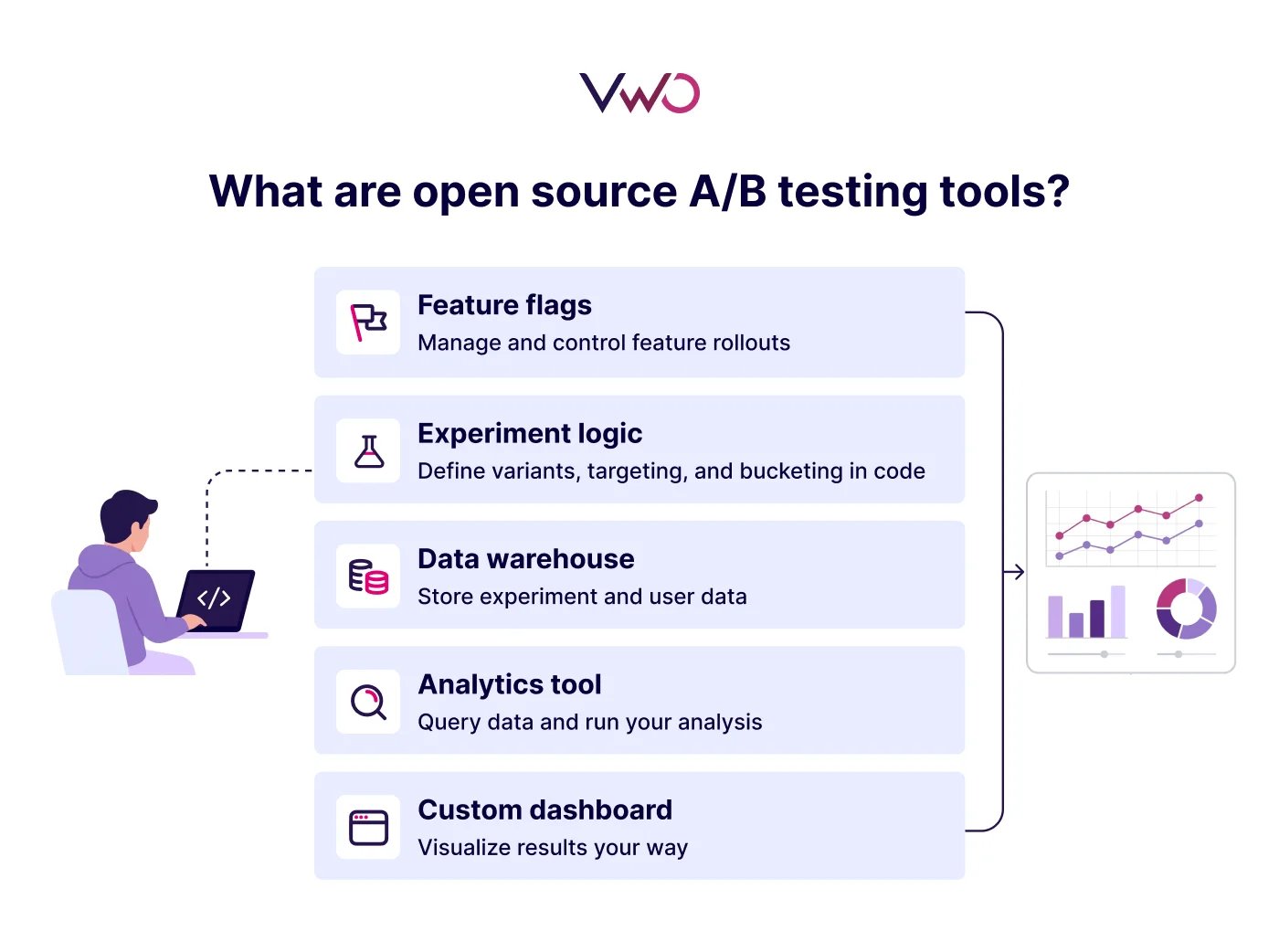
The operational workflows of these two categories reflect their target audiences. Open-source tools are typically integrated into a web or mobile application via a Software Development Kit (SDK). Experiments are defined directly within the code using feature flags or conditional logic. Users are "bucketed" into variations based on attributes such as device type, behavior, or geographical location. The resulting data is then ingested into the company’s own database or a third-party analytics platform like Mixpanel or Google Analytics for manual analysis.
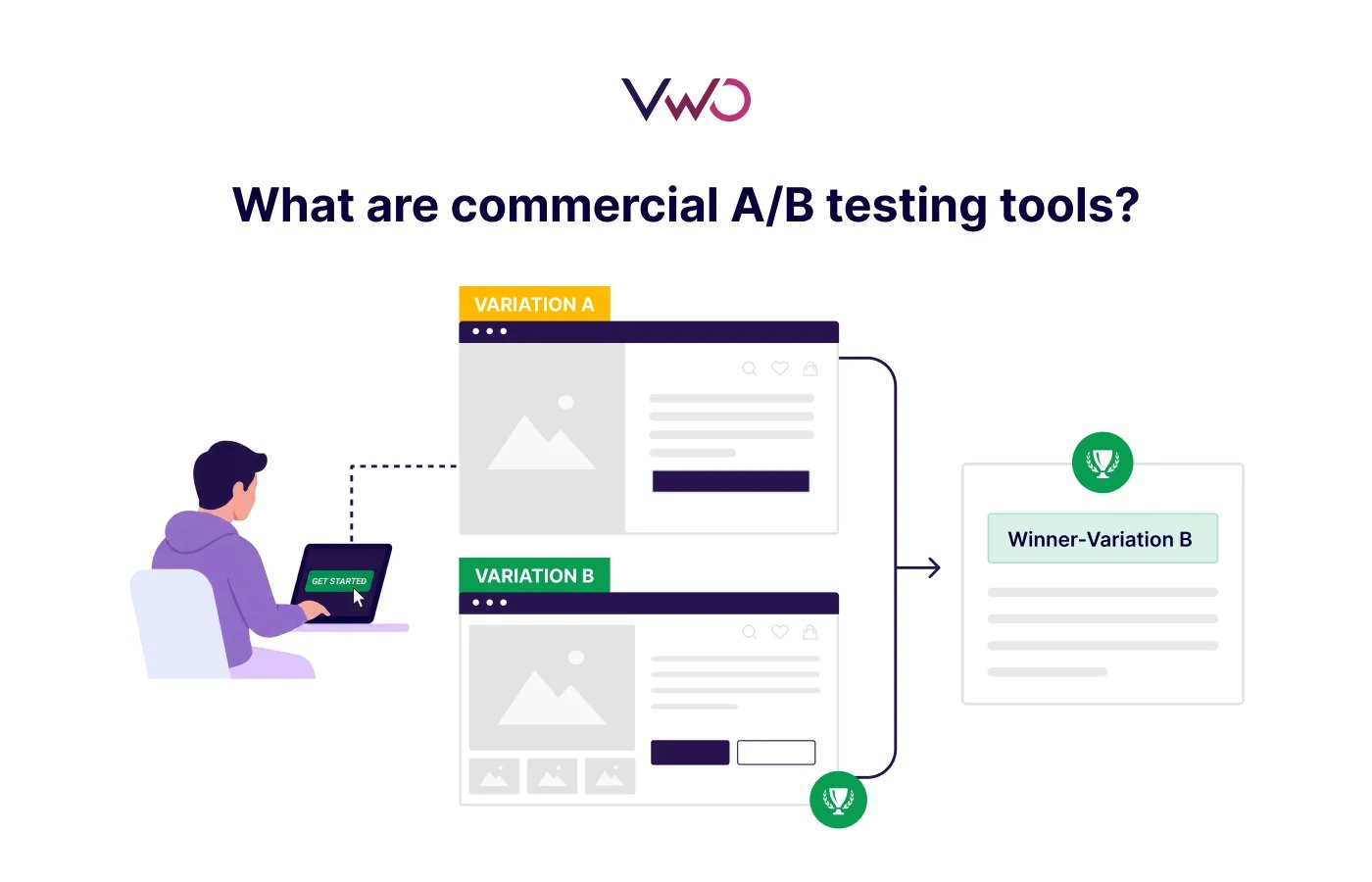
Commercial tools simplify this process by splitting traffic between a control and variations automatically. Teams define a hypothesis within the platform’s interface, create variations using a visual "point-and-click" editor, and set goals. The platform handles the traffic allocation and real-time tracking of user behavior. Critically, commercial platforms include a built-in statistical engine—often utilizing Bayesian or Frequentist methodologies—to calculate significance and declare "winners" automatically, removing the need for an in-house data scientist to interpret raw data.

Comparative Analysis: Engineering Dependency and Total Cost of Ownership
One of the most critical factors in this decision is the Total Cost of Ownership (TCO). While open-source tools do not carry licensing fees, the "hidden" costs are substantial. According to industry benchmarks, maintaining a robust internal experimentation framework can require at least 20% of a dedicated engineer’s time, with senior developer salaries in major tech hubs ranging from $150,000 to $250,000 annually. When factoring in server costs, security patches, and the development of internal reporting dashboards, the "free" tool can quickly exceed the cost of a premium SaaS subscription.
Commercial tools operate on a predictable subscription model. This investment covers not only the software but also the vendor’s responsibility for security updates, server uptime (Service Level Agreements), and scaling. For many organizations, the reduction in engineering dependency is the primary selling point. By allowing product and marketing teams to launch experiments independently, companies can significantly reduce their "time to value," moving from hypothesis to insight in days rather than weeks.
Reporting, Insights, and the Integration Ecosystem
The depth of reporting is another area of divergence. Open-source tools generally lack a native visualization layer, forcing teams to rely on external BI tools to understand experiment results. This often leads to a fragmented view of the user journey. Commercial platforms like VWO differentiate themselves by integrating experimentation with behavioral analytics. These platforms offer heatmaps, session recordings, and form analytics within the same ecosystem, providing a holistic view of why a certain variation performed better, not just that it did.
Integrations also play a vital role. Open-source tools require custom-built connectors for every piece of the tech stack, from CRMs to Customer Data Platforms (CDPs). Commercial tools come with pre-built, "plug-and-play" integrations for popular services like Salesforce, Segment, and HubSpot. This connectivity ensures that experimentation data flows seamlessly across the organization, enriching the overall data strategy without requiring additional code.
The Hybrid Model: Can You Have Both?
A growing trend among enterprise-level organizations is the adoption of a hybrid approach. In this scenario, a company might use an open-source tool or an internal framework for back-end feature flagging and controlled rollouts of core infrastructure changes. Simultaneously, they deploy a commercial tool like VWO for front-end UI/UX testing and marketing experiments.
However, industry experts warn of the risks associated with this strategy. The primary concern is "experiment conflict," where two different tools might target the same user journey, leading to data contamination. If a hybrid model is pursued, strict governance is required. Clear "surface ownership" must be established, and user attributes must be shared across both systems to ensure that a user’s experience remains consistent and that statistical integrity is maintained.
Market Implications and Official Perspectives
The choice of tool also reflects an organization’s stance on data privacy and security. Organizations in highly regulated sectors, such as banking or healthcare, often lean toward open-source or self-hosted commercial solutions to ensure that sensitive user data never leaves their private cloud. Conversely, modern SaaS providers have responded by achieving rigorous certifications, including SOC2 Type II, GDPR, and HIPAA compliance, to mitigate these concerns for commercial users.
Dominic Light, a prominent voice in the experimentation space, recently noted that the value of managed tools lies in their ability to accelerate the pace of learning. "It doesn’t get easier, it just gets faster," Light observed, referring to the fact that while the logic of testing remains complex, platforms like VWO remove the friction of deployment. This sentiment is echoed by thousands of companies that have moved away from manual testing to operationalize their experimentation programs. By reducing the reliance on development cycles, these companies foster a culture of continuous testing where data-driven decisions are made at the speed of the market.
Decision Framework: Which Is Right for You?
The determination of which tool to adopt should be based on three primary pillars: resource availability, user persona, and required velocity.
- Engineering Resources: If an organization has a surplus of engineering talent and a requirement for deep, custom integrations into a proprietary back-end, open-source tools offer the necessary flexibility. However, if engineering time is a bottleneck, a commercial tool is almost always the more efficient choice.
- User Personas: If the primary users of the tool are developers, the code-heavy nature of open source is a non-issue. If the users are product managers, CRO specialists, or marketers, the visual editors and automated reporting of a commercial tool are essential for adoption.
- Experimentation Velocity: Teams that need to run dozens of tests simultaneously across different segments of the site will find the workflows of commercial platforms superior. The ability to iterate without waiting for the next deployment cycle is a competitive advantage that often outweighs the cost of a subscription.
Conclusion: The Future of Experimentation
As we move toward 2026, the distinction between open-source and commercial tools is likely to blur as open-source projects add more "user-friendly" layers and commercial platforms offer more "developer-first" features like robust APIs and headless capabilities. For the majority of growth-focused enterprises, the "convenience" of a commercial platform provides a more scalable path to ROI. By shifting the burden of maintenance and statistical rigor to a specialized vendor, organizations can focus their internal talent on what truly matters: generating insights, innovating on product features, and driving measurable business growth.
In the final analysis, the "best" tool is the one that actually gets used. An open-source tool that sits idle because it is too difficult to implement is far more expensive than a commercial platform that empowers an entire company to test, learn, and evolve. For those ready to turn experimentation into a scalable growth engine, the move toward integrated, high-velocity commercial platforms appears to be the prevailing industry standard.








