

The modern digital consumer journey is rarely a straight line, often characterized by a series of micro-decisions and sudden exits that leave marketers and product managers questioning the efficacy of their funnels. While quantitative analytics platforms like Google Analytics or Mixpanel provide a clear “what” regarding user behavior—identifying exactly where a user dropped off—they are fundamentally incapable of explaining the “why.” To bridge this informational gap, industry leaders are increasingly turning to targeted customer feedback surveys, a methodology designed to capture the qualitative motivations, hesitations, and friction points that drive or derail a conversion.
The Strategic Shift Toward Qualitative Data
The evolution of Conversion Rate Optimization (CRO) has moved beyond simple A/B testing of button colors toward a more holistic understanding of user psychology. According to industry benchmarks, the average e-commerce site suffers from a cart abandonment rate exceeding 70%, while the median SaaS product retains fewer than 3% of its active users after the first two weeks. These figures represent a massive loss in potential revenue that cannot be recovered through traffic acquisition alone.
Industry analysts suggest that the primary cause of these high drop-off rates is a “mediocre” user experience (UX). A recent study by Baymard Institute revealed that 52% of desktop sites and 62% of mobile sites provide a product page experience that fails to meet basic consumer expectations. By implementing specific survey types at critical touchpoints, organizations can diagnose these systemic failures and implement data-backed solutions.
1. Diagnosing Product Page Hesitation
The product page serves as the primary decision-making hub for digital shoppers. When a visitor views a product but fails to add it to their cart, it is rarely a matter of “bad traffic.” Instead, it is usually a sign of information scarcity or unresolved doubt.
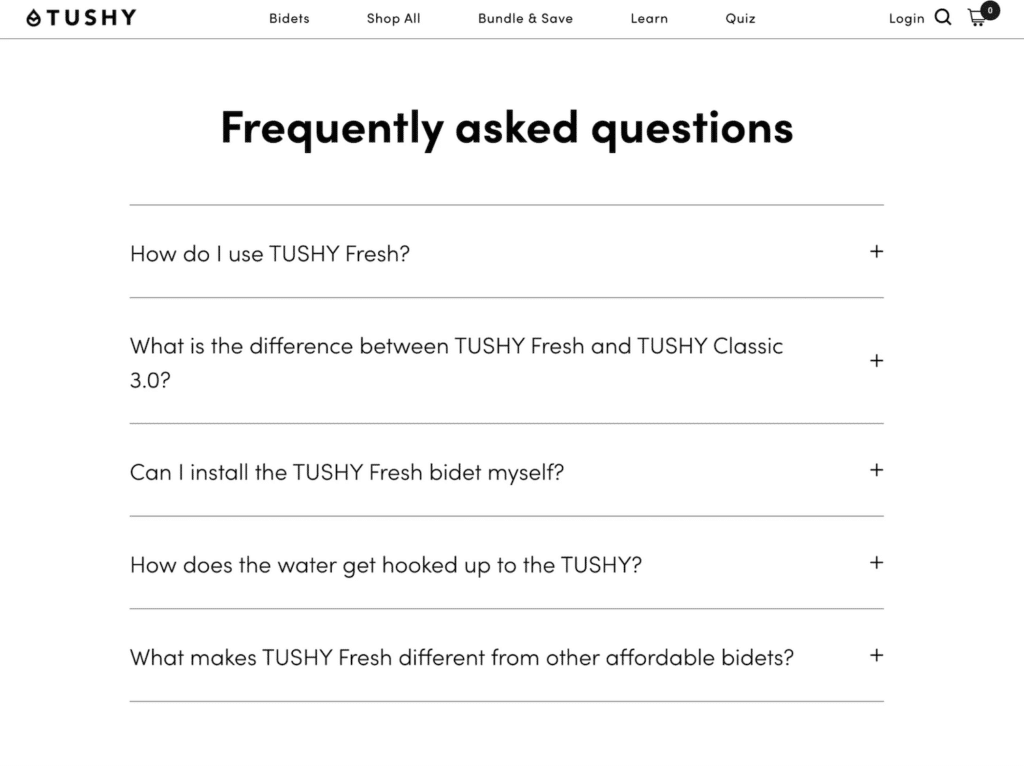
Research indicates that shoppers typically hold back for five primary reasons: high price points relative to perceived value, concerns over shipping costs, lack of social proof (reviews), technical confusion regarding product features, or general uncertainty about product compatibility. For example, the bidet brand TUSHY successfully mitigated these concerns by integrating detailed FAQs and installation guides directly onto their product pages, addressing common “what if” questions before they could lead to a bounce.
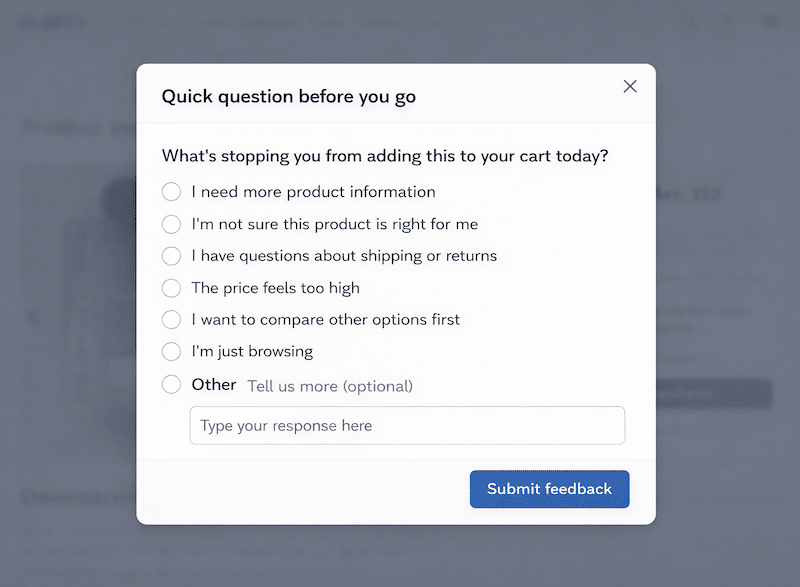
To capture this data, conversion experts recommend a “Quick Exit” survey. The primary question—”What’s stopping you from adding this to your cart today?”—is designed to be low-friction and highly specific. Analysis of these responses often reveals specific gaps in product descriptions. If users frequently select “I have a question about the product,” the brand knows it must enrich its technical specifications or FAQ section.
2. Addressing the $890 Billion Abandoned Checkout Problem
Checkout abandonment remains the single largest leak in the e-commerce revenue bucket. Unlike product page browsers, users who reach the checkout stage have demonstrated high intent. When they leave at this stage, it is typically due to “friction” rather than a lack of interest.
The National Retail Federation (NRF) and Baymard Institute point to a consistent set of checkout barriers:
- Hidden Costs: Unexpected shipping fees or taxes revealed only at the final step.
- Forced Account Creation: The refusal to offer a “Guest Checkout” option.
- Complex Logistics: Overly long forms or a lack of preferred payment methods (e.g., Apple Pay or Klarna).
- Security Anxiety: A lack of trust signals or unclear return policies.
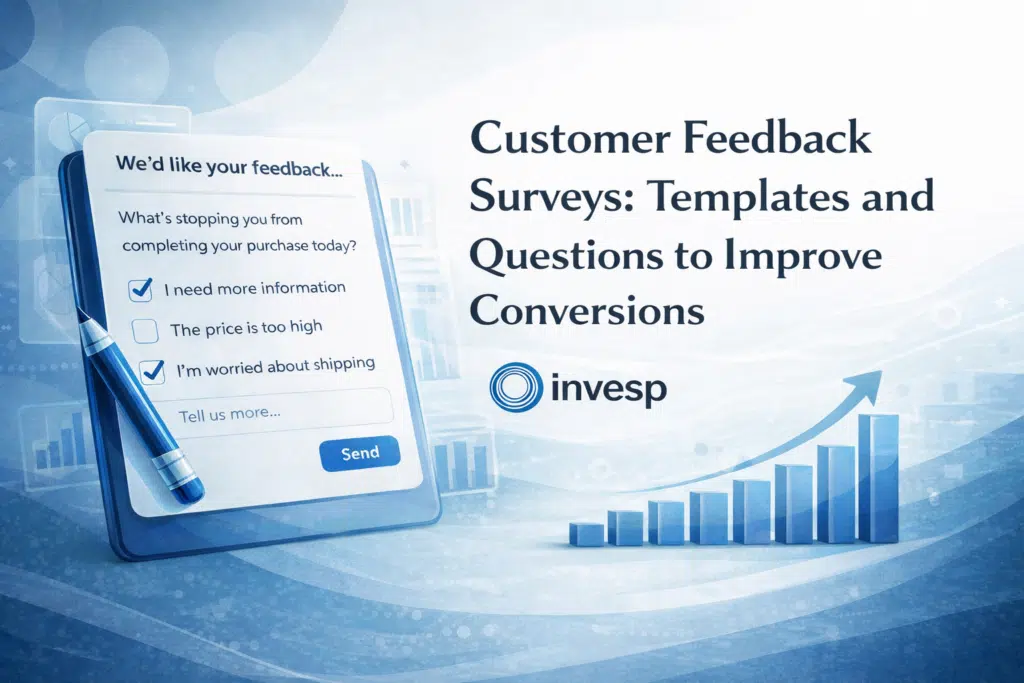
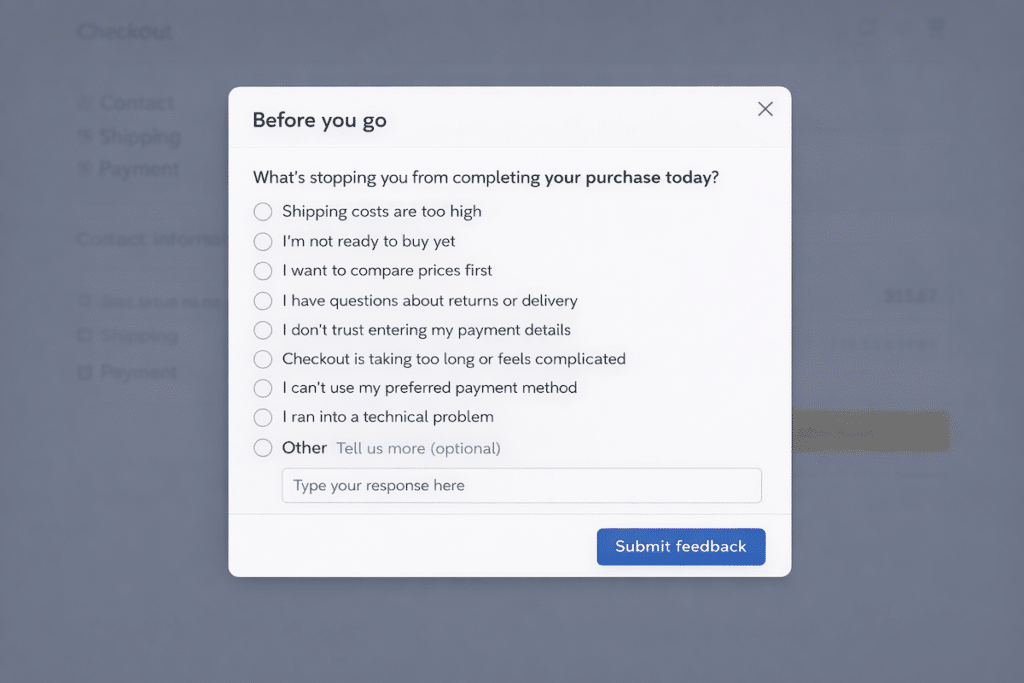
A targeted survey triggered by “exit intent” on the checkout page can salvage these sales. By asking, “What’s stopping you from completing your purchase today?”, brands can identify if their shipping costs are too high or if their mobile UI is malfunctioning. If the data shows that “Shipping is too expensive” is the dominant response, the business may need to reconsider its threshold for free shipping to protect its conversion rate.
3. Leveraging Post-Purchase Attribution in a Cookieless World
As privacy regulations tighten and third-party cookies are phased out, traditional attribution models are becoming less reliable. Marketers are increasingly operating in the “Dark Funnel”—the social interactions, podcasts, and word-of-mouth mentions that analytics tools cannot track.
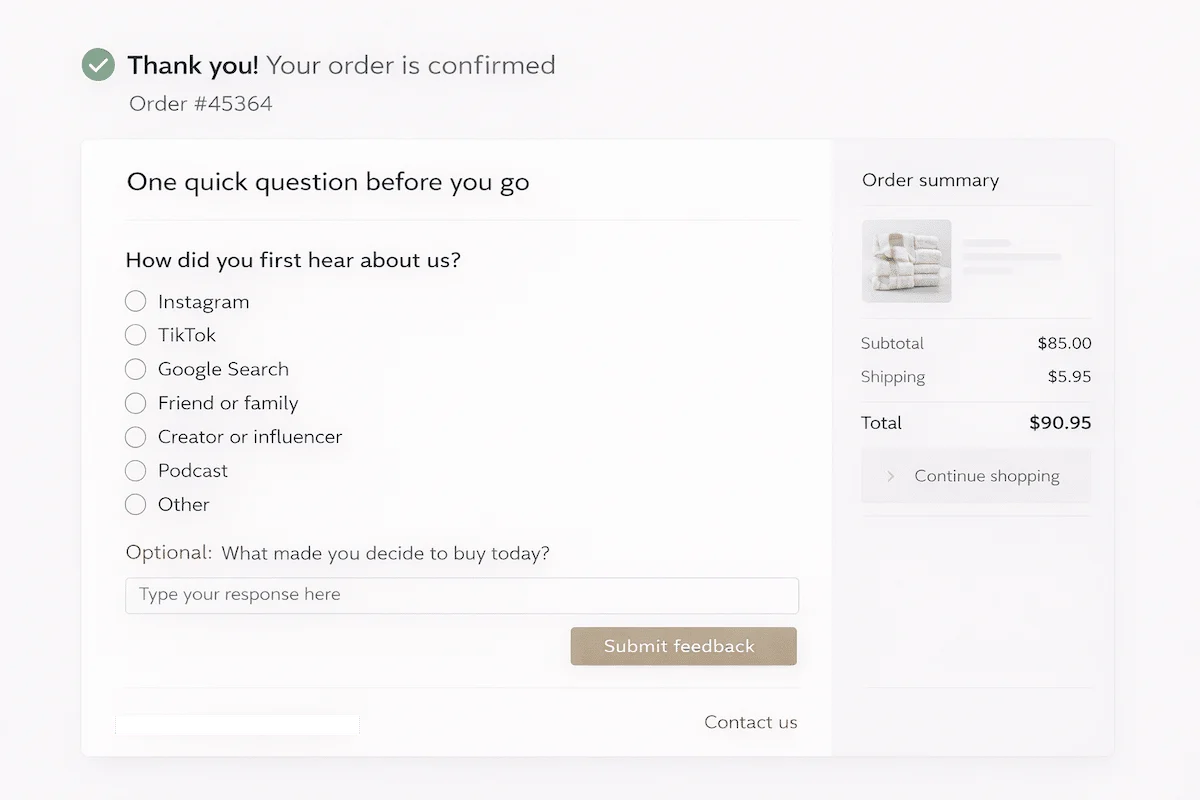
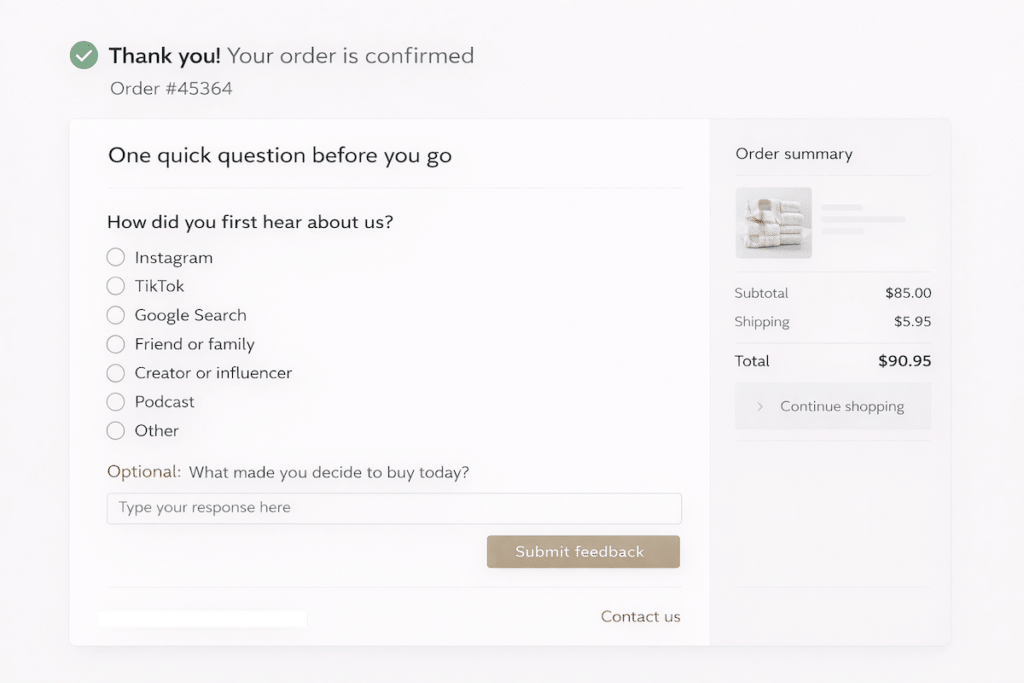
Post-purchase surveys (HDYHAU – “How Did You Hear About Us”) have emerged as a critical tool for budget allocation. Weezie, a luxury towel brand, discovered through post-purchase surveys that 35% of its customers were driven by word-of-mouth recommendations. This insight allowed them to validate their organic growth strategies and invest more heavily in community-building rather than just paid performance marketing.
The timing of this survey is crucial. It must be presented immediately after the order confirmation, while the customer’s motivation is fresh. Beyond attribution, this is also the ideal moment to ask, “What nearly stopped you from buying?” This reveals the “friction” that the customer eventually overcame, providing a roadmap for what needs to be simplified for future, less-determined shoppers.
4. Bridging the SaaS Activation Gap
In the software-as-a-service (SaaS) sector, the “activation” phase is the most dangerous part of the lifecycle. Amplitude’s Product Benchmark Report highlights a stark reality: by day 14, the vast majority of trial users have abandoned the platform. This “activation gap” occurs when the “Time to Value” (TTV) is too long; if a user doesn’t experience a “lightbulb moment” within the first few minutes, they are unlikely to return.
Surveys for trial users should focus on the initial barrier to entry. Asking “What’s stopping you from getting started today?” helps product teams identify if the onboarding process is too complex or if the user simply doesn’t understand the product’s core utility. Common responses like “I don’t have time to set it up” suggest a need for “Done-for-you” templates or automated integrations, whereas “I’m not sure how to use it” indicates a failure in the instructional UI.
5. Managing the Logistics of Returns and Churn
The financial impact of customer churn and product returns is staggering. The NRF projected that approximately 16.9% of all annual retail sales would be returned in 2024, with that number expected to climb to 19.3% for online-specific sales in 2025. In the subscription economy, the cost of acquiring a new customer is significantly higher than retaining an existing one, making churn prevention a top priority.
Post-cancellation or return surveys are essential for identifying “expectation mismatches.” If a customer returns a product because it was “smaller than expected,” the solution is a better size guide, not a marketing campaign. If a subscriber cancels because the service is “too expensive,” it may indicate that the platform has failed to communicate its ongoing value or that its pricing tiers are misaligned with user needs.
Methodology: Crafting Questions for Maximum Utility
The efficacy of these surveys depends entirely on the framing of the questions. Journalistic and psychological standards suggest several best practices:
- Specificity over Breadth: Avoid vague questions like “How was your experience?” instead, ask “What one thing would have made your purchase easier?”
- Low Cognitive Load: Use multiple-choice options to reduce the effort required from the user, but always include an “Other” or “Tell us more” field to capture nuanced qualitative data.
- Neutrality: Ensure questions do not lead the witness. Instead of “How much did you like our checkout?”, use “How would you describe your checkout experience?”
- Timing and Context: A survey should only appear when it is relevant to the user’s current action (e.g., exit intent or order completion).
Broader Implications and Strategic Analysis
The integration of customer feedback surveys into the CRO stack represents a broader shift toward “Zero-Party Data”—information that a customer intentionally and proactively shares with a brand. In an era of increased privacy awareness, this direct line of communication is the most resilient way to build a customer-centric business.
Furthermore, the data gathered from these surveys should not live in a vacuum. The most successful organizations use survey responses to fuel their A/B testing roadmap. If 40% of survey respondents say they didn’t buy because of “lack of trust,” the marketing team can prioritize a test that features prominent security badges or customer testimonials.
In conclusion, while quantitative data tells the story of the past, qualitative survey data provides a roadmap for the future. By systematically asking the right questions at the right moments—on the product page, at checkout, after the purchase, and during the onboarding process—companies can transform friction into flow and convert skeptical browsers into loyal advocates. The goal is not merely to collect feedback, but to build a diagnostic engine that continuously optimizes the user experience based on the actual voice of the customer.







