rifanmuazin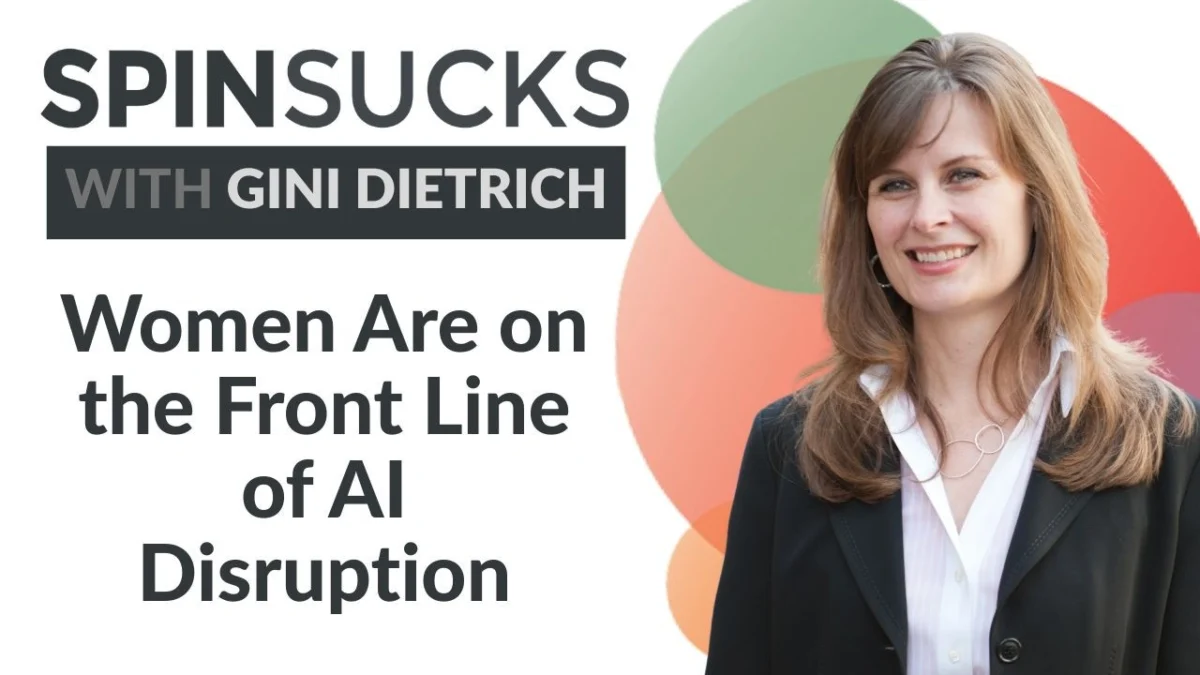
The rapid integration of generative artificial intelligence (AI) into the global economy is precipitating a structural shift that disproportionately impacts female professionals in white-collar industries. While early technological revolutions, such as the industrial and digital eras, largely automated physical labor and routine data entry, the current wave of AI focuses on cognitive tasks, creative output, and strategic communication. Recent public statements by technology leaders, coupled with labor statistics from international organizations, suggest that this disruption is not a peripheral consequence of innovation but a central feature of the technology’s current trajectory. At the heart of this discussion is the assertion that the economic and political leverage of highly educated women—particularly those trained in the humanities—is under direct threat as AI systems begin to replicate functions previously reserved for human expertise in marketing, communications, and administration.
The Catalyst of Public Discourse: The Alex Karp Interviews
The current debate regarding gender-based AI displacement gained significant momentum following a series of candid public statements by Alex Karp, the CEO of Palantir Technologies. During an interview with CNBC, Karp articulated a vision of the future where AI significantly alters the power dynamics of the American electorate and workforce. He suggested that AI would likely reduce the economic and political influence of highly educated, often female, voters who traditionally occupy roles in strategy and the humanities. Conversely, Karp predicted an increase in the economic standing of vocationally trained, often male, workers whose physical and manual trades remain shielded from current automation capabilities.
Karp’s remarks were not isolated. Months prior, during the World Economic Forum in Davos, Karp engaged in a dialogue with BlackRock CEO Larry Fink, during which he stated that AI "will destroy humanities jobs." He specifically targeted the marketability of elite degrees in philosophy and liberal arts, suggesting that unless these professionals possess technical adjacencies, their roles would become increasingly difficult to justify in a post-AI economy. As the leader of a company valued at over $200 billion—a firm that provides critical surveillance and data analytics to the United States military and national security apparatus—Karp’s projections are viewed by analysts not merely as predictions, but as reflections of the strategic goals driving the AI industry.
Chronology of AI Displacement and Gender Exposure
To understand the current state of AI-driven displacement, it is necessary to examine the timeline of generative AI’s evolution and its specific targeting of white-collar functions.
- November 2022 – Launch of ChatGPT: OpenAI’s release of ChatGPT marked the first time sophisticated text-generation was accessible to the general public. This immediately put pressure on entry-level copywriting, customer service, and administrative roles.
- Early 2023 – The Efficiency Drive: Corporations began citing "AI efficiencies" during earnings calls, often as a justification for restructuring departments in marketing and middle management.
- January 2024 – Davos Consensus: High-level discussions at the World Economic Forum shifted from the theoretical potential of AI to the practical reality of job displacement in the "knowledge economy."
- March 2024 – The Gendered Power Narrative: Public interviews, such as those given by Alex Karp, began to explicitly link AI disruption to demographic and political shifts, highlighting a specific impact on female-dominated sectors.
- Mid-2024 to Present – Structural Adjustment: Data from labor organizations began to confirm that the displacement was not hitting the workforce evenly, with white-collar women facing the highest exposure to automation.
Statistical Analysis of AI Exposure by Gender
Data from the International Labour Organization (ILO) provides a factual foundation for the concerns raised by industry observers. According to the ILO, women in high-income countries are nearly three times more likely than men to work in occupations with high exposure to generative AI automation. In the United States, approximately 9.6 percent of women’s employment is considered at high risk for automation potential, compared to only 3.5 percent for men.
This disparity is primarily structural. Approximately 70 percent of working women in the United States are employed in white-collar roles, whereas for men, the figure is closer to 50 percent. Men are more heavily represented in construction, manufacturing, and manual trades—sectors where physical manipulation of the environment is required. Generative AI, by its nature, excels at processing and generating text, images, and code. Consequently, the roles most vulnerable to the first wave of AI adoption include:
- Communications and Public Relations: Press release generation, media monitoring, and sentiment analysis.
- Marketing and Content Creation: Copywriting, social media management, and email campaign execution.
- Administrative and Operations Support: Scheduling, report drafting, and data synthesis.
- Customer Engagement: Sophisticated chatbots replacing human customer service representatives.
Furthermore, a report by McKinsey & Company on "Women in the Workplace" identified a concerning gap in AI adoption support. The study found that only 21 percent of entry-level women reported being encouraged by their managers to use AI tools, compared to 33 percent of men at the same level. This suggests that women are simultaneously more exposed to displacement and less supported in gaining the technical literacy required to navigate the transition.
The Role of Humanities and the Ethics Gap
The targeting of "humanities-trained" professionals is a significant point of contention. The humanities—philosophy, literature, history, and the arts—train individuals in critical thinking, ethical reasoning, and the questioning of institutional power. These are the same skills that many AI researchers argue are essential for the safe and ethical deployment of automated systems.
Research from the Markkula Center for Applied Ethics at Santa Clara University indicates that women hold a disproportionate number of AI ethics roles globally. This concentration is often attributed to the historical presence of women in disciplines that emphasize social impact, relational context, and the long-term consequences of institutional actions. The irony of the current technological trend is that as AI systems scale, the need for human judgment and ethical oversight increases, yet the professionals most qualified to provide that oversight are the ones being told their roles are obsolete.
Critics of the current AI trajectory argue that reducing the power of those trained in the humanities removes a critical "constraint" on corporate and military decision-making. If AI is used to replace the strategists who ask "should we?" rather than just "can we?", the risk of ethical lapses and systemic bias in AI deployment increases significantly.
Strategic Defense: The Integration of Measurable Outcomes
In response to the perceived threat of AI-driven displacement, experts in the communications and marketing fields are advocating for a shift in how professional value is measured and communicated. One prominent framework cited as a defense against automation is the PESO Model® (Paid, Earned, Shared, and Owned media).
The PESO Model® emphasizes an integrated strategy that moves beyond simple content production—which AI can replicate—into the realm of measurable business outcomes. By connecting communications efforts to lead generation, search authority, and community conversion, professionals can demonstrate a level of strategic utility that a chatbot cannot mirror.
Strategic functions that remain difficult to automate include:
- Crisis Management: Navigating the nuances of human emotion and institutional reputation during a scandal or emergency.
- Ethical Governance: Ensuring that AI-generated content and data-driven decisions align with corporate values and legal standards.
- Complex Negotiation: Building long-term relationships and partnerships that require high levels of emotional intelligence and trust.
- High-Level Strategy: Aligning disparate business functions toward a long-term goal that requires understanding shifting cultural and political landscapes.
Broader Impact and Social Implications
The potential reduction in the economic and political power of highly educated women has implications that extend beyond the labor market. If the wealth and influence of this demographic decline, it could lead to a significant shift in political priorities and consumer behavior. The "vocationally trained" demographic mentioned by Alex Karp often holds different political and social perspectives than the "humanities-trained" white-collar demographic. Therefore, the deployment of AI could indirectly function as a tool for social and political restructuring.
Furthermore, the "do more with less" mantra currently pervasive in the corporate sector often serves as a euphemism for headcount reduction and salary compression. When executives believe that AI can perform 80 percent of a strategist’s job, they may be inclined to hire less experienced staff or reduce the department’s budget, even if the quality of the output suffers. This "perception of replaceability" is a primary driver of the current economic pressure on female-dominated sectors.
Conclusion: The Path Toward Professional Resilience
The assertions made by technology leaders regarding the future of work and gendered power dynamics serve as a critical alert for the modern workforce. While the threat of displacement is supported by labor data, the outcome is not yet a historical certainty. The resilience of female-dominated professional sectors likely depends on two factors: the proactive adoption of AI as a strategic tool and the rigorous demonstration of human-centric value that cannot be replicated by algorithms.
Professionals in affected fields are increasingly being urged to lead conversations on AI governance, to master the measurement of their strategic impact, and to insist on the continued relevance of the humanities in a technological age. As the dialogue around AI continues to evolve, the focus remains on whether the technology will be used to empower a broader range of workers or to consolidate power by marginalizing the very disciplines—and people—trained to hold that power accountable.