The Catalyst: Alex Karp’s Public Declarations
The current discourse was intensified following a series of high-profile media appearances by Alex Karp, the CEO of Palantir Technologies. During a televised interview with CNBC in March 2026, Karp provided a candid assessment of how AI technology is expected to redistribute economic and political power. He suggested that AI would likely reduce the leverage of "highly educated, often female" voters, particularly those who have historically aligned with Democratic political platforms. Conversely, Karp predicted an increase in the economic power of "vocationally trained, working-class, often male" voters.
Karp’s comments were not framed as a warning or a sociological concern but rather as a predictable outcome of the technology his company and others are developing. By specifically naming "humanities-trained" workers as the primary group facing disruption, Karp identified a segment of the workforce that relies on critical thinking, persuasive writing, and ethical reasoning—skills that have traditionally been the bedrock of high-level white-collar professions. This interview, which notably occurred during Women’s History Month, signaled a shift in how tech executives discuss the societal impacts of automation, moving away from vague generalities toward specific demographic targeting.
A Chronology of Disruption: From Davos to National Television
The narrative regarding AI’s impact on the humanities did not emerge in a vacuum. It has been built through a series of public statements and industry shifts over the first quarter of 2026.
In January 2026, at the World Economic Forum in Davos, Karp held a discussion with BlackRock CEO Larry Fink. During this session, Karp was blunt about the fate of humanities-related roles, stating that AI "will destroy humanities jobs." He further remarked that individuals who studied philosophy at elite institutions might find their degrees difficult to market unless they possessed additional technical skills. He went as far as to suggest that those who do not anticipate these disruptions are disconnected from reality.
By March 12, 2026, this rhetoric transitioned from elite circles to a broader audience via CNBC. The timing and the platform amplified the message: the technology being sold to national security agencies and global corporations is designed to automate the very tasks that define professional communication and strategic management. This timeline illustrates a consistent business philosophy that views the displacement of educated, white-collar professionals—predominantly women—as a central feature of the AI revolution rather than an unintended side effect.
Supporting Data: The Structural Vulnerability of the Female Workforce
Karp’s predictions are supported by emerging data from international labor organizations and management consultancies. The risk of AI-driven automation is not distributed evenly across the global workforce; it is heavily concentrated in sectors where women have a higher representation.
According to the International Labour Organization (ILO), women in high-income countries are nearly three times more likely than men to be employed in jobs with high exposure to generative AI automation. In the United States, the ILO estimates that women’s risk for high automation potential stands at 9.6 percent, compared to just 3.5 percent for men. This disparity is rooted in the structural composition of the labor market. Approximately 70 percent of working women in the U.S. are employed in white-collar roles, whereas the figure for men is roughly 50 percent.
The roles most susceptible to generative AI include:
- Content creation and copywriting
- Public relations and media monitoring
- Administrative support and operations
- Marketing strategy and email campaign execution
- Customer engagement and social media management
Conversely, men are more heavily represented in vocational trades such as construction, manufacturing, and manual labor—fields that require physical presence and sensory-motor skills that are currently far more difficult and expensive to automate than text-based cognitive tasks.
The AI Adoption Gap: A Compounding Factor
The challenge for women in the workforce is compounded by a documented gap in AI training and support. McKinsey & Company’s "Women in the Workplace" report highlighted a significant disparity in how managers encourage the use of new technologies. Only 21 percent of entry-level women reported that their managers encouraged them to experiment with AI tools, compared to 33 percent of men at the same level.
This gap suggests that women are simultaneously more exposed to the risks of AI displacement and less supported in acquiring the skills necessary to leverage AI as a tool for career advancement. This "double disadvantage" creates a scenario where the group most likely to be replaced by the technology is the least likely to be given the resources to master it, further eroding their economic leverage.
Analysis of Implications: The Value of the Humanities
The targeting of "humanities-trained" professionals raises fundamental questions about the future of organizational ethics and governance. Humanities disciplines—such as philosophy, history, and literature—train individuals to question power structures, analyze long-term consequences, and apply ethical frameworks to complex problems.
In a corporate context, these skills manifest as strategic communication, crisis management, and reputation building. Professionals in these roles often serve as a "conscience" for an organization, asking whether a specific action should be taken, rather than merely whether it can be taken. By automating or devaluing these roles, organizations risk losing the human judgment necessary to navigate the ethical pitfalls of AI deployment.
There is a profound irony in the current trajectory: while AI researchers emphasize the need for "alignment" and "ethical guardrails," the very professionals trained in these areas are the ones being marginalized. Research from the Markkula Center for Applied Ethics indicates that women disproportionately occupy AI ethics roles globally. As their economic and political power is challenged, the voices most likely to advocate for responsible AI use may be silenced.
Official Responses and Inferred Reactions
While many tech leaders have remained silent or offered platitudes about "upskilling," the response from the professional communications and marketing sectors has been one of increasing strategic mobilization. Industry advocates suggest that the response to Karp’s "business plan" should not be panic, but a reassertion of the unique value provided by human strategists.
Professional organizations are beginning to pivot their messaging toward "AI-augmented strategy" rather than "AI replacement." The consensus among strategic leaders is that while a chatbot can produce a "passable" blog post or news release, it cannot manage a corporate reputation, navigate a political crisis, or build long-term community trust. The reaction from women-led professional groups has focused on the necessity of measuring business outcomes to prove that strategic communications is a revenue-driving function, not a cost center.
Strategic Defense: The PESO Model and Beyond
To counter the narrative of obsolescence, professionals in the crosshairs of AI disruption are being urged to adopt rigorous, data-driven frameworks. One such framework is the PESO Model (Paid, Earned, Shared, Owned media), which integrates various communication channels to deliver measurable business results.
By utilizing the PESO Model, a professional can demonstrate:
- Earned Media Impact: How media relations drive qualified leads and brand authority.
- Owned Content Value: How strategic content improves search authority and reduces the need for expensive paid advertising.
- Shared Media Engagement: How community management converts followers into loyal customers.
- Paid Media Efficiency: How targeted distribution amplifies the reach of strategic messaging.
When these outcomes are quantified, the professional moves from being a "text-heavy" worker to a "strategic asset." Strategic functions that directly correlate to business growth and risk mitigation are significantly harder to automate or cut from a budget than isolated creative tasks.
Conclusion: The Path Forward
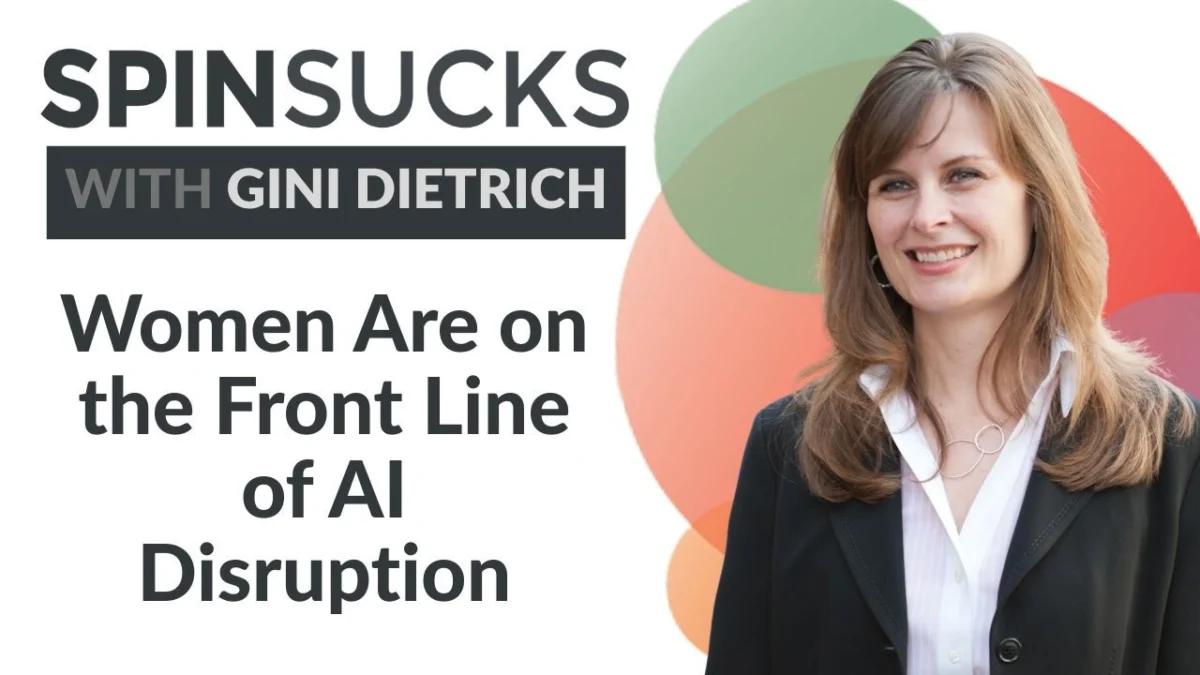
Alex Karp’s assertions serve as a stark reminder that the deployment of artificial intelligence is as much a political and economic strategy as it is a technological one. By naming the groups he expects to lose power, he has provided a roadmap of the challenges ahead for highly educated, white-collar women.
The future of these professions will depend on the ability of workers to lean into the skills that AI cannot replicate: high-level judgment, ethical oversight, and the ability to connect disparate business objectives into a cohesive, human-centric strategy. The disruption predicted by tech leaders is not an inevitability, but a challenge to be met with strategic action. As the labor market continues to evolve, the burden of proof will remain on human professionals to demonstrate that while AI can process information, only humans can provide the wisdom, empathy, and accountability that modern institutions require to survive.