The United States Postal Service (USPS), grappling with a persistent liquidity crisis, is signaling a strategic pivot that could see parcel prices rise even at the expense of overall package volume. This shift in focus, articulated by Postmaster General and CEO David Steiner, underscores the agency’s urgent need to bolster revenue streams and navigate a complex financial landscape. During an open session of the USPS Board of Governors on August 7, 2026, Steiner emphasized the significant impact pricing decisions can have on financial outcomes. "The results this quarter show the strong leverage that pricing can have on results, and pricing is one lever that we have to use now to grow revenue," Steiner stated, highlighting a departure from a volume-centric growth model.
Financial Performance and the Pricing Paradox
The USPS recently reported its third-quarter fiscal year 2026 results, ending June 30, revealing operating revenue of $19.9 billion. This figure represents a 6.1% increase compared to the same period in the previous year. While the agency managed to narrow its net loss to $2.5 billion from $3.1 billion, the underlying financial pressures remain substantial.
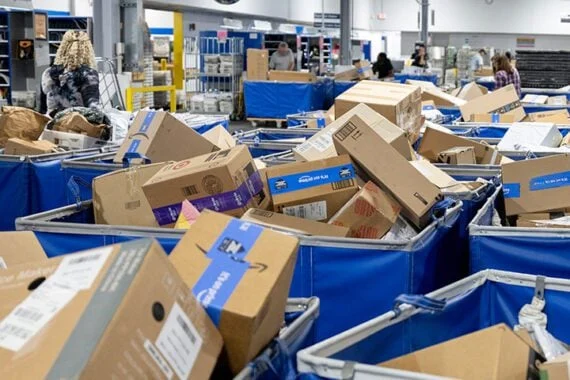
A closer examination of the revenue breakdown reveals a striking trend within the shipping and packages segment. This sector generated $8.25 billion in revenue during the quarter, an increase of $588 million, or 7.7%, year-over-year. Paradoxically, this revenue growth was achieved despite a decline in package volume by 55 million pieces, a 3.4% decrease. This suggests that the USPS is successfully extracting more revenue from each package it handles, a strategy driven by necessity.
"All of the statistics and results show that we have yet to cross the point that we should be changing our pricing strategy, and that we have more price [increases] to take in the marketplace. It would be financially irresponsible of us not to do so," Steiner asserted, underscoring his conviction that further price adjustments are not only justifiable but essential for the organization’s financial health.
This pricing dynamic is not confined to parcel services. Even in market segments where the USPS holds a de facto monopoly, such as First-Class Mail, the trend holds. First-Class Mail revenue saw a 4.3% increase in the quarter, even as its volume decreased by 3.5%. This indicates a broader organizational strategy to leverage pricing power across its service offerings.
Regulatory Constraints and Strategic Flexibility
The USPS operates under a unique regulatory framework that significantly impacts its pricing strategies. While regulations limit the extent to which the Postal Service can aggressively increase prices for its monopoly mail products, it possesses considerably more flexibility than its for-profit competitors in the broader logistics industry.
Steiner drew parallels between the USPS’s pricing approach and that of airlines and grocery stores, where dynamic pricing strategies are employed to maximize financial returns rather than solely focusing on sales volume. "Thus far, applying those basic principles has favored raising prices even though there has been a modest decrease in volumes," Steiner remarked, equating the USPS’s operational realities to those of private industry, albeit operating under distinct governmental mandates. This comparison suggests a deliberate move towards a more market-driven, profit-oriented pricing model, a significant departure from historical operational philosophies.
The Evolving Role of E-commerce in USPS Strategy
For many years, the burgeoning volume of e-commerce packages was viewed as a critical lifeline for the USPS, a potential buffer against the sustained decline in First-Class Mail volume and its associated revenue. This perception was shared by many merchants, who found the USPS an attractive carrier for lightweight residential shipments and deliveries to remote areas where private carriers often impose surcharges. The logic was compelling: e-commerce packages could fill existing trucks, processing facilities, and delivery routes that the USPS was legally obligated to maintain, thereby generating incremental revenue without substantial additional infrastructure costs. The ubiquitous presence of post offices, even in the smallest communities, seemed to naturally lend itself to absorbing these growing delivery demands.
However, Postmaster General Steiner has challenged this long-held assumption, arguing that maximizing parcel volume, or even overall mail volume, is not necessarily synonymous with maximizing revenue. The financial results from the quarter ending June 30, 2026, provide concrete evidence for this assertion. By handling 55 million fewer packages and simultaneously collecting $588 million more from those shipments, the USPS experienced what, from its financial perspective, was a favorable trade-off.
This shift in perspective has profound implications for e-commerce shippers. While the USPS still requires package volume to sustain its operations, the latest financial data indicates that it is no longer willing to accept it "at any price." Steiner’s clear preference for higher revenue generation, even with fewer parcels, signals a potential recalibration of its relationships with e-commerce businesses. This does not necessarily render services like Ground Advantage less attractive, but it does suggest that the USPS may become a more selective and price-sensitive partner. E-commerce merchants should anticipate that the cost of utilizing USPS services for last-mile deliveries might continue to increase, prompting a re-evaluation of their shipping strategies.
An Unsustainable Business Model and the Call for Congressional Action
Beyond immediate revenue-generating strategies, Steiner also articulated a broader concern about the fundamental sustainability of the Postal Service’s business model. He asserted that even with increased price-setting authority and revenue boosts, the core structural issues remain unresolved. "As things stand, the Postal Service is expected to be self-sustaining while, at the same time, fulfilling mandates that are inherently unsustainable and do not cover their costs," Steiner stated.
This points to a deeply entrenched challenge: the USPS is mandated to operate as a self-sufficient entity while simultaneously fulfilling universal service obligations, such as delivering to every address in the nation, regardless of profitability. These dual and often conflicting objectives have led to a prolonged period of financial imbalance. "We need to fix the business model that has produced the 17-year-long imbalance in costs and revenue – and that is going to require Congressional involvement," Steiner declared.
This call for legislative intervention underscores the scale of the problem. The USPS has been operating with a significant gap between its costs and revenues for nearly two decades, a situation that cannot be solely addressed through operational efficiencies or price adjustments. The agency requires systemic reform, which is ultimately dependent on the U.S. Congress.
Implications for E-commerce and the Road Ahead
The USPS’s strategic shift towards prioritizing revenue over volume has significant implications for the e-commerce sector, particularly as the crucial holiday shopping season approaches. Merchants who rely on USPS for cost-effective shipping, especially for last-mile deliveries, should brace for potential further price increases. This could necessitate a reassessment of shipping costs, potentially leading to adjustments in pricing for consumers or a greater reliance on alternative carriers.
The historical advantage of the USPS in offering affordable shipping to all areas, including rural and remote locations, might be challenged as pricing becomes a more dominant factor. E-commerce businesses may need to diversify their shipping partners and explore new strategies to manage rising logistics costs.
Furthermore, Steiner’s assertion about the unsustainable business model highlights the ongoing uncertainty surrounding the long-term financial viability of the USPS. While price increases can provide short-term relief, they do not address the underlying structural deficits. The expectation of continued price hikes, especially in the lead-up to peak shipping periods, suggests that the USPS is employing a pragmatic, albeit potentially unpopular, approach to manage its immediate financial challenges while advocating for more fundamental reforms.
The USPS’s current trajectory suggests a difficult balancing act: maintaining its universal service obligation while striving for financial solvency in an increasingly competitive and dynamic market. The strategic focus on revenue maximization through pricing, even at the cost of volume, represents a significant evolutionary step for the venerable institution, one that will likely reshape its relationship with businesses and consumers alike in the years to come. As the agency navigates this complex financial terrain, its future operational strategies and the legislative solutions pursued by Congress will be critical in determining its long-term sustainability and its continued role in the nation’s commerce.