Performance Max campaigns, a cornerstone of Google Ads’ automated advertising solutions, often report stellar returns, leading many e-commerce businesses to believe they’ve unlocked a secret to unprecedented growth. However, a closer examination reveals that this impressive performance is frequently a sophisticated reporting artifact, masking a significant "brand leak" where the system inadvertently captures and attributes demand that would have arrived organically, regardless of ad spend. This phenomenon inflates campaign metrics, distorts strategic decision-making, and ultimately obscures the true effectiveness of an advertiser’s non-brand marketing efforts. Fortunately, recent enhancements to the Performance Max platform now equip advertisers with the tools to identify and rectify this issue, allowing for a more accurate understanding of advertising ROI and enabling smarter budget allocation.
The "brand leak" occurs because Performance Max, at its core, is a bidding system designed to achieve a specific return target. In the e-commerce landscape, brand searches – queries containing a company’s name or its associated products – typically exhibit exceptionally high conversion rates and lower cost-per-click compared to generic product searches. When an advertiser sets a return target for a Performance Max campaign without explicitly excluding brand terms, the algorithm naturally gravitizes towards this highly efficient inventory. It identifies that bidding on a store’s own name is the cheapest and most direct path to achieving the desired return. Consequently, a significant portion of the reported campaign success is not a result of generating new demand, but rather capturing existing demand that already existed due to the brand’s established recognition and organic search presence. This creates a misleading blended return figure, where the high-converting brand traffic masks potentially underperforming non-brand efforts.
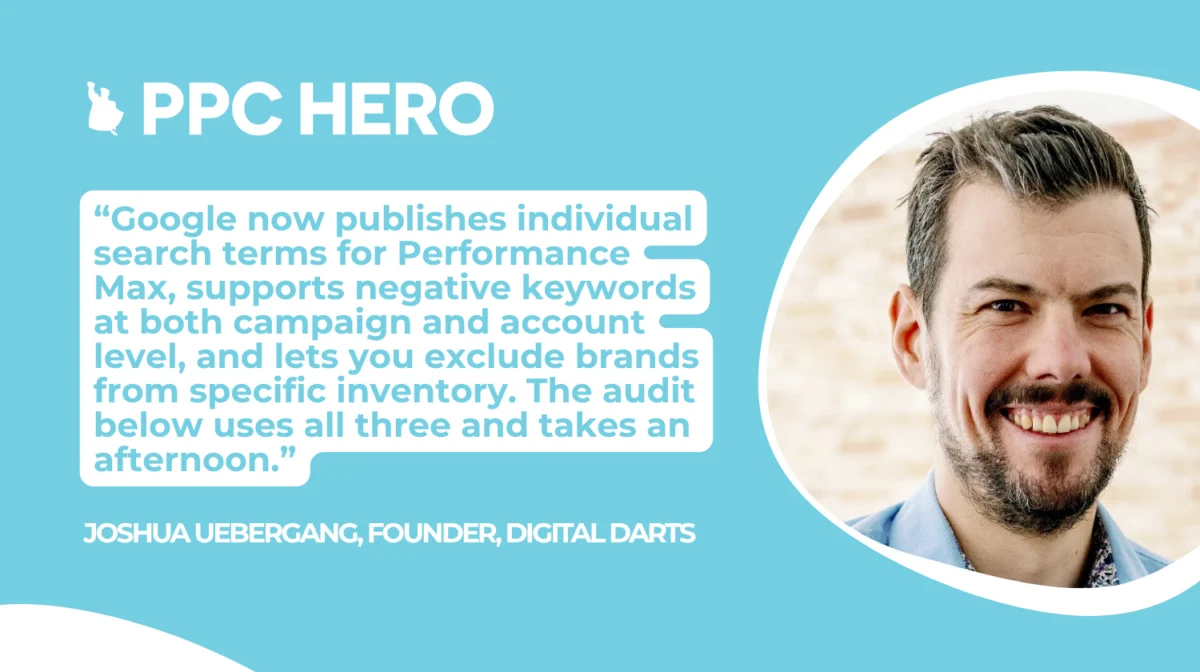
Historically, isolating this "brand leak" required complex and time-consuming methods, such as geo-holdout tests and a considerable degree of patience from clients willing to invest in granular data analysis. However, Google has progressively introduced features that democratize this diagnostic process. The introduction of individual search term reporting for Performance Max campaigns, the ability to implement negative keywords at both the campaign and account levels, and the option to exclude specific brands from inventory represent significant strides in advertiser control. These tools, when utilized effectively, allow for a comprehensive audit of brand performance within Performance Max campaigns, often achievable within a single afternoon.
The Mechanics of the Brand Leak
The genesis of the brand leak is not an act of malfeasance by Google, but rather a logical consequence of how automated bidding systems operate. Performance Max is meticulously engineered to meet predefined performance objectives. When an advertiser sets a return-on-ad-spend (ROAS) target without providing specific guardrails around branded search terms, the system logically prioritizes the most cost-effective inventory. For most established e-commerce businesses, queries directly related to their brand name, including common misspellings and variations, represent a highly convertible and inexpensive source of traffic. By tapping into this existing brand equity, Performance Max can achieve high reported returns with minimal effort in generating new customer interest.
The insidious nature of this phenomenon lies in its impact on reported metrics. The overall campaign return becomes a conflation of genuinely acquired demand through innovative marketing strategies and pre-existing demand driven by brand recognition. This blended figure is inherently flawed as a target for future optimization. Every subsequent decision, from budget allocation to campaign adjustments, is made based on a distorted perception of performance, where a portion of the reported success is, in fact, a measurement of the brand’s existing equity rather than the campaign’s incremental impact. This can lead to misguided investments, where budgets are increased on campaigns that are not genuinely driving incremental growth but are merely capitalizing on organic brand interest.
Step 1: Unearthing the Search Terms
The first critical step in dismantling the brand leak illusion is to meticulously examine the search terms report within Performance Max campaigns. Advertisers can access this by navigating to the "Campaigns" menu, then selecting "Search terms," and subsequently switching the dropdown to the Performance Max search terms report. This report, which extends back to March 2023, provides granular insights into the individual search queries that triggered ads, alongside their corresponding landing pages and ad formats. It is crucial to segment this data by ad format, distinguishing between Shopping ads and text ads, as the strategies for addressing each may differ.
The sheer volume of data in a typical Performance Max search terms report can be overwhelming. To manage this efficiently, advertisers should leverage regular expressions (regex) to automate the classification of brand-related terms, including common misspellings, plural forms, and spacing variations. Manually sifting through thousands of rows is an exercise in futility that will quickly erode patience and compromise accuracy. A practical approach involves categorizing search terms into five distinct buckets:

- Pure Brand: This category encompasses the brand name itself, along with any phonetic misspellings, pluralizations, or variations in spacing. Examples include "CompanyName," "Compny Name," "CompanyNames."
- Brand Plus Product: This includes searches where the brand name is combined with specific product categories or types. For instance, "CompanyName running shoes" or "CompanyName women’s dresses." These still represent a strong indication of pre-qualified demand where the consumer has already demonstrated intent for the brand’s offerings.
- Brand Plus Qualifier: This category captures searches where the brand name is paired with terms indicating further research or customer service inquiries. Examples include "CompanyName reviews," "CompanyName discount code," "CompanyName sizing," "CompanyName returns," or "CompanyName login." These often signify existing customers or individuals actively seeking information about the brand’s products or services.
- Brand Plus Competitor: This represents genuinely contested search queries where the brand name is used in conjunction with competitor names. These are distinct and should be analyzed separately as they indicate direct competition for market share.
- Non-Brand: This broad category encompasses all search terms that do not contain the brand name or any direct association with it. This is the segment that represents truly new demand generation.
It is important to note a significant caveat when analyzing this report: it primarily covers Search and Shopping inventory. It offers no visibility into Display, YouTube, or Discover placements. Therefore, the calculated brand share of cost and conversion value pertains specifically to search-originated traffic, which is the primary arena for the brand leak. This analysis does not represent a holistic view of the campaign’s overall brand impression.
Step 2: Quantifying the Leak in Financial Terms
The most impactful audits transcend reporting a simple "brand share of cost." They delve into two critical metrics: brand share of cost and brand share of conversion value. Understanding what portion of the ad spend is allocated to branded terms is essential, but equally, if not more important, is understanding how much of the reported campaign success is attributed to these terms.
Once these figures are established, the next step is to simulate the campaign’s performance without the influence of brand demand. This involves stripping out both the cost and conversion value associated with branded search terms. The remaining return on investment for the non-brand traffic represents the campaign’s genuine contribution to generating new demand. This adjusted figure is the only accurate metric against which performance targets should be set.
The disparity between the blended, overall campaign return and the non-brand specific return is often where the most significant strategic discussions emerge. A Performance Max campaign that appears to be delivering a comfortable, even impressive, blended ROAS can, upon closer inspection, be operating well below the break-even point when the cost of brand terms is removed. This revelation is particularly impactful because it highlights a blind spot in traditional reporting, where the true performance of new customer acquisition efforts remains obscured.
To corroborate these findings and provide irrefutable evidence, advertisers should cross-reference the data with external sources. A comparison of paid brand clicks within Google Ads against brand search volume data from Google Search Console can be highly illuminating. If paid brand clicks are observed to be steadily increasing while the total brand search volume remains flat or declines, it serves as a clear indicator that the increased ad spend is not driving incremental interest but rather cannibalizing existing organic visibility. This data point is often the most compelling evidence for the existence of a brand leak.
Step 3: Evaluating the Necessity of Plugging the Leak
While the identification of a brand leak suggests an opportunity for optimization, it is crucial to recognize that not all spend on branded search terms constitutes waste. A comprehensive audit should not recommend an outright cessation of branded search advertising without careful consideration. There are specific scenarios where paying for one’s own brand name within a Performance Max campaign can be strategically defensible:
- Competitive Landscape: In highly competitive markets where rivals actively bid on competitor terms, maintaining a presence on one’s own brand name can serve as a defensive measure to protect market share and prevent competitors from capturing valuable traffic.
- Brand Protection: For brands that have invested heavily in building recognition and reputation, running ads on their own name can act as a safeguard against counterfeit products or misleading information that may appear in organic search results. It ensures that consumers are directed to the official source.
- New Product Launches: When introducing new products or services, running branded campaigns can help amplify awareness and drive immediate traffic to these offerings, particularly if the brand name itself is associated with innovation or quality.
- Customer Loyalty and Retention: For existing customers who may be searching for specific product support, account information, or re-order details, branded ads can provide a direct and efficient route to the necessary resources, fostering loyalty and repeat business.
The ultimate objective of this audit is not necessarily to eliminate all spending on branded searches. Instead, it is to ensure that such spending is deliberate, controlled, and strategically allocated. Advertisers should aim to pay for branded searches at a predetermined price, within a clearly defined line item, rather than allowing the automated bidding system to dictate the spend accidentally. This provides transparency and allows for a more informed evaluation of the return on investment for this specific segment of advertising.
Step 4: Implementing Strategic Exclusions
To effectively plug the brand leak and regain control over branded search spend, advertisers can leverage three primary control mechanisms within the Google Ads platform. Each of these tools targets different inventory types, and selecting the incorrect one can lead to unexpected and inexplicable results.

- Campaign-Level Negative Keywords: This is the most direct and granular method for excluding specific keywords from a Performance Max campaign. By adding branded terms as negative keywords at the campaign level, advertisers can prevent the campaign from bidding on those specific queries. This is particularly effective for precise control over which branded terms are excluded.
- Account-Level Negative Keywords: For advertisers managing multiple campaigns, applying negative keywords at the account level ensures consistent exclusion across all campaigns, including Performance Max. This is ideal for broader brand protection and preventing accidental spend on any variation of the brand name across the entire account.
- Brand Exclusion Lists: This feature allows advertisers to create lists of specific brands that should be excluded from certain ad placements. While often associated with managing inventory across different ad types, it can be utilized to exclude the advertiser’s own brand from specific Performance Max inventory if the platform’s settings permit this specific application for owned brands.
The sequence in which these controls are implemented is paramount to success. The recommended approach is to first create and launch a dedicated branded campaign. This new campaign should be meticulously optimized to capture and serve branded search traffic effectively. Once this branded campaign is confirmed to be operational and serving ads as intended, the exclusion of branded terms from the Performance Max campaign can then be applied. This phased approach ensures that valuable branded traffic is not inadvertently handed over to competitors or lost entirely. Attempting to exclude brand terms from Performance Max before establishing a dedicated brand campaign can result in a significant drop in visibility on branded searches, allowing other advertisers to capture that prime real estate on the search results page.
The subsequent optimization of the remainder of the advertising account is crucial for maximizing the impact of any recovered budget. Comprehensive strategies for structuring Performance Max campaigns, particularly for e-commerce platforms like Shopify, are detailed in separate resources, offering a holistic approach to maximizing advertising ROI beyond just addressing the brand leak.
Step 5: Sustained Measurement for Accurate Outcomes
A common pitfall when implementing brand exclusions is the premature reversal of these changes due to short-term fluctuations in campaign performance. It is an expected outcome that overall campaign return will likely fall immediately after brand terms are carved out. This dip should not be interpreted as a failure but rather as an accurate reflection of the campaign’s performance without the influence of brand demand. The critical error occurs when individuals monitoring campaign dashboards on a daily or weekly basis observe this decline and revert the changes, thereby reintroducing the brand leak.
To mitigate this, it is imperative to establish a clear measurement framework before any modifications are made. This involves defining a fixed measurement window, ideally at least four weeks, and meticulously recording key account-level metrics such as total spend, total revenue, total orders, and new-customer orders. This window should be adhered to rigorously, with no shortening or arbitrary adjustments.
Following the implementation of brand exclusions and the designated measurement period, two primary outcomes can be observed:
- Stable Total Revenue with Decreased Spend: If total revenue remains consistent or shows minimal decline while total ad spend decreases, it strongly indicates that the previously spent budget on branded terms was primarily capturing demand that would have materialized organically. The campaign is now operating more efficiently by focusing on incremental growth.
- Reduced Total Orders Correlating with Removed Brand Conversions: If the total number of orders decreases by an amount roughly equivalent to the number of brand-attributed conversions removed, it suggests that those branded orders were indeed influenced by the advertising. In such cases, the solution is not to reinstate the brand terms within Performance Max but rather to deliberately allocate budget to a separate, dedicated brand campaign, ensuring that this valuable segment of demand is captured strategically and efficiently.
While a rigorous approach to performance measurement might involve sophisticated incrementality testing, such as geo-holdouts, the methods described above offer a practical, account-level solution that can be implemented immediately. These techniques allow advertisers to accurately assess the impact of Performance Max on their business without the need for complex experimental designs. The underlying principle, as previously highlighted in research on running Performance Max against brand, is that the incremental value of such campaigns is often negligible.
The Unveiling of Performance Max’s True Impact
Across numerous e-commerce accounts audited, a consistent pattern emerges: the brand share of Performance Max cost is often smaller than advertisers initially fear, while the brand share of conversion value is significantly larger than anticipated. This seemingly counterintuitive combination is precisely what renders the brand leak so difficult to detect. The reported spending may appear reasonable, but the reported performance is disproportionately buoyed by demand that the business already possessed.
Over the past two years, Google has made substantial advancements in providing advertisers with the necessary transparency to address these issues. The introduction of features that enable granular control and detailed reporting has fundamentally altered the landscape for Performance Max optimization. However, the adoption of these critical tools by a vast majority of advertisers has been surprisingly slow. The capabilities are now readily available, yet many businesses continue to operate under the illusion of high performance, unaware that their perceived success is largely a byproduct of their existing brand equity. The continuous stream of Performance Max updates, when viewed through the lens of enhanced control and visibility, paints a picture of an evolving platform that empowers advertisers to reclaim agency over their advertising spend and achieve genuine, incremental growth.