


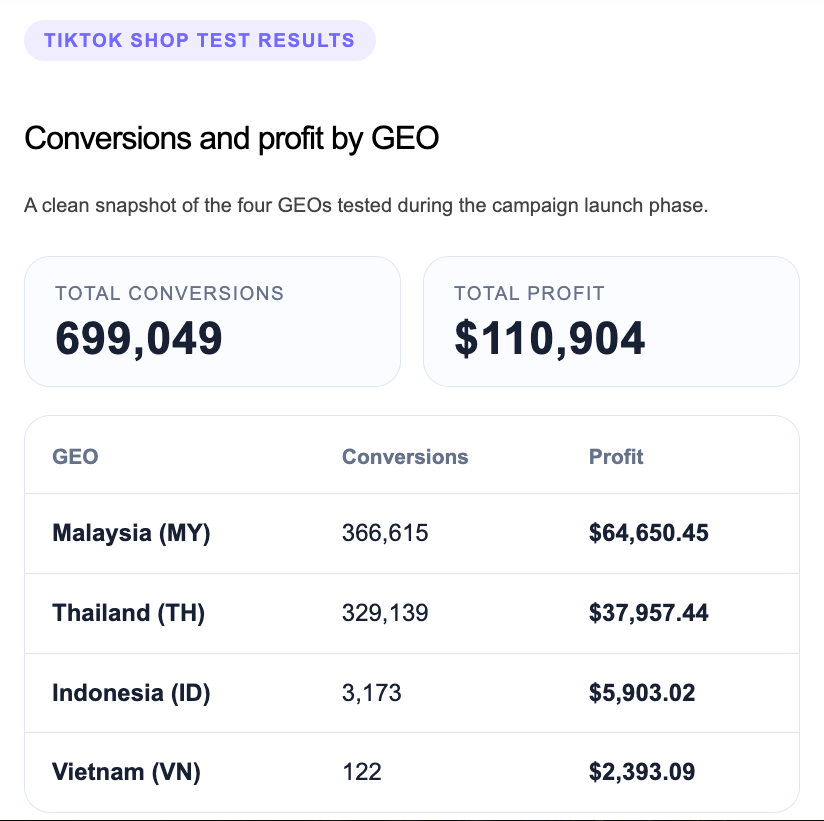
TikTok Shop is rapidly emerging as a pivotal platform for e-commerce affiliates and media buyers, particularly within Asian markets where social commerce, creator-driven product discovery, and seamless in-app purchasing are deeply integrated into consumer habits. A compelling case study published by PropellerAds highlights the significant potential of this ecosystem, revealing how one advertiser achieved over 699,000 conversions and generated more than $110,000 in net profit during the first quarter of 2026. This success was attributed to a strategic combination of TikTok Shop offers and the deployment of Popunder traffic across carefully selected Asian geographical targets.
The groundbreaking results underscore a growing trend: the synergy between emerging social commerce platforms and established yet adaptable advertising channels can unlock substantial revenue streams for performance marketers. This case study offers a granular look into the campaign’s architecture, revealing a data-driven approach that prioritized broad testing before aggressive optimization, a strategy that proved highly effective in identifying and capitalizing on high-converting segments of the market.
The Anatomy of a Successful TikTok Shop Campaign
The advertiser’s campaign was meticulously structured, encompassing a diverse range of Asian geographical locations and leveraging a combination of traffic and bidding strategies available through the PropellerAds platform. The initial phase was characterized by broad testing, a crucial step designed to identify the most potent conversion signals across various traffic sources, devices, and regions. This approach allowed the advertiser to gather comprehensive data before narrowing their focus and implementing more refined optimization techniques.
The campaign’s geographical focus included Malaysia, Thailand, Indonesia, and Vietnam. These regions were chosen due to their robust digital economies and high adoption rates of social media and e-commerce. Within these markets, the advertiser experimented with several traffic and bidding methods to ascertain the most effective pathways to conversion.
The primary traffic source utilized was Popunder traffic, a less conventional but often highly effective method for driving traffic to offer pages. This format, which opens a new browser window or tab behind the user’s current one, can be particularly effective when combined with compelling offers and targeted audiences. Bidding strategies employed included "CPA Goal" (Cost Per Acquisition), where advertisers set a target cost for each conversion, and "SmartCPM" (Cost Per Mille), an intelligent bidding method that optimizes for impressions at a target cost. Additionally, "High Intent CPM" was used, a strategy designed to target users who have demonstrated a strong propensity to convert.
A Phased Approach: Broad Testing Precedes Optimization
A cornerstone of this campaign’s success was its deliberate departure from immediate, aggressive optimization. Instead, the strategy emphasized a comprehensive broad testing phase. The advertiser initiated Run-On-Network (RON) campaigns, a method that casts a wide net across various traffic sources, devices, and geographical segments. The primary objective of this initial phase was to amass a substantial volume of conversion data. This data served as the bedrock for subsequent, more targeted optimization efforts.

Once sufficient data was collected, the optimization process began, focusing on several key areas:
- Traffic Source Refinement: Identifying and scaling the most effective traffic sources that delivered high-quality leads and conversions. This involved analyzing conversion rates, CPA, and overall ROI from different sources.
- Device Optimization: Analyzing performance across desktop, mobile, and tablet devices to allocate budget and focus efforts on the platforms where users were most likely to convert.
- Creative Testing: Iteratively testing different ad creatives, landing pages, and offer presentations to identify the combinations that resonated most strongly with the target audience. This included variations in calls-to-action, visual elements, and value propositions.
- Bid Strategy Adjustment: Fine-tuning bidding strategies based on real-time performance data. This could involve adjusting CPA goals, optimizing CPM bids for specific audience segments, and dynamically allocating budget to the most profitable campaigns.
- Audience Segmentation: Developing more granular audience profiles based on the data gathered during the broad testing phase, allowing for more personalized and effective targeting.
This methodical approach, prioritizing data acquisition and analysis before resource-intensive optimization, allowed the advertiser to avoid costly missteps and build a campaign foundation rooted in proven performance metrics.
Unveiling the Top-Performing Geographies
The case study identified Malaysia and Thailand as the standout performers in the campaign. These regions demonstrated exceptional responsiveness to the TikTok Shop offers, driven by a combination of cultural affinity for social commerce and effective campaign execution.
In Malaysia, the advertiser observed a Cost Per Acquisition (CPA) ranging from an impressively low $0.04 to $0.20. This remarkable efficiency, coupled with conversion rates that reached up to 10%, underscores the market’s receptiveness and the campaign’s strong alignment with consumer behavior. Similarly, Thailand showcased robust performance, with conversion rates also peaking at around 10% in certain segments.
Indonesia and Vietnam, while not reaching the same heights as Malaysia and Thailand in this particular campaign, still contributed significantly to the overall results. The data from these markets provided valuable insights into regional nuances and opportunities for future campaign refinements. The image provided in the case study visually corroborates these findings, displaying a clear breakdown of conversions and profit by geographical region, with Malaysia and Thailand leading the charts.
The success in these regions can be attributed to several factors. Firstly, the inherent social commerce culture in Southeast Asia means that users are already accustomed to discovering and purchasing products directly through social media platforms. TikTok’s massive user base and its algorithm, which excels at surfacing relevant content, create an ideal environment for product discovery. Secondly, the advertiser’s strategic use of Popunder traffic, when combined with compelling offers, effectively captured user attention and directed them to conversion points within the TikTok Shop ecosystem.
The Strategic Significance of TikTok Shop for E-commerce Affiliates
TikTok Shop’s growing prominence is a significant development for e-commerce affiliates, largely due to its streamlined purchase flow. Users can seamlessly discover products embedded within engaging content, click on product tags, and complete their transactions without ever leaving the TikTok application. This frictionless experience significantly reduces the traditional barriers to online shopping, making it particularly effective for impulse-driven product categories such as beauty, fashion, consumer electronics, and lifestyle goods.
The case study further highlights the enduring relevance of alternative traffic sources in the e-commerce landscape. Formats like Popunder and Push notifications are actively being explored and utilized by advertisers seeking to scale their campaigns beyond the more saturated and often more expensive standard social media and search channels. This is especially true in rapidly expanding e-commerce markets across Asia, where innovative advertising approaches can yield superior returns.
The ability to integrate e-commerce directly into the content consumption experience aligns perfectly with how modern consumers engage with digital media. For affiliates, this translates into higher potential conversion rates and a more engaged user journey. By leveraging the viral nature of TikTok content and the platform’s built-in shopping functionalities, affiliates can tap into a vast and active consumer base looking for immediate gratification and convenient purchasing options.
Key Takeaways for Affiliates from the PropellerAds Case Study
The insights derived from this PropellerAds case study offer a valuable roadmap for affiliates looking to explore and capitalize on e-commerce offers, particularly those integrated with TikTok Shop. Several key conditions and strategies emerge as crucial for success:
- Embrace Social Commerce Integration: Understanding and leveraging the unique features of platforms like TikTok Shop, which facilitate in-app purchasing, is paramount. Affiliates should focus on offers that benefit from this seamless user experience.
- Strategic Traffic Channel Exploration: While mainstream channels are important, exploring and testing alternative traffic sources like Popunder and Push notifications can unlock significant growth potential, especially in emerging markets. These channels, when used judiciously, can offer cost-effective access to large audiences.
- Data-Driven Broad Testing: The principle of broad testing before aggressive optimization is a critical lesson. Gathering extensive data across various parameters allows for informed decision-making and minimizes the risk of investing in underperforming strategies.
- Geographical Targeting Precision: Identifying and focusing on high-performing geographical markets is essential for maximizing ROI. The case study demonstrates that understanding regional consumer behavior and market maturity is key.
- Conversion Rate Optimization Focus: The ability to achieve high conversion rates (up to 10% in this study) highlights the importance of compelling offers, well-designed landing pages, and a deep understanding of the target audience’s motivations.
- Cost-Effective Acquisition: Achieving low CPAs, as seen in Malaysia and Thailand, is a testament to effective campaign management and the utilization of the right traffic and bidding strategies. Affiliates should constantly strive for efficiency in their acquisition costs.
Exploring PropellerAds’ E-commerce Solutions
For performance marketers and affiliates keen on venturing into or scaling their e-commerce campaigns, PropellerAds offers a comprehensive suite of traffic formats and advanced optimization tools. The platform is designed to support affiliate and performance marketing endeavors by providing access to diverse ad formats, including Push notifications, Native ads, Popunders, and Interstitials. These tools are complemented by sophisticated campaign management and optimization capabilities, enabling advertisers to fine-tune their strategies based on real-time data and achieve their desired performance benchmarks.
PropellerAds’ commitment to supporting e-commerce growth is evident in its continuous development of features aimed at enhancing campaign efficiency and profitability. This includes intelligent bidding algorithms, detailed analytics dashboards, and dedicated support for advertisers navigating the complexities of the digital advertising landscape. By providing a robust infrastructure and a data-centric approach, PropellerAds empowers affiliates to effectively leverage platforms like TikTok Shop and explore the vast potential of global e-commerce markets. The platform’s case study serves as a powerful endorsement of its capabilities and its role in facilitating significant e-commerce success stories.
The implications of this case study extend beyond the immediate financial gains. It signals a maturation of the social commerce landscape, where sophisticated affiliate marketing strategies can be effectively deployed to drive substantial business outcomes. As platforms like TikTok continue to innovate and integrate commerce functionalities, the opportunities for affiliates who can master these new ecosystems will undoubtedly grow. The blend of creator influence, seamless in-app purchasing, and data-driven advertising represents a potent formula for the future of online retail.








