admin
admin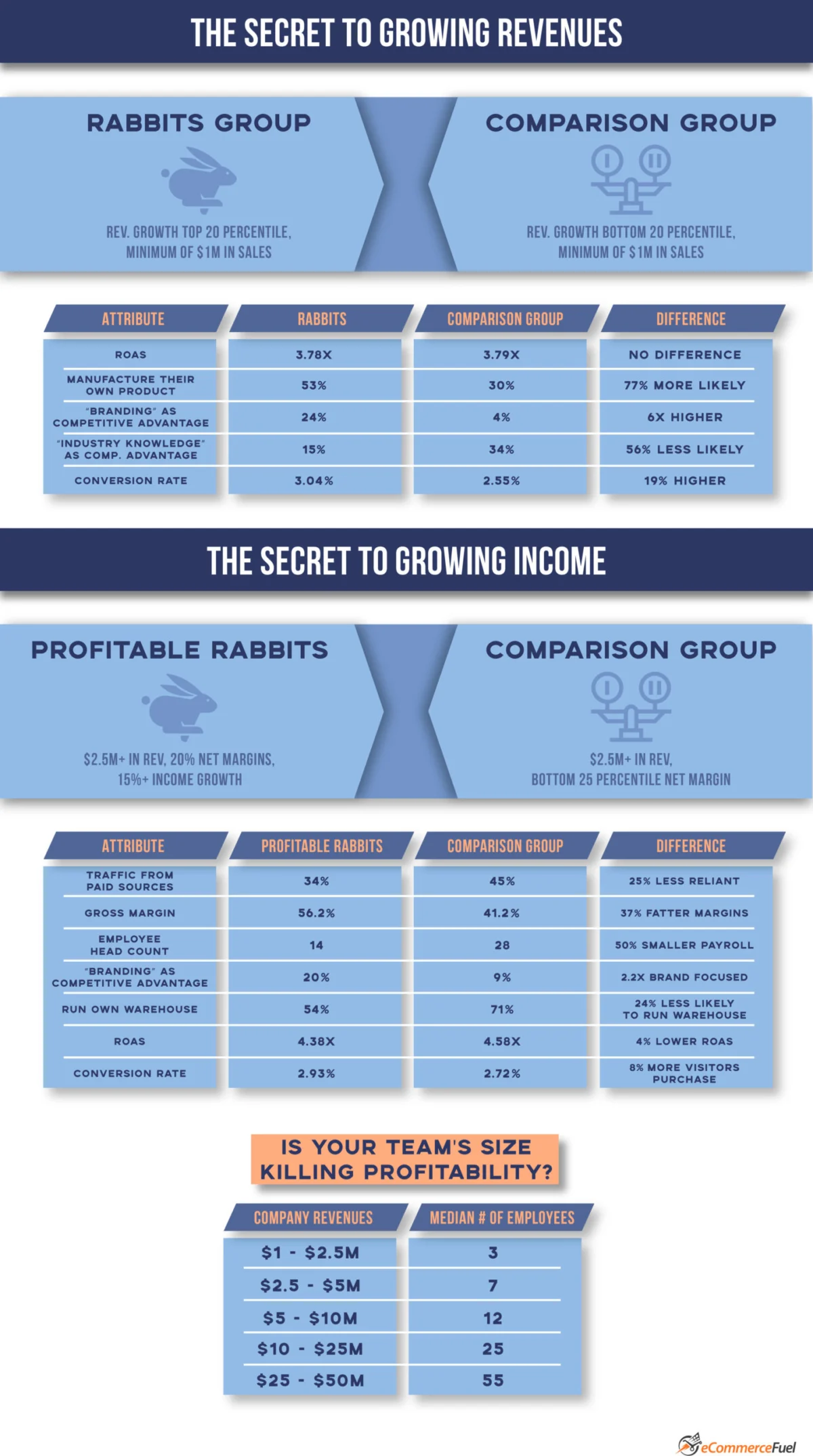
In the competitive landscape of e-commerce, the prevailing narrative often emphasizes aggressive marketing, expansive team growth, and a relentless pursuit of higher revenue as the primary drivers of business success. However, a closer examination of highly profitable enterprises reveals a different story – one where operational efficiency and strategic financial management play a more critical role than often acknowledged. Recent analyses and case studies suggest that businesses achieving peak profitability are not necessarily those with the largest marketing budgets or the most extensive workforces, but rather those that master the art of operational leanness and sophisticated tax planning. This approach allows them to retain a significantly larger portion of their earnings, leading to sustained growth and reduced owner stress.
The conventional wisdom in business scaling dictates that increased revenue necessitates a proportional increase in headcount. This assumption, deeply ingrained in many entrepreneurial circles, posits that growth is directly correlated with more employees to handle the expanding workload. Yet, real-world examples and data analysis challenge this paradigm, indicating that strategic optimization of resources, rather than sheer expansion, is the true differentiator for enduring profitability. This revised perspective shifts the focus from simply generating more sales to maximizing the net return on those sales, a crucial distinction for long-term business health.
The Data: Operational Leanness as a Profitability Predictor

A comprehensive study examining hundreds of e-commerce businesses sought to identify the key factors separating highly profitable operations from those struggling to gain traction. Contrary to expectations that marketing prowess would be the decisive element, the research found that the Return on Ad Spend (ROAS) between top and bottom performers showed negligible differences. Businesses excelling in profitability were not demonstrably superior at executing Facebook ad campaigns or SEO strategies. Instead, the data pointed to two core areas: operational efficiency and financial strategy.
The findings revealed that top-performing stores consistently maintained significantly leaner operations. Specifically, these businesses operated with approximately half the payroll costs compared to their less profitable counterparts. Furthermore, they exhibited a 25% higher likelihood of outsourcing their warehouse and fulfillment operations to third-party logistics (3PL) providers. Concurrently, these successful ventures demonstrated a 25% reduced reliance on paid traffic, suggesting a strategic focus on organic growth and customer retention rather than constant acquisition through paid channels. This operational leanness, the research concluded, consistently outperformed marketing sophistication in driving profitability.
This insight is not merely anecdotal. It represents a pattern observed across a broad spectrum of e-commerce businesses, indicating a systemic truth about sustainable profitability. The implication is that while effective marketing is necessary for revenue generation, it is the efficiency with which revenue is converted into profit that truly defines a business’s success.
Beyond Headcount: Defining Operational Lean

The concept of "staying lean" in business is often narrowly interpreted as reducing headcount through layoffs. However, a more comprehensive understanding of operational lean encompasses a wider array of overhead costs that can quietly erode profitability. This includes underutilized physical assets, such as office spaces that remain half-empty in a post-pandemic remote work era, and warehouse facilities that could be managed more cost-effectively by specialized 3PL providers. Additionally, the proliferation of Software as a Service (SaaS) subscriptions, often auto-renewing at seemingly small monthly costs, can accumulate into significant, often forgotten, expenses.
A critical filter for identifying areas of potential lean optimization lies in discerning what aspects of a business are truly core to its brand identity and competitive advantage. For instance, if a brand’s unique selling proposition is its distinctive product design, then retaining in-house design talent would be strategically sound. Conversely, if the primary function of a business is not the intricate process of packing and shipping, then outsourcing these operations to a 3PL can free up capital and reduce complexity. Profitable businesses are not indiscriminately cutting costs; rather, they are making deliberate decisions about where to allocate their resources, focusing on activities that directly contribute to their brand’s value proposition and competitive edge.
The Necessity of Proactive, Difficult Conversations
The journey towards operational lean often necessitates engaging in difficult conversations, a task many business owners tend to postpone until forced by dire circumstances. A profound truth often cited in leadership circles is that an individual’s success in life is often measured by their willingness to confront and navigate challenging discussions. In the business context, these conversations typically arise when faced with economic downturns, tightening cash flow, or a precipitous decline in profitability that threatens the very existence of the enterprise.

However, business owners who consistently achieve high levels of profit are those who proactively initiate these discussions. They ask critical questions before a crisis emerges: Is this role truly essential, or was it a product of a perceived need for busyness? Are we paying for this software subscription out of necessity, or simply out of habit? If faced with a mandatory 25% reduction in expenses tomorrow, what would be the first items on the chopping block? By addressing these questions preemptively and making intentional adjustments, these leaders build resilience and maintain financial agility, not because they are in distress, but because they are strategically managing their operations.
The Underrated Lever: Strategic Tax Management
Beyond operational efficiencies, another significant, yet often overlooked, lever for enhancing profitability is strategic tax management. Many business owners tend to view taxes as a fixed cost – a percentage of income to be paid regardless of proactive planning. However, discerning business owners have discovered ways to legally reduce their tax burden significantly, not through illicit means, but through intentional financial strategies.
Consider the illustrative case of two identical e-commerce businesses, each generating $2.5 million in revenue and $250,000 in profit, with owners having similar family situations (married with three children) and drawing the same salary. In this scenario, one owner might pay $75,000 in annual taxes, while the other pays only $21,000. The discrepancy arises from Owner B’s deliberate focus on maximizing after-tax outcomes.

Assuming a marginal tax rate of approximately 30%, Owner B achieves these substantial savings through several key strategies:
- Profit Sharing: Contributing $45,000 into retirement accounts via profit-sharing plans, far exceeding standard 401(k) limits. This strategy alone can yield approximately $13,500 in tax savings.
- Appreciated Stock Donations: Instead of donating cash to charities, Owner B donates stock that has appreciated in value. This approach completely avoids capital gains tax on the appreciation and still allows for a full charitable deduction, saving an estimated $3,500.
- Maximized Health Savings Account (HSA): Contributing the maximum family limit of $8,500 to an HSA provides a triple tax advantage (tax-deductible contributions, tax-free growth, and tax-free withdrawals for qualified medical expenses), leading to savings of roughly $2,550.
- Employing Children: Paying his three children $7,000 each for genuine work performed in the business. These payments are deductible for the owner and are invested by the children in Roth IRAs, allowing for tax-free growth over decades. This strategy can save approximately $6,300.
- Inventory Donations: Donating $60,000 worth of slow-moving inventory to charities at its fair market value, rather than liquidating it at a loss. This deduction at fair market value is a substantial, often underutilized strategy in e-commerce, potentially saving around $18,000 in taxes.
Collectively, these intentional tax planning measures can account for a difference of over $54,000 annually in retained earnings.
The Invisible Nature of Tax Opportunities
The reason these tax optimization opportunities are frequently missed by many business owners is the fragmented nature of tax-related information. Tax obligations are spread across personal tax returns, business filings, brokerage accounts, and payroll reports, lacking a consolidated dashboard that provides a holistic view. Consequently, many owners remain unaware of their total tax liability and fail to explore avenues for reduction. The owner in the example paying $75,000 is not necessarily less intelligent; they simply may not have consolidated their financial information to identify these strategic possibilities or engaged with a financial professional who proactively offers such insights. A "decent" accountant, while ensuring compliance, often operates reactively, processing information provided by the client rather than proactively generating tax-saving strategies.

Evaluating Your Financial Advisor
A simple yet effective test for assessing the value of a Certified Public Accountant (CPA) or tax advisor is to consider when they last proactively offered a strategic recommendation. It is not about their ability to accurately file returns or answer direct questions, but rather their initiative in reaching out with ideas tailored to the client’s specific financial situation. If such proactive engagement is a rarity, it suggests that while the accountant may be competent in basic compliance, they might be costing the business significant opportunities for financial optimization. The substantial difference in retained earnings, as illustrated by the $54,000 gap, is not a product of complex financial engineering but of deliberate, intentional planning. This underscores the importance of partnering with financial professionals who not only manage compliance but actively contribute to strategic financial growth.
Conclusion: Prioritizing Profit Retention
In the bustling world of e-commerce, marketing metrics like Return on Ad Spend (ROAS), Customer Acquisition Cost (CAC), and Lifetime Value (LTV) dominate discussions and attract considerable attention. These are undoubtedly important for generating revenue. However, the owners who consistently achieve superior profitability often leverage two less glamorous, yet profoundly impactful, levers: operational efficiency and strategic tax planning. By maintaining leaner teams, outsourcing non-core functions, and meticulously managing their tax liabilities, these entrepreneurs ensure that a larger proportion of the revenue they generate remains within their business. While acquiring new customers is essential, the ability to retain more of the earnings from existing sales often represents a more direct and impactful path to sustained financial success and reduced operational stress. This strategic focus on profit retention, rather than solely on revenue generation, is a hallmark of enduringly successful e-commerce enterprises.