


In the intricate landscape of digital commerce, the "thank you for your order" email transcends its perceived role as a mere transactional receipt, emerging as a critical touchpoint for customer reassurance, brand reinforcement, and the cultivation of enduring loyalty. This automated message, dispatched instantaneously upon a successful purchase, is far more than a simple confirmation; it is a strategic communication designed to validate the customer’s decision, provide clarity on subsequent steps, and subtly weave the brand’s narrative into the post-purchase experience. Its primary function is not to pitch further sales but to offer peace of mind, detailing the order’s successful processing, the amount paid, and the anticipated delivery timeline. Often interchangeably referred to as a "thank you for your purchase" email, both terms encapsulate this vital post-checkout communication.
The Evolving Landscape of Post-Purchase Communication
Historically, order confirmations were utilitarian messages, devoid of personality and primarily serving as a digital ledger of transactions. However, as e-commerce matured and competition intensified, businesses recognized the profound impact of every customer interaction. The post-purchase phase, once overlooked, transformed into a fertile ground for relationship building. Customers, having just committed financial resources, are at a heightened state of anticipation and vulnerability. They seek immediate validation that their transaction was successful and that their chosen items are on their way. This psychological need for reassurance positions the "thank you for your order" email as an indispensable element of the modern customer journey, transitioning it from a dry receipt to a dynamic tool for fostering trust and appreciation.
Understanding the "Thank You for Your Order" Email: Definition and Core Purpose

At its core, a "thank you for your order" email is a transactional message that officially acknowledges a customer’s purchase and confirms its specific details. Automated to deploy within minutes of checkout completion, its overriding objective is customer reassurance, not promotional sales. While a basic order confirmation typically itemizes transaction specifics—such as the order number, product list, total cost, and estimated delivery—a "thank you for your order" email elevates this interaction by infusing gratitude and the distinct voice of the brand. It carries the same essential facts but opens with a sincere expression of appreciation, transforming a routine interaction into a personalized moment. This subtle yet significant shift in tone capitalizes on the customer’s post-purchase interest, making the brand’s communication feel more personal and considerate. Beyond emotional connection, the practical benefit is substantial: centralizing order details reduces the influx of customer support inquiries concerning basic information, streamlining operational efficiency.
Quantifying Engagement: The Power of Automation in Post-Purchase Messaging
The strategic importance of automated post-purchase emails is underscored by compelling engagement metrics. Data from Omnisend’s 2026 e-commerce marketing report highlights that automated messages, including "thank you for your order" emails, consistently outperform scheduled promotional campaigns. The report found that these automated communications boast a 24% higher open rate and an impressive six times higher click engagement. While these figures encompass all automated messages, they establish a robust benchmark for the potential impact of a well-crafted thank you email. This superior engagement stems from the inherent expectation customers have for these messages; they are actively awaiting confirmation and details about their recent purchase. As Agnė Ganchev, Director of Customer Success at Omnisend, aptly states, "Post-purchase automated emails consistently generate higher engagement than standard promotional campaigns. A ‘thank you for your order’ confirmation email is something the buyer expects. You’re meeting them at a point when their interest is highest. It can turn a routine transaction into something the buyer remembers and appreciates, fostering a meaningful connection." This data emphatically demonstrates that these emails are not just administrative necessities but powerful vehicles for direct customer interaction and relationship building, offering a unique window to solidify brand loyalty.
Navigating the Post-Purchase Journey: Tailored Communication Strategies
Effective "thank you for your order" emails are not monolithic; they adapt to various post-purchase scenarios and customer segments, guiding the customer through their journey with personalized and timely information.
-
Immediate Reassurance: The Core Confirmation:
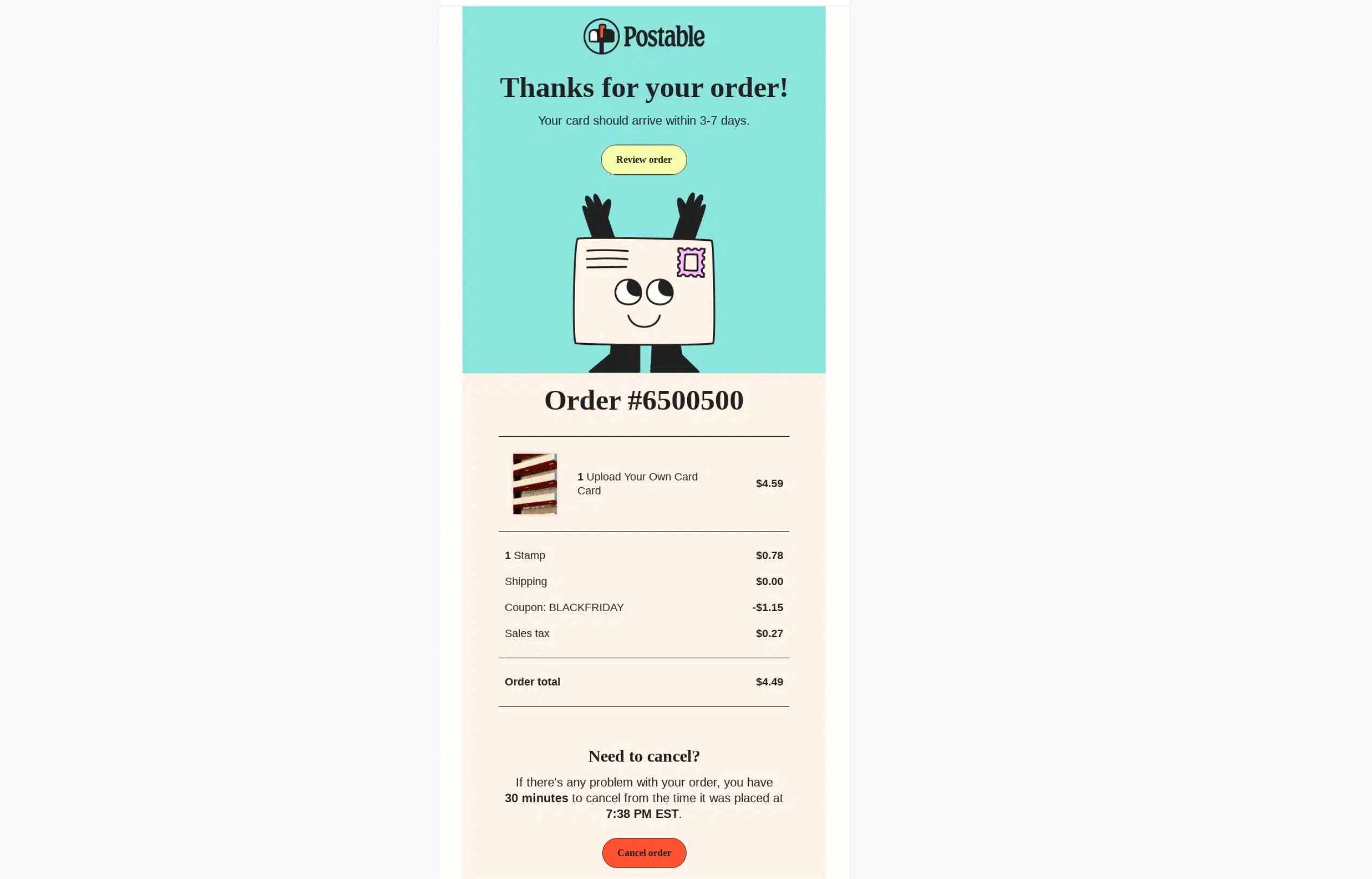
- Simple Thank You: Ideal as a warm follow-up to a separate, more detailed order confirmation. It prioritizes gratitude, followed by essential highlights like product name, total, and estimated delivery. Postable’s approach, for instance, leads with thanks and delivery estimates, placing the itemized order below, and even includes a visible cancellation option for a brief window, demonstrating exceptional customer-centricity.
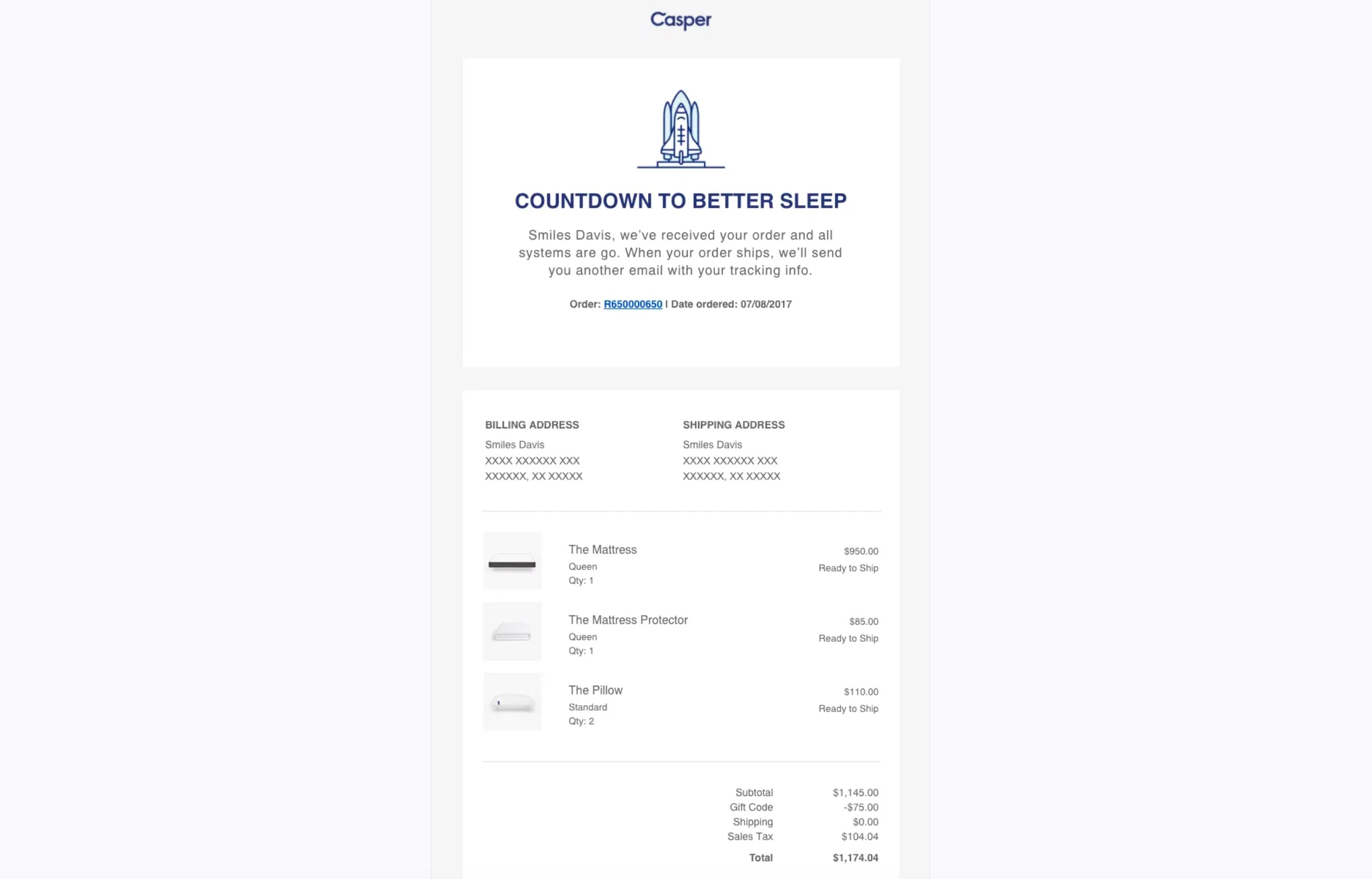
- Comprehensive Order Confirmation: When a single email must fulfill both gratitude and full transactional details, this template includes a complete breakdown: order number, date, itemized list with variants and prices, shipping method, total, and a clear timeline of what happens next (packing, tracking info, expected delivery). Casper’s "Countdown to better sleep" headline exemplifies how personality can be integrated without sacrificing clarity, meticulously listing all billing and shipping addresses alongside product details.
-
Building Connection and Value:
- First Purchase Welcome: Crucial for new customers, this email extends a personal welcome, potentially sharing a brief brand mission or story to introduce the brand’s values. It also acts as an invitation to engage further, perhaps through a loyalty program or social media channels. It’s the first step in converting a new buyer into a loyal advocate.
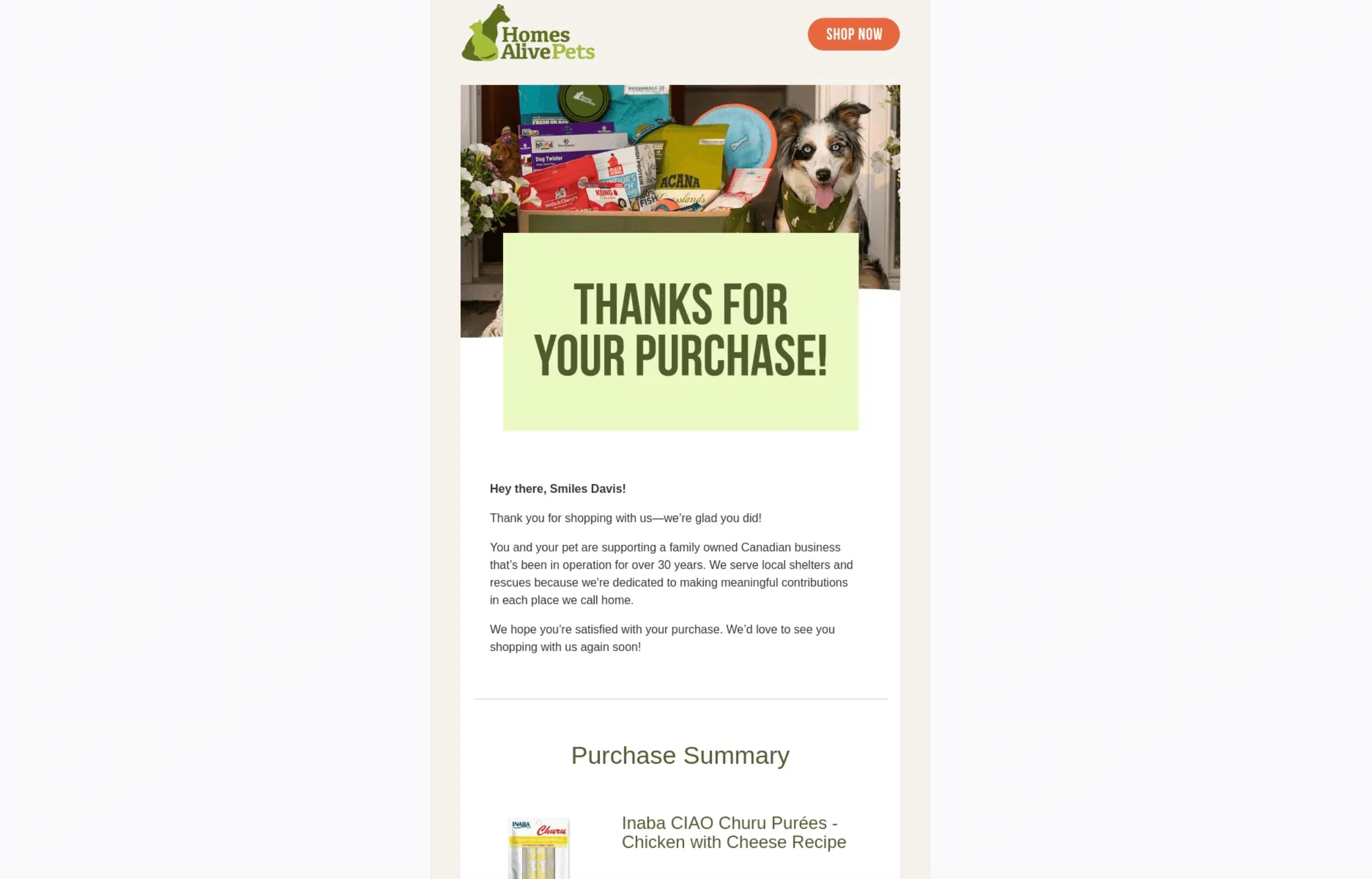
- Product-Centric Gratitude: Sent shortly after the initial confirmation, this message focuses on the purchased product itself, offering a practical tip or insight to enhance the customer’s experience. Homes Alive Pets effectively combines a thank you with a mention of their support for local shelters, making the purchase feel more meaningful. This approach adds value pre-emptively, positioning the brand as a helpful partner rather than just a seller.
-
Fostering Loyalty and Repeat Business:
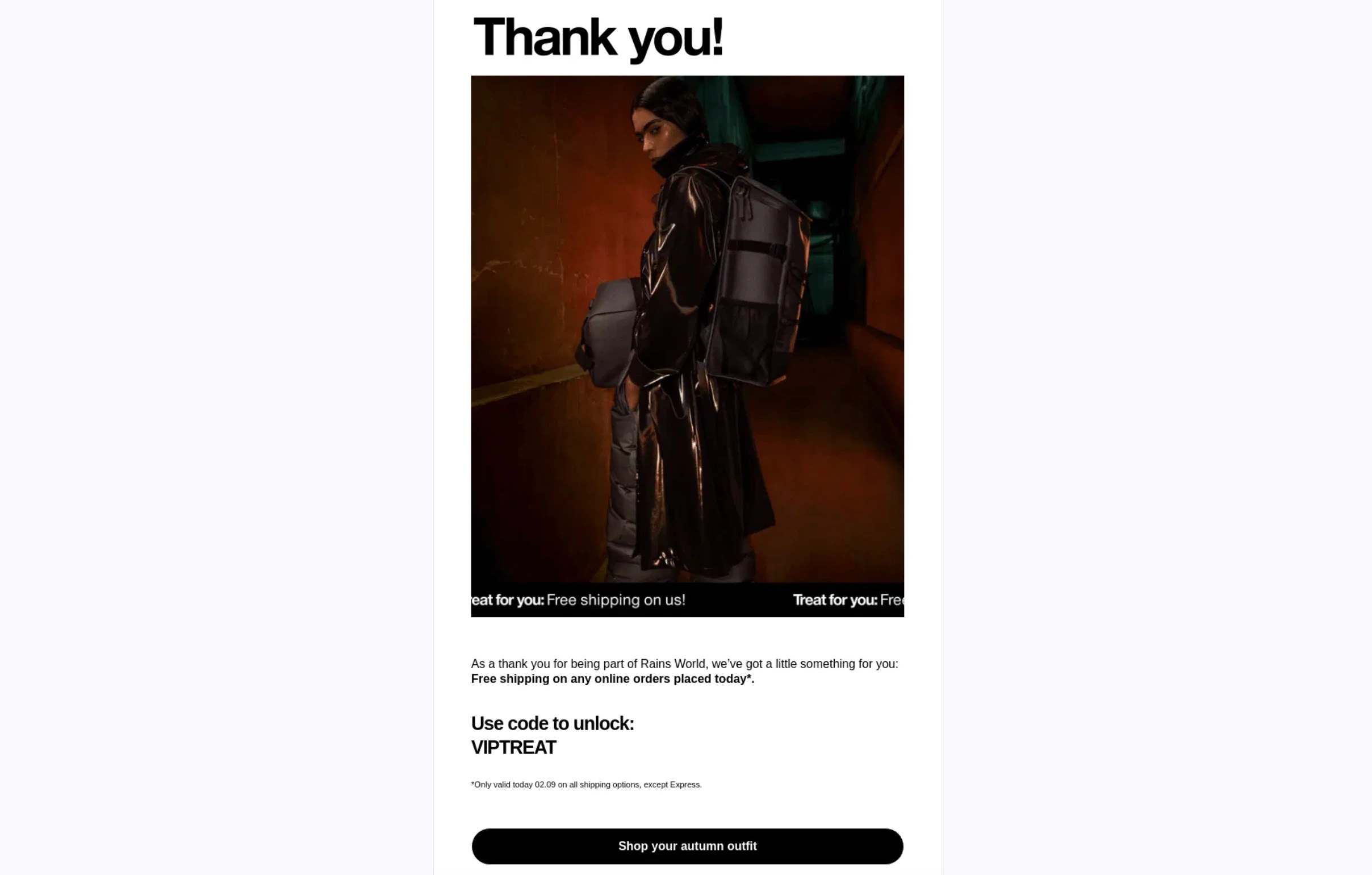
- Repeat Customer Recognition: Acknowledging a customer’s repeat business makes them feel seen and valued. These emails can include a small loyalty reward, such as a discount code for future purchases, reinforcing their decision to return. Rains, for example, uses a "VIPTREAT" code for free shipping, framing it as a direct thank you for continued loyalty. This strategy leverages existing trust to encourage further engagement.
- VIP or High-Value Order Thank You: Reserved for top-tier customers or significant purchases, this email focuses on recognition over discounts. It might come from a founder or senior team member, emphasizing priority handling and direct access to support, making the customer feel exceptionally valued.
- Strategic Discounts: Sent after the customer has received and ideally used the product, this email offers an incentive for a second purchase. A time-limited discount creates urgency without appearing overly transactional, separating the offer from the immediate post-checkout experience. Sleep Country’s clear, prominent display of a gift card code and its expiry date exemplifies how to present an incentive effectively.
- Review Requests: Timed for after delivery and sufficient product use, these emails politely request feedback. They should clearly state the brevity of the process and provide a direct link, while also offering a private channel for unresolved issues before a public review is submitted.
-
Multi-Channel Approach: SMS Integration:
- For customers who have opted into text messages, a concise "thank you for your order" SMS, sent a few minutes after the email, provides immediate, glanceable confirmation and a tracking link. Its brevity is key, as detailed information resides in the email. This dual-channel approach maximizes reach and customer comfort.
These templates, when customized to reflect brand voice and triggered strategically within automated workflows, become powerful tools in the e-commerce arsenal.
Essential Elements for an Effective Thank You Email
Regardless of the specific template chosen, a truly effective "thank you for your order" email incorporates eight crucial elements, each designed to preempt customer queries and foster trust. Omitting any of these can lead to increased support tickets or missed opportunities for engagement.
- A Clear and Concise Subject Line: This is the gateway to the email. It should be informative, include the brand name and order number, and express gratitude (e.g., "Your [Brand Name] order is confirmed! #[Order number]").
- Personalized Greeting: Addressing the customer by name immediately creates a personal connection.
- Explicit Thank You Message: The core purpose of the email; this should be sincere and prominent.
- Order Summary: A clear, itemized list of products purchased, including quantities, sizes/variants, and individual prices.
- Total Cost: The final amount charged, including taxes and shipping.
- Shipping Information: This includes the shipping address, chosen shipping method, and, crucially, the estimated delivery date or window.
- Tracking Information: Once available, a direct link to track the order’s progress is paramount for customer reassurance.
- Customer Support Information: Clear instructions on how to contact support for questions, changes, or issues, often with a direct reply option or a link to a help center.
- Branded Sign-off: A closing that reflects the brand’s personality and values, signed by "The [Brand name] team" or even a founder’s name for VIP emails.
- Relevant Call to Action (CTA): While transactional, a single, clear CTA can guide the customer to a relevant next step, such as joining a loyalty program, browsing new arrivals, or leaving a review (when appropriate).
Crafting Impact: Best Practices for Success
Beyond including the necessary elements, adherence to best practices ensures these emails maximize their impact:
- Timeliness is Paramount: Send the email within minutes of checkout. This aligns with customer expectations and provides immediate reassurance.
- Prioritize Gratitude Over Sales: The primary goal is reassurance and relationship building. Avoid aggressive upsells or cross-sells in the initial confirmation.
- Clarity and Scannability: Use clear headings, bullet points, and ample white space. Customers should be able to quickly find the information they need, especially on mobile devices.
- Maintain Brand Voice: Infuse the email with your brand’s unique personality. This consistency reinforces brand identity.
- Single, Focused Call to Action (When Applicable): If an additional action is desired (e.g., join loyalty program, leave a review), make it a single, prominent CTA to avoid overwhelming the customer.
- Mobile Optimization: A significant portion of emails are opened on mobile devices. Ensure the email is responsive and easy to read on smaller screens.
- Personalization: Beyond the customer’s name, leverage order details to make the message feel more relevant (e.g., mentioning the specific product purchased).
- A/B Testing: Continuously test different subject lines, body copy, and CTAs to optimize open rates and engagement.
Safeguarding Trust: Identifying and Avoiding Fake Order Emails
The effectiveness of legitimate "thank you for your order" emails is unfortunately exploited by scammers. "Thank you for your order" email scams are fake confirmations sent to individuals who never placed an order, aiming to induce panic and prompt a call or click. MailGuard, in December 2025, documented a version utilizing a PDF invoice and a fraudulent support line to deceive victims. These emails typically mimic real confirmations, often referencing expensive purchases or subscription renewals. They then instruct recipients to "cancel" the order by calling a fake number or opening a malicious attachment. Engaging with these prompts can lead to fraudulent refund processes or malware installation.
To distinguish legitimate confirmations from deceptive ones, customers should be vigilant:
| Sign | A Legitimate Email | A Fake Email |
|---|---|---|
| Sender Address | Matches the brand’s official domain | A free webmail address or a subtle lookalike domain |
| The Order | Corresponds to a recent, actual purchase | A fictitious purchase, often addressed generically |
| Attachments | None, or an expected, secure receipt | An unexpected PDF invoice or other suspicious files |
| Support Contact | Known, official brand channels | A phone number with urgent "call now" prompts |
| Money | No payment or refund pressure | Demands for payment or urgent refund actions |
| Links | Direct to the brand’s official website | Ask for login credentials on unfamiliar pages |
If an order email appears suspicious, verification should occur without interacting with the email itself. Instead, directly navigate to the brand’s official website, log into your account, and check your order history. Alternatively, contact the company using its officially listed customer service number. Businesses, in turn, must consistently use their official sender domains, avoid unnecessary attachments, and link only to their secure, branded platforms to build and maintain customer trust. Consistent branding and email design across all transactional messages further reinforce authenticity.
Broader Implications for E-commerce Success
The strategic deployment of "thank you for your order" emails has far-reaching implications for e-commerce success:
- Enhanced Customer Lifetime Value (CLV): By fostering a positive post-purchase experience, these emails contribute significantly to customer satisfaction and loyalty, encouraging repeat purchases and increasing CLV.
- Strengthened Brand Loyalty and Advocacy: A thoughtful, appreciative email elevates the customer’s perception of the brand, transforming a transaction into a relationship. Satisfied customers are more likely to become brand advocates, sharing their positive experiences.
- Operational Efficiency: Clear, comprehensive order details reduce the burden on customer support teams, allowing them to focus on more complex issues rather than routine inquiries.
- Data Collection and Personalization: These emails, particularly those with follow-up elements like review requests or discount offers, can gather valuable customer feedback and inform future marketing strategies, enabling even deeper personalization.
Conclusion
The "thank you for your order" email is far more than a digital formality; it is a strategic cornerstone of modern e-commerce customer experience. It marks the first crucial conversation after a sale, serving to confirm the purchase, express genuine gratitude, clarify subsequent steps, and subtly guide the customer toward further engagement. By choosing the appropriate template, including all essential elements, and deploying it within minutes of checkout, businesses can capitalize on the customer’s peak interest. Providing useful, easily digestible information, making the customer feel valued, and adhering to best practices in email design and security are paramount. In doing so, these automated messages transform from mere administrative tasks into powerful engines for building lasting customer relationships and driving sustained business growth in the competitive digital marketplace.








