
 rifanmuazin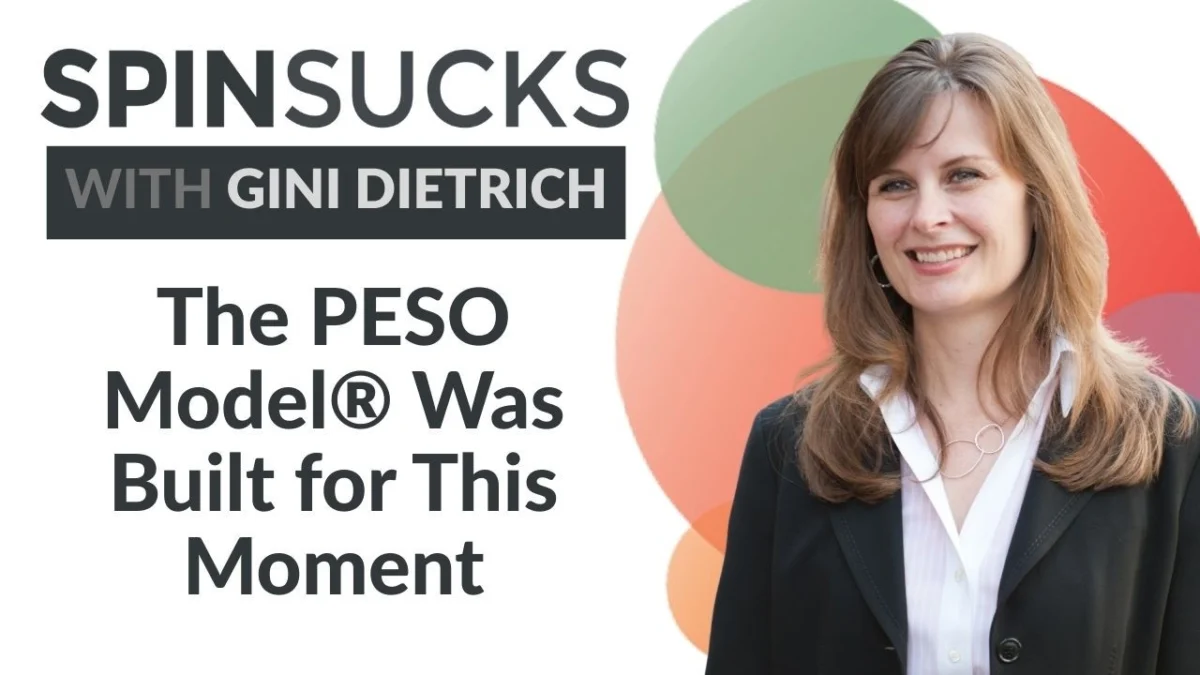
The marketing and communications industry is currently navigating a period of profound transformation, driven largely by the rapid integration of artificial intelligence and a fundamental shift in how consumers discover information. At the center of this evolution is the PESO Model—a framework encompassing Paid, Earned, Shared, and Owned media—which has transitioned from a tactical checklist into a comprehensive strategic operating system. While some industry skeptics have suggested that the rise of AI summaries and zero-click search might render traditional frameworks obsolete, evidence suggests the contrary: the fragmentation of trust and the automation of content discovery have made a unified, integrated approach more essential than ever before.
The modern iteration of the PESO Model serves as a response to a world shaped by "zero-click" discovery, where users receive answers directly from AI-generated summaries or social media screenshots without ever visiting a brand’s website. In this environment, marketing can no longer rely on disconnected tactics masquerading as strategy. Instead, the model functions as a cohesive engine where owned media establishes a source of truth, earned media provides third-party corroboration, shared media amplifies the signal through community networks, and paid media accelerates successful outcomes.
The Chronological Evolution of the PESO Model
The PESO Model was first introduced by Gini Dietrich in 2014 through her book, Spin Sucks, as a way to help public relations professionals and marketers organize their efforts across a diversifying digital landscape. At its inception, the model was primarily seen as a categorization tool—a way to ensure that communicators were not over-relying on earned media (media relations) at the expense of other channels.
By 2019, the model had undergone its first major refinement. As social media algorithms became more restrictive and organic reach began to decline, the importance of "Owned" media—content a brand controls entirely—rose to the forefront. During this period, the integration of the four pillars became the primary focus, moving away from the "siloed" approach where different teams handled social, PR, and advertising independently.
The most recent shift, beginning in 2023 and accelerating through 2025, was triggered by the mainstreaming of Generative AI. With tools like ChatGPT, Claude, and Google’s Search Generative Experience (SGE) changing the mechanics of search, the PESO Model was rebuilt once again. The current version, often referred to as the PESO Model Operating System, focuses on "signal strength." It is designed to ensure that both human audiences and AI Large Language Models (LLMs) receive a consistent, corroborated message across all possible touchpoints.
Data and the Shifting Discovery Landscape
The necessity for an integrated model is supported by recent shifts in consumer behavior and search engine data. Industry reports from 2024 indicate that nearly 60% of Google searches now end without a click to a third-party website. This "zero-click" phenomenon is driven by AI overviews that synthesize information directly on the search results page.
Furthermore, trust in traditional advertising has continued to fluctuate, while the "trust gap" between brands and consumers has widened. According to the 2025 Edelman Trust Barometer, consumers are increasingly looking for "corroboration"—the verification of a brand’s claims by independent third parties, such as journalists, influencers, or peer reviewers. This makes the "Earned" and "Shared" components of the PESO Model critical; without them, a brand’s "Owned" content is viewed with skepticism by both users and the algorithms that rank content based on E-E-A-T (Experience, Expertise, Authoritativeness, and Trustworthiness).
Statistical analysis of high-performing digital campaigns in the current market shows that brands using an integrated PESO approach see a 25% higher conversion rate than those using siloed tactics. This is attributed to the "compounding effect," where the authority gained in one quadrant (such as a high-tier earned media placement) significantly lowers the Cost Per Click (CPC) in the Paid quadrant and boosts the search visibility of the Owned quadrant.
The Four Pillars as an Integrated Operating System
To understand why the PESO Model remains the industry standard, it is necessary to examine how its four components have been redefined for the AI era:
1. Owned Media: The Source of Truth
In the modern framework, owned media—blogs, white papers, newsletters, and webinars—is the foundation. It is the only place where a brand has total control over the narrative. However, in the age of AI, owned media is no longer just for human readers; it serves as the primary data source for AI crawlers. If a brand does not clearly define its expertise on its own platforms, AI tools will fill that vacuum with information from competitors or potentially inaccurate third-party sources.
2. Earned Media: The Corroboration Engine
Earned media remains the most potent tool for building credibility. When a reputable news outlet or industry analyst validates a brand’s claims, it provides the "proof" that both humans and AI models require to establish trust. In the current landscape, earned media is not just about the "hit"; it is about the digital footprint and the backlinks that signal authority to search engines.
3. Shared Media: The Signal Mover
Shared media has evolved beyond simple social media posting. It now encompasses community engagement, creator partnerships, and "dark social"—the private sharing of content via apps like WhatsApp or Slack. The goal of shared media in the PESO system is to move the brand signal through networks, creating the repetition necessary for a message to stick in a fragmented attention economy.
4. Paid Media: The Momentum Accelerator
Rather than being used for "cold" outreach, modern paid media is used to amplify what is already working. If an owned blog post is performing well or an earned media piece is generating buzz, paid social and search are used to ensure that content reaches a wider, targeted audience. This strategic use of budget prevents the "flinging messages into the void" approach that characterized early digital advertising.
Industry Responses and the Professional Skill Gap
The evolution of the PESO Model has created a significant divide within the marketing and communications profession. Leading Chief Marketing Officers (CMOs) have expressed a growing need for "T-shaped" professionals—those who have a broad understanding of the entire PESO framework even if they specialize in one area.
"AI didn’t create the problem of bad marketing; it simply exposed it," notes a recent analysis from Spin Sucks. Marketing teams that relied on "looking busy" with disconnected campaigns are finding it increasingly difficult to prove ROI as AI-driven discovery bypasses traditional metrics like impressions and vanity clicks.
In response, there has been a surge in demand for professional certification in the PESO Model. Marketing executives are increasingly seeking practitioners who understand the "systems" approach. Certification is no longer viewed as an optional credential but as evidence that a communicator can manage the complexities of modern visibility, where messaging, proof, and distribution must be perfectly aligned to move business objectives.
Broader Impact and Strategic Implications
The long-term implications of the PESO Model’s evolution suggest that "random acts of marketing" will become increasingly expensive and ineffective. As AI continues to mediate the relationship between brands and consumers, the brands that win will be those that send the clearest and most consistent signals across all media types.
For businesses, the shift toward a PESO-based operating system requires a structural change. Organizations must break down the walls between PR, SEO, social media, and advertising departments. When these teams work in isolation, they often produce conflicting signals that confuse AI models and erode consumer trust. Conversely, an integrated team can create "content that works harder," repurposing a single high-quality owned asset into earned media pitches, shared media snippets, and paid advertisements.
The transition also places a higher premium on "measurement that matters." The modern PESO Model moves away from decorative PowerPoint filler—such as total reach or likes—and focuses on business outcomes, such as lead generation, brand sentiment, and "share of voice" within AI-generated summaries.
Conclusion: The Future of Brand Visibility
The PESO Model was not rebuilt for a fleeting moment in tech history; it was rebuilt for a market that is in a state of permanent flux. As search engines evolve into "answer engines" and social platforms become increasingly insular, the ability to run a coordinated, multi-channel strategy is the only way to ensure brand survival.
The question facing modern marketers is no longer whether the PESO Model is relevant, but whether their own skills have evolved to match its complexity. In a world where visibility is shaped by repetition, consistency, and third-party proof, the "checklist" approach to marketing is dead. The "operating system" approach is the new baseline for success. Those who master the integration of Paid, Earned, Shared, and Owned media will find themselves capable of building lasting authority, while those who continue to rely on disconnected tactics will find themselves increasingly invisible to both the machines and the humans they are trying to reach.










