The digital marketplace in 2026 is witnessing a dynamic evolution in the sources driving traffic to online retailers, with artificial intelligence (AI) playing an increasingly pivotal role. This transformation is not only altering the volume of traffic but also significantly impacting revenue per visit, as indicated by recent data. A notable trend is the burgeoning competition among AI platforms, with Google’s Gemini and Anthropic’s Claude showing substantial gains and challenging the long-standing dominance of OpenAI’s ChatGPT. This shift underscores the rapid maturation of AI in e-commerce and hints at future developments in agentic commerce.
AI Referral Traffic Sees Significant Year-Over-Year Growth
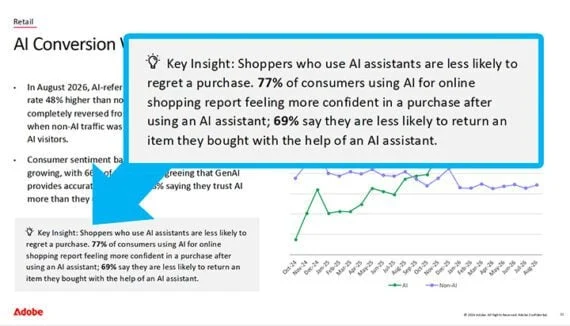
The impact of AI on e-commerce traffic is undeniable and accelerating. In July 2026, Adobe Analytics reported a remarkable 62% year-over-year increase in AI-associated referral traffic to e-commerce websites. This surge is not merely about volume; it translates directly into increased revenue. Adobe’s observations revealed that shoppers referred by AI tools generated 53% more revenue per visit compared to those arriving through other channels. While traditional search engines still represent the largest share of overall referral traffic, the potency of AI-driven referrals in terms of conversion and revenue generation presents a compelling opportunity for online merchants.
New findings derived from the AI Commerce Rankings, a collaborative effort between Digital Commerce 360 and ReFiBuy, offer a granular view into the large language models (LLMs) contributing the most to AI traffic for online retailers featured in the Top 1000 Database. This database, which ranks North American online retailers by annual web sales, serves as a crucial benchmark for understanding market dynamics. The data reveals a palpable shift in the competitive landscape between the first and second quarters of 2026, highlighting a renewed rivalry for OpenAI’s ChatGPT, particularly from Anthropic’s Claude. This development comes on the heels of Claude’s recent announcement of new agentic commerce features, signaling a strategic move to capture a larger share of the e-commerce AI market.
The Rise of Gemini and the Evolving Dominance of AI Referral Sources
An in-depth analysis of traffic referral sources for online retailers in the second quarter of 2026, as presented by ReFiBuy analysts, has identified significant shifts in platform performance. Scot Wingo, founder and CEO of ReFiBuy, detailed these changes, emphasizing the erosion of ChatGPT’s absolute lead. "In Q1, 844 retailers had ChatGPT as No. 1," Wingo stated. "That decreased to 722 [in Q2]." This decline, while seemingly modest, signifies a growing diversification in how retailers are leveraging AI for traffic acquisition.
The gains observed by other AI platforms are directly correlated with ChatGPT’s slight dip. Google’s Gemini, for instance, has shown remarkable progress. Wingo elaborated, "Replacing that was a combination of the folks behind… So, [Google] Gemini went from 16 – being the top for 16 retailers – to 32." This doubling of retailers identifying Gemini as their primary AI traffic source in Q2 compared to Q1 underscores Google’s aggressive push into the AI-powered commerce space.
Beyond Gemini, other AI platforms are also making significant inroads. Perplexity, known for its innovative approach to search and information synthesis, gained traction, with 12 additional online retailers now considering it their top AI traffic source. However, the most dramatic ascent has been observed with Anthropic’s Claude. The platform’s growth trajectory suggests it is poised to become a formidable competitor to the established products from OpenAI and Google.
Anthropic’s Claude: A Strategic Leap into Agentic Commerce
Anthropic’s Claude has made a particularly striking move in the AI commerce arena, transitioning from a marginal player to a significant contender in a short period. Wingo highlighted the substantial growth: "Only one retailer had Claude as their top source of traffic [in Q1], and now there’s 15. That’s a really big move." This fifteen-fold increase in Q2 alone demonstrates a rapid adoption rate and a growing recognition of Claude’s capabilities within the e-commerce sector.
Historically, while OpenAI and Google were actively exploring direct checkout integrations in early 2025, these efforts were largely re-evaluated, with a pivot towards agentic commerce experiences that flow through retailer-specific applications. Anthropic, initially, took a different approach. The company conducted internal experiments with an agentic marketplace under the project name "Project Deal," focusing on how AI agents could facilitate complex transactions and personalized shopping journeys.
More recently, Anthropic has made significant strategic moves to solidify its position in agentic commerce. A key development was the announcement of an expanded partnership with Salesforce to create "Claudeforce." This integration aims to empower Salesforce users with advanced AI capabilities for commerce, streamlining customer interactions and sales processes. Furthermore, Anthropic has unveiled new digital blueprints specifically designed for commerce-targeted AI agents. These blueprints likely provide developers and retailers with frameworks and tools to build sophisticated AI-powered shopping assistants and recommendation engines.
The accelerating adoption of Claude as a referral source to retailers’ websites is a direct reflection of these strategic advancements. Its growing influence indicates that its role is evolving beyond simple information provision to actively facilitating commerce. Wingo’s projection emphasizes this potential: "If that continues over eight quarters, they’re gonna be in the hunt for up there with Gemini and ChatGPT." This suggests a potential future where the top AI referral sources are a more evenly distributed field, with Claude emerging as a dominant force.
Implications for Online Retailers and the Future of E-commerce
The ongoing competition among AI platforms has profound implications for online retailers. The diversification of AI traffic sources means that businesses can no longer rely on a single AI tool to drive their online sales. Instead, a strategic approach to leveraging multiple AI platforms will likely become essential for maximizing reach and revenue. Retailers will need to understand the unique strengths of each AI model and how they can best be integrated into their marketing and sales funnels.
The rise of agentic commerce, spearheaded by developments from Anthropic and others, signifies a shift towards more personalized and automated shopping experiences. AI agents could soon be capable of understanding complex customer needs, comparing products across different retailers, negotiating prices, and even managing post-purchase support, all with minimal human intervention. This evolution promises to enhance customer satisfaction and operational efficiency for businesses.
For retailers, staying abreast of these rapid advancements is crucial. The AI Commerce Rankings and similar market intelligence tools will become indispensable for tracking emerging trends and identifying the most effective AI partners. Furthermore, proactive engagement with AI developers and a willingness to experiment with new AI functionalities will be key to staying competitive in the evolving digital retail landscape.
Background and Chronology of AI in E-commerce
The integration of AI into e-commerce is not a sudden phenomenon but rather a progression that has gained significant momentum in recent years.
- Early 2020s: Initial AI applications in e-commerce focused on basic functionalities like chatbots for customer service, product recommendation engines, and fraud detection. These were largely rule-based and lacked the sophisticated conversational abilities of modern LLMs.
- Mid-2020s: The advent of advanced LLMs like GPT-3 and its successors, followed by competitors, marked a turning point. These models enabled more natural language interactions, leading to improved chatbots and the exploration of AI-driven content generation for product descriptions and marketing copy.
- 2025: OpenAI and Google began experimenting with direct checkout integrations within their AI interfaces, attempting to bridge the gap between AI interaction and purchase completion. These early efforts, however, proved challenging to scale and optimize for diverse retail environments.
- 2026 (Early to Mid): A strategic pivot occurred, with a greater emphasis placed on "agentic commerce." This approach focuses on AI agents that act on behalf of the user to perform tasks, facilitate complex research, and provide personalized recommendations, often directing users to retailer-specific platforms for final transactions. Anthropic’s "Project Deal" and its later developments exemplify this trend.
- 2026 (Q1-Q2): The data from Digital Commerce 360 and ReFiBuy highlight a significant shift in the leading AI referral traffic sources. ChatGPT’s initial dominance began to face challenges from Google’s Gemini and, most notably, Anthropic’s Claude, which demonstrated exponential growth.
- 2026 (Late): Anthropic’s announcements of new Claude agents for e-commerce and its strategic partnership with Salesforce through "Claudeforce" solidify its commitment to the agentic commerce space, positioning it as a major contender.
Broader Impact and Future Outlook
The increasing reliance on AI for e-commerce traffic and revenue generation signals a fundamental reshaping of the online retail ecosystem. Retailers that fail to adapt to these AI-driven changes risk falling behind competitors who are effectively harnessing these powerful tools. The trend also raises important considerations regarding data privacy, algorithmic bias, and the ethical implications of increasingly autonomous AI agents in commerce.
As AI continues to evolve, we can anticipate further innovations. The integration of AI into augmented reality (AR) and virtual reality (VR) shopping experiences is a likely next frontier, offering even more immersive and personalized ways for consumers to interact with products and brands. The ability of AI to analyze vast amounts of consumer data in real-time will also enable hyper-personalization at an unprecedented scale, potentially leading to significant increases in customer loyalty and lifetime value.
The competitive dynamism observed in the AI referral traffic landscape suggests that the race for AI dominance in e-commerce is far from over. The coming years will likely see continued innovation, strategic partnerships, and an ongoing battle for market share among AI providers, ultimately benefiting online retailers and shaping the future of how consumers shop. The data clearly indicates that AI is no longer a supplementary tool but a core component of successful e-commerce strategies, with its influence only set to grow.
Editor’s Note: To ensure you receive regular updates on the latest developments in e-commerce, subscribe to our retail newsletter. For those interested in understanding their standing within the industry, submitting your data for our global e-commerce rankings is encouraged. Stay informed about the dynamic online retail sector by signing up for a complimentary subscription to Digital Commerce 360 Retail News and follow us on LinkedIn, TikTok, X (formerly Twitter), Facebook, and YouTube.