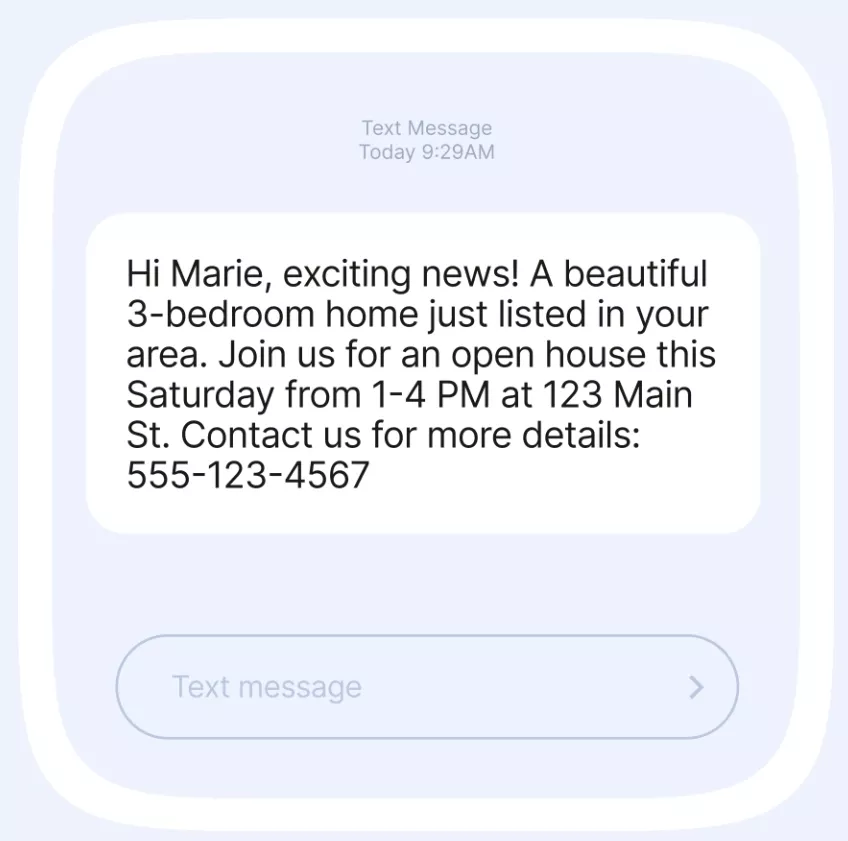
Real estate SMS marketing has emerged as a critical tool, leveraging the ubiquity of text messages to deliver listings, price updates, and showing reminders directly to clients’ most accessible inbox – their phones. This direct communication channel significantly reduces the lag often associated with traditional methods like email, which can sit unread for hours, or phone calls from unknown numbers that frequently divert to voicemail. In a market where speed can dictate the success or failure of a deal, SMS marketing provides an invaluable edge by ensuring time-sensitive information reaches recipients almost instantaneously, leading to quicker engagement and improved transaction efficiency.
The Rise of Mobile-First Communication in Real Estate
The shift towards mobile-first communication is not a recent phenomenon but an accelerating trend that has profoundly impacted the real estate sector. For decades, property transactions relied heavily on physical interactions, print media, and later, email. However, the advent of smartphones and widespread mobile internet access has fundamentally altered how buyers and sellers search for properties and interact with agents. According to the National Association of Realtors’ (NAR) 2025 Generational Trends Report, a significant 69% of home buyers now initiate their property search on a mobile device. This statistic underscores the imperative for real estate professionals to adapt their communication strategies to meet clients where they are most active: on their mobile phones.
This shift isn’t just about convenience; it’s about expectation. Modern clients, accustomed to instant gratification in various aspects of their lives, anticipate prompt responses and real-time updates from their real estate agents. They expect to receive property details, schedule viewings, and ask questions through channels that integrate seamlessly into their daily digital routines. SMS, being the primary communication method for many, perfectly aligns with these evolving client expectations, providing a direct, unobtrusive, and highly effective conduit for information exchange.
Why SMS Marketing is Indispensable for Modern Agents
The efficacy of SMS marketing in real estate stems from its inherent characteristics: directness, immediacy, and high engagement rates. Unlike emails that contend with crowded inboxes and spam filters, text messages typically bypass these hurdles, landing directly in a personal communication stream that users check frequently. Data from the 2025 Consumer Texting Behavior Report by EZ Texting indicates that SMS open rates can reach an astounding 98%, a figure that dwarfs the average email open rates across most industries. This near-guaranteed visibility means that an agent’s message is almost certainly seen, a crucial factor when a new listing or a price drop demands immediate attention.
Furthermore, the speed of response facilitated by SMS is a game-changer. When a new property hits the market, agents who can disseminate this information quickly to interested buyers gain a significant advantage. The ability to send instant alerts ensures that clients are among the first to know, empowering them to act swiftly in competitive scenarios. This not only enhances the client experience but also significantly increases the likelihood of closing a deal before other interested parties emerge. The financial performance data further supports this, with automated SMS campaigns reportedly generating an average of $0.74 per message sent, outperforming campaign blasts that yield $0.15 per message, according to Omnisend’s 2025 data. This demonstrates a clear return on investment for strategically implemented SMS workflows.
The key benefits for real estate agents include:
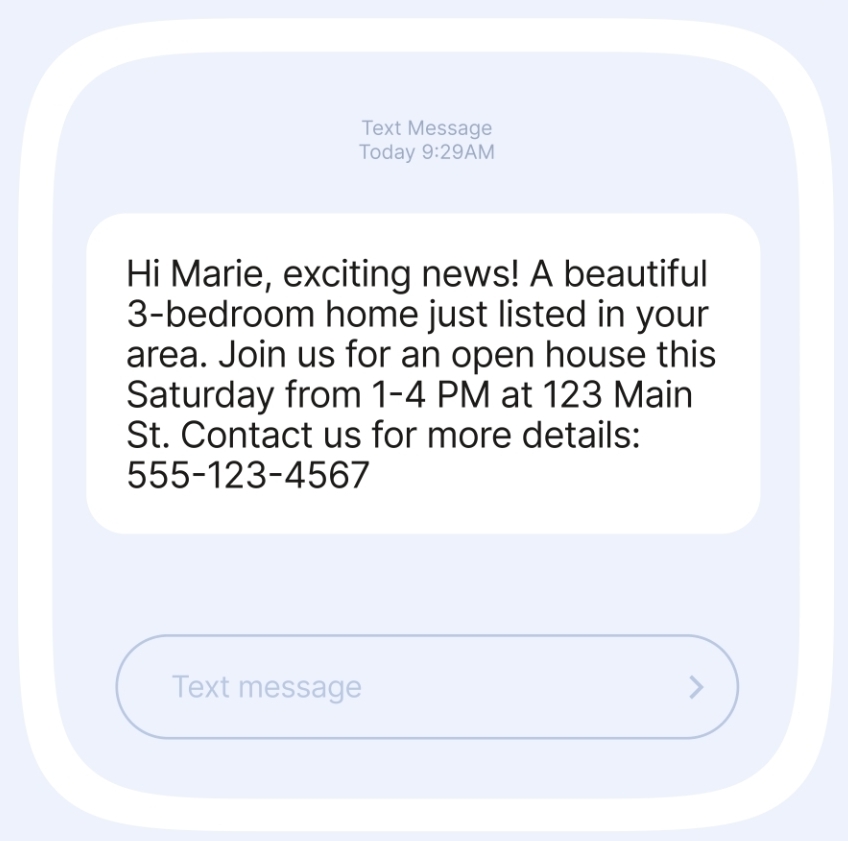
- Instant Communication: Delivering critical updates like new listings or price changes within minutes.
- Higher Engagement: Leveraging near 100% open rates to ensure messages are seen.
- Improved Responsiveness: Clients are more likely to reply quickly to a text than an email or voicemail.
- Enhanced Client Satisfaction: Meeting client expectations for prompt, mobile-friendly communication.
- Streamlined Operations: Automating reminders and follow-ups to save agents time.
- Competitive Advantage: Staying ahead in a fast-moving market by being the first to inform clients.
These advantages collectively contribute to a more efficient, responsive, and ultimately more successful real estate practice.
Key Strategies for Effective Real Estate SMS Campaigns
To maximize the potential of SMS marketing, agents must implement well-structured, targeted campaigns that deliver clear value to the recipient. The following strategies represent proven approaches for leveraging text messages throughout the client journey:
1. New Listing Alerts:
Automated text alerts, tailored to a buyer’s specific search filters (e.g., location, budget, property type, number of bedrooms), are paramount. In a market where desirable properties can go under contract within hours, speed is critical. Agents should configure their CRM or SMS platform to trigger an automated text message the moment a new listing matches a client’s predefined criteria. The message must be concise, highlighting key features, price, and most importantly, include a direct link to the full listing with photos, allowing buyers to quickly assess their interest.
- Example SMS: “(Name), Maple Grove alert 🏡 4-bed, 3-bath colonial, $612K, listed this morning. Want a tour this week? Photos: [link] -(Agent Name), (Agency Name)”
2. Appointment Reminders:
Reducing no-shows for property viewings or client meetings is a direct benefit of SMS reminders. A staggered reminder system is most effective: an immediate confirmation after booking, a reminder the day before, and a final nudge a few hours prior to the appointment. Each message should contain essential details such as the date, time, full address, and any specific access instructions (e.g., gate codes, parking). Crucially, clients should be able to easily confirm or reschedule with a simple reply, minimizing friction and ensuring schedule efficiency.
- Example SMS: “Hi (Name), reminder from (Agent Name) at (Agency Name): Your showing at 27 Birchwood Ln is tomorrow at 4:30 PM. Reply C to confirm or R to reschedule.”
3. Lead Follow-Up Messages:
The speed of lead follow-up can significantly impact conversion rates. When a new lead inquires about a property, an immediate, personalized text message can acknowledge their interest, answer preliminary questions, and initiate a conversation. This rapid response prevents potential buyers from moving on to another agent who responds faster. Subsequent follow-ups should be periodic and value-driven, offering helpful information rather than constant sales pitches, keeping the opportunity alive without overwhelming the lead.
- Example SMS: “Hi (Name), it’s (Agent Name) with (Agency Name). 1448 Casper Ave is still available – I can get you in on Thursday or Saturday. Which works better?”
4. Price Reduction Alerts:
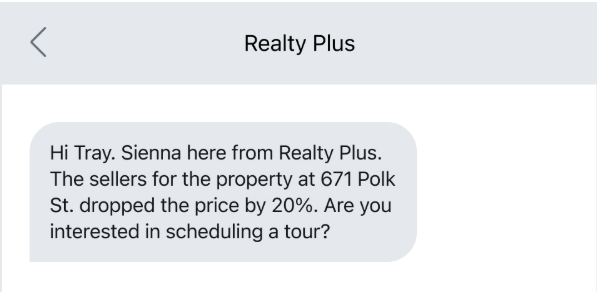
Price drops are often a strong motivator for previously interested but hesitant buyers. Agents should immediately notify clients who have shown interest in a particular property (e.g., viewed it, saved it to favorites, made an inquiry) when its price is reduced. The message should clearly state both the old and new prices, providing context and highlighting the potential value proposition. Including a link to the updated listing allows buyers to quickly revisit the property with its new pricing.
- Example SMS: “(Name), a match for your saved search just dropped $20K: 3-bed ranch in Cedar Park, now $378K. Details: [link] Reply and I’ll book a showing. -(Agency Name)”
5. Open House Promotions:
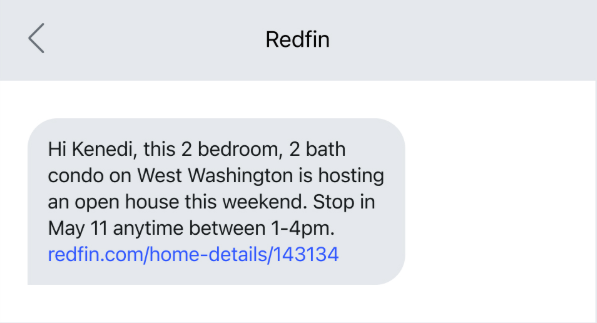
Promoting open houses via SMS can significantly boost attendance. Messages should provide all necessary information upfront: date, time, address, key property features, and listing price. Agents should target buyers searching in the specific location or price range of the open house. A mid-week invitation followed by a reminder the day before ensures maximum visibility. Clarifying whether an RSVP is required or if visitors can simply drop by can also reduce barriers to attendance.
- Example SMS: “Open house Sun 1-3 PM: 71 Lakemont Dr, 4-bed with finished basement, $529K. No RSVP, just stop by. Listing and directions: [link] -(Agent Name), (Agency Name)”
6. Buyer/Seller Nurture Campaigns:
Long-term client relationships are built on consistent value and communication, extending beyond a closed deal. Nurture campaigns involve sending relevant market updates to past clients, such as monthly market summaries for their previous neighborhood, new listings in areas they expressed interest in, or general real estate news. These campaigns prevent agents from losing future listings and referrals by staying top-of-mind. Personalization, based on location and past preferences, is key to maintaining engagement, and every message must include a clear opt-out option for compliance.
- Example SMS: “(Name), your June Cedar Park snapshot: 14 new listings, median $402K, homes sitting longer than spring. Report: [link] -(Agency Name) Reply STOP to opt out.”
Navigating the Regulatory Landscape: Compliance and Best Practices
While the benefits of SMS marketing are substantial, agents must operate within a strict regulatory framework to avoid hefty penalties. The Telephone Consumer Protection Act (TCPA) in the United States, along with similar regulations in other jurisdictions, governs how businesses can communicate with consumers via text message. Non-compliance can result in fines ranging from $500 to $1,500 per message, with each text potentially counting as a separate violation.
Key compliance considerations include:
- Explicit Consent (Opt-in): Agents must obtain clear, written consent from every recipient before sending any marketing text messages. This is typically achieved through double opt-in processes via web forms, physical sign-up sheets at open houses, or initial opt-in messages where the user confirms their desire to receive texts. The consent mechanism must clearly state the purpose of the messages, expected frequency, and that message and data rates may apply.
- Clear Opt-Out Mechanism: Every marketing SMS must include an easy and clear way for recipients to opt out of future communications. Common keywords like “STOP,” “UNSUBSCRIBE,” or “END” must be recognized, and the system should automatically remove the user from the list upon receiving such a response. This process must be immediate and frictionless.
- Quiet Hours: Messages generally must be sent between 8 a.m. and 9 p.m. in the recipient’s local time zone. However, some states or regions may have stricter requirements. Automated systems should have quiet-hours settings to prevent messages from being sent outside these windows, regardless of the agent’s time zone.
- Transparency: Agents must clearly identify themselves and their agency in every message. Deceptive practices or misleading information are strictly prohibited.
- Record Keeping: Maintaining meticulous records of consent, message logs, and opt-out requests is crucial for demonstrating compliance in case of an audit or complaint.
Adhering to these regulations is not merely a legal obligation but also a fundamental aspect of building trust with clients. Transparent and respectful communication practices foster a positive brand image and ensure the long-term viability of SMS marketing efforts.
Implementing an SMS Marketing System: A Step-by-Step Guide
For real estate agents looking to integrate SMS marketing into their operations, a systematic approach is essential:
1. Choose an SMS Marketing Platform:
The foundation of a successful SMS strategy is a robust marketing platform. Agents should look for solutions that offer:
- List-building tools: Integrated signup forms, pop-ups, and opt-in message capabilities.
- Segmentation features: The ability to group contacts based on various criteria (e.g., property preferences, engagement history).
- Automation workflows: Pre-built or customizable sequences for common real estate scenarios (reminders, follow-ups).
- Compliance features: Built-in TCPA legal blocks, automatic opt-out management, quiet-hours settings.
- Analytics and reporting: Dashboards to track delivery rates, open rates, click-through rates, and conversions.
- CRM integration: Seamless connection with existing customer relationship management systems.
- Scalability and pricing transparency: Understanding per-message rates and how costs will evolve with volume.
Platforms like Omnisend offer combined SMS and email marketing capabilities, prebuilt automation flows, and compliance safeguards, providing a comprehensive solution.
2. Build and Segment Your Contact List:
The first rule of SMS marketing is obtaining explicit consent. Agents should utilize website pop-ups, dedicated landing pages, and physical sign-up sheets at open houses, ensuring all clearly state the purpose of collecting phone numbers and offer an obvious opt-in. Once the list grows, segmentation becomes vital. Sending generic messages to a diverse audience leads to low engagement. Effective segmentation for real estate includes:
- Buyer vs. Seller: Tailoring content specifically to their needs.
- Location/Neighborhood: Sending alerts relevant to their preferred areas.
- Price Range: Matching properties within their budget.
- Property Type: Filtering for condos, single-family homes, multi-family, etc.
- Engagement Level: Categorizing active leads vs. past clients.
- Recent Activity: Segmenting based on recent inquiries or showings.
Such precise targeting ensures that messages are always relevant, maximizing engagement and minimizing opt-outs.
3. Create Concise and Relevant SMS Messages:
Given the character limits of SMS, brevity is paramount. Every message should have a single, clear purpose and a direct call to action. The most critical information (e.g., price drop, showing time) should appear first. Agents should use natural, conversational language, avoiding jargon, excessive punctuation, or all-caps, which can make messages seem spammy. While emojis can add personality, they should be used sparingly and appropriately. Utilizing a platform’s character counter and preview screen helps ensure messages are perfectly formatted and within limits. Cadence is also important; two to three well-timed, value-driven messages per month are typically sufficient to maintain engagement without overwhelming recipients.
4. Set Up Automation Workflows:
Automation is the backbone of efficient SMS marketing. Agents should identify repetitive communication tasks that can be automated, such as:
- Welcome messages: For new subscribers.
- Appointment confirmations and reminders: As outlined above.
- New listing alerts: Based on client preferences.
- Lead nurturing sequences: A series of messages delivered over time.
- Post-showing follow-ups: Gathering feedback.
Visual automation builders allow agents to map out customer journeys, defining triggers and conditions for sending specific messages. Testing these workflows thoroughly before activation is crucial to ensure correct timing, message accuracy, and functional links.
5. Track and Optimize Performance:
Launching campaigns is only half the battle; continuous monitoring and optimization are essential for maximizing ROI. Agents should regularly track key metrics:
- Delivery Rate: Percentage of messages successfully delivered.
- Open Rate: Percentage of messages opened (often assumed to be near 100% for SMS).
- Click-Through Rate (CTR): Percentage of recipients who clicked on a link within the message.
- Response Rate: Percentage of recipients who replied to the message.
- Opt-Out Rate: Percentage of recipients who unsubscribed.
- Conversion Rate: Percentage of messages leading to a desired action (e.g., showing booked, listing viewed).
Low CTRs or response rates might indicate issues with message content, timing, or targeting. A/B testing different subject lines, calls to action, or even message timing can reveal what resonates best with the audience. Platforms with robust analytics dashboards provide real-time insights, enabling agents to identify underperforming campaigns and make data-driven adjustments.
Technological Integrations and Future Outlook
The future of real estate SMS marketing is increasingly intertwined with advanced technological integrations. Seamless integration with CRM systems is becoming standard, allowing agents to centralize client data and personalize SMS communications based on a comprehensive understanding of each client’s journey. Artificial intelligence (AI) and chatbots are also poised to play a larger role, enabling automated, intelligent responses to common client queries, scheduling assistance, and even personalized property recommendations based on predictive analytics. This will further enhance efficiency and client satisfaction, providing instant, round-the-clock support.
Moreover, the combination of SMS with other digital channels, such as email and social media, within an omnichannel marketing strategy will allow for a more cohesive and comprehensive client experience. For instance, an SMS alert about a new listing could be followed by an email with more detailed property information, and then retargeting ads on social media. This integrated approach ensures that clients receive information through their preferred channels, maximizing touchpoints and engagement.
Conclusion
Real estate SMS marketing is no longer an optional add-on but a fundamental component of a successful, modern real estate practice. Its inherent directness, immediacy, and high engagement rates make it an unparalleled channel for critical communications, from new listing alerts to appointment reminders and lead follow-ups. By embracing strategic campaigns, adhering strictly to compliance regulations, and leveraging robust marketing platforms, real estate agents can significantly enhance client engagement, streamline their operations, and ultimately drive more successful deal closures. In a market that continues to accelerate, the ability to communicate swiftly and effectively via text message provides a powerful competitive advantage, ensuring agents remain at the forefront of client interaction and service delivery. The path forward for real estate professionals lies in fully integrating and optimizing this potent tool, transforming quick texts into lasting client relationships and profitable transactions.