For the past decade, the digital advertising realm has undergone continuous transformation, marked by a predictable yet dynamic shift in costs. While the price for clicks and leads has generally trended upward, a parallel evolution in platform efficiency, particularly on giants like Google, has seen click-through and conversion rates surge dramatically. This intricate interplay of rising costs and enhanced effectiveness necessitates a nuanced understanding for businesses seeking to maximize their return on investment. This comprehensive guide delves into the complexities of online advertising expenditures, offering clear insights, actionable examples, and strategic tips to help advertisers set realistic expectations, optimize their budgets, and ultimately, drive more leads and sales.
Our analysis draws from a robust dataset, encompassing internal benchmark studies and external research, to provide a factual overview of current online advertising costs. The data reveals a varied cost structure across platforms, influenced by a multitude of factors including business goals, industry competition, and target customer demographics.

Key Averages in Online Advertising Costs
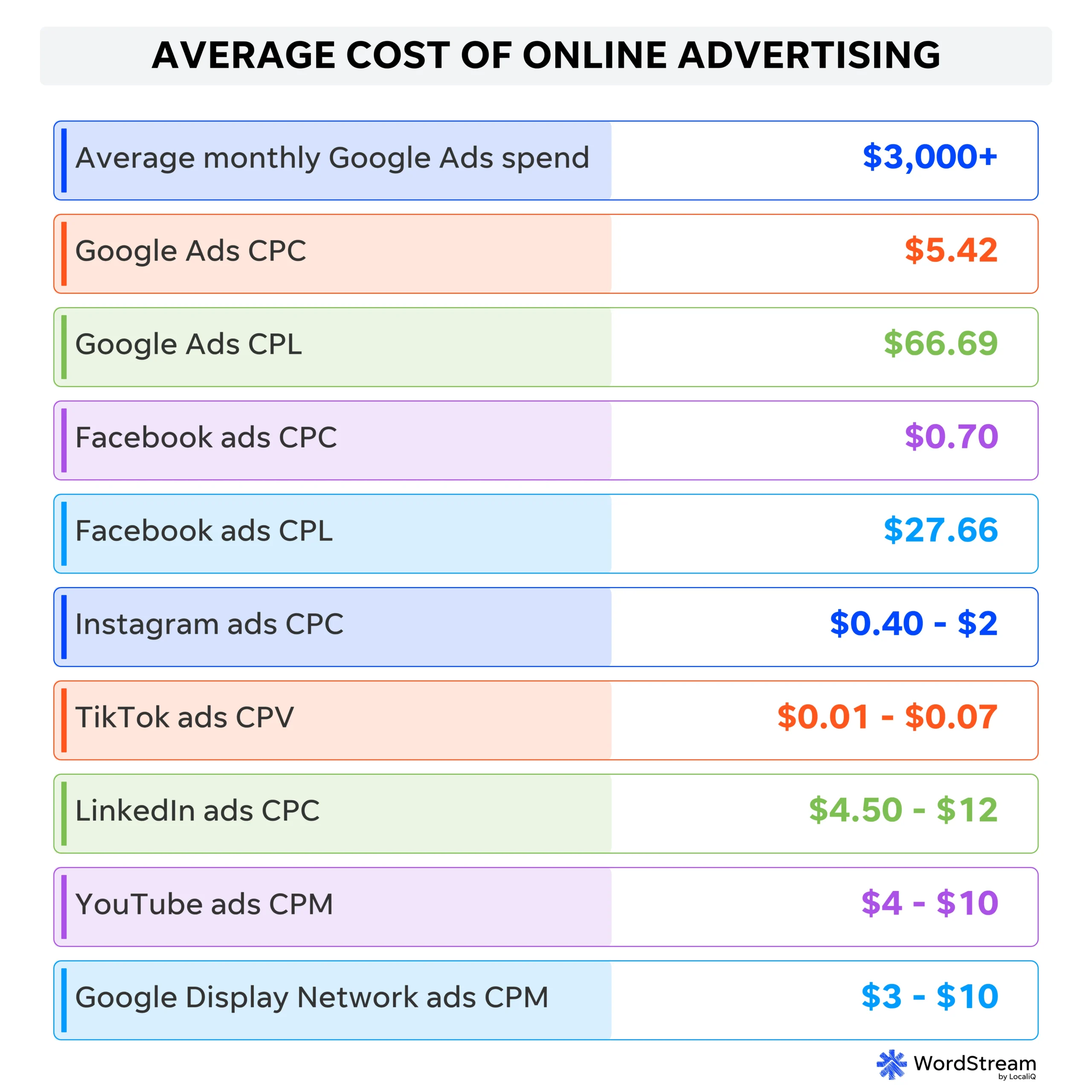
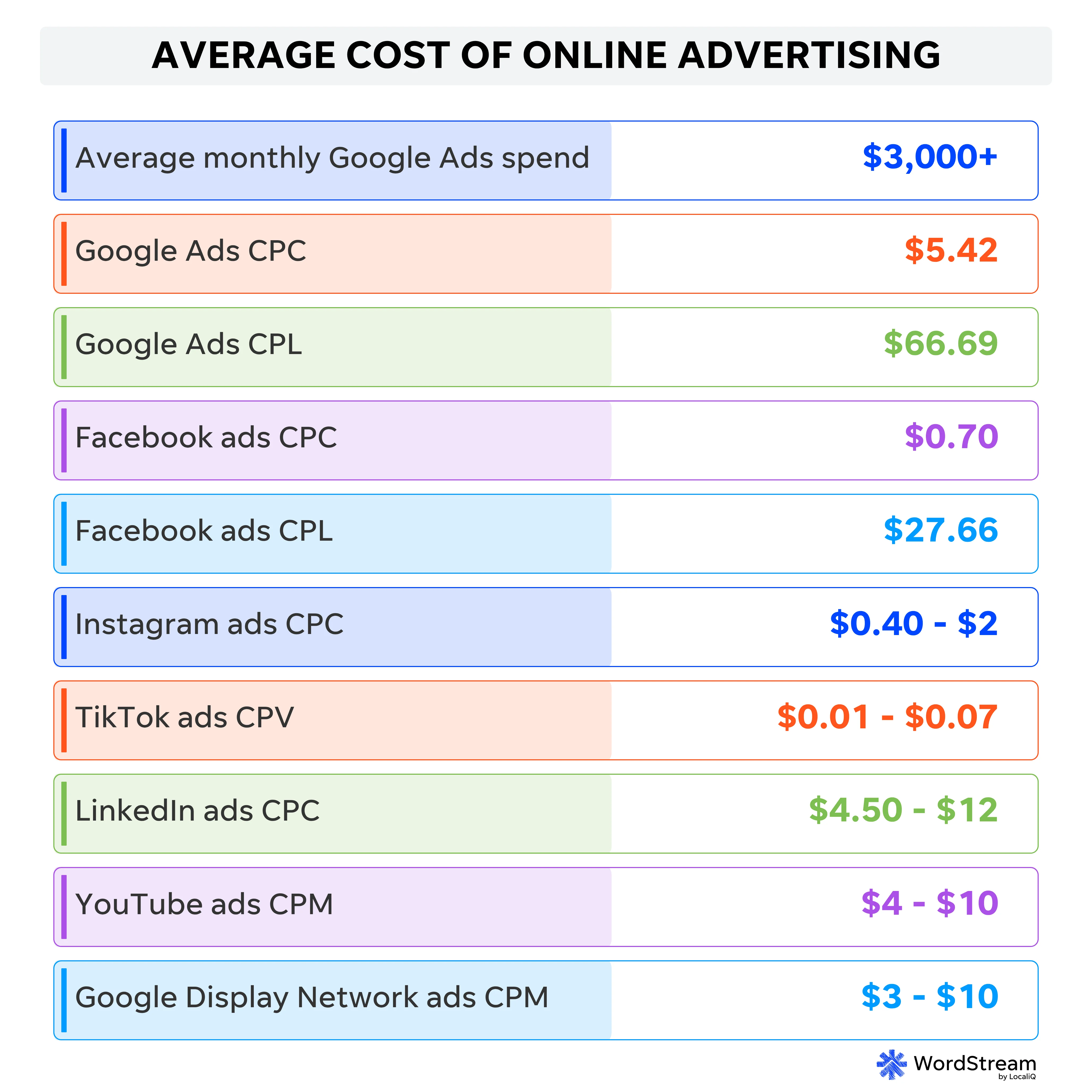
To illustrate the current market, consider these average costs:
- Average Monthly Google Ads Spend: Exceeding $3,000 for many small businesses.
- Google Ads Cost Per Click (CPC): Averaging $5.42.
- Google Ads Cost Per Lead (CPL): Averaging $66.69.
- Facebook Ads CPC: A more accessible $0.70 for traffic campaigns.
- Facebook Ads CPL: Averaging $27.66 for lead generation campaigns.
- Instagram Ads CPC: Ranging from $0.40 to $2.
- TikTok Ads Cost Per View (CPV): Typically between $0.01 and $0.07.
- LinkedIn Ads CPC: A higher range of $4.50 to $12, reflecting its professional audience.
- YouTube Ads Cost Per Mille (CPM): Ranging from $4 to $10.
- Google Display Network Ads CPM: Similar to YouTube, ranging from $3 to $10.
These figures provide a foundational understanding, but the true cost of online advertising is deeply contextual.
The Dominance of Google Ads: Search Intent and ROI
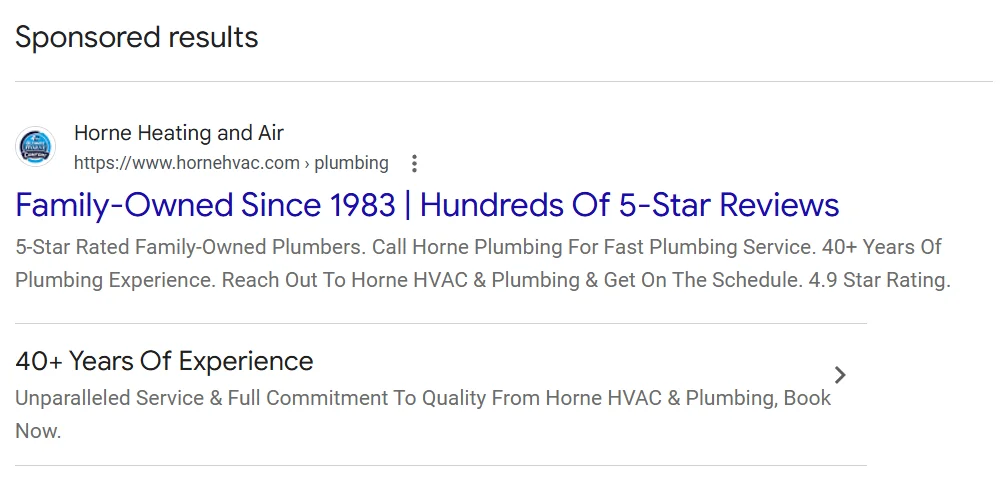
Google Ads, a cornerstone of pay-per-click (PPC) advertising, remains a vital channel due to its ability to capture users with high purchase intent. When a user actively searches for a product or service, such as “best local plumber,” they are often in a decisive stage of their buying journey. This intent translates into higher conversion rates and, consequently, a greater return on investment for advertisers.
The average small business allocates approximately $3,000 per month to Google Ads. The pricing models primarily revolve around cost per click (CPC) and cost per lead (CPL).
Understanding Google Ads Cost Per Click (CPC)
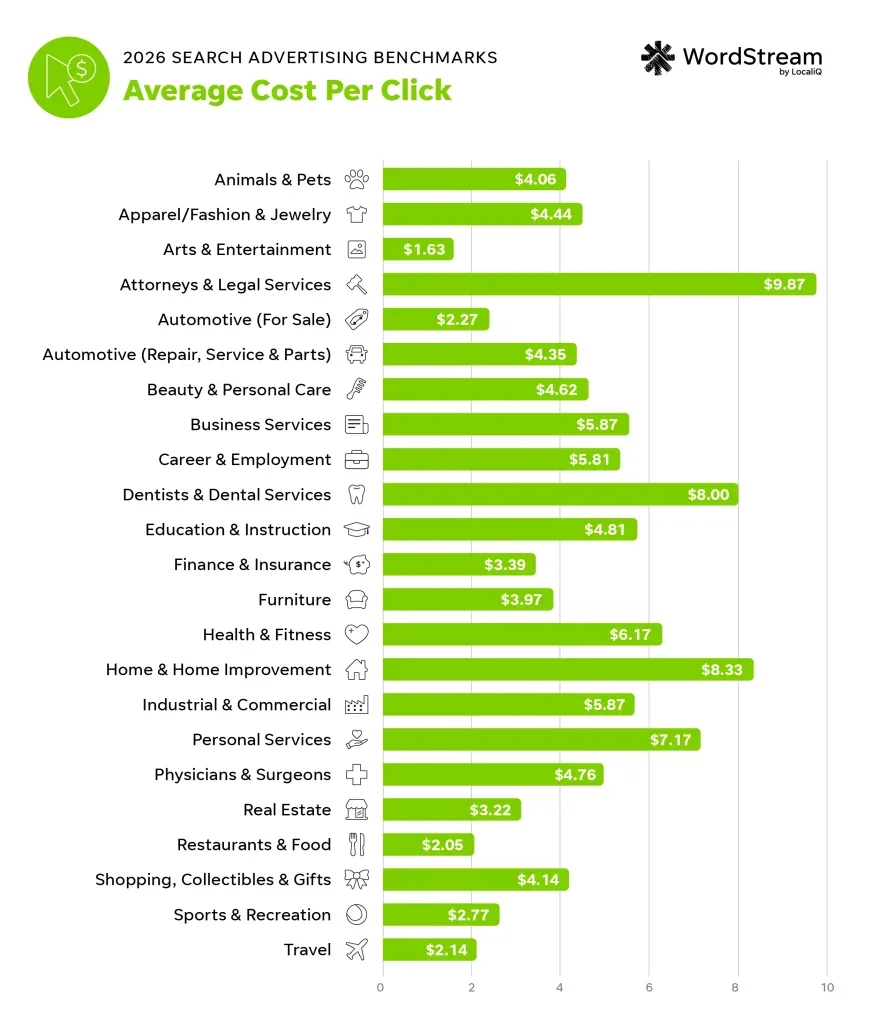
The average CPC on Google Ads stands at $5.42. This model charges advertisers each time a user clicks on their ad. The exact CPC is determined dynamically through Google’s ad auction system, which evaluates numerous factors, including keyword relevance, bid amount, ad quality, and expected click-through rates, to rank ads and set their prices. A thorough understanding of this auction process is crucial for optimizing CPC.
Industry Variations in Google Ads CPC:
The cost of a click can vary significantly by industry, reflecting the competitive landscape and the perceived value of a lead within that sector.
- Arts & Entertainment: A more budget-friendly $1.63 per click.
- Attorneys & Legal Services: Commands a significantly higher CPC, nearing $10.
This disparity highlights the importance of industry benchmarking when setting advertising budgets and performance expectations.
Google Ads Cost Per Lead (CPL)
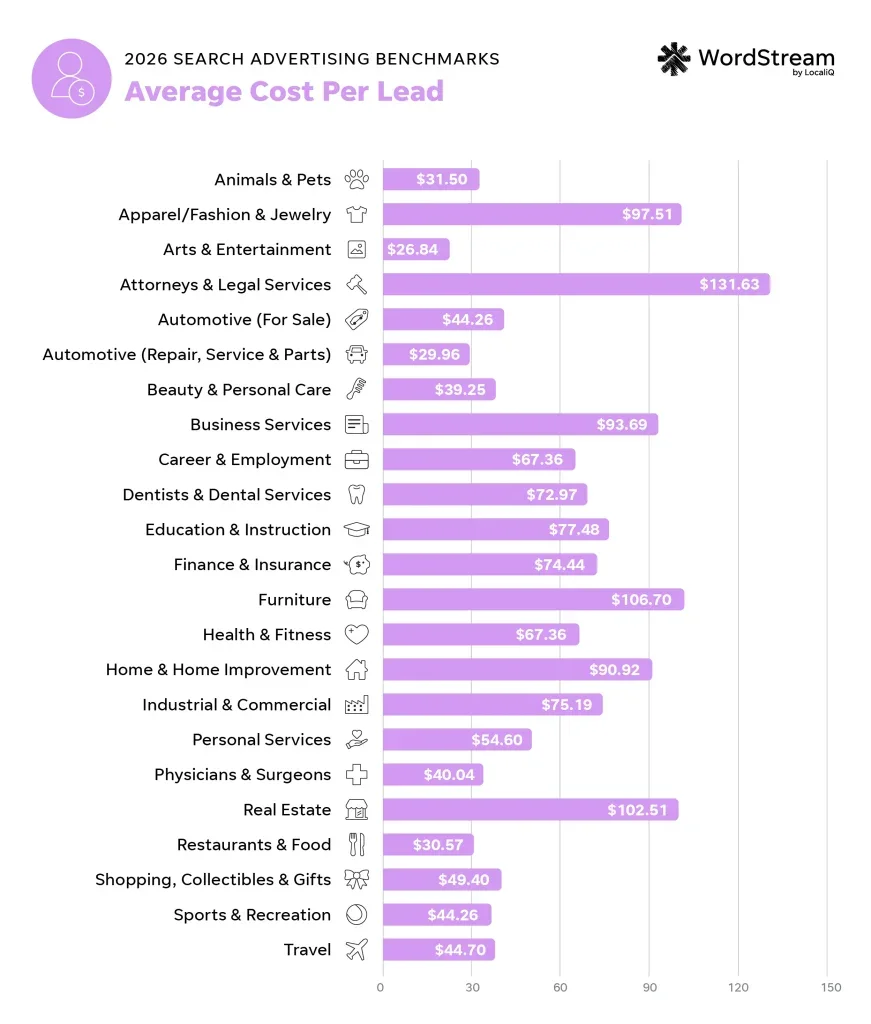
The average CPL for Google Search Ads is $66.69. In this model, advertisers are charged when a user completes a predefined conversion action, such as filling out a lead form, downloading a resource, or subscribing to a newsletter. CPL is often considered the ultimate “money metric” as it directly ties advertising performance to tangible business outcomes and revenue generation.
Industry Variations in Google Ads CPL:
Similar to CPC, CPL is heavily influenced by industry dynamics. Highly competitive sectors often see higher CPLs.
- Real Estate: Typically experiences higher CPLs due to intense competition.
While Google Ads continues its reign, social media platforms have emerged as formidable competitors, rapidly gaining market share in the digital advertising arena.
The Ascendancy of Social Media Advertising
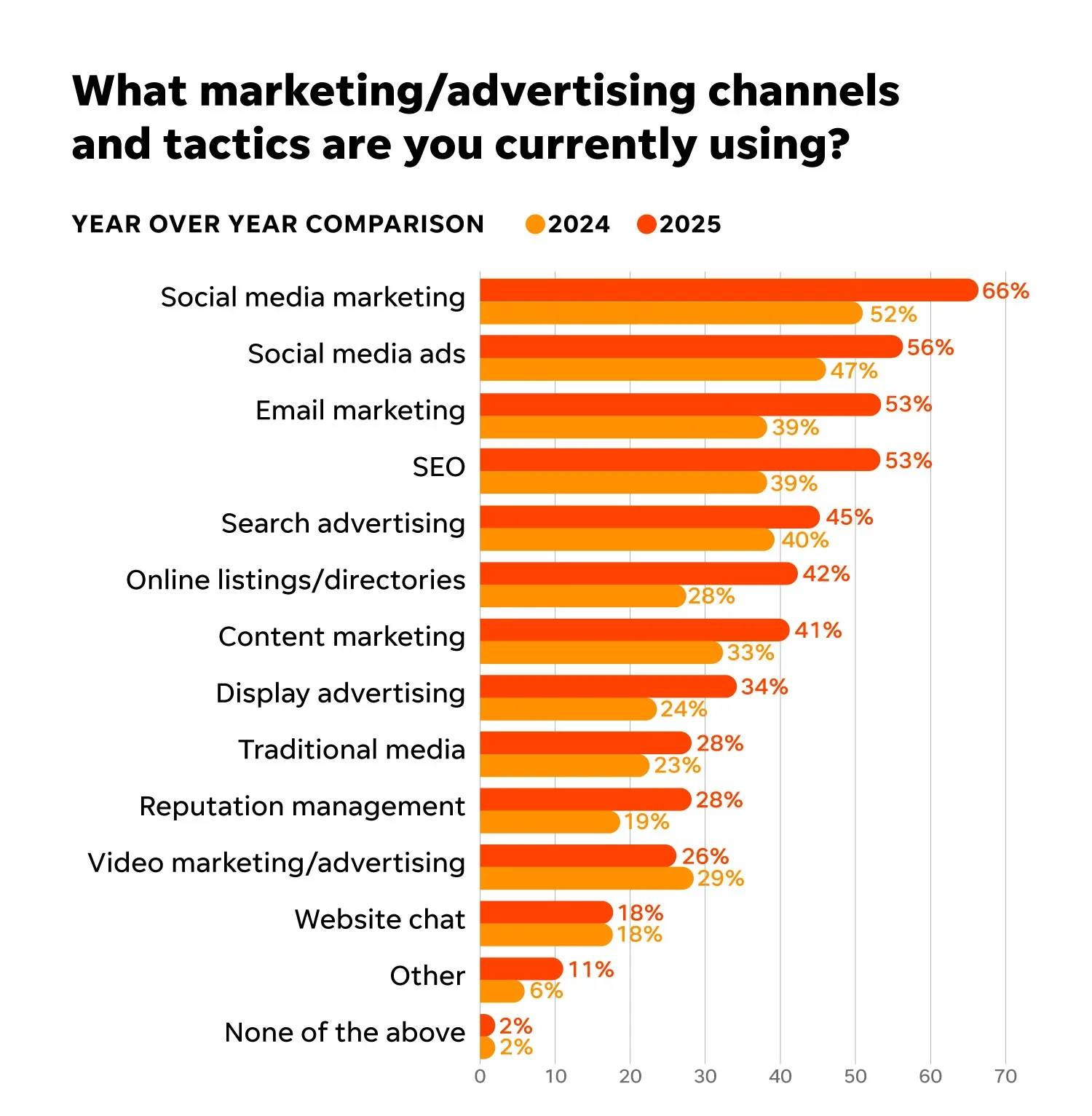
Social media has evolved into a powerhouse advertising channel, increasingly rivaling search engines in revenue generation. Projections indicate that Meta (the parent company of Facebook and Instagram) is poised to surpass Google in digital ad revenues, underscoring the platform’s growing influence. Small businesses consistently rank social media among their top advertising channels, drawn by its vast reach and sophisticated targeting capabilities.
Each social media platform employs unique pricing and ad delivery mechanisms, requiring a tailored approach.
Facebook Ad Costs: Reach and Engagement
Facebook, as the largest social network globally, offers flexible advertising options that make it a valuable platform for diverse businesses. Its advertising system operates on an auction model, similar to Google, though with different bidding criteria.
Facebook Traffic Campaigns:
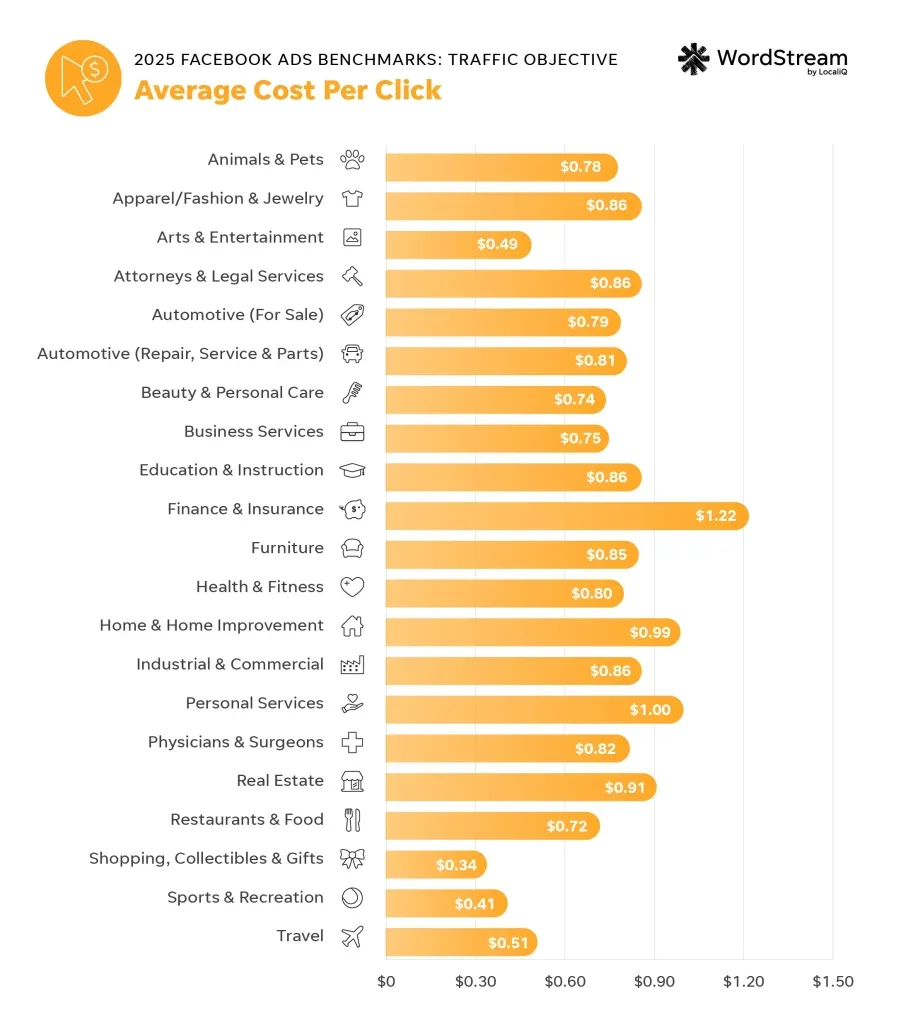
These campaigns prioritize driving website traffic, optimizing ad delivery to users most likely to click. The primary metric for success is CPC.
- Average CPC for Traffic Campaigns: $0.70.
Industry CPC Variations on Facebook:

- Finance & Insurance: Often see the highest CPCs.
- Shopping, Collectibles & Gifts: Tend to have the lowest CPCs.
Facebook Leads Campaigns:
These campaigns are designed to maximize lead generation and conversions, often utilizing Facebook Lead Ads that allow users to submit their information directly within the platform.
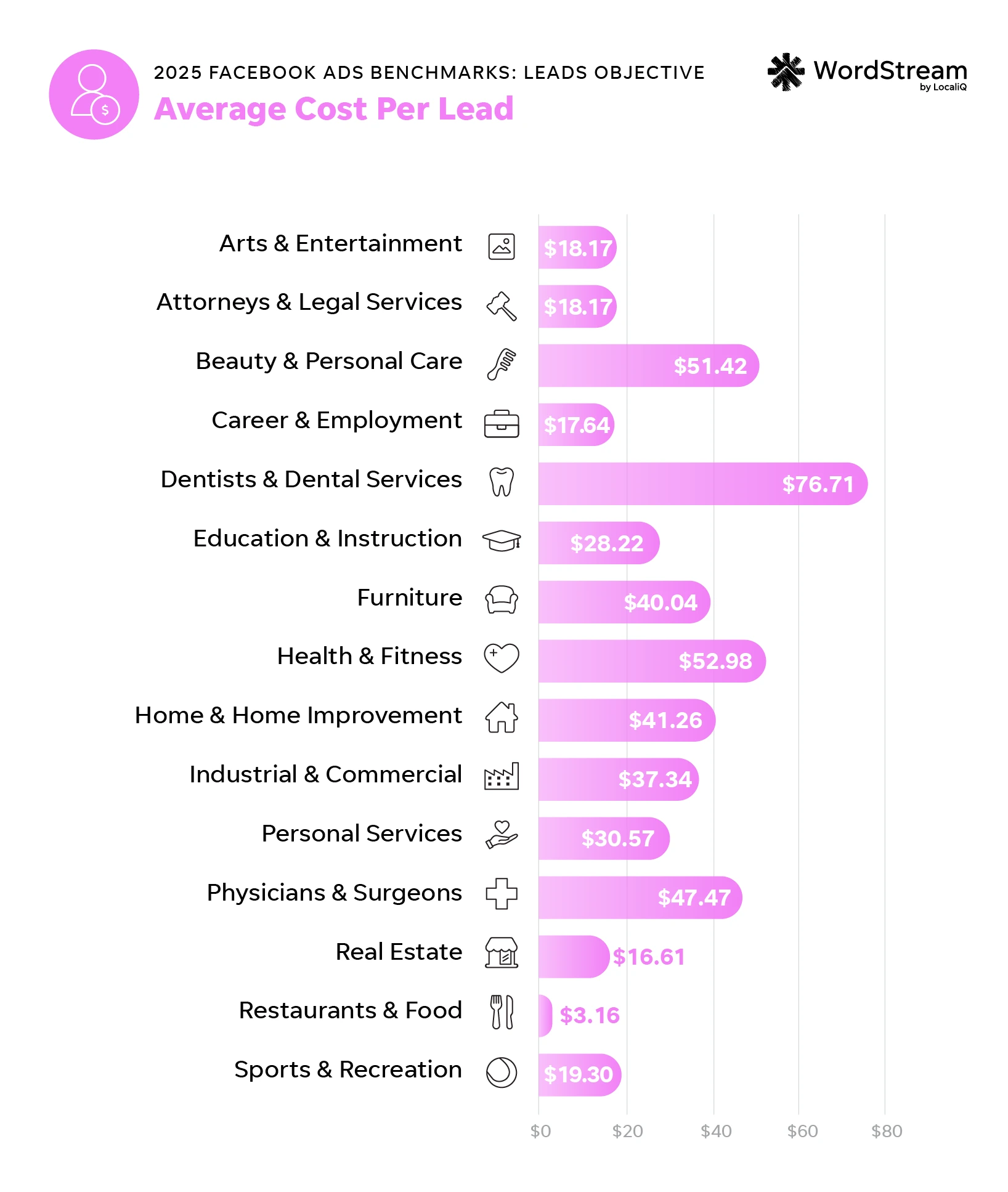
- Average CPL for Lead Campaigns: $27.66.
Industry CPL Variations on Facebook:
- Dentists & Dental Services: Report some of the highest average CPLs.
- Restaurants & Food Industry: Typically experience the lowest average CPLs.
Instagram Advertising Costs: Visual Appeal and Engagement
As a subsidiary of Meta, Instagram’s advertising costs and operational models closely mirror those of Facebook. This synergy simplifies the advertising process for users familiar with Facebook Ads, making it accessible for new advertisers as well. The platform’s visually driven nature makes compelling imagery and video crucial for ad success.
Based on various studies, Instagram ad costs are:
- Average CPC: $0.70 (for traffic campaigns).
- Average CPL: $27.66 (for lead generation campaigns).
- Average CPM: $6.20 (for awareness campaigns).
TikTok Advertising Costs: Rapid Growth and High Engagement
TikTok has rapidly ascended as a significant marketing channel, appealing to a broad spectrum of users across different age groups and interests. Notably, TikTok ads have demonstrated higher click-through rates than those on Facebook and Instagram. The platform’s ad auction system, diverse ad formats, and minimum budget requirements necessitate a strategic approach.
Current data on TikTok ad costs indicates:
- Cost Per View (CPV): $0.01 – $0.07.
- Cost Per Mille (CPM): $4.00 – $10.00.
LinkedIn Advertising Costs: The B2B Powerhouse
LinkedIn remains a dominant force in B2B advertising, though its appeal is extending to B2C brands seeking to reach a professional demographic. Ads on LinkedIn are governed by an auction system combined with a relevancy score.
Averaging available LinkedIn ad cost data reveals:

- Average CPC: $4.50 – $12.
- Average CPL: $50 – $150.
- Average CPM: $10 – $20.
YouTube Advertising Costs: Video-Centric Reach
YouTube functions as a multifaceted platform, blending search engine capabilities with streaming and social media elements. Over 90% of consumers report discovering new products and brands on YouTube, making it a critical channel for brand awareness and product discovery.
The cost of YouTube ads varies significantly by ad type and objective. Skippable in-stream ads, for instance, often utilize a CPV model, while non-skippable ads are typically charged on a CPM basis.
- Average CPM (for display ads): $3 – $10.
- Average CPV (for in-stream ads): $0.05 – $0.30.
Display Advertising Costs: Broad Reach and Brand Building
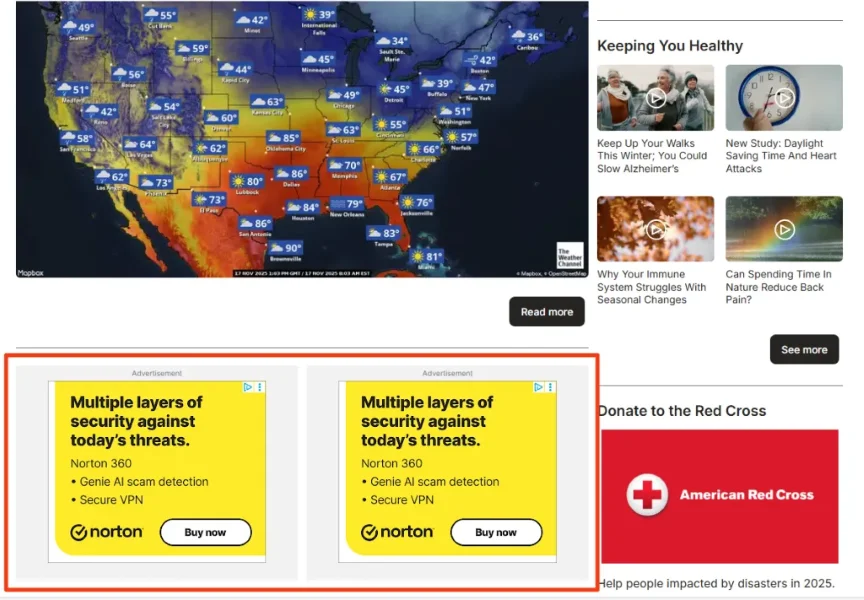
Display ads, encompassing visual formats like banner ads and video placements, are strategically positioned across websites and mobile applications. Unlike search ads, which are triggered by user queries, display ads proactively reach audiences based on targeting parameters such as demographics, interests, and past behaviors. This makes them exceptionally effective for building brand and product awareness.

The Google Display Network (GDN) offers extensive reach, encompassing over 35 million websites and Google properties like YouTube and Gmail.
- Google Display Network Ads CPM: $3 – $10.
Other networks, such as the USA TODAY Network, also offer significant reach, connecting advertisers with millions of potential customers across a diverse portfolio of websites.
Seven Strategies to Optimize Online Advertising Costs
To ensure that advertising spend translates into tangible results, implementing strategic cost-control measures is paramount.

1. Enhance Ad Relevancy
Ad relevancy is the degree to which an ad’s offer, copy, and creative align with the target audience’s needs and interests, and with the content of the landing page. Highly relevant ads attract more engaged users, reducing wasted spend on uninterested clicks. Furthermore, ad platforms like Google and TikTok prioritize relevant ads in their auctions, potentially leading to better ad placements even with lower bids.
2. Leverage Negative Keywords
Negative keywords are crucial for search campaigns, preventing ads from appearing for irrelevant search queries. Implementing negative keywords has been shown to significantly boost conversion rates. Studies of Google Ads accounts have found that those utilizing negative keywords achieve up to three times higher conversion rates compared to those that do not. This precise targeting ensures that ad budgets are allocated to audiences genuinely seeking what the business offers.
3. Refine Bidding Strategies
The bid amount dictates how much an advertiser is willing to pay for a desired outcome, such as a click or a lead. Bidding too low can result in missed visibility, while bidding too aggressively can inflate costs without proportional returns. Understanding the various manual and automated bidding strategies available on each platform and aligning them with campaign objectives is essential for optimal performance and cost management.

4. Tighten Targeting Parameters
A deep understanding of the target audience—their preferences, location, and professional backgrounds—is fundamental to efficient ad targeting. Platforms offer sophisticated targeting options, including geotargeting and lookalike audiences, which enable advertisers to reach the most receptive segments of their market. Utilizing these features effectively minimizes ad spend on unqualified prospects.
5. Implement Remarketing Strategies
Remarketing, or retargeting, allows advertisers to re-engage individuals who have previously interacted with their website or business. By showing tailored ads to these warm leads, businesses can significantly increase their conversion rates, as users who have shown prior interest are more likely to convert. Remarketing is available across major platforms like Google and Facebook, offering a cost-effective way to nurture potential customers through the sales funnel.
6. Create Dedicated Landing Pages
A dedicated landing page is a standalone web page designed specifically for an ad campaign, meticulously crafted to match the ad’s promise and guide visitors toward a single, specific action. This focused approach, free from the distractions of a full website, can dramatically improve conversion rates. Businesses utilizing well-optimized landing pages have reported conversion rate boosts of up to 220% compared to directing traffic to generic web pages.
7. Incorporate Power Words in Ad Copy
Compelling ad copy is vital for capturing attention and driving clicks, even with effective targeting and bidding strategies. Analyzing top-performing ads reveals the consistent use of “power words” – words that evoke emotion, urgency, or benefit. Incorporating these words can enhance ad effectiveness and improve the overall return on ad spend.
Frequently Asked Questions About Online Advertising Costs
What variables affect online ad costs?
Several factors influence online advertising expenses:

- Competition: Higher competition within an industry or for specific keywords drives up costs.
- Seasonality: Demand fluctuations throughout the year can impact ad prices.
- Ad Quality Score: Platforms like Google reward high-quality, relevant ads with lower costs.
- Targeting Precision: More specific targeting can lead to higher relevance and efficiency.
- Bidding Strategy: The chosen bidding strategy directly impacts how much is spent.
- Industry: Different sectors have inherent variations in advertising costs.
What are the most common online ad pricing models?
The primary pricing models include:
- Cost Per Click (CPC): Pay for each click on an ad.
- Cost Per Mille (CPM): Pay for every 1,000 impressions (views) of an ad.
- Cost Per Lead (CPL): Pay when a user completes a desired lead action.
- Cost Per Acquisition (CPA): Pay for each successful conversion or sale.
- Cost Per View (CPV): Primarily used for video ads, paying for each view.
How much should be spent on Google Ads?

While there is no one-size-fits-all answer, experts recommend a starting budget of $1,000 to $2,500 per month for Google Ads. This range provides sufficient data for Google’s algorithms to optimize bidding and targeting effectively, leading to better performance over time.
Conclusion: Navigating the Dynamic Digital Advertising Landscape
Online advertising presents an unparalleled opportunity for businesses to expand their reach, cultivate brand awareness, and acquire new customers. The sophisticated targeting, creative possibilities, and vast audience reach make it an indispensable tool for modern businesses. However, without astute strategies and diligent management, advertising costs can escalate rapidly, diminishing efficiency and hindering the realization of desired outcomes.
The data and strategic recommendations presented in this guide serve as a vital resource for establishing benchmarks and effectively managing advertising expenditures. By understanding the nuances of platform costs, implementing optimization techniques, and continually refining campaign strategies, businesses can ensure their online advertising investments yield maximum returns, driving sustainable growth in the ever-evolving digital marketplace.