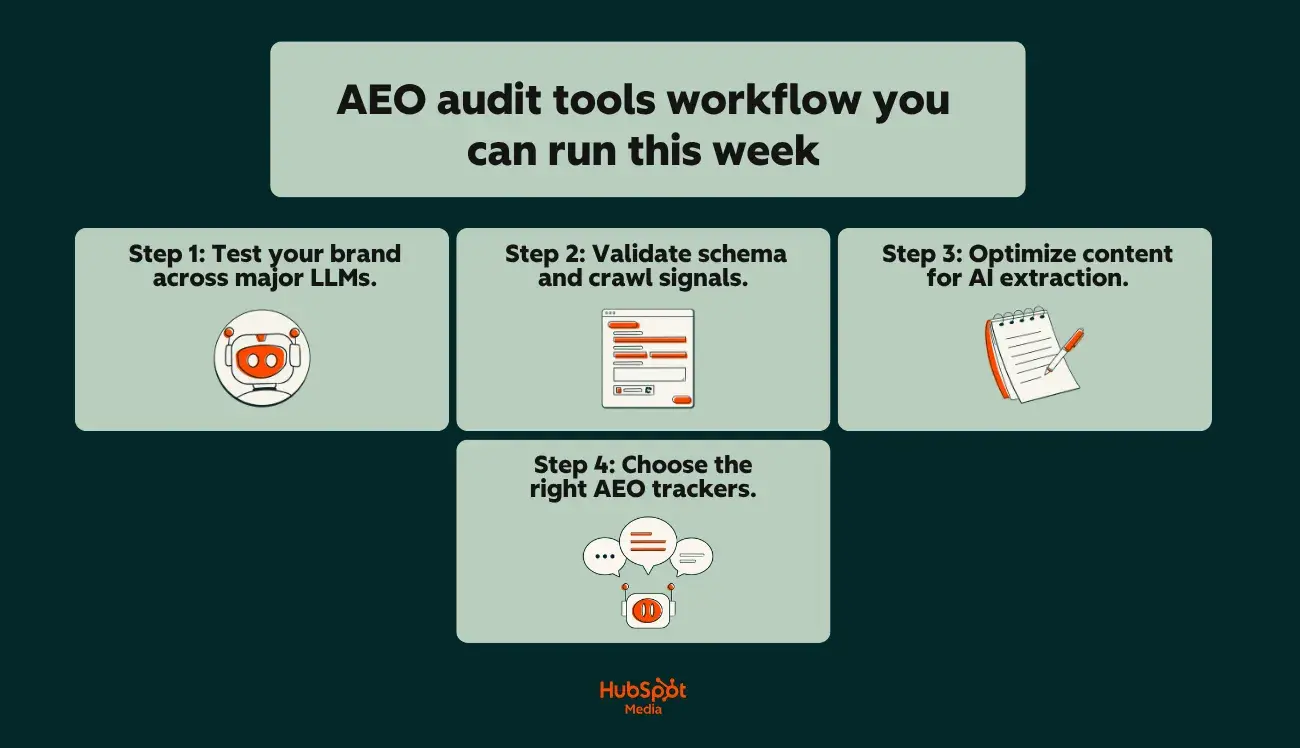
The rapid evolution of artificial intelligence has profoundly reshaped the digital search landscape, ushering in a new imperative for brands: Answer Engine Optimization (AEO). No longer sufficient to merely track traditional search engine rankings or website crawl health, modern digital marketing teams now face the critical challenge of ensuring their brand is accurately and prominently cited by AI-powered answer engines such as ChatGPT, Perplexity, and Gemini. This shift necessitates the adoption of specialized AEO audit tools, which have become indispensable for any organization aiming to maintain relevance and influence in the burgeoning era of direct, AI-driven recommendations. These tools represent a crucial, yet often overlooked, measurement layer for SEO managers, content strategists, and growth marketers.
The Paradigm Shift: From Keywords to Conversational AI
For decades, Search Engine Optimization (SEO) focused primarily on keywords, backlinks, and technical site health to rank content on traditional search engine results pages (SERPs). The objective was to appear high in a list of links, encouraging users to click through to a website. However, the advent of sophisticated Large Language Models (LLMs) and their integration into search interfaces marks a fundamental departure from this model. Consumers are increasingly bypassing traditional search results, opting instead to ask conversational AI platforms for direct answers, summaries, and recommendations. Industry analysts suggest that a significant percentage of online queries are now routed through or influenced by AI chatbots, a figure projected to grow by over 40% annually in the coming years. This seismic shift underscores why brands must now prioritize visibility and accuracy within these new digital gatekeepers.
The timeline of this evolution has been remarkably swift. While rudimentary conversational AI existed for years, the public launch of advanced LLMs like OpenAI’s ChatGPT in late 2022 catalyzed a rapid integration of AI into mainstream search. Google’s Search Generative Experience (SGE) and Microsoft’s Copilot (formerly Bing Chat) quickly followed, demonstrating a commitment from major search providers to an answer-first approach. This swift adoption has created an urgent need for brands to adapt their digital strategies, with AEO emerging as the discipline specifically designed to navigate this new environment. Marketing strategists widely agree that proactive, regular AEO auditing is non-negotiable for competitive differentiation in the current digital ecosystem.
Why AEO Audit Tools Are Crucial for Your 2026 Strategy and Beyond
The imperative for AEO audit tools is rooted in the fundamental change in how buyers discover information and make decisions. When a prospective customer asks an AI engine for a product recommendation, a solution to a problem, or a comparison between services, the brand cited directly by that AI gains an unprecedented level of authority and trust. Failing to appear in these citations, or worse, being cited inaccurately, poses a significant threat to brand visibility and reputation. Data from recent consumer surveys indicate that over 60% of users trust AI-generated recommendations, highlighting the potential impact on brand perception and purchasing decisions.
AEO audit tools are designed to measure this specific form of answer engine visibility. Unlike traditional SEO audits that focus on organic rankings and technical crawlability, AEO tools track whether a brand is being mentioned, how often, for which queries, and with what level of accuracy across diverse AI platforms. This continuous monitoring is vital because the AI landscape is dynamic. Models are constantly retraining on new data, competitors are publishing fresh content optimized for AI extraction, and citation logic can shift without warning. A brand that is prominently cited by Perplexity today could easily disappear from its recommendations next month if a more authoritative or better-structured source emerges. Therefore, the best AEO audit solutions treat visibility tracking not as a one-time snapshot but as an ongoing, iterative process critical for sustained digital presence.
The Comprehensive AEO Audit Process: A Step-by-Step Guide

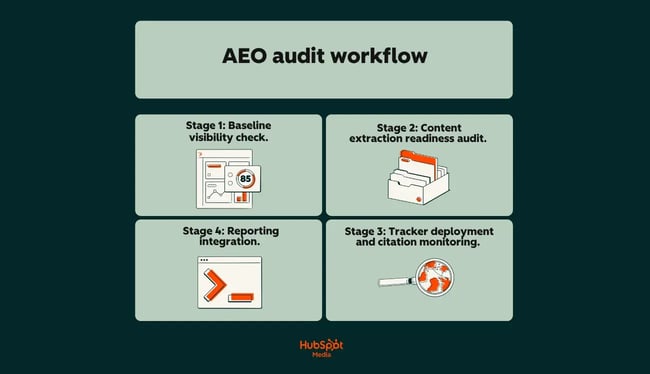
Effectively auditing Answer Engine Optimization requires a structured approach that moves from initial assessment to continuous monitoring and refinement. This multi-stage process ensures that brands not only identify current visibility gaps but also establish a framework for ongoing performance improvement.
Step 1: Baseline Visibility Check – Uncovering Your Current Footprint
Before investing in any dedicated AEO software, it is prudent for teams to conduct a thorough, often free, diagnostic of their current answer engine visibility. This initial baseline check reveals exactly where a brand appears (or is conspicuously absent) across major AI platforms like ChatGPT, Perplexity, and Gemini. Tools like HubSpot’s AI Search Grader offer a valuable starting point, providing an automated assessment of a brand’s presence without immediate financial commitment. This step is crucial for understanding the scale of the AEO challenge and prioritizing subsequent actions. Manual queries across various platforms, using core brand keywords and common customer questions, should complement automated checks to provide a comprehensive initial picture. For instance, testing queries like "best [product category] for [specific need]" or "reviews of [brand name]" can reveal immediate citation patterns.
Step 2: Content Extraction Readiness Audit – Optimizing for AI Consumption
The ability of AI engines to cite a brand accurately hinges on the structure and clarity of its online content. AI models are designed to scan and extract specific "chunks" or paragraphs of information. Therefore, a critical step involves auditing existing content to ensure it adheres to best practices for AI extraction. This means reformatting introductory paragraphs to offer immediate answers to common questions, incorporating clear Q&A blocks, and utilizing comparison tables that AI can easily parse. The audit should focus on the top-performing 50-100 pages, assessing them against structural criteria such as heading hierarchy, conciseness of answers, and use of bullet points. Content marketers must think like an AI, anticipating how information will be consumed and re-presented.
Step 3: Tracker Deployment and Citation Monitoring – Establishing Continuous Oversight
With a foundational understanding of baseline visibility and content readiness, the next phase involves deploying dedicated AEO trackers. These tools are invaluable for continuous monitoring, mapping which specific queries trigger brand citations, and verifying the accuracy of those responses. They provide granular data on citation coverage, helping teams understand not just if they are cited, but how and for what. This level of detail is essential for identifying patterns, competitor activity, and areas requiring immediate content refinement. For example, a tracker might reveal that a brand is cited for product features but not for pricing, indicating a content gap.
Step 4: Reporting Integration and Performance Measurement – Connecting AEO to Business Outcomes
The ultimate value of AEO efforts lies in their measurable contribution to overall marketing and business objectives. Therefore, it is critical to integrate AEO citation data into existing marketing dashboards and reporting frameworks. AEO success is not merely about raw citations; it encompasses customer sentiment, share of voice within AI responses, and ultimately, its impact on lead generation and sales. Successful marketing teams correlate AEO performance with traditional SEO gains, campaign attribution, and other key marketing metrics, providing a holistic view of digital performance and demonstrating return on investment. This integration helps articulate the value of AEO beyond mere visibility, linking it directly to revenue generation.
The Tooling Landscape: Matching Solutions to Organizational Needs
The market for AEO audit tools is rapidly expanding, offering a range of solutions tailored to different organizational sizes, reporting maturities, and budget constraints. Selecting the right stack is paramount to effective AEO implementation.
Startup and SMB Stack: Validating Initial Presence
For smaller teams (1-5 marketers) or startups, the primary question revolves around fundamental visibility: "Does AI search even acknowledge our brand?" At this stage, cost-effective solutions are preferred, focusing on validating basic AI presence before committing substantial budget.
- Recommended Stack: Manual testing across ChatGPT, Perplexity, and Gemini, augmented by free tools like HubSpot’s AI Search Grader.
- Best For: Teams needing to confirm AI visibility and identify initial content gaps.
- Advantages: Zero cost, provides crucial early insights. If initial audits reveal negligible brand presence, the immediate priority shifts to content reformatting for AI extraction, rather than costly software.
- Pro Tip: Prioritize reformatting at least 30% of top pages with answer-first intros, Q&A sections, and comparison tables. AI-extraction-ready content is a prerequisite for any meaningful visibility.
Mid-market Stack: Scaling Monitoring and Integration
Mid-market organizations (5-20 marketers) with dedicated SEO functions require more robust solutions than manual spot-checks. Enterprise-level platforms may be outside their budget, making integrated solutions that layer citation tracking onto existing SEO and CRM workflows ideal.

- Recommended Stack: A dedicated AEO tracker integrated with an existing marketing automation and CRM platform (e.g., HubSpot Marketing Hub).
- Best For: Teams requiring ongoing citation monitoring, query research capabilities, and seamless integration with broader marketing reporting.
- Advantages: Reduces manual effort, provides continuous data, and integrates with existing systems, avoiding tool sprawl. This allows for a more holistic view of digital performance, linking AEO to customer journeys.
Enterprise Stack and Compliance Checklist: Comprehensive Governance and Scalability
Large enterprise teams (20+ marketers, multi-brand organizations, regulated industries) face complex challenges including standardizing measurement across diverse business units and ensuring regulatory compliance. Their AEO audit tools must consolidate tracking and content governance within their existing operational systems.
- Recommended Stack: An enterprise-grade AEO platform seamlessly integrated with a comprehensive marketing attribution system (e.g., HubSpot Marketing Hub with advanced attribution capabilities).
- Best For: Organizations needing robust, scalable solutions for multi-faceted brand management and detailed performance attribution.
- Advantages: Solves the critical measurement problem, allowing CMOs to link AEO success directly to key business metrics. Provides centralized control and reporting across complex organizational structures, vital for brand consistency.
- Enterprise Vetting Checklist: Before procurement, confirm:
- Data Security and Privacy: Compliance with global regulations (GDPR, CCPA, HIPAA for regulated sectors).
- Scalability: Ability to track thousands of queries across multiple brands/regions and languages.
- Custom Reporting: Flexibility to create tailored dashboards for different stakeholders (e.g., product teams, legal, marketing leadership).
- API Integrations: Seamless data flow with existing enterprise systems (CRM, BI tools, content management systems).
- Service Level Agreements (SLAs): Guaranteed uptime, data refresh rates, and dedicated support.
- Pro Tip: Negotiate pricing based on tracked queries and answer engines, not seat count. Data volume is the primary cost driver for AEO at scale, reflecting the true value derived.
Automating Recurring AEO Reports: Sustaining Momentum
A one-time AEO audit provides a snapshot; a recurring audit system reveals progress, identifies regressions, and informs strategic adjustments. Given the dynamic nature of AI models and competitor activity, establishing a consistent reporting cadence is essential.
Weekly: Citation Alerts and Brand Accuracy Flags
Weekly monitoring is designed for rapid response, catching issues before they escalate. This layer focuses on real-time accuracy and immediate alerts.
- Automate:
- Citation Alerts: Notifications when a brand is newly cited or drops from an AI response for key queries.
- Accuracy Monitoring: Automated checks for factual correctness of brand information (pricing, product features, company details).
- Sentiment Analysis: Basic monitoring of the tone and sentiment associated with brand citations, flagging potentially damaging misrepresentations.
- Pro Tip: Route these alerts to a centralized communication channel (e.g., Slack, email list) shared by SEO and content teams to ensure immediate awareness and coordinated action, avoiding departmental silos.
Monthly: Citation Share Reviews and Content Performance
Monthly reviews transition from reactive monitoring to strategic analysis, addressing the crucial question of AEO’s measurable impact.
- Automate:
- Citation Share Reports: Track the percentage of relevant queries for which the brand is cited, benchmarked against competitors.
- Content Performance Analysis: Link AEO citations to specific content pieces, identifying high-performing assets and areas for optimization.
- Query Trend Analysis: Monitor shifts in user queries and AI-generated answer patterns, informing future content strategy.
- Outcome: Provides a clear picture of whether the brand is gaining or losing ground in answer engines, and which content strategies are most effective, facilitating data-driven content planning.
Quarterly: Full Engine Tests and Stack Evaluation
Quarterly reviews offer a strategic zoom-out, re-evaluating the foundational AEO strategy and technological stack.
- Automate/Review:
- Comprehensive Baseline Retest: Rerun the initial baseline visibility check across the full query set and all prioritized answer engines.
- AEO Software Evaluation: Assess whether current tools continue to meet evolving needs and budget, considering new market entrants or feature updates.
- Strategic Reporting: Present high-level insights, trends, and future recommendations to leadership, linking AEO performance to broader business objectives and informing executive decisions.
- Outcome: Ensures the AEO strategy remains aligned with market dynamics and organizational goals, justifying ongoing investment and demonstrating leadership in digital innovation.
Navigating the AEO Landscape: Common Pitfalls and Best Practices
While the promise of AEO is significant, several common pitfalls can derail efforts. Awareness and proactive measures are key to successful implementation.
Pitfall 1: Tool-First Buying – The Cart Before the Horse
A pervasive mistake is the premature acquisition of AEO software without first conducting a baseline visibility test and a comprehensive content audit. Without understanding a brand’s current standing and content readiness, software selection can be misinformed and inefficient. The initial focus should always be on diagnosis and content optimization, only then moving to tool evaluation. Industry reports indicate that "tool sprawl" without clear strategy is a significant drain on marketing budgets.
Pitfall 2: Weak Documentation and Absence of a Measurement Framework
Many teams adopt AEO tools but fail to establish a clear definition of success or a robust measurement framework. Simply accumulating data without defined goals or KPIs leads to "numbers for the sake of numbers" syndrome. Before deploying any trackers, build a comprehensive framework that outlines what metrics will be tracked, how they will be interpreted, and what constitutes success.
- Best Practice: Store the measurement framework and baseline data within the same platform as citation reports. Platforms like HubSpot’s Marketing Hub can centralize AEO reporting alongside campaign attribution and pipeline data, providing context and actionable insights. This also aids in onboarding new team members and ensuring consistency.
Pitfall 3: Single-Engine Focus – The Blind Spot of Partial Coverage
A dangerous assumption is that testing visibility in one AI engine (e.g., ChatGPT) sufficiently represents the entire answer engine landscape. This creates significant blind spots. Each AI engine operates on different data sources, retrains on unique schedules, and applies distinct citation logic. A brand highly visible in ChatGPT might be entirely absent from Perplexity or Gemini. A holistic AEO strategy mandates comprehensive testing across all major players to ensure broad market reach and accurate representation.
Broader Implications for Digital Marketing and Content Strategy
The rise of AEO fundamentally alters the landscape for digital marketers. Content creation strategies must evolve from simply attracting clicks to providing clear, concise, and verifiable answers that AI engines can readily extract. This necessitates a greater emphasis on structured data, semantic SEO, and a deep understanding of user intent within conversational contexts. Brand reputation management also takes on a new dimension; inaccuracies or negative sentiment expressed by an AI can spread rapidly and carry significant weight, demanding swift intervention and continuous monitoring. Furthermore, digital marketing budgets will likely see a reallocation, with increased investment in AEO tools, content restructuring, and specialized training for marketing teams. The skillset of an SEO professional is expanding to encompass prompt engineering, AI content auditing, and multi-platform AI visibility management. This represents not just a technical shift, but a strategic reorientation of how brands communicate and connect with their audiences.
Conclusion: Securing Your Brand’s Future in the AI-Driven Search Landscape
The transformation of search by artificial intelligence is not a distant future; it is the present reality. Buyers are actively leveraging AI platforms for direct recommendations, making AEO audit tools an indispensable component of any forward-thinking digital strategy. These tools empower teams to evaluate their performance, ensure accurate brand representation, and strategically position themselves within the new answer-driven discovery ecosystem. By embracing a systematic approach to AEO auditing – from initial baseline checks and content optimization to continuous monitoring and strategic reporting – brands can navigate this evolving landscape effectively.
To solidify your brand’s presence in answer engines, consider these immediate steps:
- Conduct a baseline visibility check across ChatGPT, Perplexity, and Gemini to understand your current standing.
- Audit your existing content for AI extraction readiness, prioritizing answer-first structures and clear Q&A blocks.
- Deploy appropriate AEO trackers that align with your organizational size and budget to monitor citations and accuracy.
- Integrate AEO data into your broader marketing reports to demonstrate tangible impact and ROI.
The imperative is clear: today’s search landscape demands a proactive, data-driven approach to Answer Engine Optimization. Brands that adapt swiftly will secure their position as trusted sources in the age of AI.