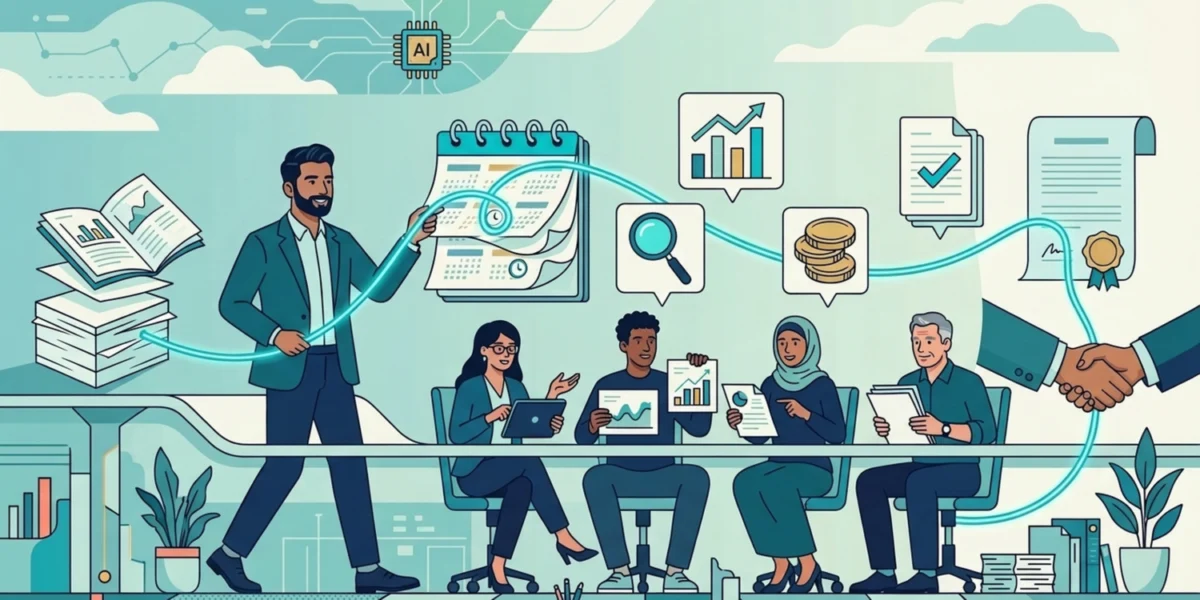
The creator economy, a dynamic and rapidly expanding sector, is currently experiencing one of its most profound transformations yet: the widespread and swift embrace of Artificial Intelligence. What was, until recently, viewed with anxious suspicion and even outright dread by many within the creative community, has now firmly established itself as a necessary, if complex, strategic tool for growth and efficiency. This dramatic shift underscores a pivotal moment where technological advancement is not just augmenting but fundamentally reshaping the landscape of creative work, productivity, and intellectual property.
The Shifting Sands of Perception: A Rapid Transformation
Just a year ago, conversations surrounding AI in the creator sphere were largely defined by apprehension. Legal expert Kameron Buckner, founder of Social Docket—a firm dedicated to helping creators navigate the legal intricacies of their work—recalls a prevailing sentiment of fear regarding AI’s potential to displace human talent and devalue creative output. However, the tone has decisively shifted. Buckner notes that the discourse has moved from "this thing is going to take over" to a more pragmatic exploration of "how do we actually use it." This evolution highlights a maturing understanding of AI, recognizing its potential as a powerful assistant rather than an existential threat.
This accelerated adoption is not merely anecdotal; it reflects a broader industry consensus. Insights from recent major events, such as the Cannes Lions International Festival of Creativity, confirm AI’s central role in contemporary discussions across marketing, advertising, and creative industries. Attendees and industry leaders universally acknowledged AI not as a peripheral topic, but as a core driver of future strategies. The pervasive sentiment among creators, consultants, founders, and social media strategists interviewed reveals a landscape devoid of widespread fear. Instead, a spectrum of engagement exists, from discerning integration to keen enthusiasm, all unified by the understanding that judicious AI utilization is paramount for relevance and competitive advantage in a crowded digital space.
The Creator Economy: A Landscape Ripe for Innovation
To understand the magnitude of AI’s impact, it’s crucial to contextualize the creator economy itself. Valued at an estimated $250 billion in 2023, and projected to reach $500 billion by 2027, this sector encompasses millions of individuals who monetize their skills, passions, and unique voices across diverse platforms. From YouTubers and TikTokkers to independent writers, artists, and podcasters, creators are at the forefront of digital content production. Their core challenges often revolve around scaling content creation, optimizing workflows, enhancing engagement, and securing fair compensation and intellectual property rights. These inherent pressures have made the creator economy particularly receptive to innovations that promise efficiency and reach.
The recent explosion of generative AI tools—such as ChatGPT for text, Midjourney and DALL-E for images, and various video and audio synthesis platforms—has provided creators with an unprecedented toolkit. These technologies, built upon sophisticated large language models and diffusion models, have democratized access to capabilities that once required specialized skills, extensive teams, or significant financial investment. The initial reaction, reminiscent of past technological disruptions like the advent of digital photography or desktop publishing, saw artists and writers express concerns over intellectual property infringement, data sourcing ethics, and the potential for a flood of generic, AI-generated content. Yet, the rapid iteration and increasing sophistication of these tools, coupled with a growing understanding of their practical applications, have transformed skepticism into strategic engagement.
AI as an Accelerator, Not an Author
A recurring theme among creators is the distinction between AI as an accelerator and AI as an independent author. DonYé Taylor, known for her culture-shifting campaigns for brands like LVRN, Amazon, and Nike, and now running her own brand, Nuclei, aptly likens AI to a calculator. "Just because I have a TI-89 doesn’t mean I’m going to get the right answer. I still need to put the right inputs into the calculator." This analogy underscores the critical role of human intelligence and intentionality in leveraging AI effectively. AI amplifies human capabilities but does not inherently generate novel, emotionally resonant ideas without human direction.
Alicia Richardson, head of community and brand partnerships at FiveTwoNine and founder of Black Create Connect, echoes this sentiment, asserting that AI "can enhance your creativity; it doesn’t create your creativity." She firmly believes that in the realm of raw, creator-led work, AI will not fully take over because audiences fundamentally connect with people, not just outputs. This emphasis on authentic human connection highlights a core tenet of the creator economy: the parasocial relationships and trust built between creators and their audiences are paramount, a bond that AI, in its current form, cannot replicate.
For many, AI serves as an invaluable "running start." Kameron Buckner advises her clients to view AI less as a finished product and more as an initial outline. "Why start from a blank sheet of paper when you can start from an outline?" This perspective shifts the focus from AI replacing creative ideation to AI streamlining the initial, often time-consuming, stages of content production. Buckner even finds that the process of prompting AI well has improved her management skills, forcing her to articulate her desires with greater precision before delegating tasks to human team members. She applies this same meticulous approach to her own brand’s visibility, using tools like HubSpot’s AEO to optimize Social Docket’s search performance.
Tangible productivity gains are evident across the industry. Gigi Robinson, a prominent content creator and founder of Hosts of Influence, a social media consulting business, utilizes AI video tools to process raw footage. Her team feeds 15-plus minutes of content into AI software to generate a rough cut, identifying "book-worthy" moments, before a human editor refines the final product. This hybrid approach significantly reduces editing time, with Robinson estimating AI saves her over 10 hours per week and has contributed to a 20% increase in her income. Similarly, Lindsey Gamble, vice president of creator strategy & innovation at IZEA, observes a trend where creators build personal content hubs, feeding years of past newsletters and captions into AI tools to uncover thematic through-lines and previously covered topics, thereby increasing content repurposing efficiency.
Despite these efficiency gains, Buckner stresses that AI tools are not a substitute for deep knowledge and expertise. While they can automate routine tasks and provide data-driven insights, the nuanced understanding, critical thinking, and strategic foresight that define true expertise remain distinctly human attributes.
The Legal Labyrinth: Playing Catch-Up in a Fast-Moving World
The rapid advancement and adoption of AI have inevitably created a significant chasm between technological capabilities and legal frameworks. Kameron Buckner candidly states, "Law is so far behind, it’s never going to be able to catch up to the speed of technology. We’re still citing cases from like 1963." This regulatory lag has opened new avenues for both innovation and exploitation, particularly concerning intellectual property (IP), contract negotiations, and data privacy.
Brands, eager to leverage AI’s potential, have begun pushing contractual boundaries. Buckner has observed the emergence of new clauses requiring creators to grant brands access to their AI prompts and processes. Her advice to clients is unequivocal: "Immediately, no. That’s unnecessary access." She argues that a creator’s prompting process represents their actual thinking and strategic approach, an insight that extends beyond the deliverable and should remain proprietary. Regardless of formal legal recognition, creators are increasingly advised to establish clear boundaries to protect their creative methodology.
Conversely, Lindsey Gamble notes clauses where brands outright ban AI use without prior written consent, reflecting a cautious approach to originality and brand integrity. He anticipates a future where creators, not just brands, will incorporate their own AI-use clauses into agreements, defining how their content and voice can be leveraged or repurposed by brands employing AI. This proactive stance would empower creators to safeguard their creative autonomy and ensure fair usage of their digital identity.
A particularly frustrating paradox, highlighted by Annie-Mai Hodge, founder of Girl Power Marketing and a HubSpot partner, involves social media platforms. These platforms simultaneously integrate AI tools directly into creator dashboards while penalizing content that appears to be AI-generated or lacks authenticity. "We are stuck in this incredibly frustrating paradox where platforms demand AI adoption but punish the output," Hodge explains. This creates a dilemma for creators who are either hesitant to experiment with new tools or afraid to admit their use, hindering innovation and transparency.
The reliance on AI without a full understanding of legal implications carries substantial risks. Gigi Robinson recounts an instance where a creator partnered with one brand and then, just two weeks later, posted content for a direct competitor—a clear breach of the exclusivity window common in brand deals. Robinson questions whether this oversight stemmed from the creator’s uncritical reliance on AI to "negotiate for me" without fully comprehending the contractual terms. Furthermore, the act of feeding confidential contracts into public AI tools like ChatGPT can, in itself, constitute a breach of contract, depending on the brand’s legal team’s stipulations regarding data confidentiality.
This legal quagmire underscores the critical role of human legal counsel. While AI can define terms like "perpetuity," it cannot analyze how such terms will specifically impact a creator’s unique circumstances. Buckner emphasizes that connecting legal definitions to real-life consequences and strategic implications remains a fundamentally human task, requiring nuanced judgment and understanding of individual contexts.
AI: Leveling the Playing Field or Widening the Gap?
The impact of AI on the creator economy is multifaceted, simultaneously presenting opportunities for democratization and risks of homogenization or exacerbating existing inequalities.
In many respects, AI acts as a great equalizer. Lindsey Gamble observes that AI provides emerging creators with tools and capabilities previously exclusive to larger creators with extensive teams and significant budgets. Tasks like generating scripts, crafting captions, producing rough video cuts, and designing carousels—elements of the entire production pipeline that once required hired help—can now be accomplished in minutes with AI. This dramatically lowers the barrier to entry, enabling more individuals to participate and compete in the creator economy.
However, this widespread access to similar tools also carries the risk of flattening creative output. "If everyone’s using the same thing and doing the same thing, a lot of the content feels the same," Gamble notes. The proliferation of content generated by the same handful of AI tools, often prompted in similar ways, can lead to a lack of originality and a sense of sameness, making it harder for individual creators to stand out.
Beyond content uniformity, AI’s adoption also highlights existing social disparities. Data cited by Annie-Mai Hodge from Lean In reveals that women are 22% less likely than men to be regular AI users at work and 32% more likely to fear being perceived as "cheating" if they use it. Hodge challenges this inherent guilt, asking why women are conditioned to feel this way, suggesting it may stem from broader societal pressures or implicit biases that discourage women from leveraging technological advantages. This disparity could potentially widen the gap in productivity and earning potential if not addressed.
Conversely, AI has shown promise in addressing another long-standing issue in the creator economy: rate transparency. Historically, compensation benchmarks have been shrouded in secrecy, making negotiation difficult for creators. AI chatbots, by aggregating and analyzing vast amounts of data, can now provide creators with industry benchmarks and insights into fair rates. While this might not directly compel brands to pay more, it "gives the creator more power and confidence to negotiate," Hodge explains, thereby potentially closing a different kind of economic gap.
The Consensus: Humans Remain Irreplaceable
Despite the undeniable power and efficiency offered by AI, a strong consensus emerges from industry leaders and creators alike: the human element remains irreplaceable. Gigi Robinson’s observation from Cannes Lions—that the word "human" was heard more often than "AI" or "creators"—serves as a powerful indicator that even in the most technologically forward-looking marketing event, the demand for authentic, human-driven work persists.
DonYé Taylor articulates this fundamental truth simply: "AI does not have feelings, it does not have emotion. You can’t replace human connection." This speaks to the core of why audiences engage with creators: to connect with genuine experiences, perspectives, and emotional resonance that AI, by its very nature, cannot replicate.
Lindsey Gamble highlights the tangible cost of omitting the human touch, particularly on platforms like LinkedIn. He observes a pervasive sameness in writing, noting that "everyone’s writing sounds the same. No one really has a voice, because everyone’s using the same thing." He uses the metaphor of creativity as a muscle, warning that neglecting it through over-reliance on AI can lead to its atrophy, much like a body losing strength without training. His recommendation for creators is to consciously protect this muscle by periodically engaging in creative processes—writing, filming, ideating—without any AI tools, as they did before these technologies became ubiquitous.
Gamble also underscores the importance of disclosure. Content that appears AI-generated but is not explicitly disclosed often receives a cold reception from audiences, undermining trust and authenticity. Transparency, therefore, becomes a critical component of ethical AI use in the creator economy.
Alicia Richardson reinforces the brand perspective, acknowledging a place for raw, AI-generated animation, but reiterating that for creator-led content, AI will not fully take over. "People connect with human beings, and that won’t ever change," she asserts.
Annie-Mai Hodge’s personal practice exemplifies this philosophy. She still manually reads and summarizes every social media update weekly, eschewing automation. While some might deem this inefficient, she confidently states, "ChatGPT and Claude can’t do it like I can." Her advice to fellow creators is not to avoid AI tools, but to be precise about their application. "If you are going to use it," she advises, "make it work harder for you." In essence, AI should serve as a powerful augmentative force, but it can never truly be the creator. The future of the creator economy, therefore, lies in a sophisticated synergy between human ingenuity and artificial intelligence, where the former directs and enriches the latter, ensuring that authenticity, creativity, and connection remain at the forefront.