

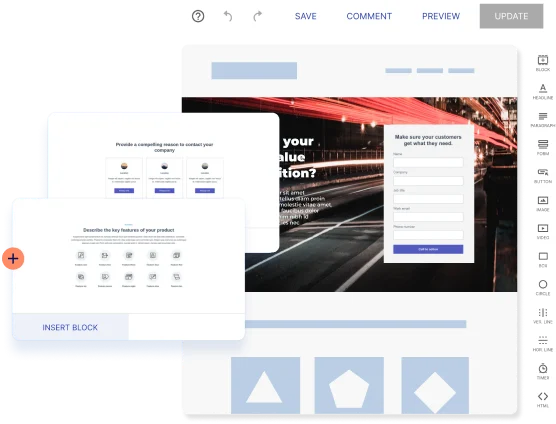
The Economic Reality of Digital Recruitment
The current recruitment landscape is characterized by intense competition for talent across both specialized white-collar sectors and the high-volume gig economy. According to recent benchmarks from the Society for Human Resource Management (SHRM), the average cost-per-hire in the United States has risen to approximately $4,700, though many employers report costs significantly higher when accounting for specialized roles and advertising overhead.
When a candidate clicks on a targeted recruitment advertisement—whether on LinkedIn, Indeed, or Facebook—they are signaling immediate intent. However, the traditional corporate career site often acts as a barrier rather than a bridge. These sites are typically designed for broad information-seeking rather than specific action. They often feature complex navigation menus, multiple external links, and deep hierarchies that force the candidate to "re-find" the job they just clicked on. This friction results in high bounce rates and what analysts call "budget leakage," where paid traffic fails to enter the recruitment funnel.
The Evolution of the Recruitment Landing Page
The transition from the traditional career portal to the dedicated recruitment landing page follows the trajectory of performance marketing in the e-commerce sector. Historically, recruitment was a passive function of human resources; today, it is increasingly treated as a specialized branch of digital marketing.
A Brief Chronology of Online Hiring
- The Job Board Era (Late 1990s – 2000s): Organizations relied on massive aggregators like Monster and CareerBuilder, where the user experience was dictated by the platform, not the employer.
- The Integrated Career Site (2010s): Companies began building internal portals integrated with Applicant Tracking Systems (ATS). While better for branding, these were often slow and not mobile-optimized.
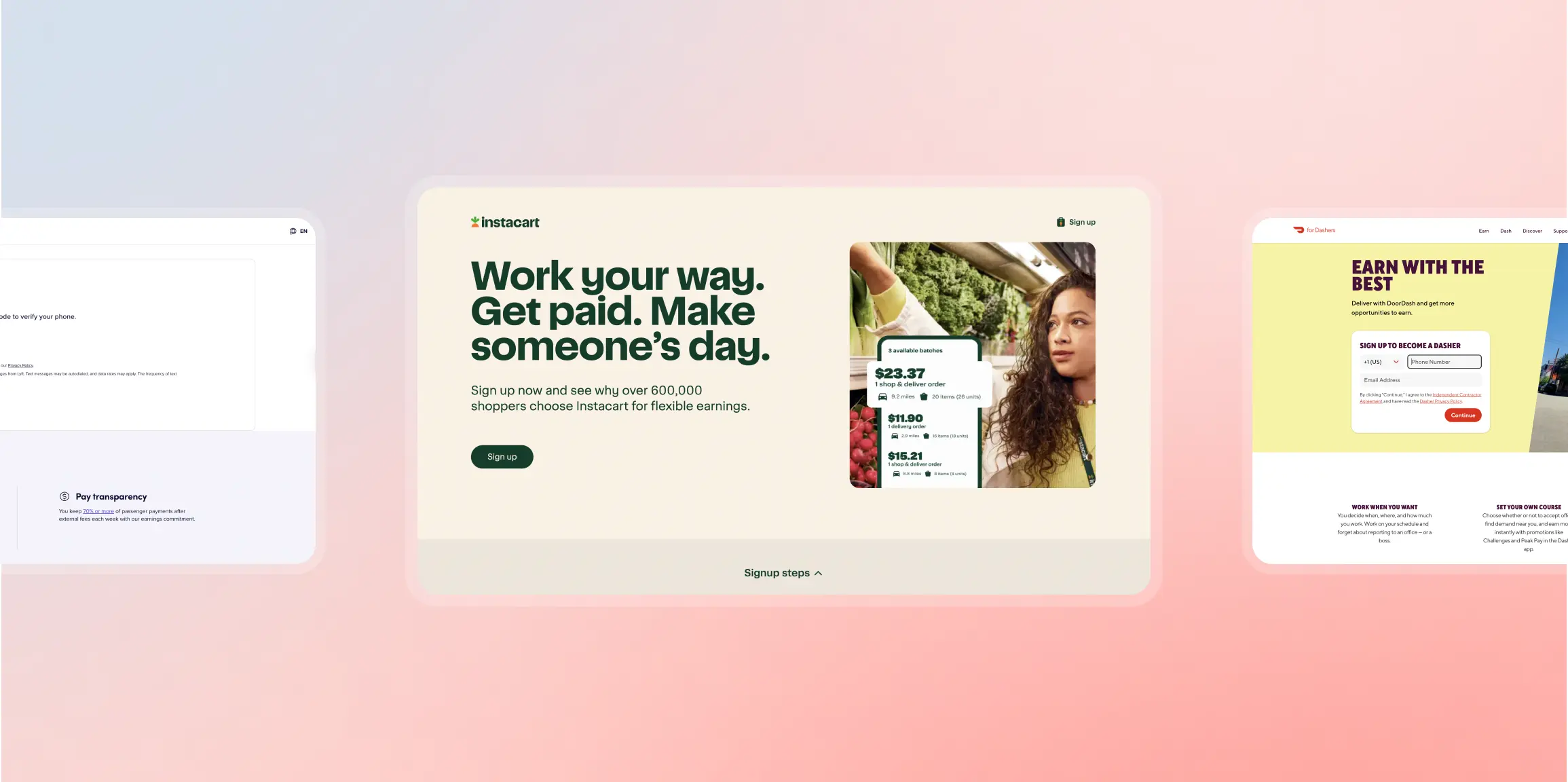
- The Performance Era (2020s – Present): High-growth companies, led by gig economy giants like Uber and DoorDash, pioneered the use of standalone, single-purpose landing pages. These pages are decoupled from the main corporate site to ensure maximum speed and conversion focus.
Core Principles of High-Converting Recruitment Pages
To understand why a recruitment landing page outperforms a standard job description, one must examine the psychological and technical levers of conversion optimization.
Strategic Message Match
The principle of "message match" dictates that the landing page must be a seamless continuation of the advertisement. If an ad promises "Remote Software Engineering Roles with $150k Salaries," and the landing page leads with a generic "Join Our Global Family" headline, the cognitive dissonance triggers a bounce. Journalistic analysis of top-performing pages shows that repeating the specific value proposition of the ad in the H1 headline is the single most effective way to retain traffic.
Above-the-Fold Architecture
In digital recruitment, the "first fold"—the area visible without scrolling—is the most valuable real estate. Effective pages communicate three essential elements within the first three seconds: the specific role, the primary benefit (e.g., flexibility, pay, or career growth), and a clear call to action (CTA). Industry experts recommend including at least one "trust signal" in this area, such as a company rating from Glassdoor or a logo denoting a "Great Place to Work" certification.
Friction Reduction and Form Optimization
Application abandonment is a chronic issue in HR. Data indicates that every additional field in a recruitment form can decrease the conversion rate by 5% to 10%. High-performing organizations have moved toward a "minimalist" approach, often asking only for a name, email, and resume upload. Some have even implemented two-step forms, where the candidate’s contact information is captured first, allowing the recruitment team to follow up even if the candidate does not complete the secondary, more detailed portion of the application.
Case Studies: Industry Leaders in Candidate Conversion
An analysis of market leaders reveals how different sectors tailor the landing page experience to their specific demographic needs.
1. Uber: The Efficiency Model
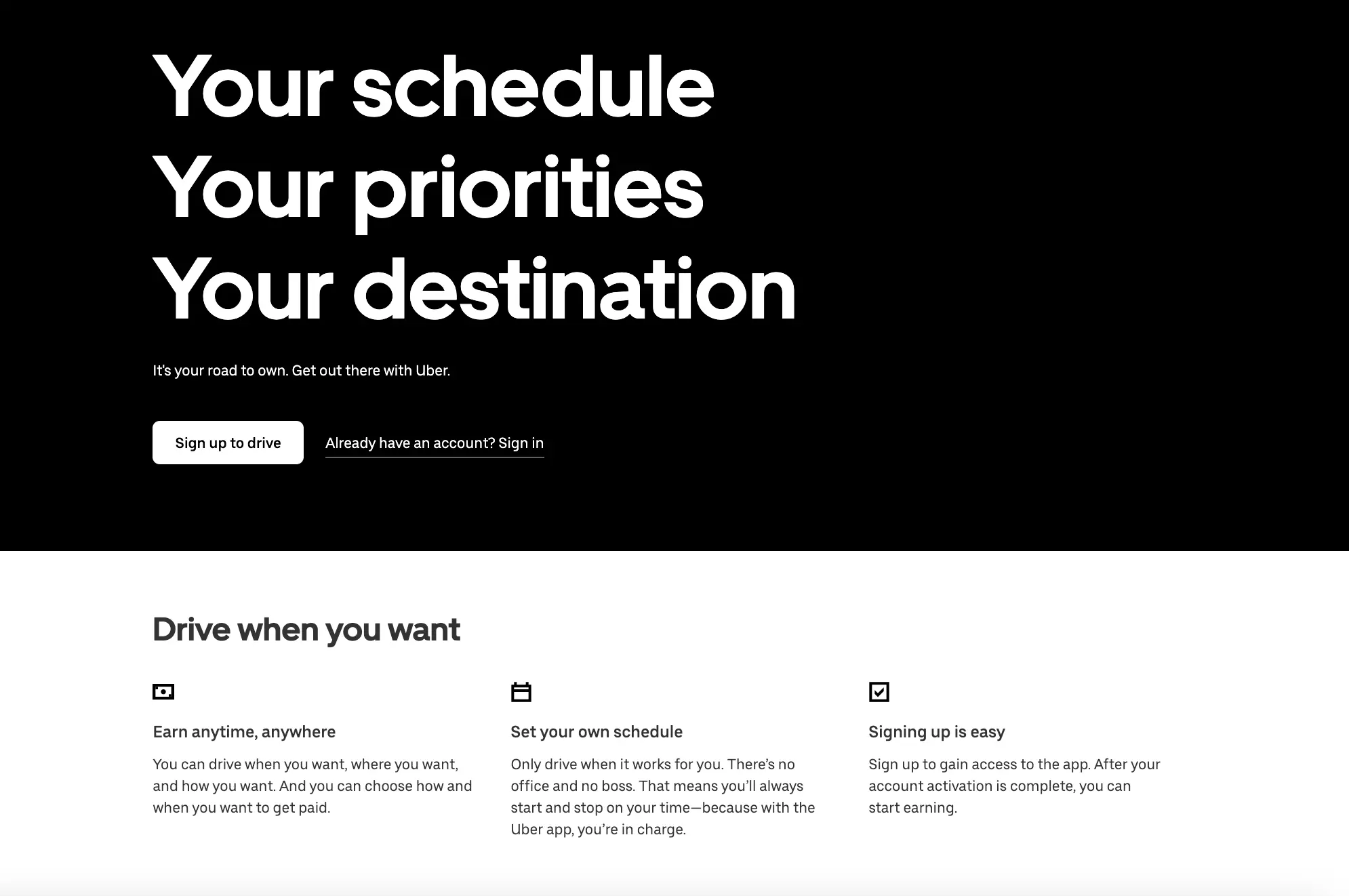
Uber’s driver and delivery recruitment pages are benchmarks for the gig economy. Because their target audience often researches opportunities during "micro-moments" on mobile devices, the page is built for speed.
- Strengths: The page utilizes geo-targeting to show local earning potential and uses a simple, bold CTA.
- Strategic Analysis: By focusing on "earning on your own schedule," Uber addresses the primary motivator for its workforce immediately, bypassing corporate fluff.
2. Lyft: Emphasizing the Value Proposition
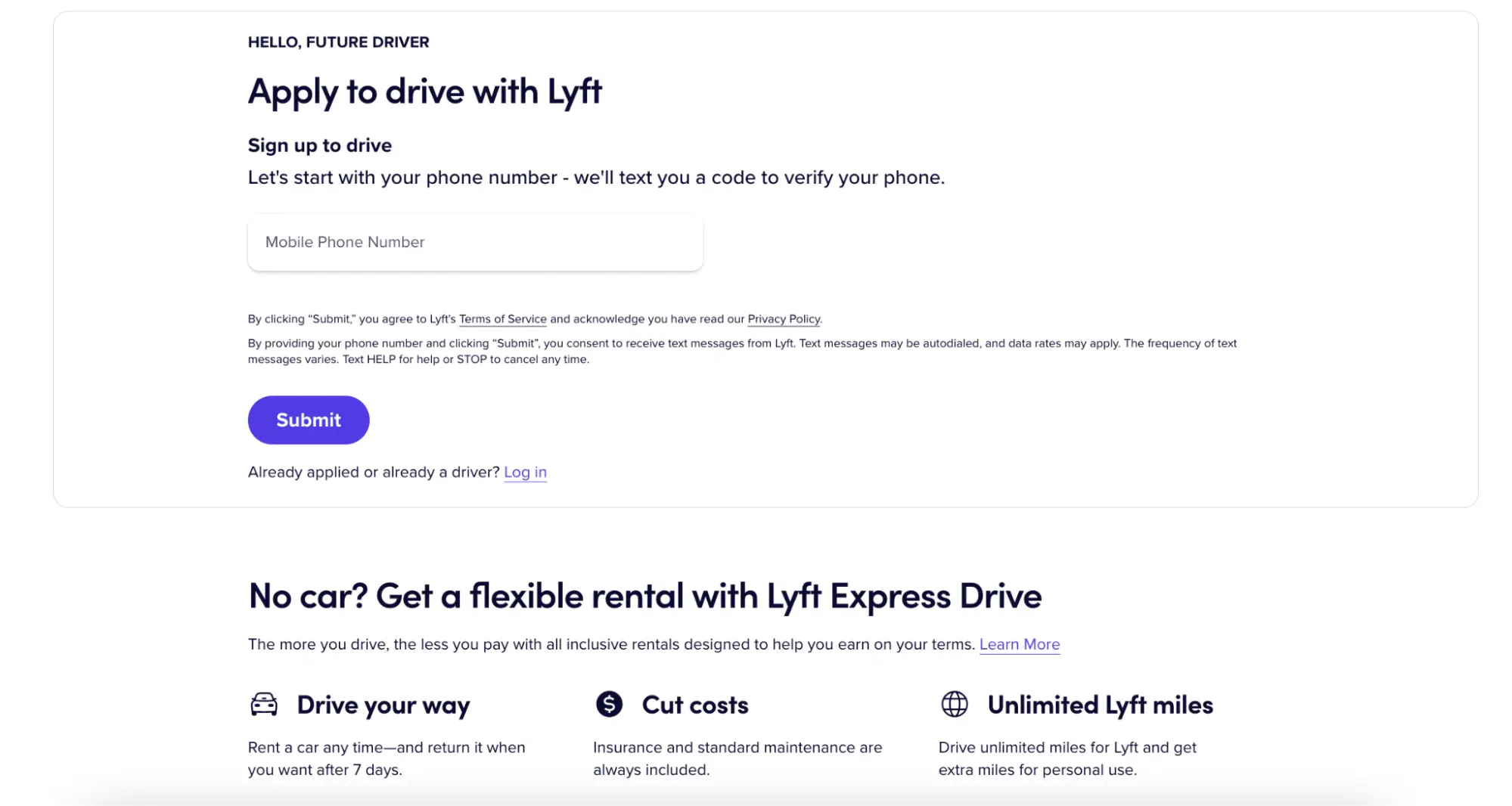
Lyft’s recruitment strategy often mirrors Uber’s but differentiates through visual branding and specific driver perks.
- Key Feature: Lyft often includes "Earnings Calculators" on their landing pages, providing immediate utility to the visitor.
- Impact: This interactive element increases "time on page" and provides a tangible reason for the candidate to proceed with the application.
3. DoorDash: Minimizing Entry Barriers
The DoorDash "Dasher" signup page is designed to move a user from "interested" to "onboarded" in the shortest possible time.
- Tactical Execution: The use of high-contrast buttons and a persistent "Sign Up" form that follows the user as they scroll ensures the conversion point is always accessible.
4. Writers Work: Skill-Based Niche Targeting
For freelance and platform-based work, the challenge is proving the platform’s legitimacy. Writers Work uses a "qualification" style landing page.
- Psychological Lever: By framing the application as a "qualification check," they increase the perceived value of the platform, making candidates more likely to complete the process.
5. Instacart: Visual Social Proof
Instacart utilizes high-quality photography of real shoppers to build an emotional connection.
- Effectiveness: Showing the "human element" of the job helps potential applicants visualize themselves in the role, which is a powerful driver of conversion in service-oriented industries.
Technical Optimization: The Role of Mobile and Speed
As of 2024, recruitment data shows that upwards of 70% of initial job searches occur on mobile devices. This shift has profound implications for landing page design. A page that takes longer than three seconds to load on a 4G connection will lose nearly half of its potential applicants.
Furthermore, "exit links"—including social media icons and standard header navigation—are increasingly viewed as liabilities. In a journalistic review of "A/B testing" results, it was found that removing the main navigation menu from a recruitment landing page can increase the conversion rate by as much as 100%, as it removes the ability for the candidate to wander away from the application goal.

The Power of A/B Testing in Talent Acquisition
The most sophisticated recruitment teams do not guess what works; they test it. A/B testing, or split testing, involves running two versions of a landing page simultaneously to see which performs better.
Priority Elements for Testing:
- Headlines: Testing a benefit-driven headline ("Earn $25/hour") against a role-driven headline ("Drive for Us").
- CTA Buttons: Comparing "Apply Now" vs. "Get Started" vs. "Join the Team."
- Visuals: Testing a video testimonial from an employee against a static image of the workplace.
- Form Length: Measuring the drop-off rate between a 3-field form and a 6-field form.
AI-driven tools, such as those provided by Instapage, have automated much of this process. These platforms can now automatically shift traffic toward the winning variation of a page in real-time, ensuring that the maximum amount of ad spend is directed toward the most efficient conversion path.
Broader Implications for the Labor Market
The move toward optimized recruitment landing pages has broader implications for the labor market and corporate transparency. As companies are forced to compete on the clarity and speed of their hiring process, the power dynamic shifts slightly toward the candidate.
Organizations that fail to adapt to these digital-first recruitment standards risk not only wasting their marketing budgets but also losing top-tier talent to competitors who offer a more frictionless entry point. In a volatile economic climate, the ability to rapidly scale a workforce through efficient digital funnels is no longer a luxury—it is a strategic imperative.

Conclusion: The Path Forward
Recruitment landing pages represent the intersection of human resources, data science, and digital marketing. By treating candidates as customers and the job application as a conversion event, organizations can significantly reduce their cost-per-hire and improve the quality of their talent pipeline. The data is clear: the companies that win the war for talent in the coming decade will be those that master the art of the post-click experience, turning every ad dollar into a tangible opportunity for growth.







