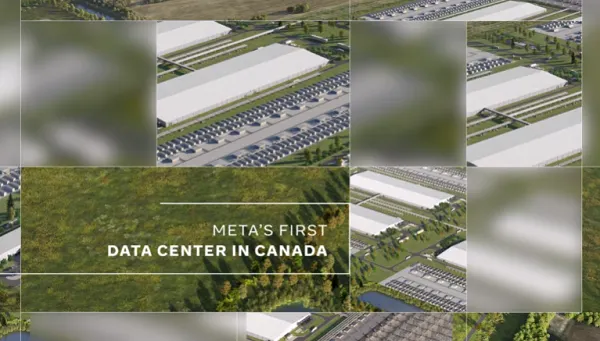
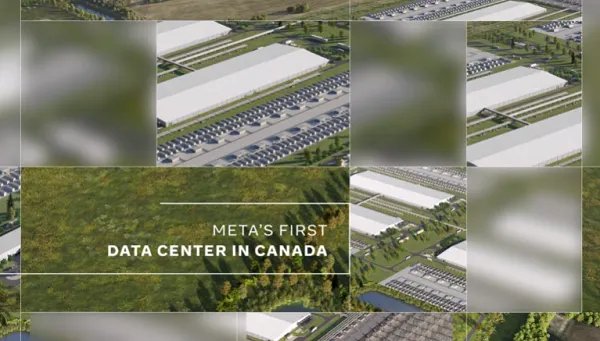
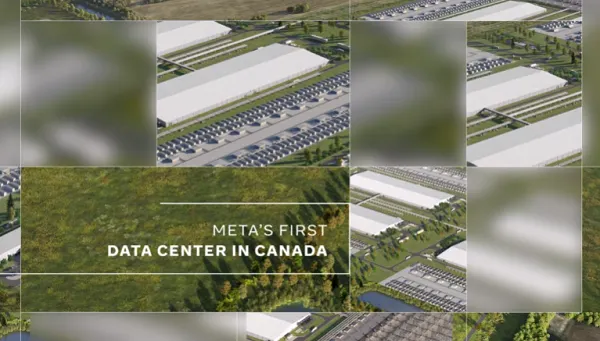
Meta Platforms Inc. has commenced construction on a monumental $10 billion data center project in Sturgeon County, Alberta, marking a significant expansion of its global infrastructure and its first such facility in Canada. This strategic move, which positions Alberta at the forefront of the company’s artificial intelligence ambitions, comes amidst a backdrop of escalating industry investment in AI and growing market discourse around the sustainability and profitability of the burgeoning AI sector. The facility is poised to become Meta’s 33rd data center worldwide and represents a critical component in its extensive strategy to bolster its computational capabilities for advanced AI workloads.
A Strategic Investment in the AI Race
The new 1-gigawatt (GW) data center in Sturgeon County is specifically optimized to handle the immense processing demands of Meta’s artificial intelligence initiatives. Company statements confirm its purpose: "We’re breaking ground on a new 1GW data center in Sturgeon County, Alberta – our first data center in Canada and 33rd in our global fleet. This data center will be optimized for our AI workloads, helping bring to life the technologies that billions around the world use to connect, find communities, grow businesses, and experience the power of our wearables." This facility is not merely an expansion of storage or basic computing power; it is a specialized engine designed to fuel the development, training, and deployment of Meta’s next-generation AI models, which underpin everything from content recommendation algorithms on Facebook and Instagram to the sophisticated generative AI tools being integrated across its product ecosystem and the foundational technologies for its metaverse vision.
The decision to invest such a substantial sum in Alberta underscores Meta’s unwavering commitment to winning the global AI race, a competition characterized by an insatiable demand for processing power and cutting-edge hardware. This Canadian project is an integral part of Meta’s broader AI infrastructure plan, which has seen the company commit an astounding $600 billion in the United States alone for similar developments. The scale of these investments reflects the company’s belief that leadership in AI will dictate the future trajectory of the tech industry, and that proprietary, expansive infrastructure is key to maintaining a competitive edge.
Economic Impact and Sustainability Commitments
The construction of the Alberta data center is projected to generate thousands of jobs during its multi-year development phase, providing a significant economic boost to the region. Once operational, the facility will sustain approximately 300 ongoing, high-skilled technical and operational roles, contributing to local employment and fostering a technology-driven workforce. Beyond direct job creation, Meta has pledged to implement locally beneficial funding and support programs, aiming to integrate the data center meaningfully into the community fabric. These programs often include initiatives in STEM education, local infrastructure improvements, and partnerships with educational institutions to develop talent pipelines.
Crucially, Meta has also articulated strong commitments to sustainable electricity and water usage practices for the Alberta facility. Data centers, especially those of this magnitude, are notorious for their energy and water consumption. A 1GW facility represents a massive draw on regional power grids. Meta’s sustainability goals align with broader industry trends towards greener operations, often involving powering facilities with renewable energy sources such as wind and solar, implementing advanced cooling technologies to reduce water consumption, and striving for a low Power Usage Effectiveness (PUE) ratio. Alberta, with its abundant renewable energy potential and a provincial government keen on economic diversification and attracting tech investment, presents an attractive location for such an undertaking, provided these sustainability targets are met and managed responsibly. The cooler climate of Alberta also offers natural advantages for data center cooling, potentially reducing energy consumption for climate control.
The Broader AI Investment Landscape and Market Concerns
Meta’s aggressive infrastructure build-out unfolds amid a period of intense scrutiny and debate within the tech industry regarding an "artificial intelligence bubble." Following the rapid advancements and widespread adoption of generative AI technologies, particularly after the public launch of OpenAI’s ChatGPT, venture capital funding and corporate investments have surged into AI startups and infrastructure. However, questions persist about whether these investments are sustainable, if the market has overvalued the short-term potential of AI, and critically, whether AI projects can consistently turn a profit given the enormous upfront and ongoing operational costs.

The capital expenditure required to develop and deploy cutting-edge AI models is staggering. This includes not only the physical data centers but also the acquisition of specialized hardware, primarily high-performance Graphics Processing Units (GPUs) from companies like Nvidia, which command premium prices due to their scarcity and computational power. The energy consumption for training large language models (LLMs) alone can be equivalent to that of small cities. These factors contribute to a challenging profitability landscape, compelling companies to explore diverse monetization strategies.
Meta’s substantial commitment, as evidenced by its Q1 2026 performance update where it projected an additional $125 billion to $145 billion in development spending for 2026—primarily for AI infrastructure, an increase from its earlier estimate of $115 billion to $135 billion—highlights the competitive intensity. The company explicitly states that processing power is key to "winning the AI race," signifying its all-in approach to outfitting itself with the best AI models and infrastructure money can buy.
Competitive Pressures and the Global AI Arena
While U.S. tech giants like Meta pour billions into infrastructure, the global AI landscape is characterized by increasingly fierce competition. Recent reports have highlighted that many China-based AI laboratories are developing similarly impressive models using significantly fewer resources. CNBC, for instance, reported that Chinese-built AI models, including DeepSeek and Z.ai, are gaining traction at U.S. companies due to their lower costs and comparable performance benefits. This trend exerts considerable pressure on U.S. companies to simultaneously reduce their operational costs and enhance performance, a difficult balance to maintain when operating on such vast and expensive infrastructure.
The efficiency demonstrated by some Chinese AI developers suggests alternative approaches to model architecture, optimization, and hardware utilization, potentially challenging the prevailing assumption that sheer scale of investment in compute capacity is the sole determinant of AI superiority. If competitors can achieve similar results with less capital expenditure, it could erode the competitive advantage of companies that have invested heavily in traditional, large-scale data center infrastructure.
From Advantage to Albatross? The Strategic Dilemma
Meta’s rapidly expanding data center network undeniably grants it massive compute capacity, a critical advantage in the arms race for AI dominance. This capacity allows Meta to train larger, more complex models, iterate faster on research, and integrate AI more deeply across its vast ecosystem of products and services. It also offers a degree of control over its entire hardware and software stack, potentially leading to greater efficiencies and innovations tailored to its specific needs. In the long run, such scale could lead to economies of scale, reducing per-unit computing costs as its operations mature.
However, this aggressive expansion also poses a significant strategic dilemma: could this immense capacity become an "albatross" rather than an unmitigated advantage? The reports suggesting Meta may have over-invested in infrastructure, potentially necessitating the exploration of a cloud infrastructure business to monetize excess capacity, are telling. If Meta were to pivot into offering its compute resources as a service, it would enter a highly competitive market dominated by established players like Amazon Web Services (AWS), Microsoft Azure, and Google Cloud Platform (GCP). This would not only require a substantial shift in business strategy and operational focus but also raise questions about its core mission and potential dilution of efforts.
The risks associated with such massive investments are multi-faceted. There’s the financial burden of high upfront and ongoing operational costs, the risk of technological obsolescence if new, radically more efficient chip architectures or computing paradigms emerge, and the ever-present scrutiny over environmental impact. The long-term profitability of these colossal AI endeavors remains an open question, contingent on Meta’s ability to effectively monetize its AI advancements across its platforms and potentially beyond.
In conclusion, Meta’s $10 billion data center in Alberta is a potent symbol of the current era of hyper-investment in artificial intelligence. It represents a bold bet on the future, an anchor for Meta’s strategic vision, and a significant economic boon for its host region. Yet, as the global AI landscape evolves with unprecedented speed and new competitive dynamics emerge, the ultimate success of this monumental investment hinges on Meta’s capacity to translate its raw computational power into tangible, profitable innovations, navigating the complex interplay of technological advancement, market pressures, and sustainable growth. The world watches to see if Meta’s gamble on scale will secure its AI leadership or become a weighty challenge to its long-term strategic agility.