The strategic implementation of Google Ads Smart Bidding, particularly on YouTube, has become a cornerstone for advertisers seeking to optimize campaign performance and achieve tangible business objectives. As the platform’s capabilities evolve, a nuanced understanding of these automated bidding strategies is no longer a luxury but a necessity for driving sales, generating leads, and increasing brand awareness. This comprehensive guide delves into the intricacies of YouTube Smart Bidding, offering actionable insights and strategic recommendations to help advertisers unlock its full potential.
Smart Bidding, at its core, is a suite of automated bidding strategies designed by Google to optimize for conversions or conversion value within a specified budget. For YouTube campaigns, these strategies are particularly impactful due to the platform’s vast reach and diverse audience. However, their effective deployment requires more than just a superficial knowledge of available options; it demands a strategic approach to campaign setup, budget allocation, and ongoing optimization.
Understanding YouTube Smart Bidding Options
Google offers several Smart Bidding strategies applicable to YouTube campaigns, each tailored to specific campaign goals. It is crucial to recognize that the primary beneficiaries of these strategies are “Action Format” campaigns, which are designed to drive direct response actions such as sales, leads, or sign-ups. Campaigns employing these formats, like Video Action Campaigns (VACs), are prime candidates for Smart Bidding.
However, Smart Bidding is not exclusively for direct response. There is also a provision for “Reach Formats,” such as bumper ads, which are primarily geared towards generating brand awareness. While the core objective differs, Smart Bidding can still assist in optimizing ad delivery to reach the widest relevant audience within budget constraints.

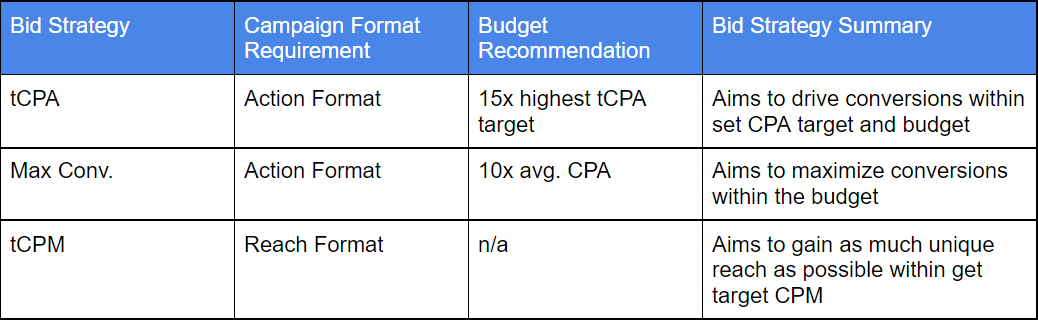
The core Smart Bidding strategies available on YouTube generally revolve around two main objectives: maximizing conversions and optimizing for a target cost per acquisition (tCPA).
- Maximize Conversions: This strategy automatically sets bids to help get as many conversions as possible at the target CPA you set. If no target CPA is set, it aims to get the most conversions for your budget. This is often recommended as a starting point for new campaigns or when establishing a baseline cost per conversion.
- Target CPA (tCPA): This strategy sets bids to help get as many conversions as possible at or below the target cost-per-acquisition (tCPA) you set. It allows for more control over the cost of each conversion, making it ideal for campaigns where a specific acquisition cost is critical.
For campaigns focused on awareness, strategies like “Maximize Reach” or “Target CPM” might be employed, though the focus of this discussion remains on conversion-oriented Smart Bidding.
Strategic Budgeting for Smart Bidding Success
A critical, often overlooked, aspect of successful Smart Bidding implementation on YouTube involves strategic budget allocation. Google Ads recommendations for budget relative to the cost per conversion (CPA) are not arbitrary; they are based on extensive data analysis and are designed to provide the algorithm with sufficient data to learn and optimize effectively.
Google typically recommends setting daily budgets that are 10 to 15 times the average CPA. For instance, if a campaign’s target CPA is $85, a budget of at least $1,275 ($85 x 15) is advisable to allow the Smart Bidding algorithm sufficient room to operate and find converting users. Similarly, for a “Maximize Conversions” campaign aiming for an $85 CPA, a budget of at least $850 ($85 x 10) is suggested.
These recommendations can sometimes appear substantial, potentially causing hesitation among advertisers. However, empirical evidence consistently demonstrates that adhering to these budget-to-CPA ratios is fundamental to setting campaigns up for success. Without adequate budget, the Smart Bidding algorithm may struggle to gather enough data, leading to underperformance, limited delivery, and an inability to identify optimal bidding opportunities.

A Recommended Approach: Maximize Conversions First, Then tCPA
A widely adopted and highly effective strategy is to initiate campaigns with the “Maximize Conversions” bidding strategy. This approach allows the algorithm to focus on acquiring as many conversions as possible within the allocated budget, thereby establishing a baseline CPA. Once this baseline is established and the campaign has stabilized, advertisers can then transition to the “Target CPA” strategy. This transition enables more granular control over the cost of each conversion, leveraging the data learned during the “Maximize Conversions” phase to set a realistic and achievable tCPA.
This phased approach is particularly beneficial for newer campaigns or those entering new markets where conversion data is scarce. It allows the system to learn user behavior and identify valuable audiences without the immediate constraint of a strict CPA target, which could otherwise limit the campaign’s ability to explore and discover.
Mini Case Study: Overcoming “Limited By Budget”
To illustrate the impact of strategic budget adjustments, consider a hypothetical scenario involving a campaign running on tCPA that was flagged as “Limited By Budget” (LBB). This status indicates that the campaign’s budget is restricting its ability to achieve its full potential.
Situation: A YouTube campaign utilizing the tCPA bidding strategy was experiencing performance limitations due to its budget.
Initial Bid to Budget Ratio: The campaign’s daily budget was set at approximately 10 times its current CPA.
Strategic Update: The budget was significantly increased to 15 times the current CPA.
Results: Following this budget adjustment, and after accounting for the typical two-week learning period associated with Smart Bidding, the campaign exhibited notable improvements in both overall volume of conversions and efficiency. The data indicated a positive trend in key performance indicators, demonstrating that the increased budget enabled the Smart Bidding algorithm to explore a wider range of bidding opportunities and reach more relevant users, ultimately leading to a more robust and cost-effective campaign.
This case study underscores a crucial principle: when a campaign is “Limited By Budget,” increasing the budget is often the most direct and effective solution to unlock performance gains. The 10x to 15x rule of thumb serves as a valuable guideline for ensuring campaigns have the necessary fuel to thrive.
Broader Considerations for YouTube Smart Bidding
Beyond budget and strategy selection, several other factors contribute to the success of Smart Bidding on YouTube:
- Conversion Tracking Accuracy: The efficacy of any Smart Bidding strategy is directly proportional to the accuracy and completeness of conversion tracking. Ensuring that all valuable conversion actions are correctly implemented and measured is paramount. This includes micro-conversions that may lead to a macro-conversion, such as adding an item to a cart or initiating a checkout process.
- Data Volume: Smart Bidding algorithms thrive on data. Campaigns with insufficient conversion volume may struggle to optimize effectively. For tCPA, a minimum of 15-30 conversions per month is often cited as a benchmark, though more is generally better. If a campaign is not meeting this threshold, it may be necessary to reconsider the target CPA or explore broader targeting options.
- Campaign Structure and Targeting: While Smart Bidding automates bidding, the underlying campaign structure and targeting still play a vital role. Broad targeting can provide more data for the algorithm, but it’s essential to ensure that the audience is still relevant to the product or service being advertised. Conversely, overly narrow targeting might restrict the available data pool.
- Creative Assets: High-performing creative assets are crucial for driving engagement and conversions. Even the most sophisticated bidding strategy cannot compensate for unengaging or irrelevant ad content. Investing in compelling video creative that resonates with the target audience is non-negotiable.
- Seasonality and Market Fluctuations: External factors such as seasonality, economic trends, and competitor activity can influence campaign performance. Smart Bidding algorithms are designed to adapt, but advertisers should remain aware of these external influences and adjust strategies accordingly. For instance, during peak shopping seasons, it might be prudent to increase budgets and potentially adjust tCPA targets to capture increased demand.
- Learning Period Management: It is essential to acknowledge and respect the learning period associated with Smart Bidding strategies. During this initial phase (typically 7-14 days), the algorithm gathers data and refines its approach. Making significant changes to bids, budgets, or targeting during this period can disrupt the learning process and prolong the time it takes for the campaign to reach optimal performance. Patience during this phase is key.
The Future of Automated Bidding on YouTube
The continuous advancements in machine learning and artificial intelligence are further enhancing the capabilities of Google Ads Smart Bidding. As platforms like YouTube become more sophisticated in understanding user intent and predicting behavior, automated bidding strategies are poised to become even more powerful. Advertisers who embrace these tools, coupled with a strategic understanding of their underlying mechanics, will be best positioned to navigate the evolving digital advertising landscape and achieve sustainable growth.
In conclusion, mastering YouTube Smart Bidding requires a holistic approach that encompasses understanding the available strategies, implementing recommended budgeting practices, ensuring accurate conversion tracking, and continuously monitoring and adapting to campaign performance. By leveraging these insights, advertisers can transform their YouTube campaigns from mere visibility tools into powerful engines for driving measurable business outcomes. For those seeking further guidance or wishing to explore advanced strategies tailored to their specific needs, engaging with experienced digital marketing professionals can provide invaluable support.