The word "target" is foundational in the field of marketing, representing the crucial act of identifying and addressing specific audience segments. This strategic approach encompasses various dimensions, including behavioral, psychographic, demographic, and geographic targeting. However, an equally vital, yet often complex, aspect of effective marketing lies in understanding how to communicate with individuals across different generational cohorts. This article, part of an ongoing series exploring digital marketing strategies for distinct age groups, delves into the characteristics and consumption patterns of Millennials (born 1980-1994), a generation that has significantly reshaped the consumer landscape. Following an initial exploration of Gen Z, this installment focuses on understanding how to effectively reach and engage this influential demographic.
Millennials have become a focal point of marketing discussions, largely due to their status as the largest living generation, having surpassed the Baby Boomers in sheer numbers. They are often characterized as digitally adept, health-conscious, and burdened by debt. While these descriptors offer a superficial glimpse, a more nuanced understanding of their mindset, consumption habits, and media preferences is essential for marketers aiming to connect with them authentically and effectively.
The Millennial Mindset: Digital Natives and Life Stage Evolution
Unlike Gen Z, who were born into a fully realized digital world, Millennials are the generation that witnessed and actively participated in the internet’s explosive growth and the subsequent digital transformation. This formative experience has endowed them with a profound understanding and comfort with technology. Indeed, the creation of Facebook, a platform that has become a cornerstone of modern social interaction and communication, can be attributed to a Millennial. During their childhood and early adulthood, they observed and adopted the rise of transformative technologies and platforms such as mobile phones, Google, Amazon, and Apple. This immersion has cultivated a generation that is inherently tech-savvy, comfortable navigating digital spaces, and adept at utilizing online resources for information, communication, and commerce.
Data consistently supports this technological fluency. According to Pew Research Center data from 2019, Millennials are more educated than older generations. However, this educational attainment is often accompanied by significant financial challenges. The escalating costs of higher education and the subsequent burden of student loan debt, coupled with the rising expenses of housing, have created a unique economic reality for many Millennials. This financial pressure has led to a noticeable delay in achieving traditional life milestones. Marriage, homeownership, and starting families are often postponed compared to previous generations, as Millennials navigate a more protracted path to financial stability and independence. This shift in life stages necessitates a reevaluation of marketing approaches that might assume earlier entry into peak consumption years.
Beyond their digital prowess and economic circumstances, Millennials are often described as self-oriented, idealistic, and valuing individual freedom. This introspection can translate into a strong sense of personal purpose and a desire for authenticity in their interactions with brands. Their health-consciousness is a well-documented trait, contributing to the surge in plant-based diets (vegetarianism, veganism, pescetarianism) and a general focus on wellness. This emphasis on personal well-being extends to their purchasing decisions, where factors beyond mere price often come into play. Furthermore, a significant aspect of the Millennial consumer ethos is the prioritization of experiences over material possessions. This preference for creating memories and engaging in meaningful activities influences their spending habits, favoring investments in travel, events, and personal growth opportunities.
Millennial Consumption Patterns: Beyond Stereotypes
Understanding how Millennials consume is crucial for effective marketing. While generalizations can be tempting, a deeper dive into their purchasing behaviors reveals more intricate patterns. A comprehensive study by McKinsey & Company identified several distinct consumption behavior clusters within the Millennial demographic, highlighting the diversity within this cohort. These clusters underscore that while shared generational experiences exist, individual choices and priorities still drive purchasing decisions.
Despite concerns about their financial future, Millennials demonstrate a willingness to invest in premium and quality products. This inclination stems from a desire for items that offer longevity, durability, and tangible benefits, particularly concerning their health and well-being. This aligns with their preference for experiences; they are more likely to allocate resources towards items that enhance their quality of life or support their values, rather than disposable goods. This discerning approach means that brands focusing on sustainability, ethical sourcing, and demonstrable value proposition can resonate strongly with this audience.
Marketing to Millennials: Strategic Platforms and Messaging
Reaching Millennials requires a strategic approach that acknowledges their digital nativism and evolved consumption habits. Marketers must identify the platforms where this generation spends their time and craft messages that resonate with their values and aspirations.
Platforms to Reach Millennials
The digital landscape is the primary arena for engaging with Millennials. While they are present across a broad spectrum of social media, certain platforms hold particular significance.
- Social Media Dominance: Platforms like Instagram, Facebook, and YouTube remain highly influential. Instagram, with its visually driven interface, appeals to Millennials’ appreciation for aesthetics and curated content. Facebook, despite its age, continues to be a hub for community building, news consumption, and brand interaction. YouTube serves as a vital source for entertainment, education, and product reviews, with many Millennials relying on video content for research and discovery.
- Emerging and Niche Platforms: As Millennials have aged, their platform usage has also evolved. While Gen Z may dominate platforms like TikTok, Millennials continue to engage with established social networks. However, brands should also consider niche platforms and communities that align with specific interests, such as Pinterest for inspiration or LinkedIn for professional networking and thought leadership.
- Search Engines and Review Sites: Given their research-oriented nature, Millennials heavily rely on search engines like Google to find information, compare products, and read reviews. Online review sites and forums also play a critical role in their decision-making process.
- Content-Rich Environments: Millennials are drawn to platforms that offer in-depth content, such as blogs, podcasts, and online publications. They seek value beyond superficial advertisements and are receptive to educational or entertaining content that positions brands as knowledgeable and helpful.
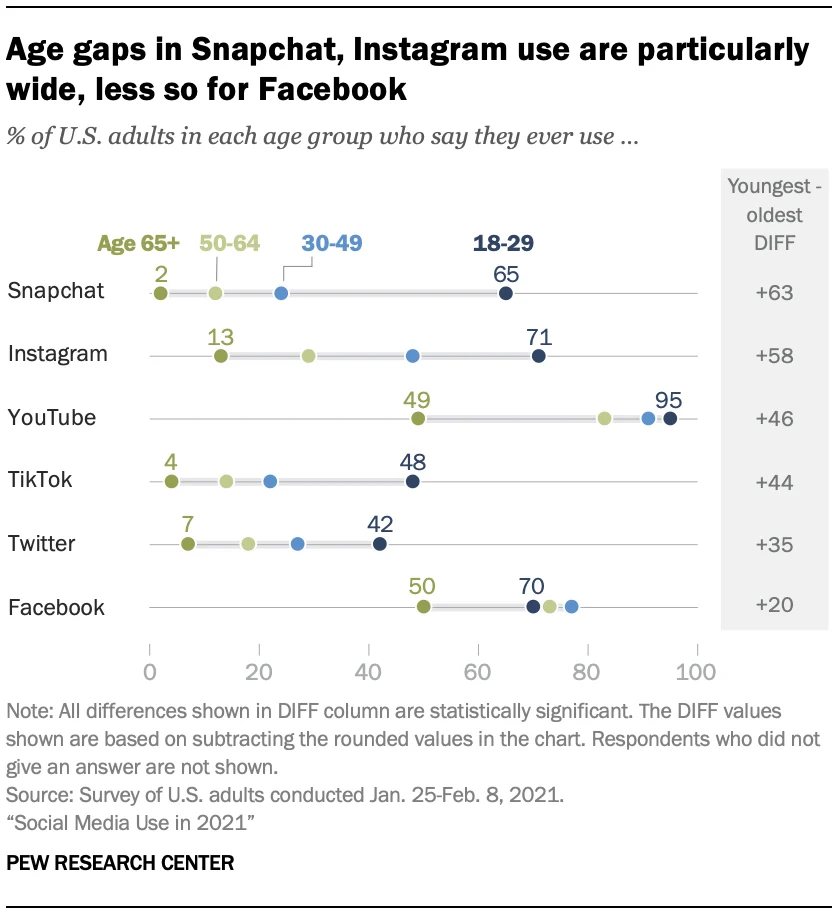
The accompanying graphic, illustrating age gaps across different social media platforms, underscores the importance of selecting the right channels. While platforms like Facebook and Instagram have broad appeal, understanding the nuances of user demographics within each platform is key. For instance, while Millennials are active on Facebook, the platform’s user base skews older compared to newer, more visually focused platforms. Conversely, their engagement on Instagram reflects their appreciation for visual storytelling and aspirational content.
Messaging That Speaks to Millennials
Crafting messages that resonate with Millennials requires an understanding of their core values and priorities. Generic advertising often falls flat; authenticity, transparency, and a focus on benefits beyond mere product features are paramount.
- Authenticity and Transparency: Millennials value genuine interactions and are quick to identify disingenuous marketing. Brands should adopt a transparent approach, openly sharing information about their products, practices, and values. User-generated content, influencer collaborations that feel organic, and behind-the-scenes glimpses can foster trust.
- Value-Driven Communication: Instead of simply highlighting product features, messages should focus on the benefits and value that a product or service provides. This could include how it enhances experiences, promotes well-being, saves time, or contributes to a larger purpose. For instance, marketing a sustainable product should emphasize its environmental benefits and ethical sourcing, aligning with Millennial values.
- Empowerment and Personalization: Millennials appreciate brands that empower them and offer personalized experiences. Messaging that speaks to their individual needs and aspirations, rather than broad generalizations, is more effective. This can involve personalized recommendations, customized product options, or loyalty programs that reward individual engagement.
- Social Responsibility and Purpose: Many Millennials are socially conscious and are drawn to brands that demonstrate a commitment to ethical practices, environmental sustainability, and social good. Messaging that highlights a brand’s purpose and positive impact can create a strong emotional connection and drive brand loyalty.
- Experiential Marketing: Given their preference for experiences, marketing efforts that offer opportunities for engagement, interaction, and memorable moments can be highly effective. This could include events, workshops, interactive online campaigns, or partnerships that facilitate unique experiences.
It is crucial to recognize that the Millennial generation is not a monolithic entity. Within this cohort, individuals fall into distinct consumer categories, influenced by factors such as income, lifestyle, and personal values. For example, a Millennial focused on career advancement might respond differently to marketing than one prioritizing family or personal wellness. Therefore, tailoring messages to specific sub-segments within the Millennial demographic, based on the consumption clusters identified earlier, will yield more effective results.
Ultimately, successful marketing to Millennials is an ongoing process of understanding, adapting, and engaging. It requires moving beyond superficial stereotypes and embracing a more nuanced appreciation of their life experiences, values, and evolving consumer behaviors. For brands seeking to forge meaningful connections and achieve lasting impact with this dominant generation, a commitment to authenticity, value, and personalized communication is not just a strategy – it is a necessity. For further assistance in developing tailored digital marketing solutions to effectively reach and convert your Millennial audience, consulting with experienced marketing professionals can provide invaluable insights and strategic direction.