
 rifanmuazin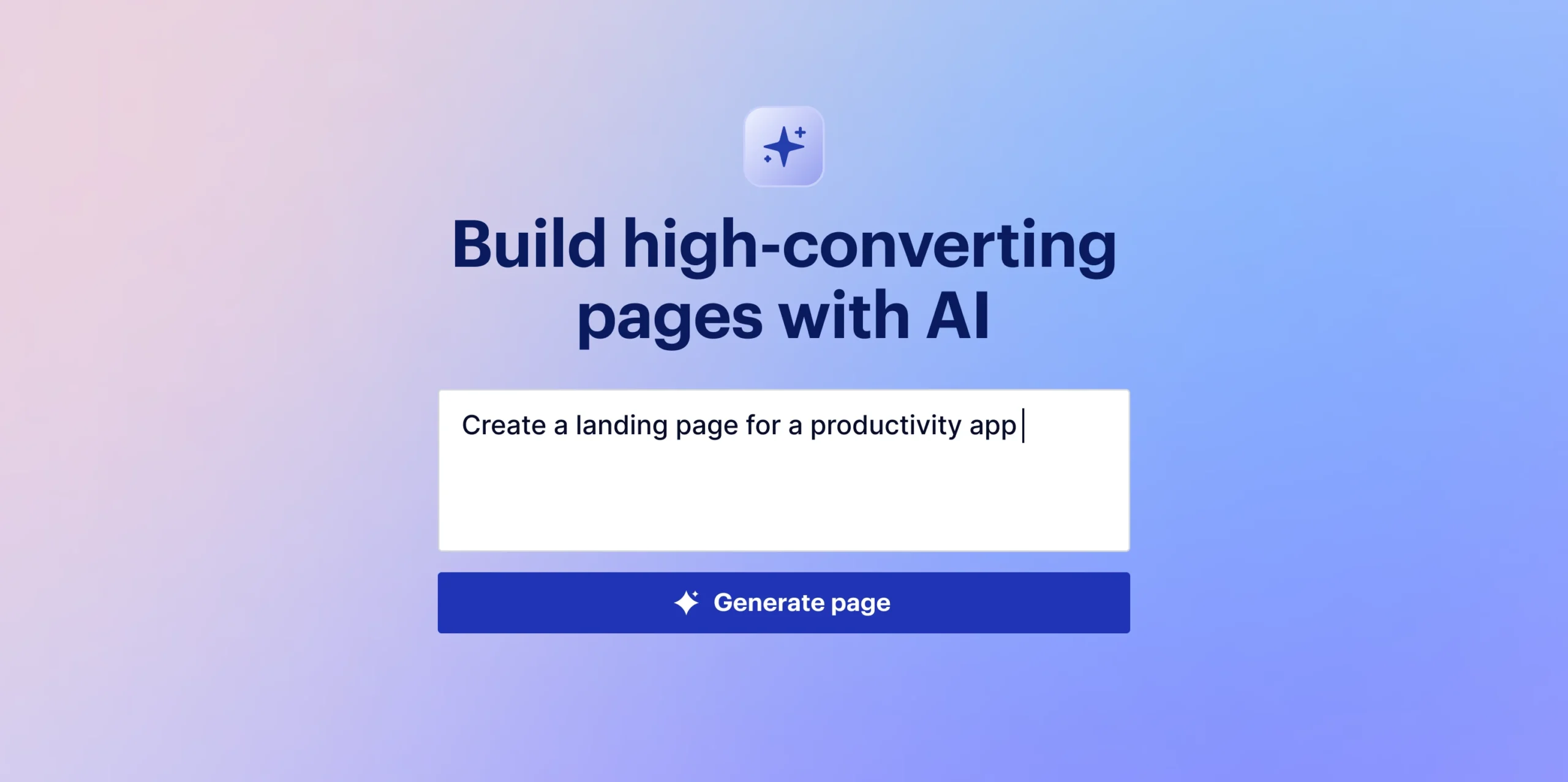
The digital marketing landscape has undergone a significant transformation with the announcement of Instapage’s transition into a fully integrated, AI-powered marketing platform. Since its inception in 2012, Instapage has maintained a dominant position in the landing page technology sector, originally gaining recognition for its high-performance page builder. The company has now moved beyond its initial scope, evolving into a comprehensive Conversion Rate Optimization (CRO) and marketing suite. This latest development represents a strategic pivot toward embedding artificial intelligence across the entire marketing lifecycle, including page generation, experimentation, personalization, and automated lead follow-up.
This evolution comes at a critical juncture for the MarTech industry. As businesses face increasing pressure to scale operations without proportional increases in headcount, the demand for consolidated tools has reached an all-time high. By integrating AI-driven workflows into its existing infrastructure, Instapage aims to eliminate the “fragmentation tax”—the loss of time and data integrity that occurs when marketers are forced to stitch together disparate tools for page building, email automation, and analytics.
The Evolution of Landing Page Technology: From 2012 to the AI Era
The chronology of Instapage reflects the broader history of the digital advertising industry. In 2012, the primary challenge for marketers was the technical barrier to creating high-quality landing pages. Most teams relied on overextended web development departments, leading to bottlenecks that delayed campaign launches. Instapage solved this by introducing a user-friendly, drag-and-drop builder that prioritized speed and aesthetics.
By the mid-2010s, the focus shifted from mere page creation to optimization. Instapage responded by expanding its platform to include sophisticated CRO tools, such as A/B testing, heatmaps, and dynamic text replacement. This allowed marketers to not only build pages but also to scientifically improve their performance. However, as the volume of digital content exploded, the “blank page” problem became the new bottleneck. Marketers had the tools to build, but the creative demands of generating copy and layouts for dozens of different audience segments became overwhelming.
The current phase of Instapage’s development, culminating in the 2024–2026 rollout of its AI suite, addresses this creative and operational exhaustion. The platform now utilizes generative AI to handle the heavy lifting of initial design and copywriting, while maintaining the precision of its legacy editing tools.
Addressing the “Blank Page” Dilemma with AI Page Generation
One of the most significant hurdles in performance marketing is the transition from a conceptual campaign idea to a functional, conversion-ready landing page. Industry data suggests that a significant percentage of marketing initiatives are delayed or abandoned during the creative development phase. Instapage’s new AI page generation feature is designed to bridge this gap by allowing users to describe their goals in natural language.
Unlike standalone AI generators that often produce rigid, non-editable outputs, the Instapage solution integrates AI with a “pixel-perfect” drag-and-drop interface. This distinction is vital for professional marketers who require brand consistency. In many competing AI tools, making a structural change to an AI-generated page requires a complete “regeneration,” which consumes additional computational tokens and time. Instapage’s hybrid approach allows the AI to create the foundation—including tailored messaging and optimized layouts—while giving the user immediate, granular control to refine the design without starting over.
This technological synergy addresses the efficiency gap found in early-stage generative AI. By allowing for manual refinement after AI generation, the platform reduces the “back-and-forth” prompting cycle that often hinders rather than helps the creative process.
Streamlining Lead Management via AI-Powered Email Integration
The launch of AI-powered email generation marks Instapage’s official expansion into the lead nurturing space. Historically, the handoff between a landing page and an email marketing tool has been a point of friction. Leads captured on a landing page often sit idle until they are manually exported or synced via third-party integrations to a separate email service provider (ESP).
Instapage’s integrated approach seeks to eliminate this latency. The platform now allows users to generate automated, goal-oriented email sequences directly within the same ecosystem where the landing page resides. The AI email generator utilizes the context of the landing page—its tone, audience, and value proposition—to craft follow-up messages that are consistent with the initial user experience.
Marketers can define the goal of the email (e.g., booking a demo, downloading a whitepaper), the target audience, and the desired tone. The AI then produces a sequence of emails that can be triggered instantly upon lead capture. This immediate responsiveness is critical; according to various lead response studies, businesses that contact a lead within the first five minutes are nearly 100 times more likely to qualify that lead compared to those who wait 30 minutes or more.
Supporting Data: The Economic Shift Toward Tool Consolidation
The shift toward an all-in-one AI platform is supported by broader economic trends in the technology sector. As of 2024, many marketing departments are operating with leaner budgets and smaller teams than in previous years. Data from industry analysts suggests that the average enterprise now uses over 90 different marketing software tools, leading to “SaaS fatigue” and significant overhead costs.

By consolidating landing pages, websites, personalization, experimentation, email, and analytics into a single AI-driven environment, Instapage is positioning itself as a solution for budget-conscious but growth-oriented firms. The ability to “scale what works” without adding headcount is a recurring theme in the company’s recent communications.
Furthermore, the integration of AI Collections allows for the rapid scaling of content. In traditional workflows, creating 50 variations of a page for different geographic locations or ad groups would take weeks. With AI-driven automation, these tasks can be compressed into hours, allowing for a level of personalization that was previously reserved for companies with massive manual labor resources.
Strategic Implications and Industry Reactions
The move by Instapage has drawn attention from industry analysts who view it as a necessary step in the “AI-ification” of marketing stacks. While many platforms have “bolted on” AI features—such as simple subject line generators or basic image editors—Instapage is attempting to weave AI into the fundamental workflow of the marketer.
The implications for the competitive landscape are notable. Traditional landing page builders are now forced to compete not just on design flexibility, but on the intelligence of their automation. If a platform can successfully predict which layout will convert a specific demographic and then automatically follow up with those leads via AI-written emails, it moves from being a “tool” to being a “revenue engine.”
Internal statements from the Instapage team suggest that the goal is to eliminate the “gaps” in the marketing funnel. “Most platforms bolt AI onto one part of the workflow,” the company noted in its latest release documentation. “Instapage is different. AI runs through the entire marketing workflow… No switching between tools. No manual handoffs. No gaps.”
Implementation and Beta Access
As with many large-scale AI deployments, Instapage is opting for a phased rollout. While the core AI page and email generation features are now part of the platform’s identity, several advanced features remain in beta. This allows the company to gather user data and refine the machine learning models based on real-world conversion performance.
The company has invited users to experience the new platform through a 14-day free trial, a move intended to lower the barrier to entry for teams looking to modernize their tech stack. For existing customers, the rollout is being managed gradually, with specific access granted via the company’s support and success teams.
Analysis of Broader Impacts on the Marketing Profession
The transition of platforms like Instapage into AI-centric ecosystems signals a shift in the required skillset for digital marketers. As the technical tasks of building pages and writing initial email drafts become automated, the role of the marketer is shifting toward “AI Orchestration.”
In this new environment, success is less about the ability to manually move pixels or write headlines, and more about the ability to provide the AI with high-quality strategic inputs. Marketers must become experts at defining target personas, setting clear conversion goals, and auditing AI outputs for brand alignment.
The long-term impact of this shift is likely to be a democratization of high-end marketing capabilities. Small and medium-sized businesses (SMBs) that previously could not afford a dedicated CRO specialist or a copywriter can now leverage Instapage’s AI to produce professional-grade campaigns. Conversely, for larger enterprises, the benefit lies in the speed of experimentation, allowing them to test hundreds of hypotheses simultaneously.
Conclusion: The Future of End-to-End Marketing
Instapage’s transformation into an end-to-end AI-powered marketing platform reflects a broader trend toward intelligent automation and tool consolidation. By addressing the blank page syndrome through AI generation and solving the lead follow-up friction through integrated email automation, the platform seeks to provide a seamless path from ad click to conversion.
As the industry moves toward 2026, the success of such platforms will likely be measured by their ability to not just generate content, but to generate performance. With AI embedded in every stage of the funnel—from the first visit to the final follow-up—Instapage is betting that the future of marketing lies in a unified, intelligent system that empowers lean teams to achieve outsized results. The ongoing beta rollout and subsequent feature updates will be closely watched by competitors and marketers alike as an indicator of the efficacy of AI in the high-stakes world of conversion rate optimization.








