

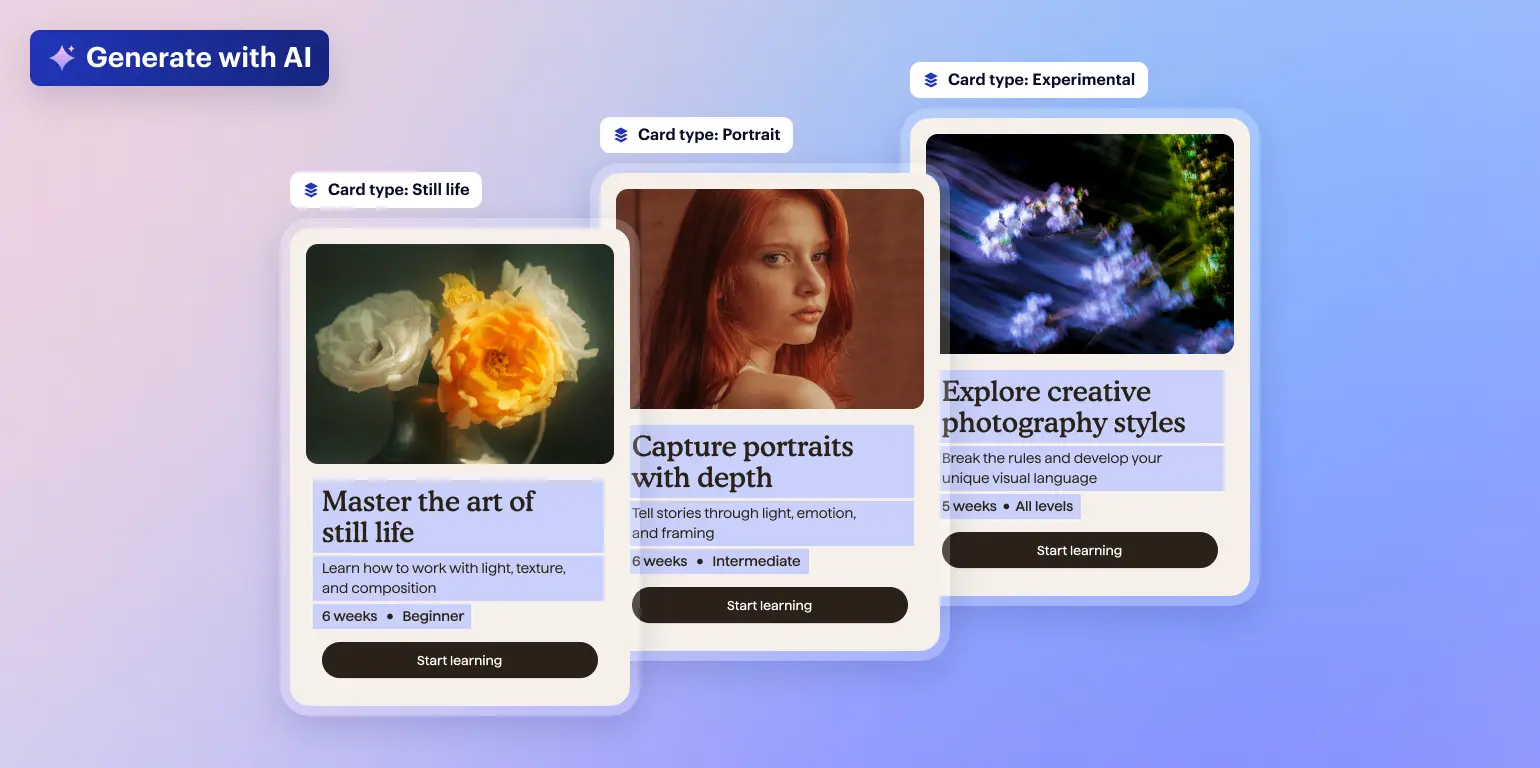
The digital marketing landscape is currently undergoing a fundamental shift as the gap between strategic intent and operational execution narrows through the integration of generative artificial intelligence. While the marketing industry has long reached a consensus that personalization is the primary driver of conversion and customer retention, the practical implementation of hyper-personalized campaigns has historically been hindered by the sheer volume of manual labor required. To address this bottleneck, Instapage has announced the launch of AI Collections, a new suite of tools designed to automate the creation and management of large-scale, personalized landing page sets. By leveraging machine learning to handle repetitive design and copywriting tasks, the platform aims to accelerate the deployment of personalized campaigns by up to 300 percent, effectively removing the "manual duplication" barrier that has historically relegated most digital advertising to generic, one-size-fits-all landing pages.
The core challenge facing modern marketing departments is not a lack of data, but the inability to translate that data into unique web experiences at scale. In a traditional workflow, creating a personalized experience for ten different audience segments requires a marketer to manually duplicate a page ten times, edit the copy for each version, adjust images, and manage ten separate URLs. When scaled to hundreds of keywords or audience segments, this process becomes mathematically impossible for most teams to sustain. AI Collections seeks to transform this linear workflow into a centralized, template-driven system. By consolidating page management into a structured content table, the tool allows users to govern hundreds of dynamic pages from a single interface, utilizing AI to populate content based on specific audience parameters.
The Evolution of Personalization in Digital Marketing
The transition toward automated personalization represents the third major era in landing page technology. In the early 2000s, the "Static Era" required web developers to hard-code every page, making testing and personalization slow and expensive. This was followed by the "Dynamic Era," characterized by the rise of no-code builders and Dynamic Text Replacement (DTR), which allowed for basic keyword insertion but often struggled with layout consistency and deeper content relevance. The current "AI-Driven Era," spearheaded by releases like AI Collections, moves beyond simple text swaps to holistic page generation.
According to industry data from McKinsey & Company, companies that excel at personalization generate 40 percent more revenue from those activities than average players. Furthermore, 71 percent of consumers now expect companies to deliver personalized interactions, and 76 percent get frustrated when this doesn’t happen. Despite these high stakes, a report from Gartner suggests that many personalization initiatives fail due to "operational complexity." The introduction of AI-driven templating is a direct response to this complexity, providing a structural framework where the AI does not just write copy but understands the relationship between design elements and audience intent.
Technical Mechanics: How AI Collections Functions
The functionality of AI Collections is built upon a three-tier architecture: the Template Layer, the AI Placeholder Engine, and the Centralized Content Table. The process begins with the creation of a "Collection Template," which serves as the visual and structural blueprint for all subsequent pages. Unlike traditional templates, these are "intelligent" layouts capable of recognizing where variable content should be injected.
The AI Placeholder Engine represents a significant technical advancement in the platform’s ecosystem. Instead of requiring a human designer to manually tag every headline, sub-headline, and image block for variation, the AI analyzes the page layout to identify optimal locations for dynamic content. This "design-aware" AI ensures that when content is generated, it fits the visual hierarchy of the page, maintaining brand consistency across hundreds of iterations. Once the placeholders are established, the system generates a content table where each row represents a unique URL and each column represents a specific content variable.
To further streamline the process, Instapage has integrated its "fluid grid blocks" technology with AI Collections. One of the primary risks of automated content generation is "layout break," where a longer-than-expected AI-generated headline pushes other elements out of alignment. Fluid grid blocks utilize a responsive logic that automatically adjusts the surrounding layout to accommodate varying content lengths. This ensures that whether a personalized headline is five words or fifteen, the page remains aesthetically professional and functionally sound without manual intervention.
Strategic Deployment and Use Cases
Marketing analysts identify several key areas where AI Collections will likely have the most immediate impact on return on investment (ROI). The most prominent is in the management of Search Engine Marketing (SEM) and Pay-Per-Click (PPC) campaigns.
In high-intent environments like Google Ads, the "Quality Score" of an ad is heavily influenced by the relevance of the landing page to the search query. Traditionally, marketers would point dozens of related keywords to a single, broad landing page. With AI Collections, a team can generate a unique landing page for every high-volume keyword in a campaign. For example, a software-as-a-service (SaaS) provider targeting "project management software for architects" and "project management software for lawyers" can now deploy two distinct pages with tailored imagery and industry-specific testimonials in the time it previously took to create one.
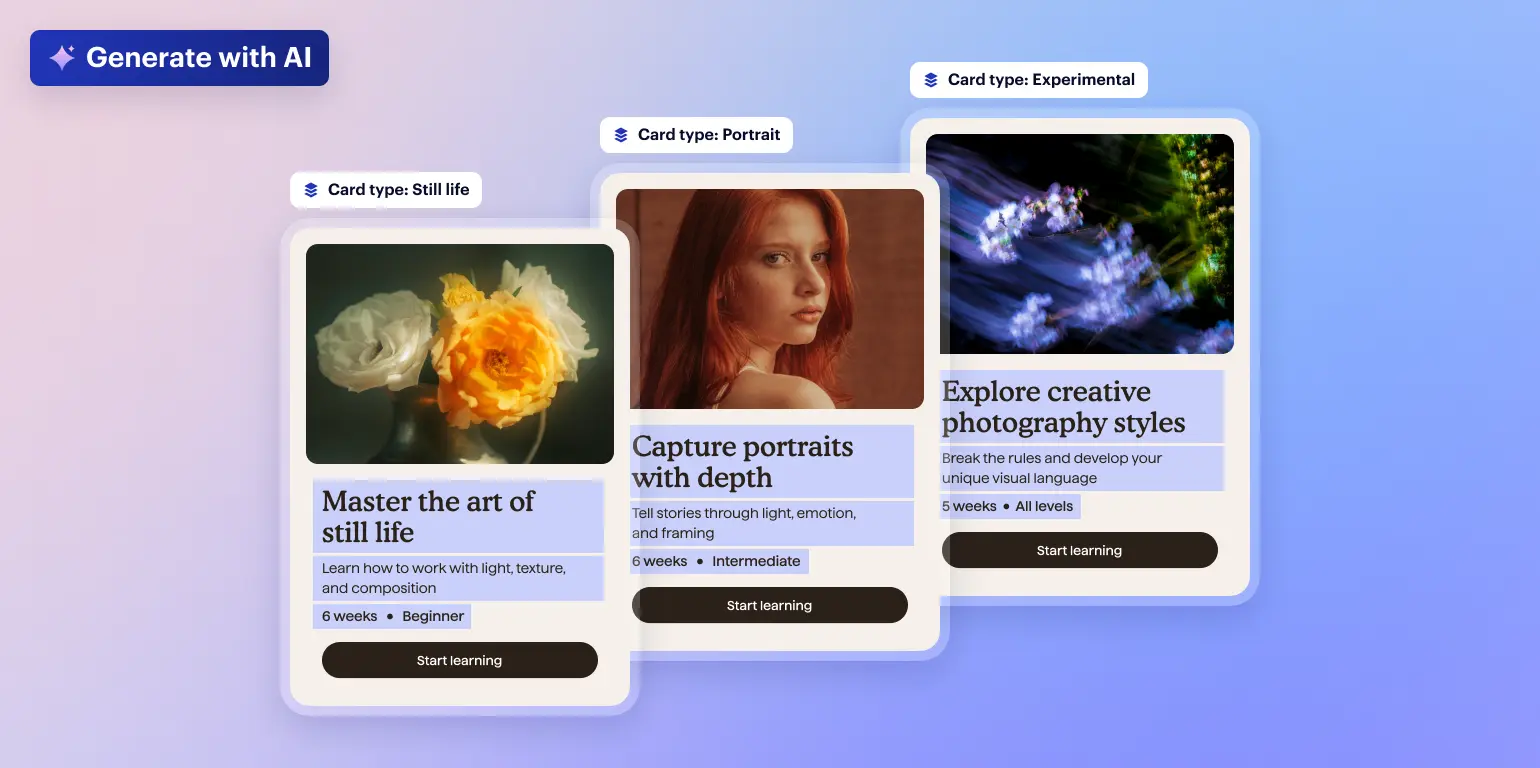
Account-Based Marketing (ABM) is another sector poised for transformation. ABM requires hyper-specific content tailored to individual high-value accounts. AI Collections allows B2B marketing teams to create bespoke landing pages for hundreds of target companies simultaneously, incorporating the target company’s name, industry challenges, and specific solutions into the page copy automatically. This level of "white-glove" service was previously reserved for a handful of "Tier 1" accounts but can now be scaled to the entire sales pipeline.
Industry Implications and Market Analysis
The release of AI Collections comes at a time when the MarTech (Marketing Technology) industry is under pressure to prove the tangible value of AI investments. While 2023 was characterized by the "hype cycle" of large language models, 2024 and 2025 are being defined by the integration of these models into specific, high-utility workflows.
"The problem has never been the idea of personalization; it has always been the execution," the company noted during the feature’s rollout. This sentiment is echoed across the industry. As privacy regulations like GDPR and the phasing out of third-party cookies make "off-platform" tracking more difficult, the "on-property" experience—the landing page—becomes the most critical touchpoint for conversion. If a brand cannot track a user across the web, it must make the most of the moment the user clicks an ad and lands on their site.
Competitors in the space, including Unbounce and Leadpages, have also been integrating AI features, such as AI copywriting assistants and traffic routing algorithms. However, Instapage’s move toward "Collections" suggests a shift in focus from the individual page to the page ecosystem. By treating a group of pages as a single manageable database, the platform is positioning itself for enterprise-level operations where volume and consistency are paramount.
Data-Driven Results and Performance Metrics
Preliminary testing of AI-assisted page generation indicates significant gains in both operational efficiency and campaign performance. Internal benchmarks suggest that marketing teams using AI-driven workflows can reduce the "time-to-market" for new campaigns by 60 to 80 percent. From a performance perspective, personalized landing pages typically see a 20 percent increase in conversion rates compared to generic counterparts.
Furthermore, the reduction in manual editing minimizes human error—a frequent byproduct of high-volume page duplication. In manual setups, it is common for "find and replace" errors to occur, or for outdated branding to persist on older page versions. Because AI Collections utilizes a single "source of truth" (the template and the content table), updates to brand colors, logos, or legal disclaimers can be pushed across an entire collection of hundreds of pages instantly.
Future Outlook: The Era of Hyper-Automation
As AI Collections becomes a staple in the marketer’s toolkit, the role of the digital marketer is expected to evolve from a "creator" to an "architect." The focus will shift away from the minutiae of editing text boxes and toward the high-level strategy of prompt engineering and audience segmentation.
The next logical step in this technological evolution is "Predictive Personalization," where AI not only generates pages based on a marketer’s table but also decides in real-time which version of a page to show a user based on their past behavior and demographic data. While AI Collections currently relies on marketer-defined prompts and data tables, the infrastructure it creates—a flexible, AI-ready page architecture—is the necessary foundation for a future of fully autonomous web experiences.
In conclusion, the launch of AI Collections by Instapage represents a significant milestone in the democratization of sophisticated marketing tactics. By solving the execution problem, the platform allows smaller teams to compete with large enterprises that have historically had the resources to manage massive, personalized web properties. As the digital advertising market becomes increasingly competitive and expensive, the ability to maximize the value of every click through AI-driven relevance will likely become a requirement for survival rather than a luxury. Instapage is currently offering a 14-day trial of the new system, signaling a push to move the broader market toward this new standard of automated personalization.







