

The landscape of conversion rate optimization (CRO) and client-side web development is undergoing a significant shift as specialized automation workflows begin to leverage the power of Small Language Models (SLMs) to handle complex coding tasks. Recent developments in generative AI have led to the creation of a sophisticated n8n-based workflow capable of writing JavaScript for A/B tests, performing automated quality assurance (QA), and executing a "self-healing" loop to rectify errors without human intervention. This system represents a move away from high-cost, resource-intensive Large Language Models (LLMs) toward more sustainable, cost-effective, and deterministic engineering practices.
The Evolution of AI-Driven Development in Experimentation
For years, A/B testing—the process of comparing two versions of a webpage to determine which performs better—has relied heavily on front-end developers to manually write JavaScript "flicker-free" injections. These scripts modify the Document Object Model (DOM) in real-time to alter user experiences. However, the manual nature of this process often creates a bottleneck in high-velocity experimentation programs.
The emergence of AI coding assistants like GitHub Copilot and Claude Code initially addressed some of these efficiency concerns. However, the industry has observed a rising demand for autonomous pipelines that do not require a developer to sit at a terminal. The newly proposed workflow by experimentation consultant Iqbal Ali utilizes SLMs—models with fewer parameters that can run locally or at a fraction of the cost of their larger counterparts—to manage the entire lifecycle of an experiment’s code development.

Technical Architecture of the Self-Healing Workflow
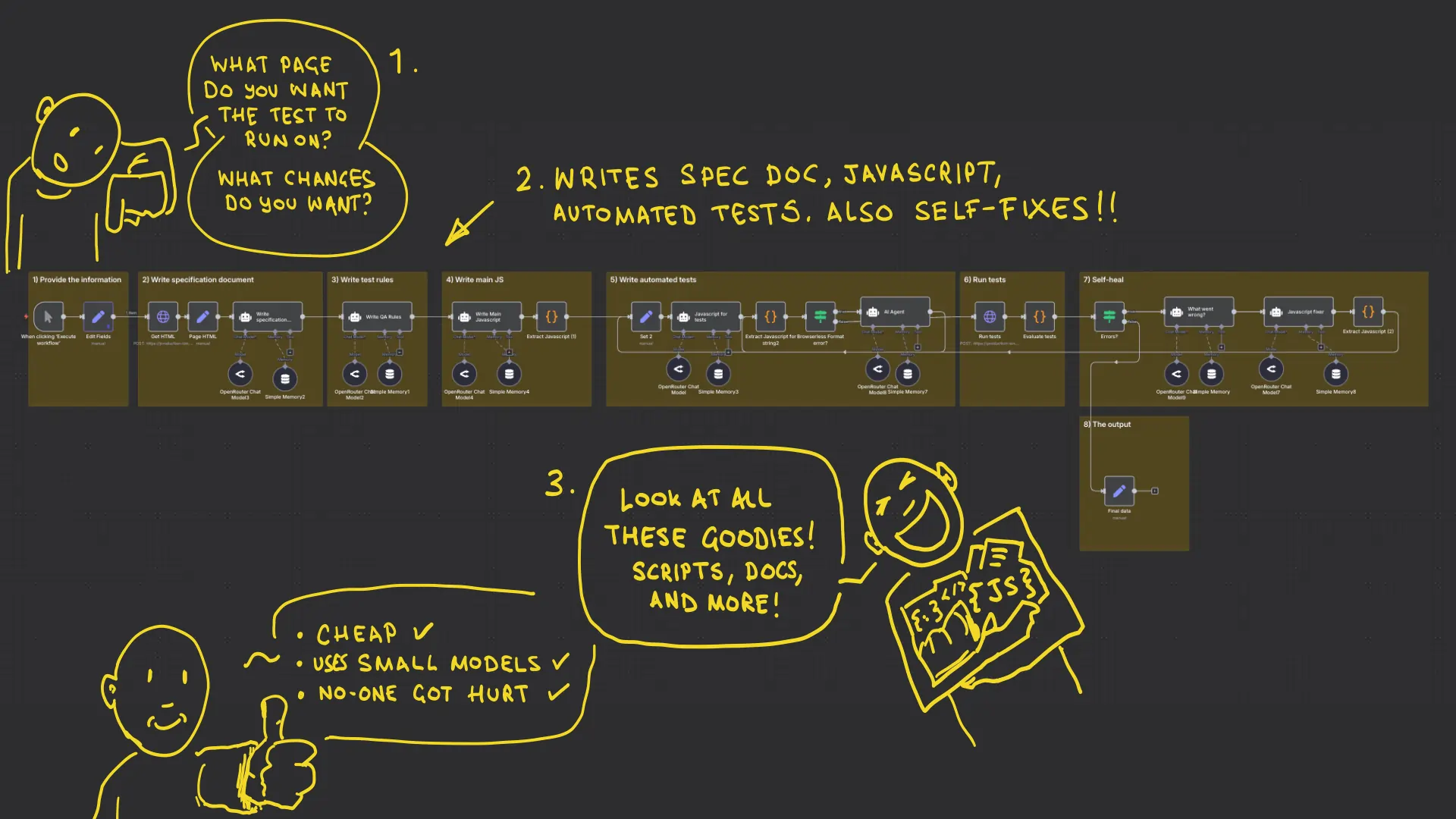
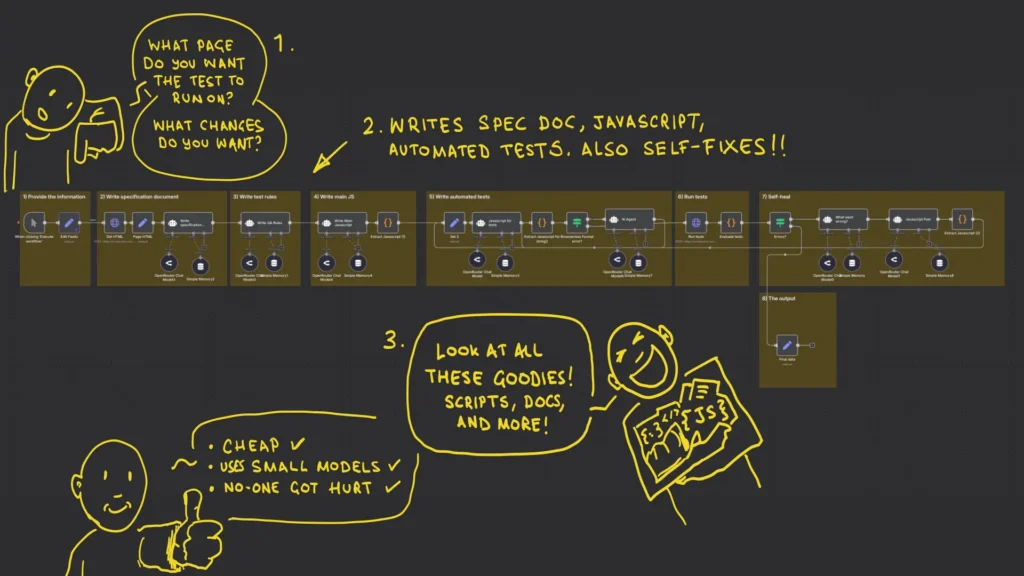
The workflow is built on n8n, an extendable automation tool, and integrates several third-party services to create a closed-loop system. The process is divided into several distinct phases, each designed to mimic the professional standards of a senior software engineer.
Phase 1: Technical Specification and Context Gathering
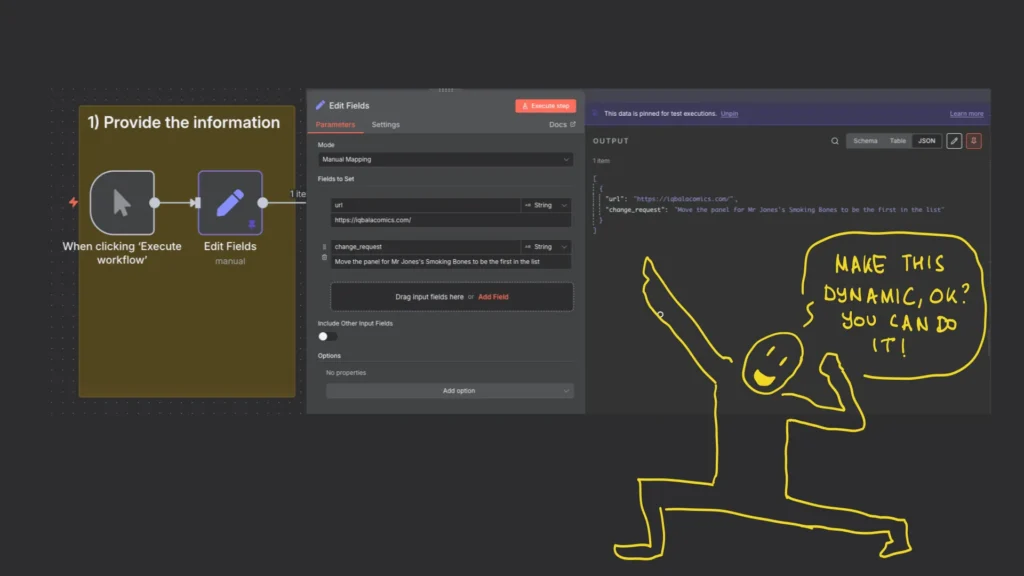
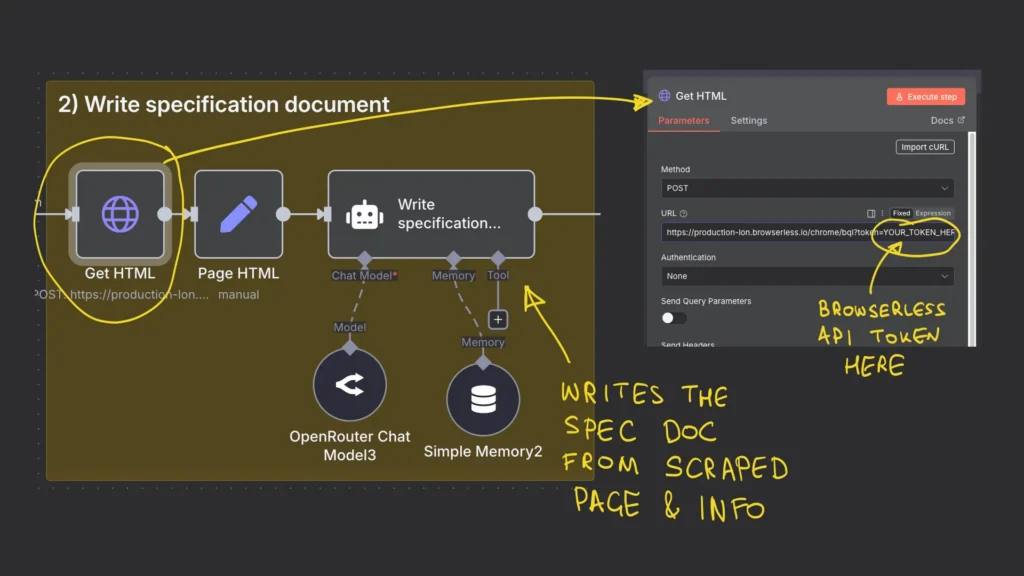
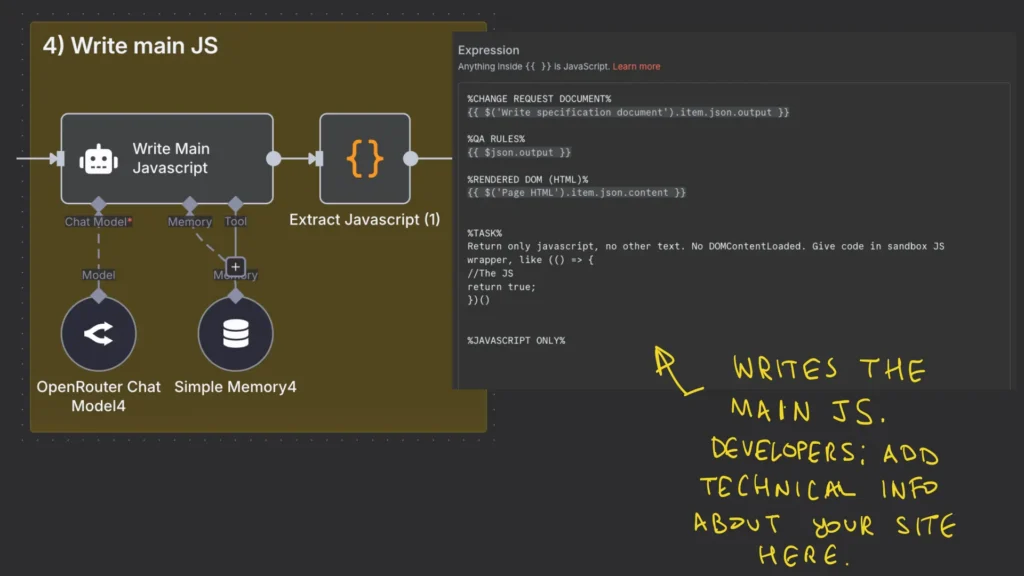
The process begins with the ingestion of a URL and a natural language description of the desired change, such as "re-order the panels on the product page." The system utilizes a headless browser service, Browserless, to fetch the live HTML of the target page. An SLM then analyzes this HTML and the user’s request to produce a comprehensive technical specification document. This document serves as the "source of truth," outlining exactly which CSS selectors to target and how the JavaScript should manipulate the DOM.
Phase 2: QA Rule Generation and Logic Design
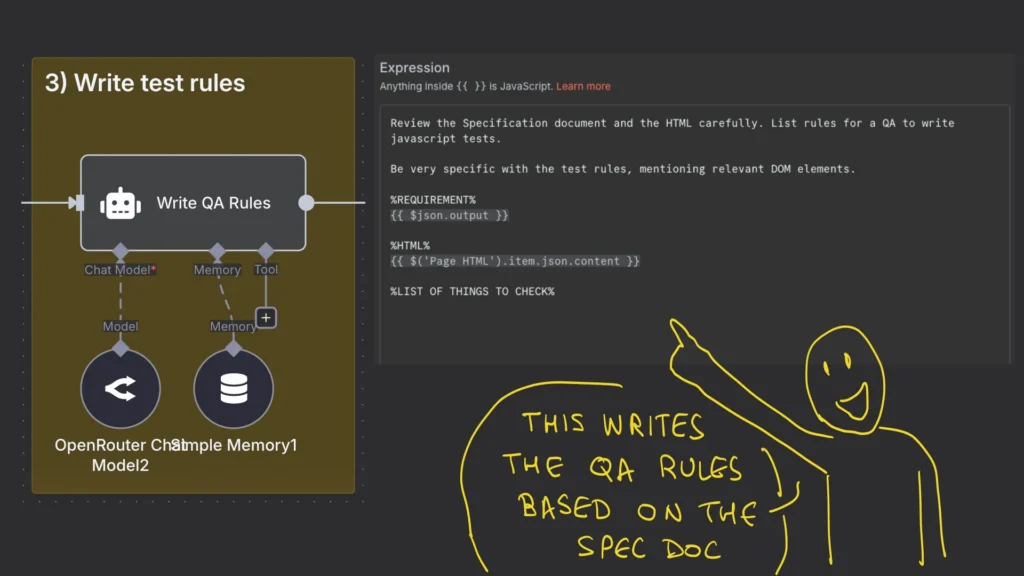
Before a single line of functional code is written, the system identifies potential failure points. By analyzing the technical specification, the AI generates a set of QA rules. These rules define what constitutes a successful implementation—for example, verifying that a specific element has moved to a new parent container or ensuring that a button’s event listener remains intact.
Phase 3: Code Generation and Automated Testing
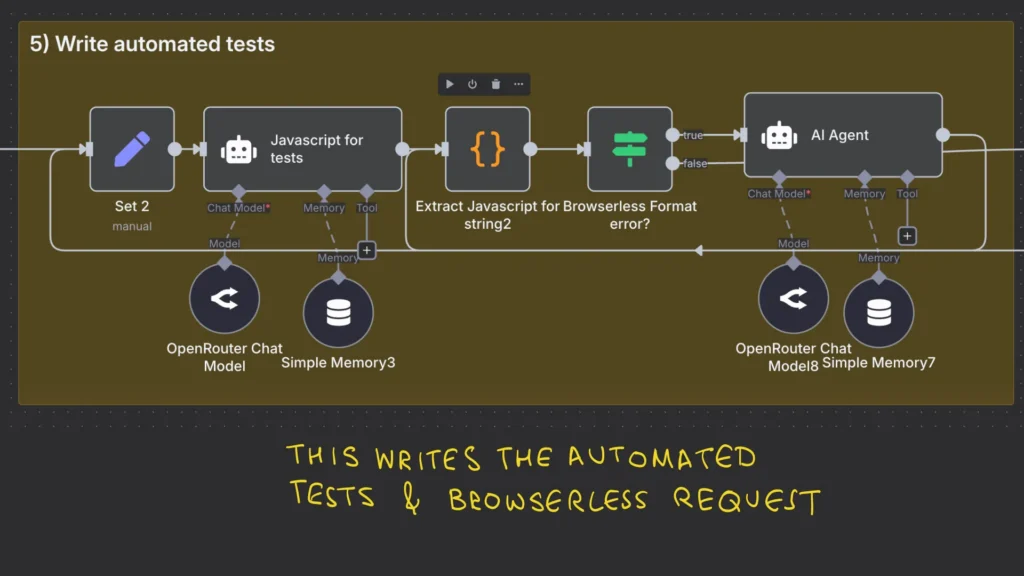
With the specification and QA rules in place, the SLM generates the JavaScript code required for the A/B test. Simultaneously, it writes a separate suite of automated test scripts, also in JavaScript. These tests are designed to be executed within a browser environment to validate the functional code. This separation of concerns—functional code versus testing code—is a cornerstone of reliable software engineering.
Phase 4: The Self-Healing Loop
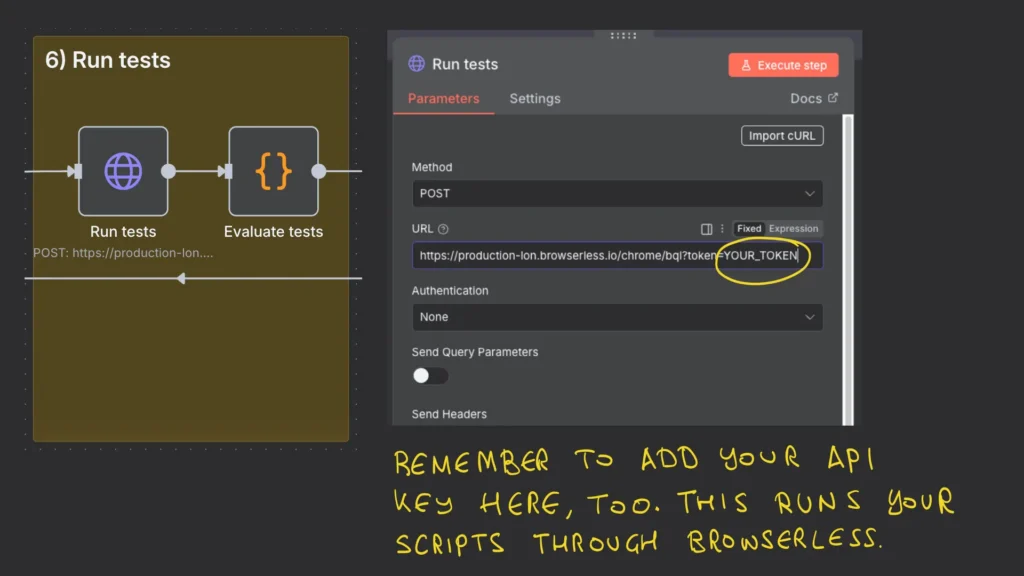
The most innovative aspect of this workflow is the self-healing mechanism. The generated code and the test scripts are sent to a Browserless instance, which renders the modified page and runs the tests. If the tests fail, the error logs and the failing code are sent back to the SLM. The model then attempts to "heal" the code by diagnosing the error and providing a fix. The workflow is currently configured to attempt this loop up to three times. If the code cannot be fixed within three iterations, it is flagged for human review, preventing excessive token consumption and infinite loops.
Economic and Environmental Impact of Small Language Models
One of the primary drivers behind the shift to SLMs is the dramatic reduction in operational costs. According to the data provided by the workflow’s designer, an experiment can be developed for less than $0.06 when using cloud-hosted SLMs via providers like OpenRouter. If the system is run locally using tools like Ollama, the marginal cost of code generation drops to near zero, excluding electricity and hardware depreciation.
In contrast, using top-tier LLMs like GPT-4 or Claude 3.5 for every iteration of a self-healing loop can quickly become expensive, especially for organizations running hundreds of experiments per month. Furthermore, the environmental impact of SLMs is significantly lower. Small models require less computational power for inference, making them a more "green" alternative in the increasingly energy-hungry field of artificial intelligence.
Chronology of AI Integration in CRO
The journey toward fully automated experimentation has progressed through several key stages:
- 2010–2020: The Manual Era. Developers manually wrote scripts for platforms like Optimizely or VWO. QA was performed by human testers on various devices.
- 2021–2022: The Autocomplete Era. The introduction of LLMs allowed developers to use AI to speed up the writing of repetitive CSS and JavaScript selectors.
- 2023: The Agentic Era. The rise of AI agents led to attempts to let AI "browse" the web and make changes. However, high costs and "hallucinations" (incorrect code) remained significant barriers.
- 2025: The Deterministic Workflow Era. The current focus has shifted toward rigid, serialized workflows that use AI for specific tasks while maintaining control through traditional JavaScript-based testing.
Determinism vs. Stochasticity in AI Workflows
A critical takeaway from this development is the emphasis on determinism. Large language models are inherently stochastic, meaning their output can vary even with the same input. This unpredictability is a liability in web development, where a single misplaced semicolon can break a website’s checkout flow.
By forcing the AI to write tests in "vanilla" JavaScript, the workflow introduces a layer of deterministic validation. JavaScript code is predictable; it either passes a test or it doesn’t. This hybrid approach—using the creative power of AI for code generation and the rigid logic of traditional programming for validation—is becoming the gold standard for enterprise-grade automation.
Industry Implications and Official Responses
While the developer community has expressed concerns about AI replacing human roles, the consensus among CRO experts is that these tools serve as "force multipliers."
"This workflow isn’t about replacing developers," stated Iqbal Ali in his analysis of the system. "It’s about reducing friction in the test development process and lowering costs. Efficiency is the key here."
Industry analysts suggest that this technology will allow smaller teams to compete with larger organizations by enabling them to launch more tests with fewer resources. However, the need for human oversight remains. The current state of SLMs still requires a "human-in-the-loop" for final validation, particularly for visual QA that automated scripts might miss, such as overlapping text or color inconsistencies.
Future Outlook and Broader Applications
The success of self-healing workflows in A/B testing suggests that similar models could soon be applied to other areas of web maintenance, such as automated bug fixing for legacy systems or real-time performance optimization. As SLMs continue to improve in reasoning capabilities, the "healing" success rate is expected to rise, potentially reducing the need for human intervention from 20% of cases to less than 5%.
Organizations looking to adopt these workflows are encouraged to treat them as a starting point. Customizing the prompt engineering to include site-specific coding standards and brand guidelines is essential for producing production-ready code. As the CRO industry moves toward 2026, the integration of local AI servers and automated QA pipelines is poised to become a standard component of the digital marketing tech stack.
In summary, the combination of n8n, Browserless, and Small Language Models provides a blueprint for the future of web engineering: one that is automated, self-correcting, and economically sustainable. By shifting the burden of repetitive coding and QA to intelligent workflows, businesses can focus their human talent on higher-level strategy and experimental design.







