

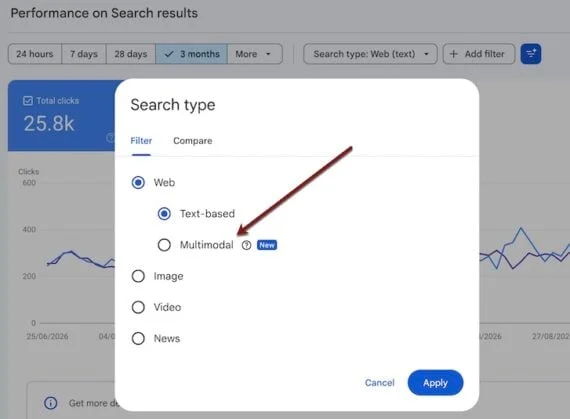
Google Search Console has rolled out a significant new filter within its Performance reports, allowing website owners to specifically track URLs that users viewed and/or clicked when conducting searches using images. This enhancement, identified as the "Multimodal" search type, marks a pivotal development for e-commerce merchants who increasingly rely on visual discovery as a primary pathway for product identification and purchase. The introduction of this filter provides unprecedented insight into how users interact with websites through Google’s various visual search interfaces, offering a critical new channel for understanding customer engagement and optimizing online presence.
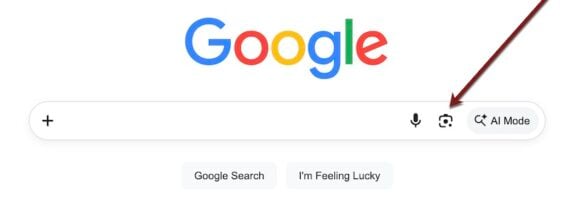
Historically, Google has offered image search capabilities through a variety of platforms. Users can access these features directly via the Google homepage by clicking the camera icon in the search bar, which initiates a search based on an uploaded image or a URL. This functionality is also integrated into Google Lens, a mobile application that uses a device’s camera to perform visual searches, and is woven into Google Images itself, where users can upload an image to find similar visuals or information. While these tools have long facilitated visual product discovery, the lack of granular performance data within Search Console meant that the impact of these visual searches on website traffic and engagement remained largely a mystery. This new filter directly addresses that gap, providing actionable data for businesses to refine their visual search strategies.
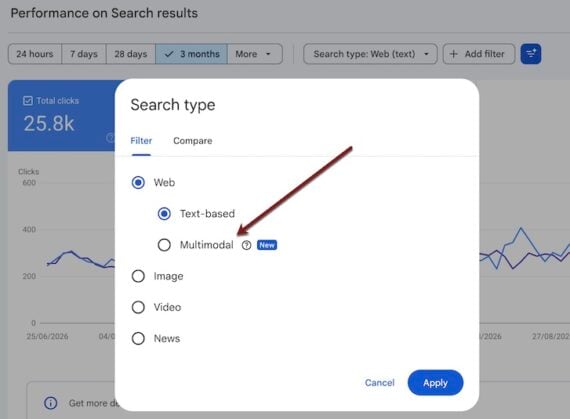
The new "Multimodal" filter is accessible within Google Search Console by navigating to Performance > Search results. Users then select "Search type: Web" and subsequently choose "Multimodal." It is crucial to understand that this filter is specifically designed for image-based searches and does not provide traditional search queries. Instead, it lists the URLs of pages that users visited or interacted with after initiating a search via an image. While the filter does not display the exact image that triggered the search on the user’s end, it does provide valuable information about the web pages that captured their attention. This includes metrics such as impressions, clicks, click-through rate (CTR), and average position for these visual search-driven visits.
The Rise of Visual Search and Its E-commerce Significance

The integration of visual search into mainstream online behavior is not a new phenomenon, but its impact on e-commerce has been steadily growing. A significant percentage of online shoppers, particularly younger demographics, now utilize visual search to discover and identify products they are interested in purchasing. This trend is fueled by the increasing sophistication of AI and machine learning, which enable search engines to accurately interpret visual queries. For example, a study by ViSenze in 2021 indicated that visual search can increase conversion rates by as much as 20%, and 80% of consumers have used visual search, with 62% of them reporting that visual search technology helps them find what they need. This underscores the commercial imperative for businesses to optimize their presence within visual search ecosystems.
Prior to the introduction of the "Multimodal" filter, businesses had limited ability to quantify the effectiveness of their visual content in driving traffic and sales. While platforms like Pinterest and Instagram have long emphasized visual discovery and provided analytics for visual content, Google’s dominant search engine position meant that its visual search capabilities, despite their growing user base, were a less understood traffic source. The new filter in Search Console is a direct response to the evolving landscape of online search and a recognition of the increasing importance of visual cues in the consumer journey.
Optimizing for Image Search: A Strategic Imperative
The introduction of this performance filter necessitates a proactive approach to image search optimization. Google’s image search results are fundamentally dependent on its ability to index and understand visual content. Therefore, leveraging tools and best practices to enhance this understanding is paramount.
Leveraging Image Sitemaps for Enhanced Indexation
One of the most effective strategies for improving visibility in image search results is the submission of image sitemaps. These specialized sitemaps provide Google with detailed information about the images on a website, including their locations, captions, and associated product details. By submitting an image sitemap through the "Indexing > Sitemaps" section of Google Search Console, businesses can directly guide Google’s crawlers to their product photos, thereby improving their chances of appearing in visual search results.
For e-commerce platforms like Shopify, image sitemaps are often automatically generated as part of the store’s standard SEO practices. However, for enhanced tracking and control, some merchants opt for dedicated image sitemap apps. Similarly, platforms like WooCommerce offer plugins that can generate image-specific sitemaps. The inclusion of images within these sitemaps is a critical step in ensuring that Google’s algorithms can properly discover, process, and rank visual content for search. This granular level of control can significantly influence performance within the newly available "Multimodal" reports.
The Enduring Power of Traditional SEO in Visual Search
Despite the visual nature of these searches, traditional Search Engine Optimization (SEO) principles remain foundational for success in image search. Images that perform well in standard text-based Google searches are highly likely to also rank well in visual search results. This means that applying descriptive, keyword-rich file names to images, optimizing alt text with relevant terms, and including informative captions are not just good SEO practices; they are essential for visual search visibility.
For instance, an image file named "red-running-shoes-nike-air-zoom-pegasus-39.jpg" is far more likely to be understood and ranked by Google than a generic name like "IMG_1234.jpg." Similarly, alt text that accurately describes the image, such as "Nike Air Zoom Pegasus 39 in bright red for men," provides crucial context for search engines. This holistic approach to on-page optimization ensures that both textual and visual elements of a webpage contribute to its discoverability across all search modalities.
The Crucial Role of Image Quality and Presentation
The quality and presentation of images directly impact user engagement and click-through rates. When users initiate an image search for a product and are presented with a visual result, their decision to click through is heavily influenced by the perceived quality, resolution, and clarity of the image. Low-resolution, poorly lit, or unclear product images are likely to deter potential customers, even if the product itself is what they are seeking.
Anecdotal evidence and testing suggest that thumbnail images on collection pages, often used by platforms like Shopify, can sometimes be suboptimal for visual search. To improve this, merchants are advised to upload high-resolution versions of their product images. A practical approach to testing this is to download a thumbnail image from a collection page, perform an image search for it on Google, and observe how it appears in the results. This allows businesses to directly assess the quality and potential of their visual assets in a real-world search scenario. The "Multimodal" filter in Search Console can then be used to track whether these improvements lead to increased impressions and clicks.
Experimentation and Diversification of Visual Assets
Visual search algorithms are adept at identifying objects within images, regardless of the angle, color, or position presented. However, for optimal ranking opportunities, the visual results that appear often correspond to images that closely match the searcher’s uploaded visual in terms of positioning, angle, or color palette. This presents a compelling reason for businesses to experiment with their product photography and diversify their visual assets.
Consider a scenario where a user uploads a photo of a plush toy from its front view. The search results are likely to prioritize other images of the same toy, or similar toys, also presented from the front. To capitalize on this, e-commerce businesses should consider offering a variety of product images that showcase different angles, close-up details, and diverse color options. This strategic diversification increases the likelihood that a business’s product will match the specific visual query initiated by a potential customer, thereby improving its ranking and potential for a click. The "Multimodal" performance data will be instrumental in identifying which types of visual assets are resonating most effectively with searchers.
Harnessing the Power of AI for Visual Search Insights
Artificial intelligence (AI) is rapidly transforming how businesses approach various aspects of their operations, and visual search optimization is no exception. Generative AI platforms can be invaluable tools for generating inspiration and identifying trends that can inform visual search strategies. Search optimizer Marie Haynes has suggested prompts for AI tools that can uncover insights relevant to visual search.
For example, an AI prompt could be: "Generate a dashboard of top-performing product categories in visual search, highlighting specific colors, textures, or materials that are frequently searched for." The AI could then analyze vast datasets of visual search patterns and present findings that indicate, for instance, that certain shades of terracotta or specific metallic finishes are trending. Armed with this information, businesses can proactively incorporate these trending elements into their product offerings or website imagery. This could involve adding complementary decor with those colors or textures to product photos, or even updating product lines to include items with those characteristics. The insights derived from AI can then be validated and tracked through the new "Multimodal" reports in Google Search Console, creating a feedback loop for continuous optimization.
The ability to request AI-generated dashboards, which might display metrics like impressions, clicks, CTR, and position for various visual search trends, further streamlines the analysis process. This allows for quick identification of what visual elements are driving engagement, enabling businesses to make data-informed decisions about their visual content strategy.

Future Implications and Strategic Planning
The introduction of the "Multimodal" filter in Google Search Console is more than just a new reporting feature; it signifies Google’s commitment to evolving search capabilities and acknowledging the growing importance of visual search in the user journey. For e-commerce merchants, this presents a significant opportunity to gain a competitive edge by understanding and optimizing for this critical discovery channel.
The implications of this development are far-reaching:
- Increased Visibility for Niche Products: Visual search can be particularly effective for products that are difficult to describe with text alone, such as unique fashion items, artisanal crafts, or specialized equipment. The new filter will help businesses identify if their niche products are being discovered through visual queries.
- Enhanced User Experience: By understanding what visual queries lead users to their site, businesses can better tailor their website content and product offerings to meet user expectations, leading to a more satisfying browsing and shopping experience.
- Data-Driven Content Creation: The performance data from the "Multimodal" reports can inform future content creation efforts. Businesses can identify which types of images are generating the most engagement and replicate successful strategies.
- Competitive Analysis: While direct competitor data is not available, observing trends in the "Multimodal" reports can provide clues about what visual strategies might be resonating across the industry, enabling businesses to adapt their own approaches.
In conclusion, the new "Multimodal" filter in Google Search Console is a game-changer for e-commerce businesses. It democratizes access to data on visual search performance, empowering merchants to optimize their online presence for a rapidly growing segment of online shoppers. By embracing strategies such as image sitemaps, traditional SEO, high-quality image presentation, visual asset diversification, and leveraging AI insights, businesses can unlock new avenues for discovery, engagement, and ultimately, sales in the increasingly visual world of online commerce. The timely tracking of these efforts within the "Multimodal" reports will be crucial for sustained success.








