rifanmuazin
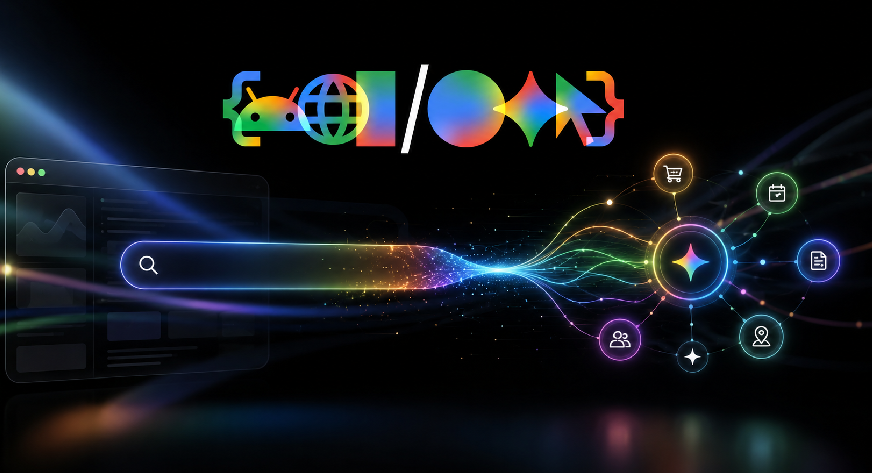
The landscape of the global internet underwent a seismic shift this week as Google transitioned its flagship product from a passive information repository into an active digital executor. At the annual Google I/O conference for 2026, the technology giant unveiled a suite of advancements centered on the concept of “agentic AI”—artificial intelligence designed not merely to answer questions, but to perform complex tasks autonomously. This evolution marks the end of the traditional “search engine” era and the beginning of what industry analysts are calling the “action engine” era.
For over a quarter of a century, Google Search functioned as a sophisticated index, providing users with a list of sources to investigate. The 2026 updates dismantle this paradigm. Through the integration of specialized AI agents, Google Search is now capable of navigating the web on behalf of the user, synthesizing data, and executing transactions within a unified interface. This shift is powered by the newly debuted Gemini 3.5 model family, a technological leap that prioritizes speed, multimodal reasoning, and background persistence.
The Evolution of Search: From Indexing to Execution
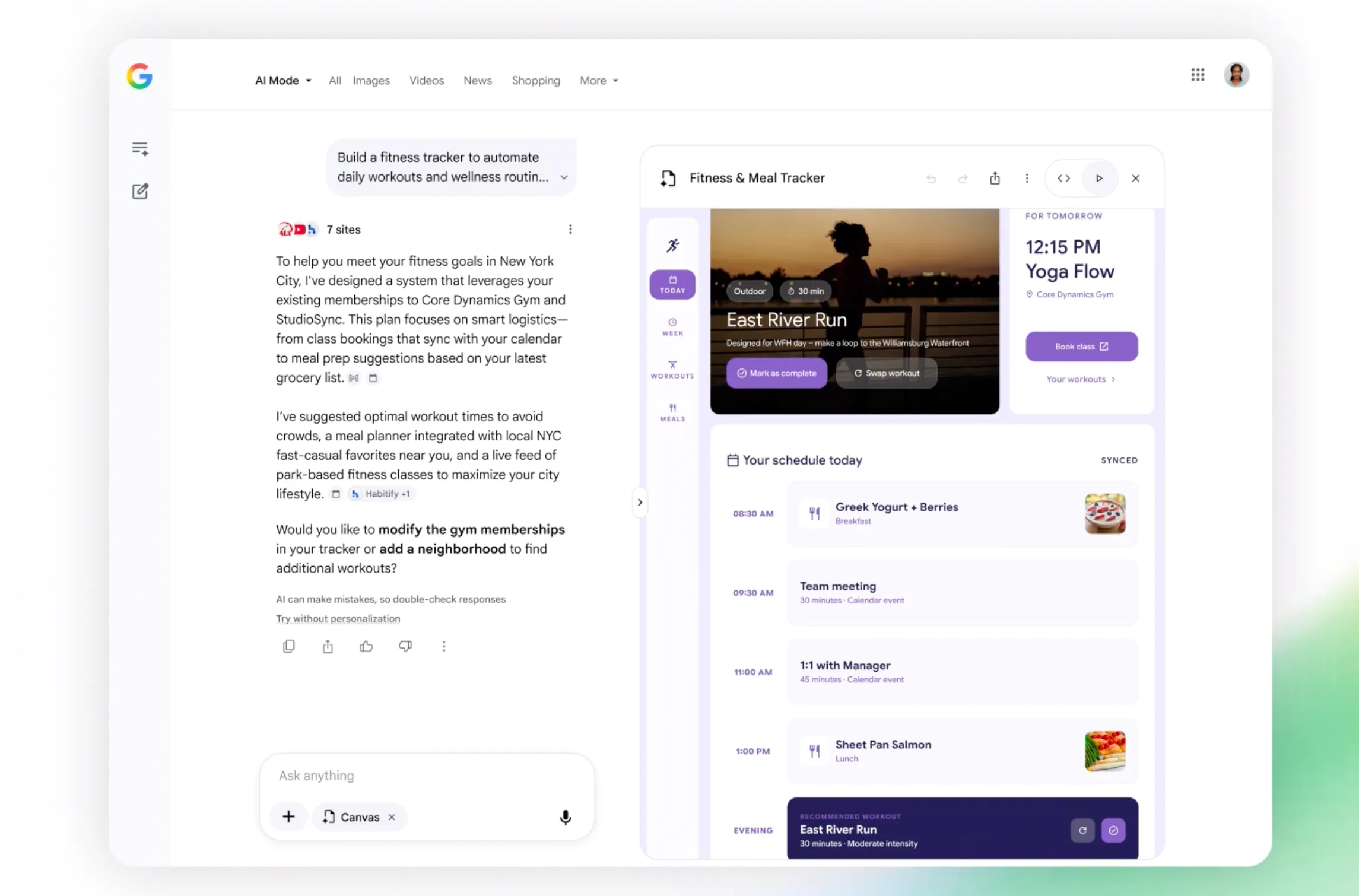
The centerpiece of the I/O 2026 keynote was the transformation of Google Search. Historically, a user looking for a specific product—such as a particular style of denim or a technical piece of hardware—would be presented with pages of links, requiring manual filtering and price comparison. Under the new “AI Mode,” the search engine functions as a personal shopper.
By utilizing agentic AI, Search now scrolls through millions of e-commerce platforms in real-time. It doesn’t just show a list of jeans; it identifies the exact match based on visual and textual prompts, compares reviews, checks stock levels, and provides an immediate “buy” option within the search results. This reduces a process that previously took minutes of browsing to a matter of seconds.
Beyond commerce, the functionality extends to education and productivity. Google introduced “Visualizing Concepts,” a feature that allows Search to generate bespoke visual illustrations for complex scientific or philosophical ideas on the fly. This eliminates the need for users to hunt for relevant YouTube videos or diagrams. Furthermore, Search has integrated direct coding assistance, allowing developers to share snippets for real-time debugging and optimization within the search bar itself.
The introduction of event tracking also changes the utility of the Google app. Users can now instruct Search to monitor specific updates—such as product launches, legislative changes, or sports developments—and the system will automatically establish a dedicated tracker that pushes updates to the user’s device as they occur.
The Engine of Action: Gemini 3.5 Flash and Pro
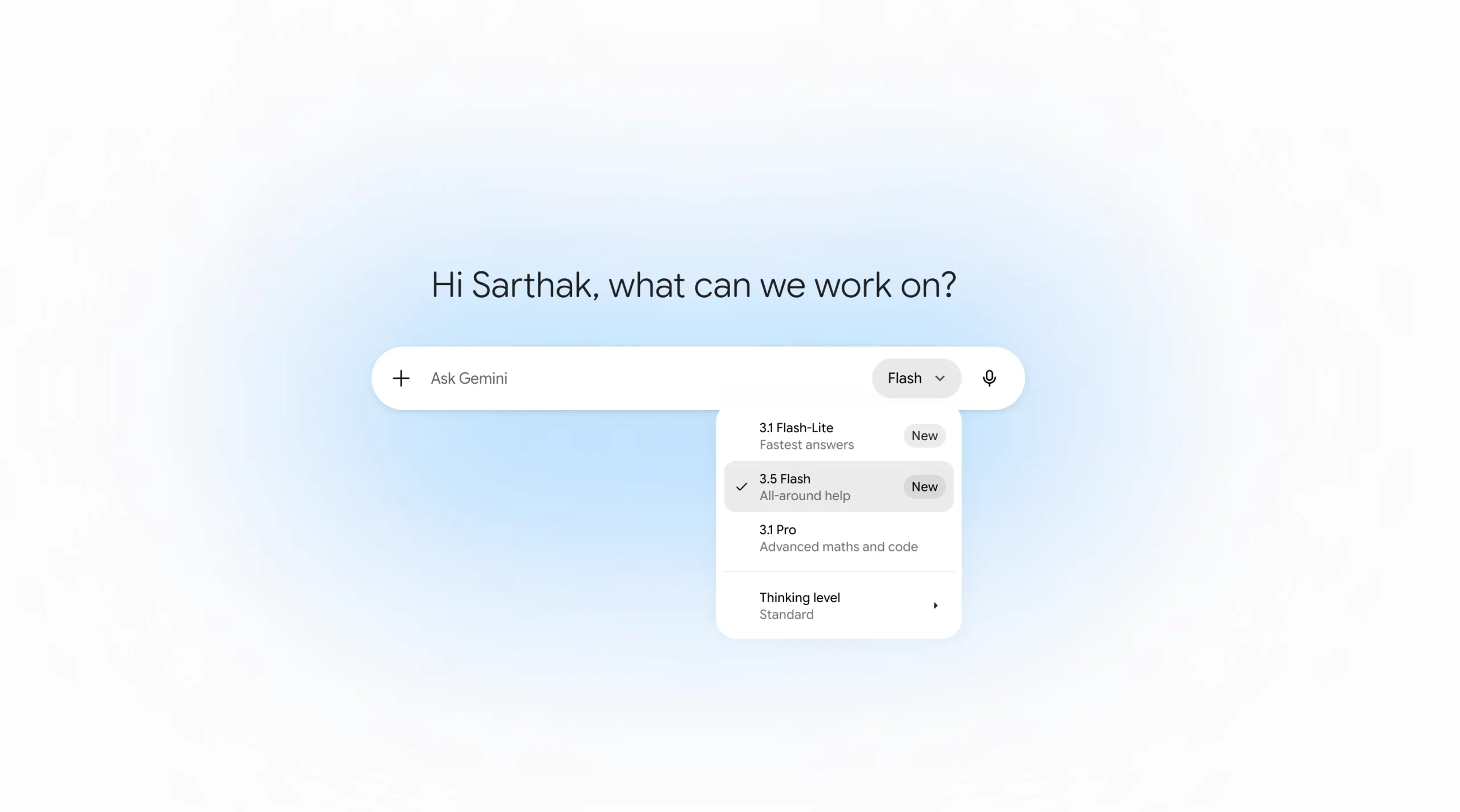
The technical foundation for this new era is the Gemini 3.5 family. While Google has historically released “Pro” and “Ultra” versions for high-level reasoning, the I/O 2026 conference focused heavily on the “Flash” variant. Gemini 3.5 Flash is engineered specifically for agentic workflows where low latency is critical.
According to technical specifications released during the event, Gemini 3.5 Flash delivers frontier-level performance while maintaining a speed four times faster than previous frontier models in terms of output tokens per second. This speed is essential for “agents” that must make thousands of micro-decisions in seconds to complete a task.
While Flash handles the immediate, high-speed interactions, Google confirmed that Gemini 3.5 Pro is scheduled for release next month. The Pro model will likely handle more resource-intensive tasks involving massive datasets and deep logical reasoning. Developers can currently access the Flash model through the Gemini API, Google AI Studio, and the new “Antigravity” platform, while enterprise clients have access via the Gemini Enterprise Agent Platform.
Gemini Spark: The 24/7 Virtual Assistant
One of the most significant departures from traditional AI interaction is “Gemini Spark.” Unlike standard chatbots that require an open browser tab or an active session, Gemini Spark is a persistent AI agent. It operates on dedicated virtual machines within Google Cloud, allowing it to function 24/7 regardless of whether the user’s device is online.
Spark is designed to manage “long-running tasks.” For example, a user could instruct Spark to monitor a complex logistics chain, organize a multi-city travel itinerary involving dozens of bookings, or conduct a week-long research project on market trends. Because Spark is integrated with the “Google Antigravity” harness, it can interact with both Google’s internal ecosystem (Docs, Gmail, Calendar) and third-party tools via the Model Context Protocol (MCP).
Google intends to roll out Spark across the Gemini app initially, followed by integrations into Chrome, Android Halo, and workspace communication tools. This represents a move toward “asynchronous AI,” where the user provides a goal and the AI works independently until the objective is met.
Gemini Omni: A Revolution in Multimodal Video Generation
In the creative sector, Google unveiled Gemini Omni, a model that brings advanced reasoning to video synthesis. While AI video generation has existed for several years, Gemini Omni distinguishes itself by allowing users to edit and refine video content through natural conversation.
The model, specifically the Gemini Omni Flash version, is currently being integrated into YouTube Shorts and Google Flow. The system understands the laws of physics, historical context, and cultural nuances, which results in videos that are not only visually impressive but logically consistent.
A key feature demonstrated at I/O was the “Contextual Illustration” tool. A creator can provide a base video and ask the AI to insert a new object—such as a specific planet or a branded product—and the AI will use its understanding of light, shadow, and physics to blend the object seamlessly into the scene. This “directorial” approach to video creation suggests that the future of content production may rely less on traditional editing software and more on high-level prompting and iterative dialogue with an AI agent.
Empowering the Developer: Antigravity 2.0 and Native Migration
For the developer community, Google I/O 2026 was defined by “Antigravity 2.0.” This platform is built for the creation of specialized subagents. Rather than relying on a single large language model (LLM) to handle every aspect of a project, Antigravity 2.0 allows developers to deploy a “team” of agents. One agent may focus exclusively on writing Kotlin code, another on security audits, and a third on UI/UX testing.
To address security concerns inherent in autonomous agents, Google introduced “Terminal Sandboxing” and “Credential Masking.” These features ensure that even if an agent is performing autonomous tasks, it cannot inadvertently leak sensitive API keys or compromise the host system’s root directory.
Android development also saw a major update with the introduction of a “Migration Agent” within Android Studio. This tool is designed to significantly lower the barrier to entry for the Google ecosystem by automatically converting apps built in React Native, iOS (Swift), or various web frameworks into native Kotlin. This move is clearly aimed at consolidating the developer landscape around Google’s AI-first architecture.
Analysis of Implications: The End of the Web as We Know It?
The shift from an informational search engine to an agentic action engine carries profound implications for the digital economy. For 25 years, the “social contract” of the web was built on traffic: Google provided links, and websites provided content in exchange for visitors. If Google Search now answers queries and executes tasks within its own interface, the incentive for users to visit third-party websites may diminish.
Industry analysts suggest this could lead to a “publisher crisis,” where websites that rely on search traffic for ad revenue see a sharp decline in hits. However, Google argues that by acting as an agent, Search will drive higher-quality “intent-based” traffic to businesses, as the AI will only lead users to a site when a transaction or deep engagement is required.
Furthermore, the “always-on” nature of Gemini Spark raises new questions regarding data privacy and cloud resource consumption. Running millions of persistent virtual machines for individual users requires an unprecedented amount of energy and infrastructure, a challenge Google aims to meet through its ongoing investments in custom TPUs (Tensor Processing Units) and green energy initiatives.
Conclusion
The announcements at Google I/O 2026 represent a pivot point in the history of technology. By embedding “agentic” capabilities into the very fabric of the internet’s most-used entry point, Google is attempting to make AI the primary layer through which humans interact with the digital world.
The transition from Gemini 3.5 Flash’s high-speed reasoning to Gemini Spark’s persistent execution and Gemini Omni’s creative mastery paints a picture of a future where the internet is no longer a place you “go to” for information, but a service that “works for” you. As these tools roll out to the public over the coming months, the focus will undoubtedly shift from what AI can say to what AI can do. For Google, the era of the “Search Engine” is officially over; the era of the “Action Engine” has begun.