Email marketers are currently navigating a significant shift in their landscape, marked by substantial declines in Gmail open rates. Reports from various industry players, including Validity customers, indicate quarter-over-quarter drops of 30 percent or more, signaling a profound change in how email engagement is measured and understood. Validity’s own data corroborates this trend, showing a roughly one-third decrease in Gmail image loading activity, which includes critical tracking pixels, observed since late November 2025. This downturn is widely attributed to Gmail’s probable reduction in the frequency of image prefetching, a process that has routed through its proxy servers since 2013. The immediate consequence is fewer recorded opens, even if actual email readership remains unchanged, prompting a re-evaluation of established email marketing strategies.
The Underlying Mechanism: Image Prefetching and “False Opens”

For over a decade, Gmail has utilized proxy servers to prefetch images in emails. While initially intended to enhance user experience and privacy by masking IP addresses, this mechanism also inadvertently led to the inflation of open rates. Tracking pixels, tiny images embedded in emails, are triggered when loaded, signaling an “open.” When Gmail prefetched these images, an open was recorded regardless of whether the user consciously viewed the email. This phenomenon, often referred to as “false opens,” became particularly pronounced following Apple Mail Privacy Protection (MPP) in 2021. MPP, by pre-loading emails via proxy servers, generated artificial open rate inflation across many platforms, including Gmail, especially for users accessing their Gmail accounts through Apple Mail apps. The recent changes at Gmail appear to be a deliberate move to counteract this inflation, offering a more accurate, albeit lower, representation of genuine engagement.
A Broader Industry Trend: Prioritizing Authentic Engagement
This isn’t the first time major email providers have adjusted their systems in ways that impact engagement metrics. Validity previously investigated similar declines at Apple and Yahoo. Apple’s shifts were driven by new functionalities like inbox categories, digest views, groupings, and AI summaries, all designed to curate a more personalized and less cluttered user experience. Yahoo, on the other hand, tightened its enforcement of existing bulk sender requirements, leading to a stricter filtering environment. Gmail’s recent actions, including a series of inbox changes over the past two years and the stricter enforcement of bulk sender requirements effective November 2025, align with this industry-wide push towards prioritizing active and engaged subscribers. The message is clear: email providers are moving away from vanity metrics and towards fostering a healthier, more valuable email ecosystem for their users.

Why the Decline Can Be Good News for Marketers
While the immediate drop in open rates may trigger alarm for marketers accustomed to using this metric as a primary indicator of campaign success, a deeper analysis reveals potential long-term benefits. The focus on genuinely engaged subscribers means that fewer false opens are being reported. Crucially, email senders are not reporting similar declines in clicks and revenue, suggesting that the actual effectiveness of their campaigns, in terms of driving user action and financial outcomes, has not necessarily diminished. Instead, the reported open rates are becoming a more accurate reflection of true user interaction. This shift encourages marketers to refine their strategies, emphasizing quality over quantity and cultivating a subscriber base that is genuinely interested in their content. Open rates, while no longer an absolute measure of reach, remain directionally useful. A sudden drop, when viewed in conjunction with other metrics, can still serve as an early warning signal for deeper underlying problems in deliverability or content relevance.
Gmail’s Multifaceted Evolution: A Chronology of Changes and Their Impact
Gmail’s recent developments are not isolated incidents but rather a series of strategic enhancements aimed at improving user experience, combating spam, and promoting genuine engagement. These changes, rolled out progressively, collectively contribute to the observed shifts in email performance metrics.
1. Increased Enforcement of Bulk Sending Requirements (Effective November 2025)
- Background: In late 2025, Gmail transitioned from a period of soft enforcement to active rejection of non-compliant bulk email traffic. This policy, designed to protect users from unwanted mail, resulted in an increase in hard SMTP-level rejection codes.
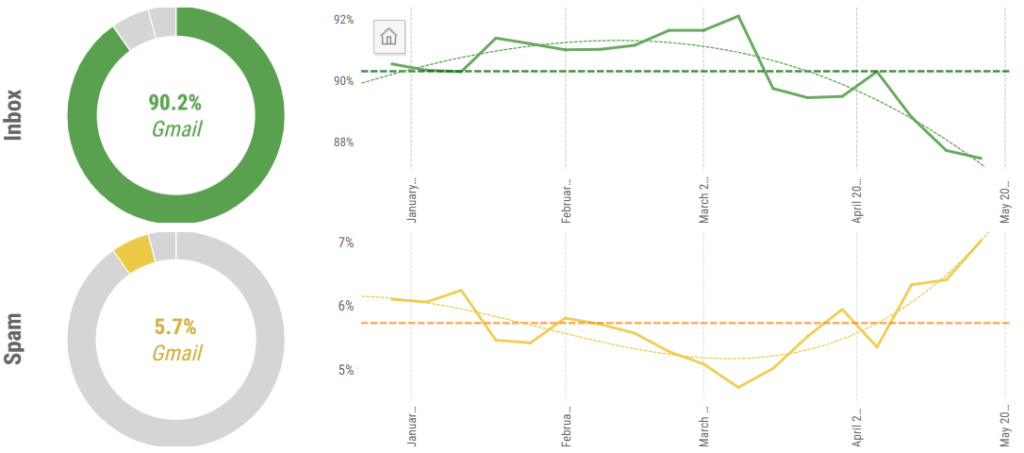
- Impact on Open Rates: The effect is straightforward: rejected emails generate no opens. Validity’s Intelligence Network reported an approximate three percent drop in Gmail inbox placement rates over the past few months, directly linked to this stricter enforcement. Marketers who fail to meet Gmail’s stringent guidelines will see their messages blocked before they even reach the inbox, impacting deliverability and, consequently, open rates.
- Strategic Response: Senders must meticulously review and ensure full compliance with all of Gmail’s bulk sender guidelines. This includes, but is not limited to, DMARC authentication, proper implementation of list-unsubscribe headers, and managing complaint rates. Leveraging tools like Google Postmaster Tools V2 to monitor compliance status indicators and scrutinizing bounce logs for specific Gmail error codes pointing to non-compliance are critical steps. A proactive approach to sender reputation management is no longer optional.
2. Relevance-Sorted Promotions Tab (Ongoing Implementation)
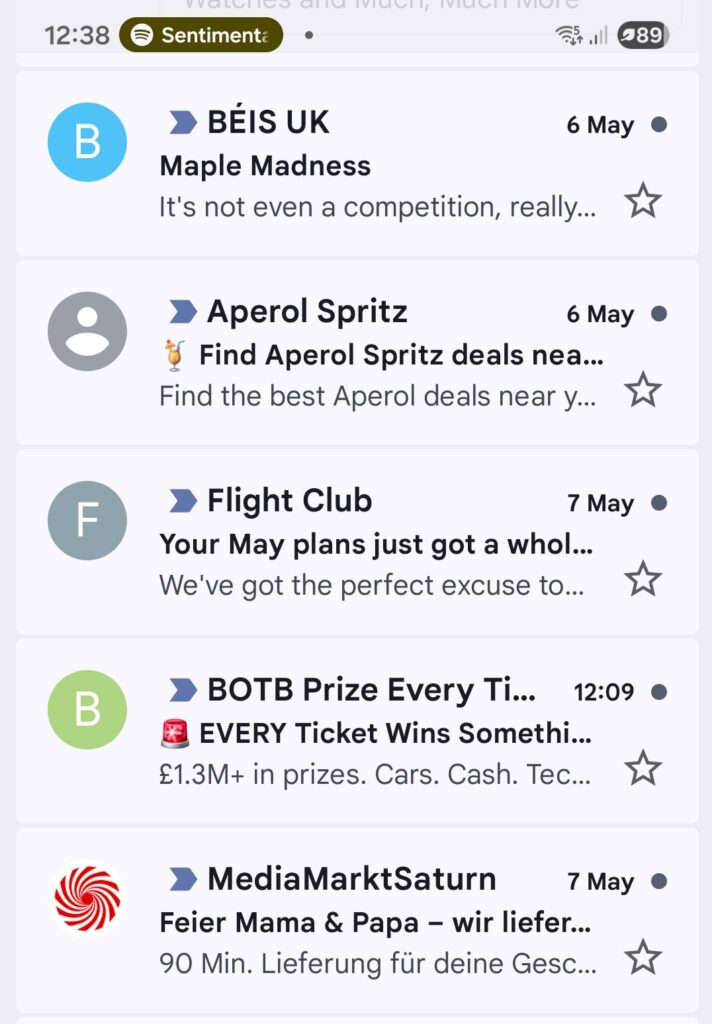
- Background: Gmail has moved away from sorting the Promotions tab by recency, opting instead for an algorithm that prioritizes emails based on perceived engagement.
- Impact on Open Rates: This change places lower-engagement senders further down the Promotions tab, significantly reducing their visibility and the likelihood of their emails being opened. This creates a feedback loop: un-opened messages fail to generate positive engagement signals, further diminishing the sender’s relevance score and pushing future emails even lower in the tab. Personalization and content relevance now directly influence deliverability within this crucial tab. Generic broadcast campaigns are increasingly being deprioritized.
- Strategic Response: Marketers must shift their focus from mass mailing to targeted, personalized communication. Aggressive segmentation of Gmail recipients based on engagement recency is essential. Implementing stricter suppression thresholds for inactive subscribers is vital to protect sender reputation and improve relevance scores. The goal is to send highly relevant content to those most likely to engage, ensuring emails surface prominently in the Promotions tab.
3. Auto-Annotations for Promotional Emails (Ongoing Implementation)
- Background: Gmail’s system now automatically extracts deal details, images, and discount codes from promotional emails, displaying them as rich previews within the Promotions tab. This occurs even if senders have not explicitly implemented the Annotations markup schemas.
- Impact on Open Rates: While seemingly beneficial for showcasing offers, this feature allows subscribers to grasp headline offers and promotional codes without needing to open the email. For an offer with a clear, concise value proposition, the email may have achieved its objective at the preview stage, removing the incentive for an actual open and thus exerting downward pressure on open rates.
- Strategic Response: Instead of relying on automatic extraction, senders should actively implement Annotations markup. This grants full control over the specific content surfaced in previews, allowing for strategic teasing of information. Marketers should also consider testing offers that explicitly require a click to reveal full details or redeem a discount, thereby driving engagement beyond a mere preview.
4. Subscriptions Manager (Launched Mid-2025, Fully Rolled Out)
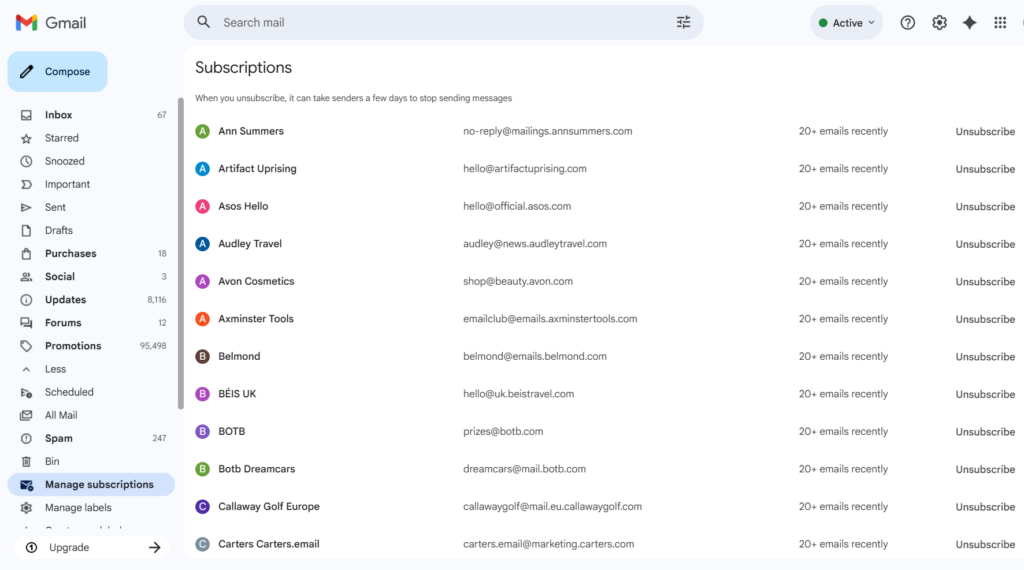
- Background: This feature, now fully deployed to personal Gmail accounts, provides users with a centralized dashboard listing all marketing senders, ranked by sending frequency.
- Impact on Open Rates: Users can unsubscribe from any sender’s mail stream with a single click, directly from the manager, without needing to open an email. The primary impact on open rates stems from potential list shrinkage. However, this shrinkage is often positive, as it prunes less engaged subscribers, leaving a smaller but more active and responsive list.
- Strategic Response: Brands with high sending frequencies should evaluate their cadence. Reducing frequency without compromising revenue might be a strategic move to lower visibility in the Subscriptions Manager and reduce passive unsubscribes. For brands using multiple “From” addresses for different content streams, ensuring each address has a unique List-Unsubscribe header allows subscribers to opt down from specific content types rather than performing a blanket unsubscribe.
5. AI-Generated Email Summaries (Rolling Out January 2026)

- Background: Starting January 2026, Gmail began rolling out AI-generated summaries that display 1-2 sentences capturing the key message of an email, appearing automatically when users open emails.
- Impact on Open Rates: The concern here is twofold. Firstly, there’s ongoing debate regarding whether these AI summaries inflate open rates by auto-opening emails for summarization; intelligence remains contradictory. Secondly, and more definitively, if subscribers can glean sufficient information from the summary alone, their motivation to open the full email diminishes.
- Strategic Response: Senders must prioritize placing their most critical content and calls to action within the opening lines of the email body, as summaries pull from the earliest readable text. Front-loading value and clearly articulating a next step within this initial content is crucial. The goal is to make the summary a compelling invitation to click through, not a replacement for the full message.
6. Integration of Gemini for Inbox Search and Management (January 2026)
- Background: January 2026 also saw the integration of Gemini, introducing conversational, natural-language search capabilities across the Gmail inbox. This allows subscribers to query their email history without opening individual messages.
- Impact on Open Rates: Users can ask questions like “What discount codes do I have for sportswear?” and receive compiled answers from multiple emails without opening any of them. This fundamentally changes how users access information contained within emails, further reducing the need for an explicit “open.”
- Strategic Response: For emails containing time-sensitive content or actionable information, senders should structure this content to be easily digestible and extractable by AI. This means using specific deadlines, named actions, structured data markup (like Schema.org), and clean HTML. Marketers should closely monitor changes in the ratio of opens between highly engaged and lapsed segments, as this feature is expected to disproportionately impact low-engagement senders, deepening disengagement.
7. Message Clipping (Persistent Challenge)
- Background: While not a new development, Gmail’s long-standing policy of clipping messages with HTML file sizes exceeding 1,024 bytes remains a critical factor impacting open rates. Content beyond this threshold is not displayed unless the reader explicitly requests it.
- Impact on Open Rates: Many senders place their open tracking pixels at the very end of the email’s HTML file. If the message is clipped, this pixel may never load, failing to register an open. Furthermore, important elements like unsubscribe links are often in footers, making them invisible in clipped messages and potentially leading to increased spam complaint rates as frustrated users seek other ways to opt out.
- Strategic Response: Senders must incorporate HTML file size checks into their pre-send QA processes to ensure emails remain below Gmail’s 1KB clipping threshold. A key recommendation is to place the open tracking pixel as early as possible within the HTML file to maximize its chances of loading even if the message is clipped.
8. Gmail Email Address Change Feature (Recent Introduction)
- Background: Gmail recently introduced a feature allowing users to change their email address. When a user changes their address, any marketing emails sent to the previous address will no longer be delivered to an active, human-readable inbox.
- Impact on Open Rates: This directly reduces opens from those now-defunct addresses. Crucially, senders should not expect automatic replacement opens from the new address; the subscriber might have changed addresses specifically to stop receiving marketing emails and has no intention of re-engaging.
- Strategic Response: Marketers should diligently monitor hard bounces and sustained non-engagement from previously active Gmail addresses. Either indicator may signal an address change. Robust engagement-based suppression thresholds will help identify and remove these newly inactive addresses from mailing lists. Furthermore, brands should develop strategies for relationship building that extend beyond the email address, such as loyalty programs, first-party identity resolution, and progressive profiling to maintain connections even if contact details change.
9. Purchases Tab (Introduced Late 2025)
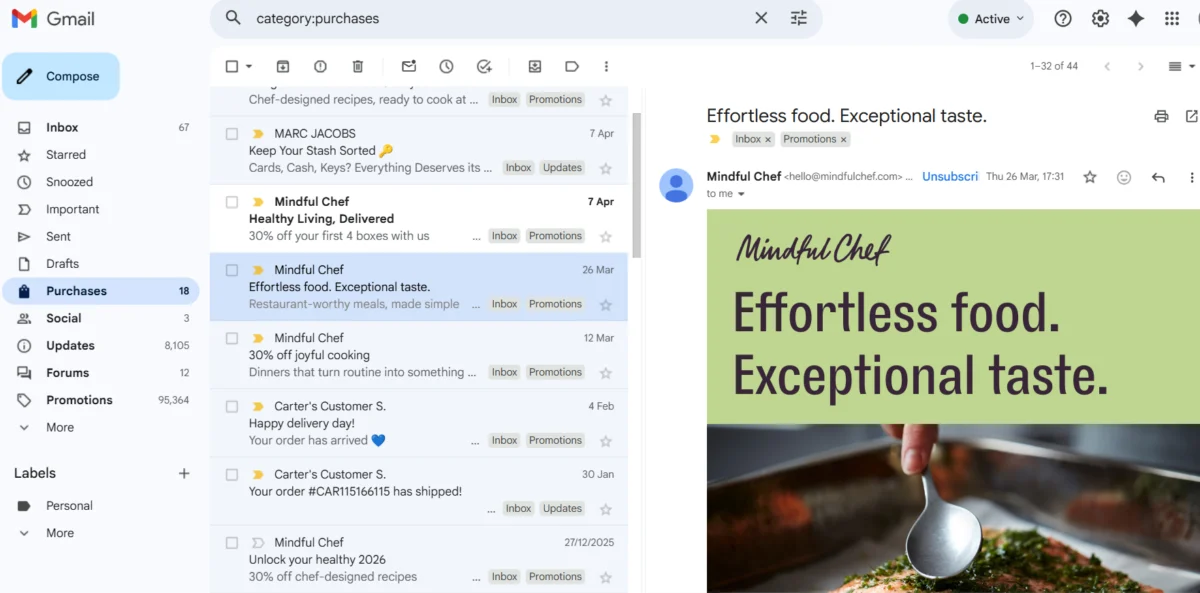
- Background: In late 2025, Gmail launched a dedicated “Purchases” view, consolidating order confirmations, shipping updates, and delivery notifications into a separate tab.
- Impact on Open Rates: While intended for transactional messages, some marketing emails inadvertently land in this tab, often due to containing detailed content about delivery policies or product-related updates. This misclassification depresses open rates, as subscribers are not accustomed to finding promotional messages there. It can also erode trust if recipients haven’t recently purchased from the brand, making the email seem out of place.
- Strategic Response: Senders must audit their email streams to identify any promotional emails inadvertently classified as purchase-related. Maintaining clear separation between transactional and promotional streams is paramount, utilizing distinct “From” addresses, sub-domains, subject line conventions, and content structures. Marketers should strictly avoid injecting promotional content into transactional emails to ensure correct routing, maintain subscriber trust, and comply with legal regulations.
10. Inactive Accounts Policy (Ongoing Enforcement)
- Background: Google reserves the right to delete accounts that have been inactive for two years or more. Activity is broadly defined and includes reading/sending emails, using Google Drive, watching YouTube, sharing photos, downloading apps, using Google Search, or signing into third-party services with Google.
- Impact on Open Rates: It goes without saying that deleted or long-inactive addresses will not open emails. While this primarily impacts list hygiene, it underscores the importance of maintaining an active, engaged subscriber base.
- Strategic Response: While Google’s policy is two years, best practice dictates that marketers should suppress addresses long before they reach 24 months of inactivity. Aggressive list hygiene, including regular removal of unengaged subscribers, is crucial for maintaining sender reputation and ensuring that email efforts are directed towards responsive recipients.
The Bottom Line: Adapting to a New Era of Email Marketing

The current landscape signifies that Gmail is not “broken” but rather undergoing a significant evolution. For email senders, this period of change presents an opportunity to sharpen their strategies and move beyond optimizing for vanity metrics like inflated open rates. The emphasis is now squarely on the quality of engagement over sheer volume.
The shift mandates a comprehensive approach to email marketing:
- Prioritize Engagement Quality: Focus on delivering highly relevant, valuable content to segmented audiences who genuinely wish to receive it. This will naturally lead to higher click-through rates, conversions, and ultimately, revenue.
- Ensure Compliance: Strict adherence to Gmail’s bulk sender requirements is non-negotiable for deliverability. Regular auditing of DMARC, List-Unsubscribe, and complaint rates, along with monitoring Postmaster Tools, is essential.
- Embrace New Metrics: As open rates become less reliable, marketers must pivot to alternative key performance indicators (KPIs) such as click-through rates (CTR), conversion rates, return on investment (ROI), unsubscribe rates, and spam complaint rates to accurately gauge campaign effectiveness.
- Technical Best Practices: From optimizing HTML for message clipping to strategically placing tracking pixels and implementing Annotations, technical diligence is more important than ever.
- Customer-Centric Approach: Understanding user behavior within the evolving inbox environment, including how they interact with AI summaries, Gemini search, and subscription managers, will inform more effective content and delivery strategies.
The future of email marketing is intrinsically linked to adaptability and a commitment to providing genuine value to subscribers. Senders who treat these changes as a catalyst for strategic refinement, rather than a cause for panic, will undoubtedly emerge stronger and more effective in this new, engagement-focused era. To further delve into these developments and their practical implications, industry experts recommend engaging with resources like the “State of Email Tactics” webinars, which offer hands-on guidance for navigating AI summaries, testing tools, and real-world inbox performance.