


The landscape of online entrepreneurship for creators is constantly evolving, with platforms emerging to help individuals monetize their content and build lasting brands. Two prominent players in this space, Spring (formerly Teespring) and Fourthwall, offer distinct approaches to e-commerce. While both cater to creators looking to sell merchandise and digital products, their underlying philosophies and feature sets position them for different stages of growth and ambition. This analysis will delve into the nuances of each platform, examining their pricing, store-building capabilities, product offerings, and overall support structures to help creators make an informed decision about which platform best aligns with their long-term goals.
The Creator Economy’s Evolving Needs
The rise of social media and content creation has democratized entrepreneurship, enabling individuals to cultivate dedicated audiences and transform their passions into profitable ventures. This burgeoning creator economy has spurred the development of specialized e-commerce solutions designed to simplify the process of selling products. Historically, platforms like Teespring (now Spring) emerged as straightforward solutions for creators to offer print-on-demand merchandise, primarily leveraging existing social followings. However, as creators mature and their business aspirations expand, the need for more comprehensive brand-building tools, diverse revenue streams, and greater control over their online presence has become paramount. This is where platforms like Fourthwall are carving out a significant niche.
Spring: Streamlined Merch for Existing Audiences
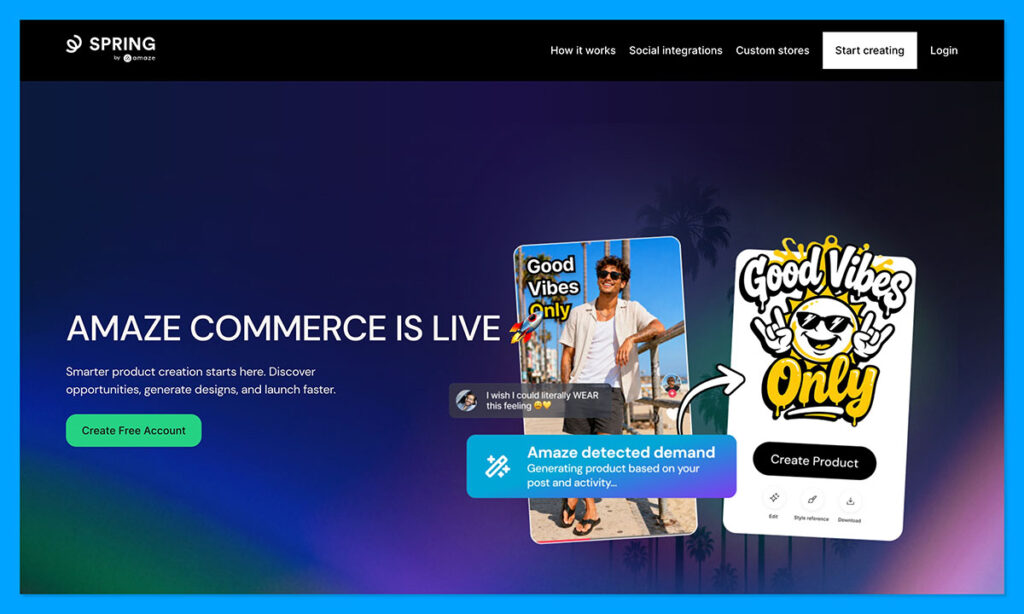
Spring remains a compelling option for creators whose primary objective is to quickly and easily sell print-on-demand merchandise to an established audience. The platform simplifies the process by offering a curated selection of products that creators can customize with their designs. The core value proposition of Spring lies in its ease of use and its ability to integrate seamlessly with social media channels, making it an ideal tool for monetizing platforms like YouTube, Twitch, and TikTok.
Key Features and Strengths of Spring:
- Simplicity and Speed: Spring excels at enabling creators to launch a storefront and begin selling products with minimal technical expertise. The platform handles the complexities of production, payments, hosting, and shipping, allowing creators to focus on their content and design.
- Audience-Centric Merchandising: For creators who have a loyal following, Spring offers a direct channel to translate that engagement into tangible products. The platform’s integrations with social media platforms facilitate easy promotion and sales.
- Print-on-Demand Focus: Spring’s foundation is built upon a robust print-on-demand model. Creators upload designs, choose products from Spring’s catalog, set their retail prices, and Spring manages the rest, from printing to delivery.
- Digital Product Sales: Beyond physical merchandise, Spring also offers a "Digital Launcher" that allows creators to sell digital assets such as eBooks, audiobooks, or filters.
Limitations of Spring:
Despite its strengths, Spring’s architecture is fundamentally geared towards a simpler e-commerce model. Its storefront customization options are limited, and while it supports custom domains, the overall branding and design flexibility are constrained. This can hinder creators who aim to build a comprehensive brand identity that extends beyond basic merchandise. Furthermore, Spring’s revenue model for digital products, which includes a percentage fee plus a per-sale charge, can significantly impact profit margins.
Fourthwall: A Comprehensive Brand-Building Ecosystem
Fourthwall positions itself as a more holistic e-commerce solution, designed for creators and small brands looking to build a multifaceted online business. It goes beyond simple print-on-demand by offering a wider array of revenue streams and extensive customization options. Fourthwall aims to empower creators with the tools to establish a fully branded online presence, manage diverse product offerings, and cultivate deeper customer relationships.
Key Features and Strengths of Fourthwall:
- All-in-One Brand Platform: Fourthwall provides a comprehensive suite of tools that enable creators to build a fully customizable branded website. This includes advanced design options, custom domain integration, and the ability to control the entire customer journey.
- Diverse Revenue Streams: Beyond print-on-demand, Fourthwall natively supports the sale of digital downloads, memberships, and subscriptions. This allows creators to diversify their income and offer recurring value to their audience.
- Merchant of Record (MoR) Support: Fourthwall acts as the Merchant of Record, which means it handles tax obligations, remittances, and compliance on behalf of the creator. This significantly reduces the administrative burden and legal complexities associated with running an e-commerce business.
- AI-Powered Assistance: The platform features an AI shop assistant, Eli, which can aid in catalog expansion, pricing strategies, and store optimization, offering a modern edge to store management.
- Retail-Grade Products: Fourthwall emphasizes a curated catalog of high-quality, retail-grade print-on-demand products, catering to creators who prioritize premium offerings for their audience. This includes options like screen printing, cut-and-sew, and embroidery.
- Seamless Integrations: Fourthwall integrates with a wide range of essential business tools, including email marketing platforms like Klaviyo and Mailchimp, and creator-focused platforms like Kit and Throne, enabling sophisticated marketing and community engagement strategies.
Limitations of Fourthwall:
While Fourthwall offers a more robust feature set, its learning curve might be steeper for creators who are accustomed to the extreme simplicity of platforms like Spring. The initial setup and customization may require more time and effort. However, the investment in building a more comprehensive brand ecosystem often yields greater long-term benefits.
Pricing, Fees, and Profit Margins: A Comparative Analysis
Both Fourthwall and Spring offer free entry points, making them accessible to creators at any stage. However, understanding their respective fee structures and how they impact profit margins is crucial for sustainable business growth.

Fourthwall Pricing:
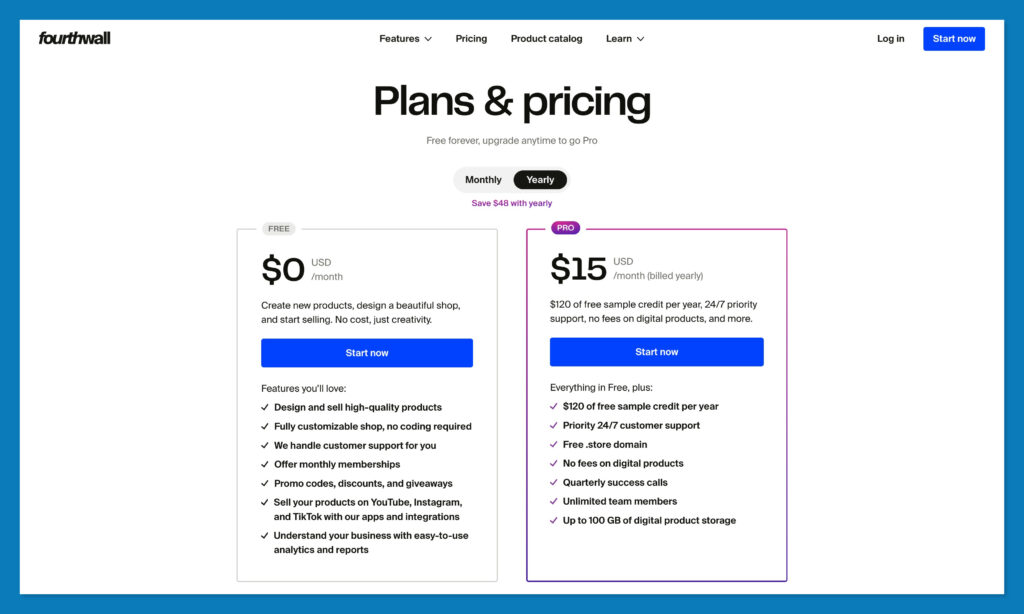
- Free Plan: This plan offers a comprehensive set of features, including a customizable store, options for physical and digital products, one additional team member, and up to 50 listings. For physical product sales, creators only incur standard payment processing costs. However, there is a 5% fee on memberships and digital products.
- Pro Plan ($19/month or $180/year): This paid tier eliminates the fee on digital products, increases the product limit to 500, allows for unlimited team members, provides $10 in monthly sample credits, and offers premium support.
Spring Pricing:
- Single Free Plan: Spring operates on a single, free-to-use plan. Creators can open a store and launch products without upfront costs. The revenue model for physical products involves a base production cost set by Spring, with creators determining their retail price above that.
- Digital Product Fees: For digital products, Spring charges a 20% fee plus an additional $1.70 per sale. This means a $10 eBook sale would yield only $6.30 for the creator, highlighting a significant margin reduction compared to Fourthwall’s free plan for digital goods.
Analysis of Profitability:
For physical merchandise, the base costs and profit margins can be comparable, with Fourthwall potentially offering higher quality products at a slightly higher base cost, which can be justified by a premium brand positioning. However, for creators focused on digital products or a mixed e-commerce model, Fourthwall’s pricing structure is significantly more favorable. The absence of per-sale fees on digital products in Fourthwall’s Pro plan, and the lower 5% fee on its free plan, offers a substantial advantage over Spring’s substantial 20% + $1.70 per sale charge. This difference can translate into considerably higher net profits for creators selling digital content or a combination of products.
Store Building and Integrations: Crafting the Creator’s Digital Hub
The capabilities for store building and third-party integrations are perhaps the most significant differentiator between Fourthwall and Spring, reflecting their core strategic intents.
Spring’s Storefront Capabilities:
Spring provides a templated, hosted social storefront. While creators can add their logo, colors, and a hero banner, the extent of customization is limited. It supports custom domain connections, which is a positive step for branding, but the underlying architecture does not allow for deep customization of pages, layouts, or the overall user experience. Integrations are primarily focused on social channels like YouTube and Twitch, enabling creators to embed their Spring storefront or products directly into their content or social media profiles. However, built-in tools for email marketing or blogging are absent, necessitating external solutions.
Fourthwall’s Advanced E-commerce Architecture:
Fourthwall offers a robust and highly customizable store builder. Creators have extensive control over themes, layouts, product collections, and even direct access to HTML and CSS for advanced styling. The platform also includes a Storefront API for greater flexibility. Crucially, Fourthwall integrates with essential marketing tools like Klaviyo and Mailchimp, empowering creators to implement sophisticated email marketing campaigns and nurture customer relationships. The integration with Kit further enhances this by automating workflows for subscriber engagement and targeted offers. Additionally, Fourthwall allows for content marketing through integrated blogging features within the store.
Analysis of Strategic Implications:
The stark contrast in store-building capabilities underscores the differing ambitions of the platforms. Spring is optimized for quick setup and sales directly from social media. Fourthwall, conversely, is designed for creators who want to build a branded online destination, a central hub for all their customer interactions and sales channels. This comprehensive approach is essential for long-term brand development and customer loyalty, as it allows for a more cohesive and professional online presence.
Product Offerings: Beyond Basic Merchandise
While both platforms facilitate the sale of physical and digital goods, their breadth and depth of offerings vary significantly.
Spring’s Product Ecosystem:
Spring’s primary strength lies in its extensive print-on-demand catalog, offering hundreds of apparel, accessory, and home goods options. The "Digital Launcher" extends its reach to digital products, but its utility is somewhat curtailed by the aforementioned fee structure. However, Spring does not natively support recurring memberships, self-sourced physical products, or direct donation features, limiting the diversity of revenue streams creators can implement within the platform.
Fourthwall’s Diversified Product Portfolio:
Fourthwall presents a curated, high-quality print-on-demand catalog, emphasizing retail-grade products suitable for premium brands. Beyond this, it excels in offering a wide array of additional revenue streams:
- Digital Downloads: Seamlessly integrated with favorable fee structures.
- Memberships and Subscriptions: Native support for paid tiers, exclusive content, and recurring revenue models.
- Self-Sourced Products: The flexibility to sell physical inventory managed by the creator.
- Donations: A direct channel for community support.
- Gift Cards: Instant delivery and perpetual validity for customer gifting.
Furthermore, Fourthwall’s AI assistant, Eli, can assist in expanding product collections, even taking a single design and applying it across multiple product types. The platform also boasts a designer marketplace, connecting creators with illustrators and other creative partners, and a partnership with Karat for financial management assistance. This holistic approach to product and service offerings allows creators to build a truly diversified and scalable business.
Print-on-Demand Quality and Production
The quality of print-on-demand products is a critical factor for brand perception. Both platforms utilize print-on-demand services, but the quality and production methods differ.
Fourthwall’s Premium Approach:
Fourthwall prioritizes quality with a curated catalog that includes "Signature Collection" items and retail-grade blanks. While base costs might be slightly higher, the enhanced quality can justify higher profit margins and contribute to a more premium brand image. Production options are diverse, including printed and embroidered apparel, screen prints, cut-and-sew, and sublimation. This variety allows creators to select the best method for their specific designs and desired product outcomes.
Spring’s Print-on-Demand Options:
Spring offers a wide range of print-on-demand products, generally of decent quality. Production primarily involves direct-to-garment printing and screen printing for apparel. While the material quality is acceptable, reviews sometimes indicate inconsistencies in the printing execution. Spring does offer a valuable feature allowing creators to order samples at base cost, enabling them to personally assess product quality before offering them to customers.
Shipping and Delivery:
Both platforms have established shipping networks. Fourthwall partners with providers across North America, Europe, Australia, and Japan, with typical delivery times of five to ten days. Spring has partners in the EU, US, Mexico, India, and Australia, though product availability can vary by region. Spring guarantees production and tracking numbers within ten business days, followed by an additional four to seven days for delivery, potentially leading to longer overall wait times for customers.
Customer Support and Merchant of Record Services
Reliable support and handling of complex administrative tasks are vital for any online business. Both Spring and Fourthwall offer robust support systems.
Shared Support Strengths:
- Merchant of Record (MoR): Both platforms act as the Merchant of Record, taking on the responsibility of managing sales tax collection and remittance. This significantly alleviates a major compliance burden for creators.
- Fulfillment: Both handle the fulfillment of print-on-demand orders, removing this logistical challenge from the creator’s plate.
- Customer Service for Defective Products: Both platforms offer customer support for defective or damaged print-on-demand items, typically providing replacements or refunds within a specified period (e.g., 30 days).
Differentiated Support Features:
- Fourthwall’s AI and Priority Support: Beyond standard email and help center support, Fourthwall provides 24/7 assistance through its AI assistant, Eli. Upgrading to the Pro tier unlocks priority support and dedicated success calls, offering a higher level of personalized guidance.
- Spring’s "Make It Right" Policy: Spring’s policy addresses issues with defective products. However, it notably does not handle customer service for issues arising from customer errors (e.g., incorrect sizing, change of mind) or general returns, as these are made-to-order items. Fourthwall also adheres to this policy for print-on-demand products, as they are custom-made.
Recent Platform Updates and Future Direction
Monitoring platform updates provides insight into their strategic focus and commitment to innovation.
Spring’s Focus on Core Creator Experience:
Recent updates from Spring have concentrated on enhancing the core creator experience. This includes improvements to listing management for bulk editing and price adjustments, robust account security with multi-factor authentication, and a more versatile checkout process that accepts various payment methods, including cryptocurrency. A dedicated Creator Experience team has also been established to provide enhanced support.
Fourthwall’s Emphasis on Scalability and Community:
Fourthwall’s recent developments underscore its commitment to building scalable businesses and fostering community engagement. The integration with Kit and the addition of the AI assistant are geared towards automating workflows and improving customer retention. New features like custom gift cards, granular team roles, and enhanced analytics for tracking specific metrics (e.g., Twitch gifting) provide creators with deeper insights and more control. The integration with Throne facilitates community support through wish lists and fundraising. Furthermore, Fourthwall has expanded its offerings with a designer marketplace, a partnership with Karat for financial management, and new additions to its premium Signature collection.
Conclusion: Choosing the Right Platform for Your Creator Journey
The choice between Spring and Fourthwall ultimately hinges on a creator’s current situation and future aspirations.
Spring is an excellent choice for:
- Creators who have a significant existing social media audience and primarily want to sell print-on-demand merchandise quickly and easily.
- Those who prioritize simplicity and a hands-off approach to production, shipping, and customer service for physical goods.
- Creators who are experimenting with selling digital products and are willing to accept the associated higher fees.
Fourthwall is the superior platform for:
- Creators who aim to build a comprehensive, owned brand with multiple revenue streams beyond just merchandise.
- Individuals who desire complete control over their store’s design, branding, and customer experience.
- Those looking to offer diverse products, including digital downloads, memberships, subscriptions, and even self-sourced inventory.
- Creators who value advanced marketing integrations and robust analytics for long-term growth.
- Businesses that require Merchant of Record services and a scalable infrastructure to accommodate future expansion.
In essence, if your goal is to quickly leverage your existing audience for merchandise sales, Spring offers an accessible entry point. However, if your ambition extends to building a lasting, diversified, and fully branded e-commerce business, Fourthwall provides the comprehensive tools and flexibility required to achieve that vision. The latter platform empowers creators to transition from simply selling products to cultivating a sustainable and thriving brand.








