
 rifanmuazin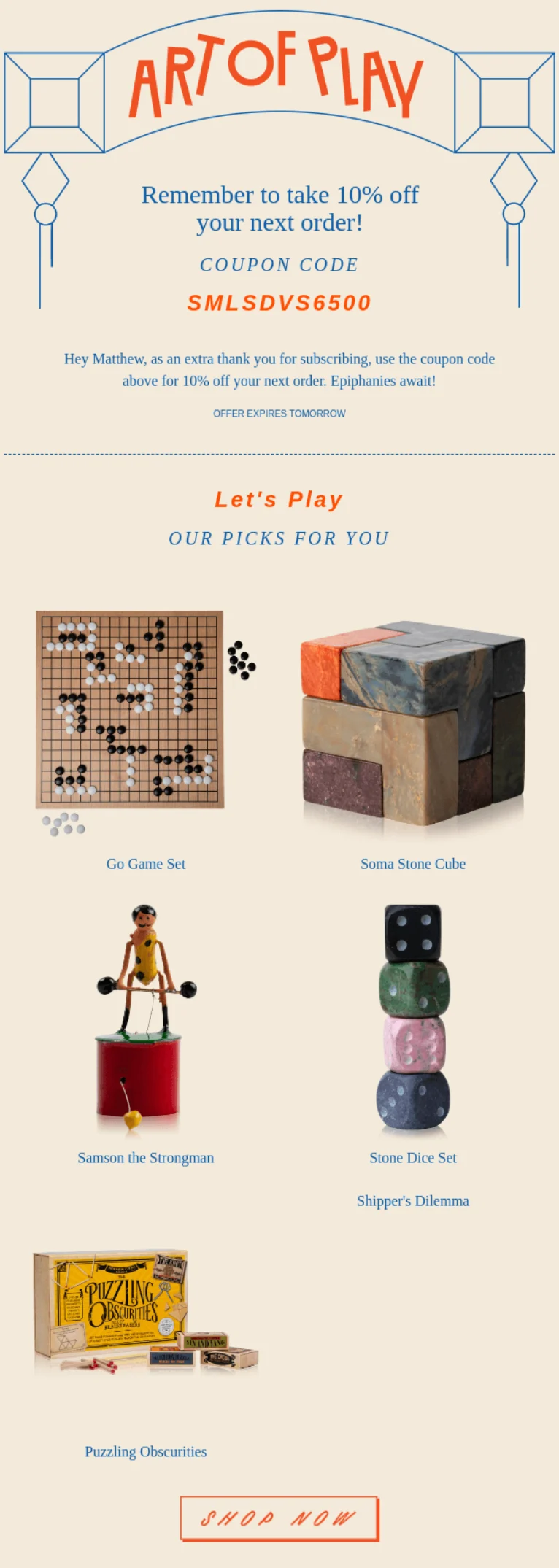
In the fiercely competitive landscape of modern e-commerce, merely attracting visitors to a digital storefront is often insufficient; the true challenge lies in converting browsing interest into completed purchases. Email coupons stand as a cornerstone strategy, effectively bridging this gap by combining tangible value with a compelling sense of urgency, thereby motivating shoppers to act decisively and reducing purchasing hesitation. These digital incentives are not merely promotional tools but sophisticated instruments capable of recovering abandoned carts, re-engaging inactive subscribers, and cultivating enduring customer loyalty, ultimately driving significant increases in engagement and conversion rates. The efficacy of coupon campaigns is further amplified through intelligent automation, which enables brands to deliver timely and highly relevant offers tailored to individual customer behaviors and preferences. By strategically incorporating elements such as clear expiration dates and personalized product recommendations, businesses can further stimulate immediate action, enhance average order value, and solidify customer relationships.
The Strategic Imperative of Email Coupons in E-commerce
Email coupons are defined as targeted promotional offers dispatched via email, designed to incentivize recipients to make a purchase. Typically manifested as a discount code, a percentage off the total order, or a free shipping incentive, these offers are redeemable at the checkout stage of an online transaction. A meticulously crafted coupon email transcends a simple discount notification; it presents a clear, attractive incentive while streamlining the redemption process, whether through an automatically applied link or a manual code entry. The strategic deployment of email coupons is pivotal in e-commerce for guiding purchase decisions and prompting timely action, effectively moving potential buyers from a state of consideration to conversion by delivering the right offer at the opportune moment.
The utility of email coupons extends far beyond initial promotions. Brands leverage these campaigns to address critical e-commerce challenges, including the recovery of abandoned shopping carts, the re-engagement of dormant subscribers, and the conversion of first-time website visitors into paying customers. The integration of automation has revolutionized the effectiveness of these campaigns, allowing businesses to trigger coupon code emails automatically based on specific customer behaviors, such as browsing activity, purchase history, or predefined timing sequences, ensuring maximum relevance and impact.
The Evolution of Digital Incentives
The concept of offering discounts to stimulate sales is ancient, evolving from physical paper coupons distributed in newspapers and magazines to the sophisticated digital vouchers prevalent today. The advent of the internet and subsequently, e-commerce, transformed the coupon landscape, with email emerging as a primary, cost-effective, and highly measurable channel for delivering these incentives. Early digital coupons were often generic, mass-sent offers. However, as e-commerce matured and customer data became more accessible, the strategy shifted towards personalization and segmentation. The rise of sophisticated Customer Relationship Management (CRM) systems and marketing automation platforms has further refined this evolution, allowing for hyper-targeted campaigns that respond dynamically to individual customer journeys.
This shift reflects a broader trend in digital marketing towards customer-centricity. In an era where consumers are bombarded with promotional messages, generic offers often fall flat. Tailored coupons, delivered at moments of high intent or specific lifecycle stages, cut through the noise, demonstrating that a brand understands and values its customers. This evolution underscores the transition of email coupons from a simple price reduction tactic to a crucial component of a comprehensive customer relationship management strategy.
Understanding the Psychology Behind Coupon Effectiveness
Email coupons are not merely financial incentives; they operate as powerful psychological triggers that can instantaneously shift a customer’s mindset from passive browsing to active purchasing. This efficacy stems from several deeply ingrained psychological principles:

- Sense of Immediate Value: A well-timed discount creates an undeniable perception of immediate gain, making the offer difficult to ignore. This perception often outweighs initial price hesitation.
- Loss Aversion and Urgency (FOMO): The inclusion of expiration dates or limited availability taps into the psychological principle of loss aversion—the fear of missing out on a good deal. This drives immediate action, as customers are motivated to secure the benefit before it vanishes.
- Reciprocity: When a brand offers a discount or a free gift, it can trigger a sense of reciprocity in the customer, who may feel a subconscious obligation to respond positively by making a purchase.
- Perceived Smart Shopping: Receiving a coupon makes customers feel like savvy shoppers who have secured a better deal, enhancing their satisfaction with the purchase.
- Anchoring Effect: The original, higher price acts as an "anchor," making the discounted price appear significantly more attractive in comparison, even if the absolute saving is modest.
These psychological underpinnings explain why a strategically deployed email coupon can be the decisive factor in converting a hesitant prospect into a loyal customer, particularly for first-time buyers who may be wary of trying a new brand.
Lifecycle-Based Coupon Strategies: Driving Action at Every Stage
The power of email coupons is maximized when they are integrated into a comprehensive customer lifecycle strategy, addressing specific needs and behaviors at different stages of the customer journey.
Customer Acquisition: The Welcoming Discount
For new subscribers or first-time visitors, a welcome coupon serves as an invaluable trust-builder and risk-reducer. Offering a discount on their first purchase lowers the barrier to entry, encouraging them to experience the brand’s products or services. This initial positive interaction is crucial for establishing a foundational relationship and converting new leads into paying customers. Data consistently shows that welcome emails with coupons have significantly higher open and conversion rates than those without, with some studies indicating a conversion rate increase of up to 2.5x.
Engagement and Conversion: Prompting Purchase Decisions
General promotional coupons, often tied to product launches, seasonal events, or flash sales, are vital for maintaining engagement and driving conversions among active subscribers. These offers can be tailored based on past browsing behavior or items frequently viewed, increasing their relevance and potential impact. They provide a direct call to action, especially when combined with a sense of urgency.
Loyalty and Retention: Nurturing Repeat Business
To foster long-term customer relationships and increase customer lifetime value (CLV), brands deploy coupons designed to reward loyalty and encourage repeat purchases. This includes post-purchase discounts on future orders, exclusive birthday or anniversary offers, and tiered discounts for VIP members. Such strategies make customers feel valued and appreciated, significantly improving retention rates. For instance, studies suggest that repeat customers spend 67% more than new customers, underscoring the value of loyalty-focused couponing.
Reactivation: Bringing Back the Lapsed Customer
For customers who have become inactive or have abandoned their shopping carts, targeted coupons are highly effective reactivation tools. An abandoned cart email containing a discount code can dramatically reduce cart abandonment rates, which average around 70-80% across industries. Similarly, "win-back" campaigns offering a special incentive can re-engage dormant subscribers, reminding them of the brand’s value and providing a compelling reason to return.
Powering Performance: Data, Automation, and Personalization
The effectiveness of modern email coupon campaigns is intrinsically linked to the capabilities of marketing automation and advanced personalization. Manual distribution of offers is inefficient and prone to human error, whereas automated systems ensure offers are delivered at the precise moment they are most likely to resonate.
Marketing automation platforms utilize sophisticated algorithms to trigger coupon emails based on a multitude of real-time customer data points. This includes browsing history, items added to cart, previous purchase categories, time since last purchase, and even demographic information. The ability to segment audiences into granular groups—from "high-value loyalists" to "new subscribers browsing specific product categories"—allows for the creation of hyper-personalized coupon offers that speak directly to an individual’s potential needs and interests.
The integration of artificial intelligence (AI) and machine learning further refines this process. AI can predict purchasing intent, optimize coupon values, and even determine the ideal timing for sending an offer to maximize conversion probability. This data-driven approach transforms email coupon campaigns from broad promotional blasts into highly efficient, individualized marketing dialogues, consistently outperforming generic approaches. Industry reports frequently highlight that personalized emails generate significantly higher transaction rates and revenue per email compared to non-personalized alternatives.
Dissecting High-Impact Email Coupon Examples
Examining successful email coupon campaigns reveals a diverse array of strategies, each designed to achieve specific marketing objectives. The following examples illustrate how brands leverage creativity and strategic thinking to maximize the impact of their offers:
Bundle Discounts: Enhancing Average Order Value
Strategy: Offer a discount when customers purchase multiple items or a specific product bundle.
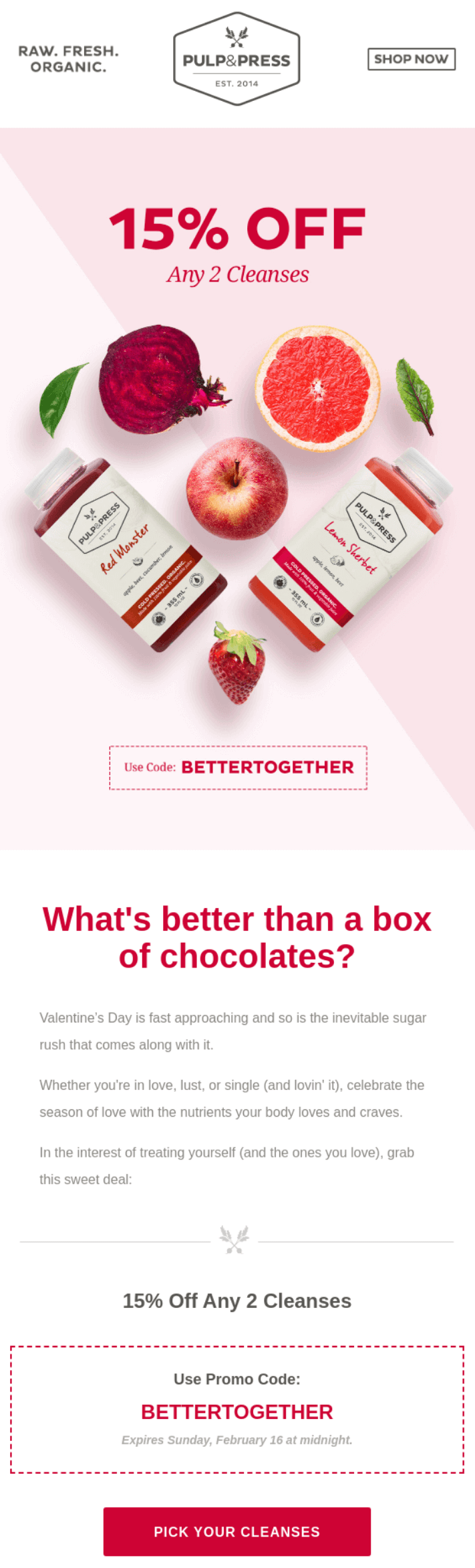
Example (Pulp & Press): "15% Off Any 2 Cleanses Ends Soon, Lovebirds!" This Valentine’s Day themed campaign incentivizes customers to buy two items instead of one, effectively increasing the average order value (AOV). The clear, memorable promo code "BETTERTOGETHER" reinforces the bundle concept.
Analysis: This tactic leverages the psychological principle of perceived value; customers feel they are getting a better deal by purchasing more, simultaneously boosting sales volume for the brand.
Time-Sensitive Offers: Cultivating Urgency
Strategy: Impose a strict time limit on the coupon’s validity to encourage immediate action.
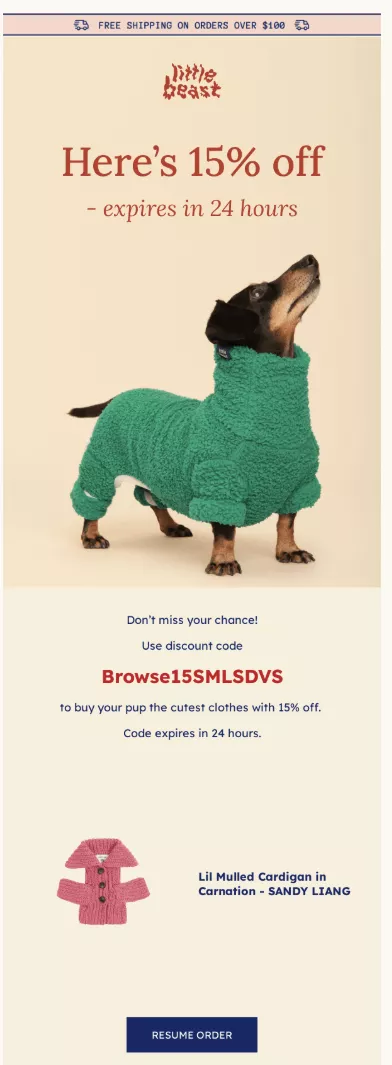
Example (Little Beast): "Here’s 15% off" for 24 hours. Alongside a free shipping offer, the primary 15% discount has a critical 24-hour expiration.
Analysis: This directly exploits loss aversion and FOMO, compelling recipients to act before the opportunity disappears. It’s particularly effective for moving inventory or achieving short-term sales targets.
Next-Purchase Incentives: Fostering Loyalty
Strategy: Provide a discount on a future purchase immediately after a customer completes an initial transaction.
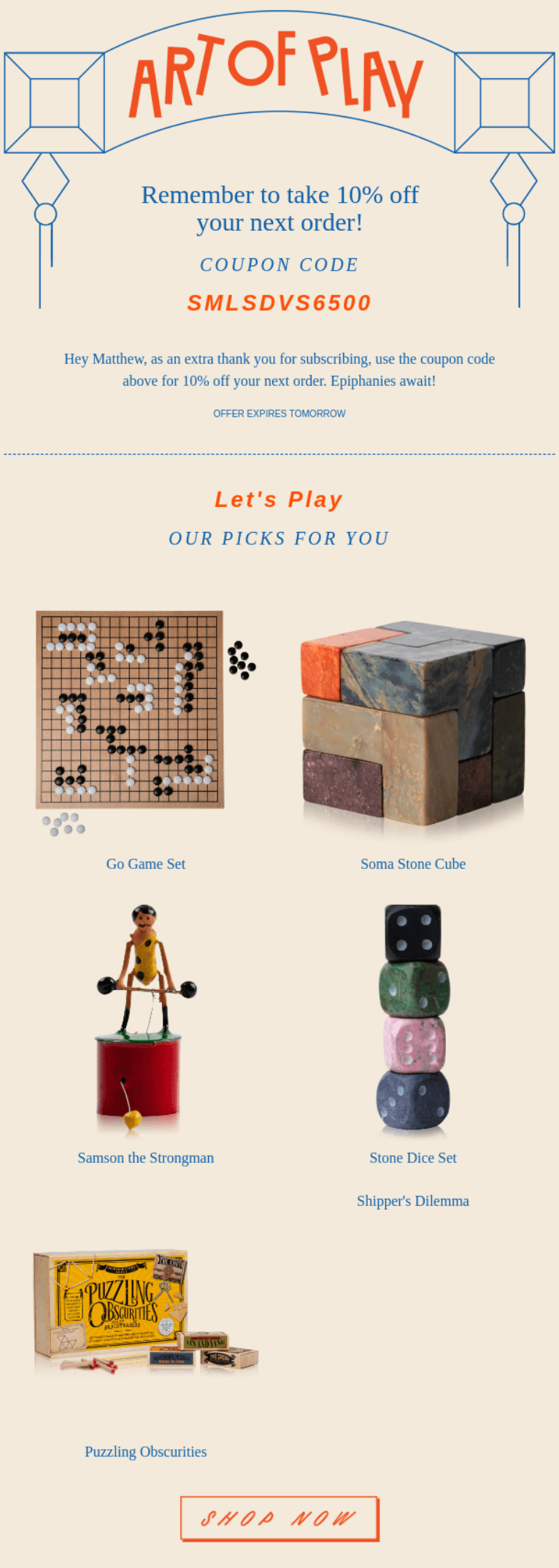
Example (Art of Play): "Smiles Davis, your code for 10% off expires tomorrow!" This personalized email offers 10% off a next order.
Analysis: This strategy is crucial for customer retention, converting one-time buyers into repeat customers and significantly increasing customer lifetime value (CLV). Personalization in the subject line further enhances its appeal.
First-Purchase Welcome: Building Initial Trust
Strategy: Offer a discount to new subscribers or first-time customers to encourage their inaugural purchase.
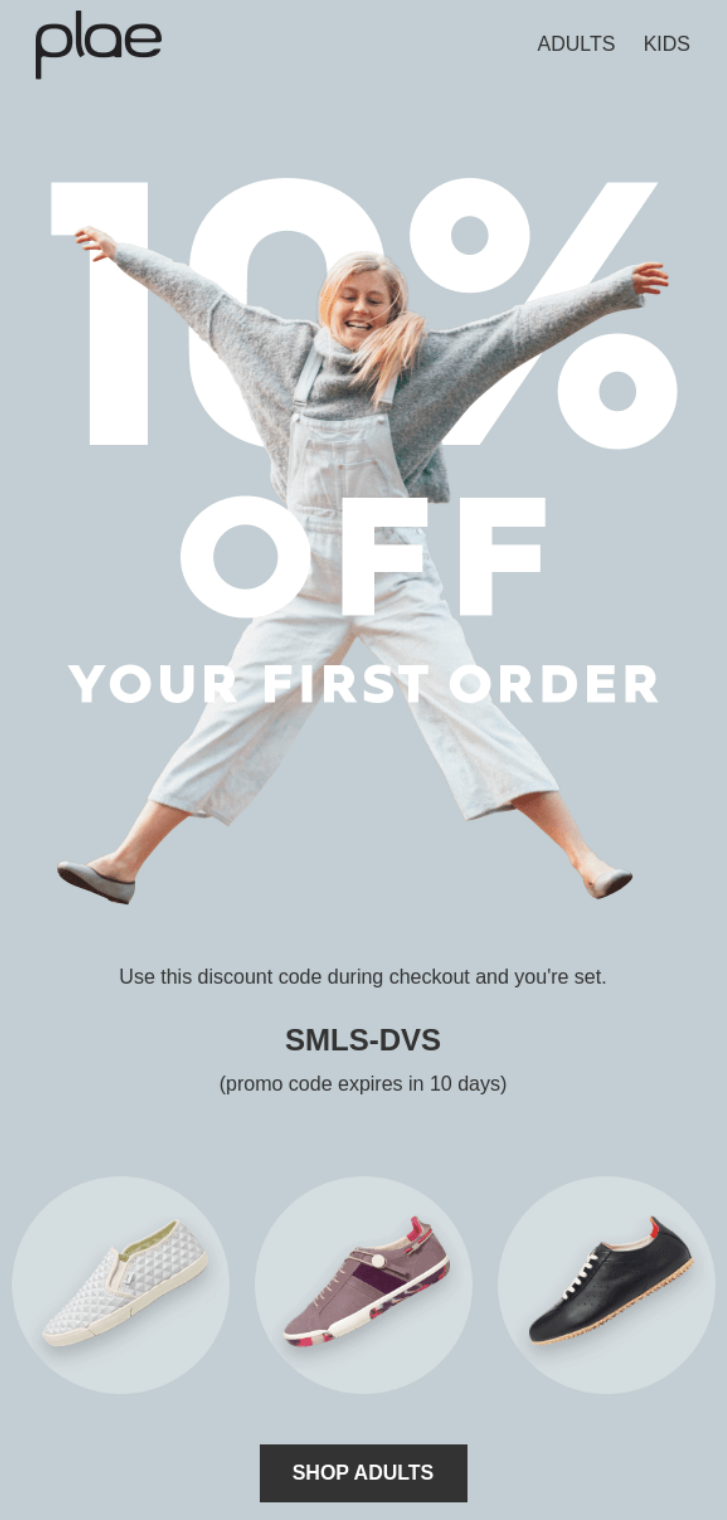
Example (Plae): "10% off at PLAE – Welcome!" with a 10-day expiration.
Analysis: This lowers the perceived risk for new customers, making them more comfortable trying a new brand. The clear visual and gentle urgency promote swift conversion of fresh leads.
Seasonal Campaigns: Capitalizing on Holiday Spirit
Strategy: Align coupon promotions with holidays, seasons, or special events to create thematic relevance.
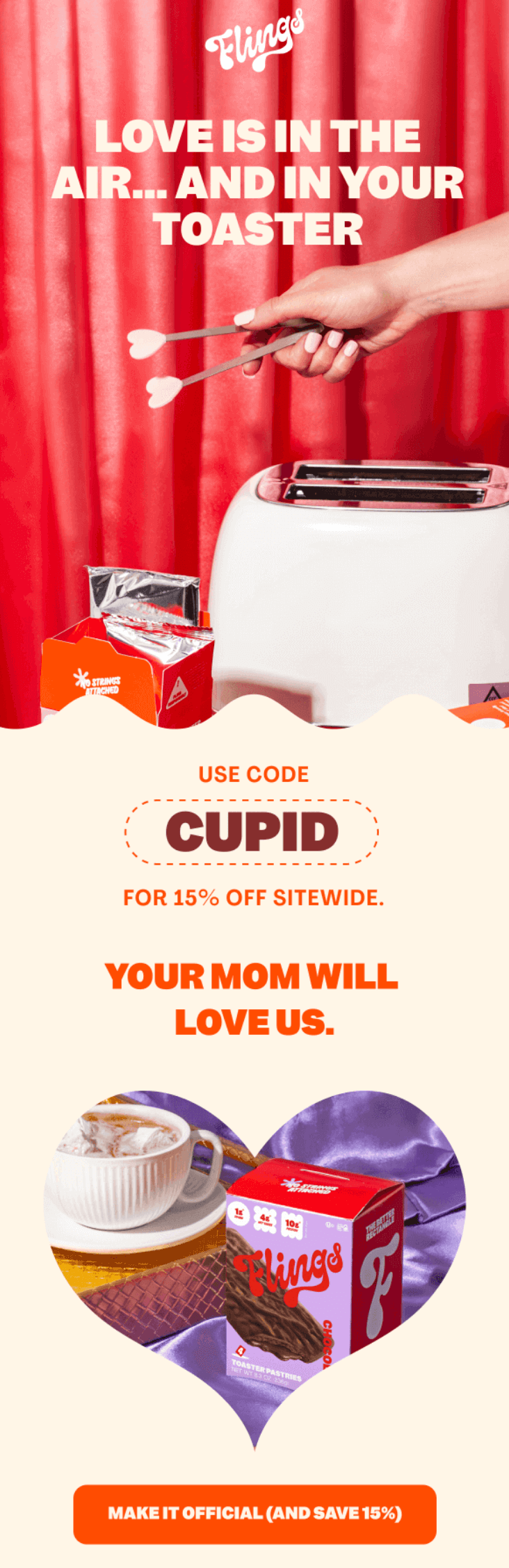
Example (Eliings): "Be Our Valentine?" offering "15% OFF SITEWIDE" with code "CUPID."
Analysis: This strategy taps into emotional connections and seasonal spending habits. A thematic coupon code makes the offer memorable and part of the celebration, increasing engagement.
Minimum-Spend Offers: Maximizing Cart Value
Strategy: Provide a discount or credit only when the customer’s order reaches a specified minimum value.
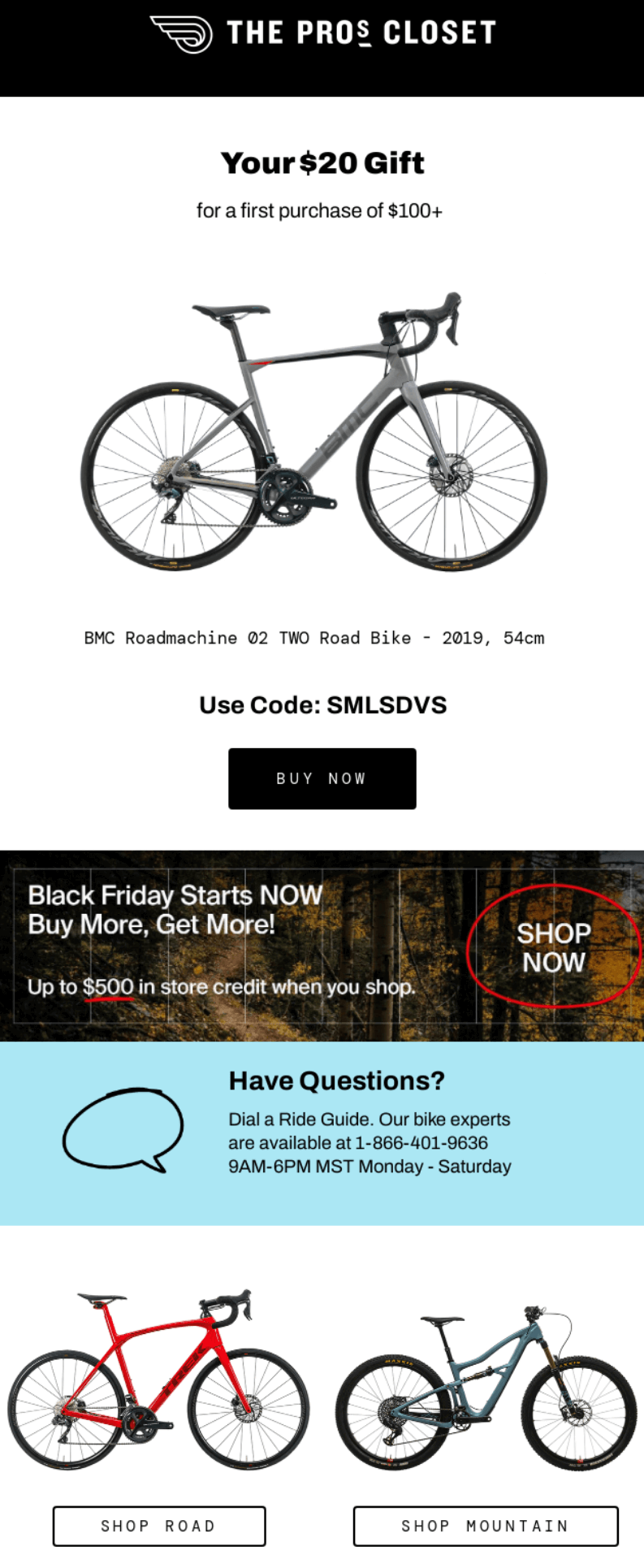
Example (The Pros Closet): "Save money, ride on" offering $20 credit on orders over $100.
Analysis: This is a highly effective method for increasing AOV, ensuring profitability on discounted transactions. By displaying products that help meet the threshold, the brand subtly guides customers to add more items.
Exclusive Early Access: Rewarding VIPs
Strategy: Grant loyal subscribers or VIPs early access to major sales or new product launches with a special coupon.
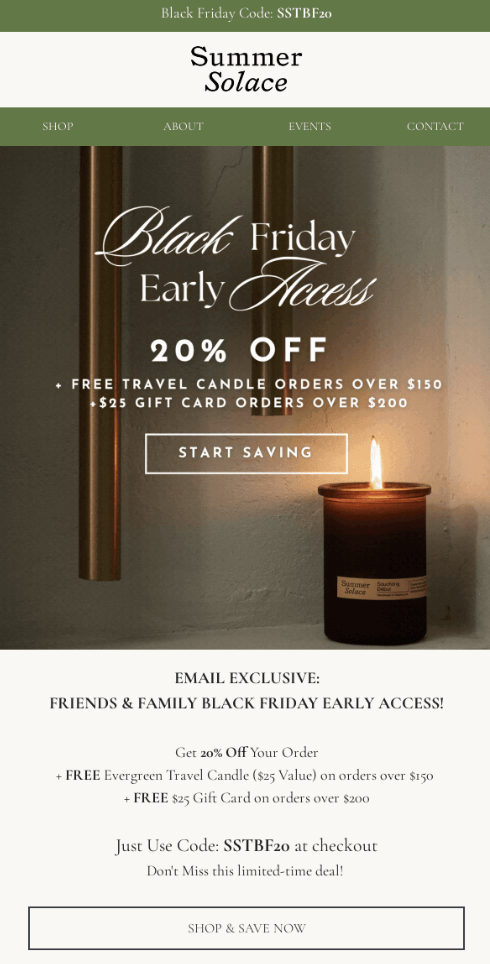
Example (Summer Solace): "Our Biggest Sale Ever: Early Access!" for Black Friday.
Analysis: This fosters a sense of exclusivity and appreciation, strengthening customer loyalty and rewarding those who have opted into the brand’s communications. It also helps capture early holiday spending.
Free Gift Promotions: Sweetening the Deal
Strategy: Offer a complimentary product or gift with a purchase, often with a minimum spend or specific item requirement.
Example (Cometeer): "Get Started With $16 Off" offering eight free cups of coffee with code "FROZEN."
Analysis: A free physical product makes the offer tangible and highly attractive, lowering the barrier to entry and increasing initial conversion rates by adding perceived value beyond a simple discount.
High-Value Seasonal Discounts: End-of-Season Sales
Strategy: Leverage seasonal transitions to offer significant discounts, often to clear inventory or stimulate sales during specific periods.
Example (Friendly’s): "So long, sweet summer!" promoting 50% off ice cream as summer ends.
Analysis: This creates a compelling reason to purchase before a season concludes, using a high-value offer and vibrant visuals to encourage immediate visits and sales.
Last-Chance Reminders: Recovering Potential Losses
Strategy: Send a final reminder email for an expiring coupon to re-engage hesitant shoppers or recover abandoned carts.
Example (Bombas): "Last Chance: A 20% Off Thank You" with "OFFER ENDS TOMORROW."
Analysis: This tactic capitalizes on urgency and loss aversion, providing a strong final nudge for customers who may have forgotten or procrastinated. It’s highly effective for recapturing potential lost revenue.
Best Practices for Maximizing Email Coupon ROI
Crafting effective email coupon campaigns requires adherence to several best practices that optimize engagement and conversion.
Precision Targeting Through Segmentation
Generic coupons often fail to resonate. The most successful campaigns are built on robust email segmentation, allowing brands to tailor offers based on customer demographics, past purchase behavior, browsing history, engagement levels, and lifecycle stage. For instance, offering a discount on a product category a customer recently viewed but didn’t purchase is far more effective than a random sitewide discount. This personalized approach fosters loyalty and significantly increases conversion probability.
Unmistakable Clarity in Value Proposition
The offer must be immediately apparent and easily understood. Use eye-catching visuals, bold typography, and concise language to highlight the discount or benefit. The redemption process should be frictionless, with clear call-to-action buttons. Any conditions or exclusions should be stated clearly but concisely. An intuitive, mobile-responsive design is also critical, as a significant portion of email opens occur on mobile devices.
Harnessing the Power of Urgency
As demonstrated by several examples, incorporating a sense of urgency is paramount. This can be achieved through clear expiration dates, countdown timers within the email, limited stock notifications, or exclusive time-bound access. The goal is to prompt immediate decision-making, transforming casual browsing into committed purchasing.
Leveraging Social Proof for Credibility
Integrating social proof, such as customer reviews, star ratings, or testimonials, into coupon emails builds trust and credibility. Hearing positive feedback from other customers can alleviate hesitation, particularly for new buyers. When linked to the specific products being promoted with the coupon, social proof becomes an even more powerful influencer, reassuring customers about the quality and value of their potential purchase.
Strategic Product Recommendations
Pairing coupons with personalized product recommendations significantly enhances their effectiveness. By suggesting items based on a customer’s past purchases, browsing history, or items in an abandoned cart, brands can simplify the shopping process and increase the likelihood of conversion. This also provides opportunities for cross-selling and upselling, further boosting AOV.
Broader Implications and Future Outlook
The strategic deployment of email coupons carries significant broader implications for e-commerce businesses. In an increasingly competitive global marketplace, coupons are not just a sales tactic but a fundamental competitive differentiator. They enable smaller brands to compete with larger players by offering compelling value, and they help established brands maintain market share and customer loyalty.
Furthermore, effectively managed coupon campaigns can have a profound impact on Customer Lifetime Value (CLV). By encouraging repeat purchases, fostering loyalty, and driving engagement throughout the customer journey, coupons contribute directly to the long-term profitability of a customer relationship. However, brands must carefully balance the allure of discounts with maintaining brand perception and avoiding a race to the bottom on pricing. Over-reliance on heavy discounting can devalue a brand’s products in the long run.
Looking ahead, the future of email coupons will likely be characterized by even greater sophistication. AI-driven dynamic pricing, real-time personalized offers based on granular behavioral data, and integration with emerging technologies like voice commerce and augmented reality are on the horizon. The focus will remain on delivering hyper-relevant value at precisely the right moment, further cementing email coupons as an indispensable tool in the e-commerce marketer’s arsenal.
Conclusion: The Enduring Efficacy of Email Coupons

Email coupons are far more than a simple marketing gimmick; they are a sophisticated, data-driven strategy essential for navigating the complexities of modern e-commerce. When deployed with clear intent, precise timing, and personalized relevance, they deliver measurable results, transforming hesitant browsers into committed buyers, significantly increasing average order value, and nurturing lasting customer relationships. The ongoing evolution of marketing automation and artificial intelligence promises to further enhance their power, enabling brands to execute increasingly refined campaigns that maximize conversions and revenue. By embracing best practices in segmentation, clarity, urgency, social proof, and product recommendations, businesses can harness the full potential of email coupons to achieve their marketing goals and thrive in the digital marketplace.









