The Evolving Ecosystem of Social Media Management

Social media marketing has matured significantly from its early days of simple content posting. By 2026, it encompasses intricate strategies involving multi-channel presence, real-time engagement, data-driven content optimization, and proactive brand reputation management. The sheer volume of platforms—including established giants like Instagram, X (formerly Twitter), LinkedIn, and Facebook, alongside rapidly growing networks like TikTok and emerging decentralized alternatives—requires marketers to manage diverse content formats, audience demographics, and platform-specific algorithms. This complexity is the driving force behind the robust market for social media tools, which extend far beyond native platform features by connecting multiple channels, automating repetitive tasks, and surfacing insights that would otherwise be labor-intensive to gather. Industry analysts project continued growth in marketing technology spending, particularly in solutions that promise efficiency and measurable impact, with social media tools forming a critical component of this investment.
Core Categories Defining the Social Media Tool Landscape

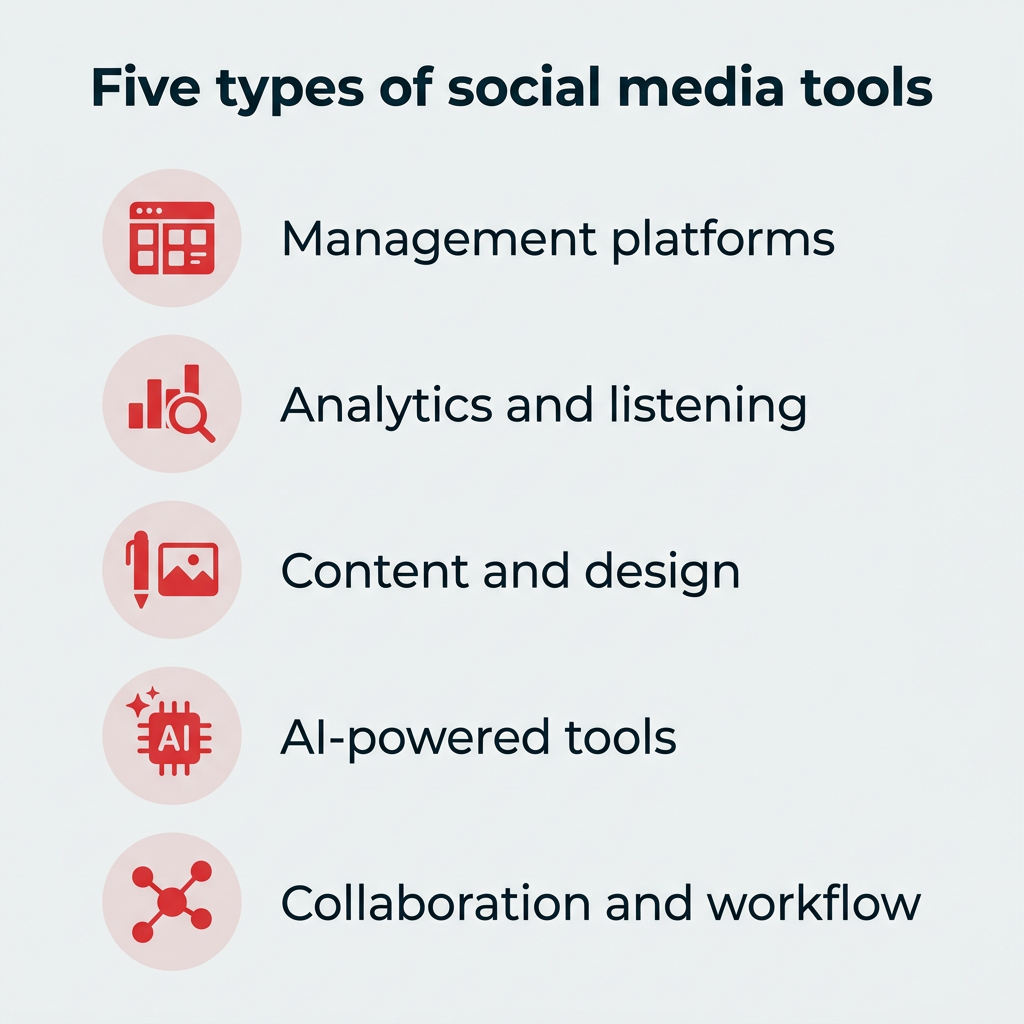
The broad category of social media tools can be segmented into several key areas, each addressing distinct operational and strategic needs. While some platforms offer all-encompassing solutions, many teams leverage a combination of specialized tools to build a comprehensive tech stack. These categories include all-in-one management platforms, analytics and listening tools, content creation and design tools, AI-powered solutions, influencer management platforms, and collaboration and workflow tools. Understanding the primary function of each type is crucial for strategic deployment.
Integrated Solutions: All-in-One Management Platforms
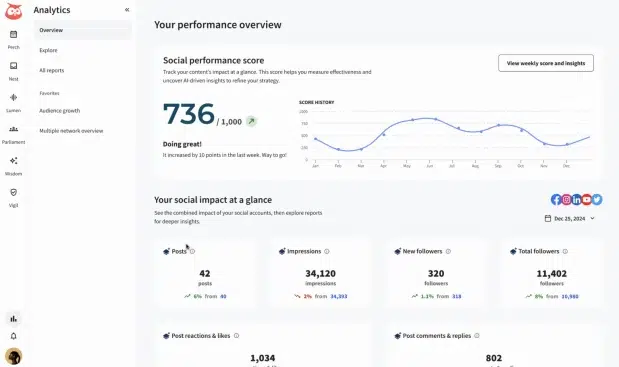
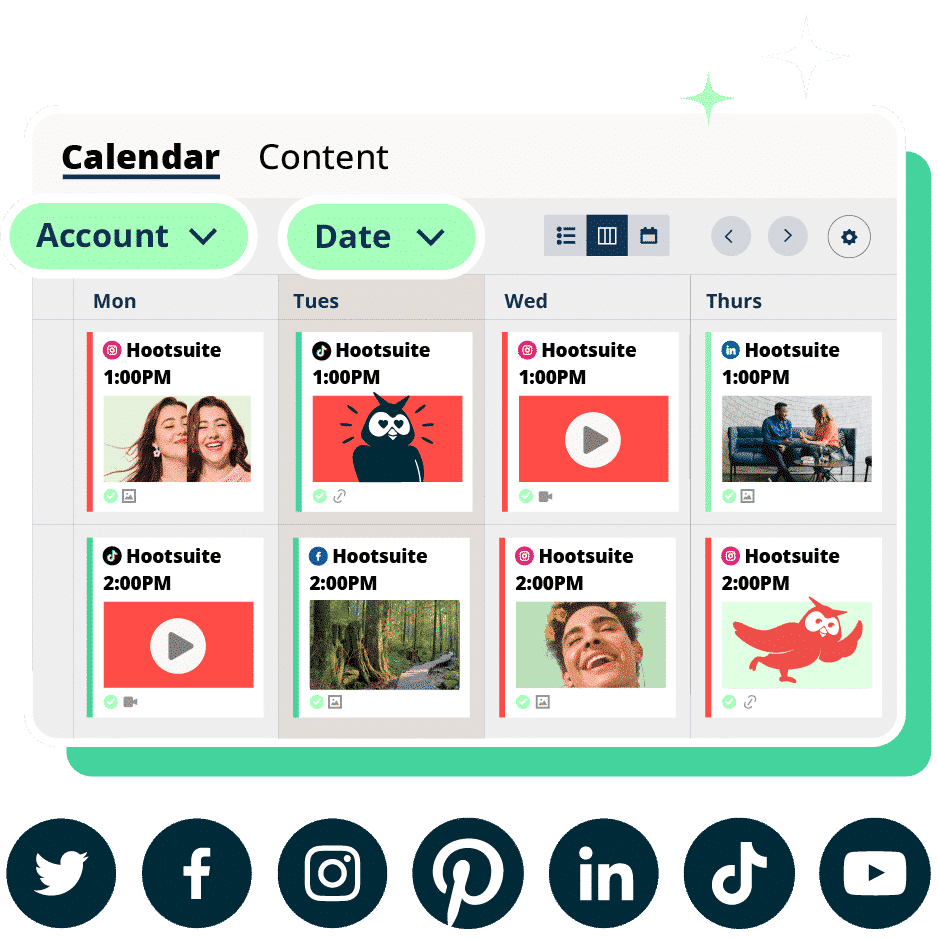
At the foundation of many social media tech stacks are all-in-one management platforms. These systems consolidate scheduling, analytics, engagement, and publishing functionalities into a single dashboard, providing a centralized hub for managing multiple social media channels and brand accounts. Their primary benefit lies in reducing tool sprawl, improving workflow efficiency, and ensuring a consistent brand voice across diverse platforms.
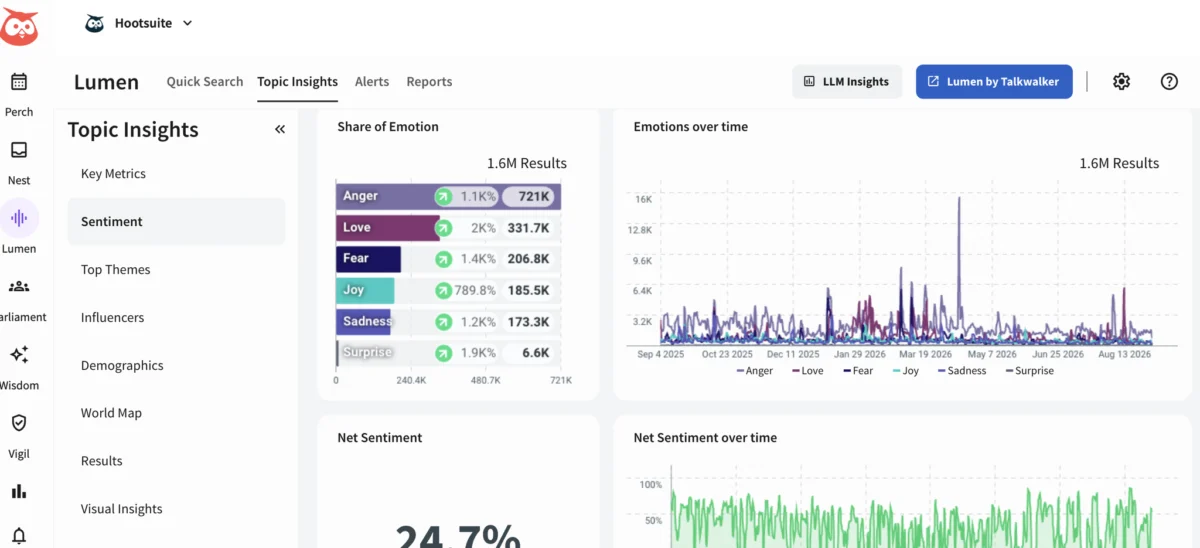
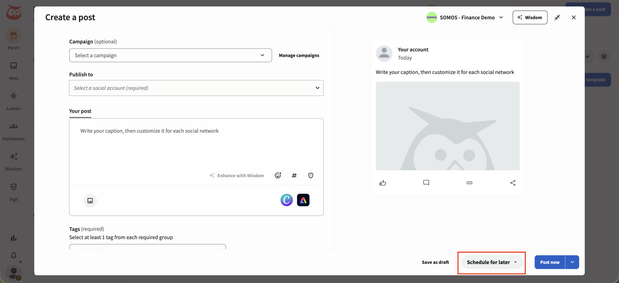
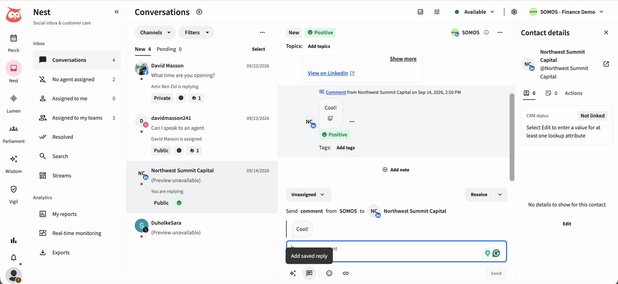
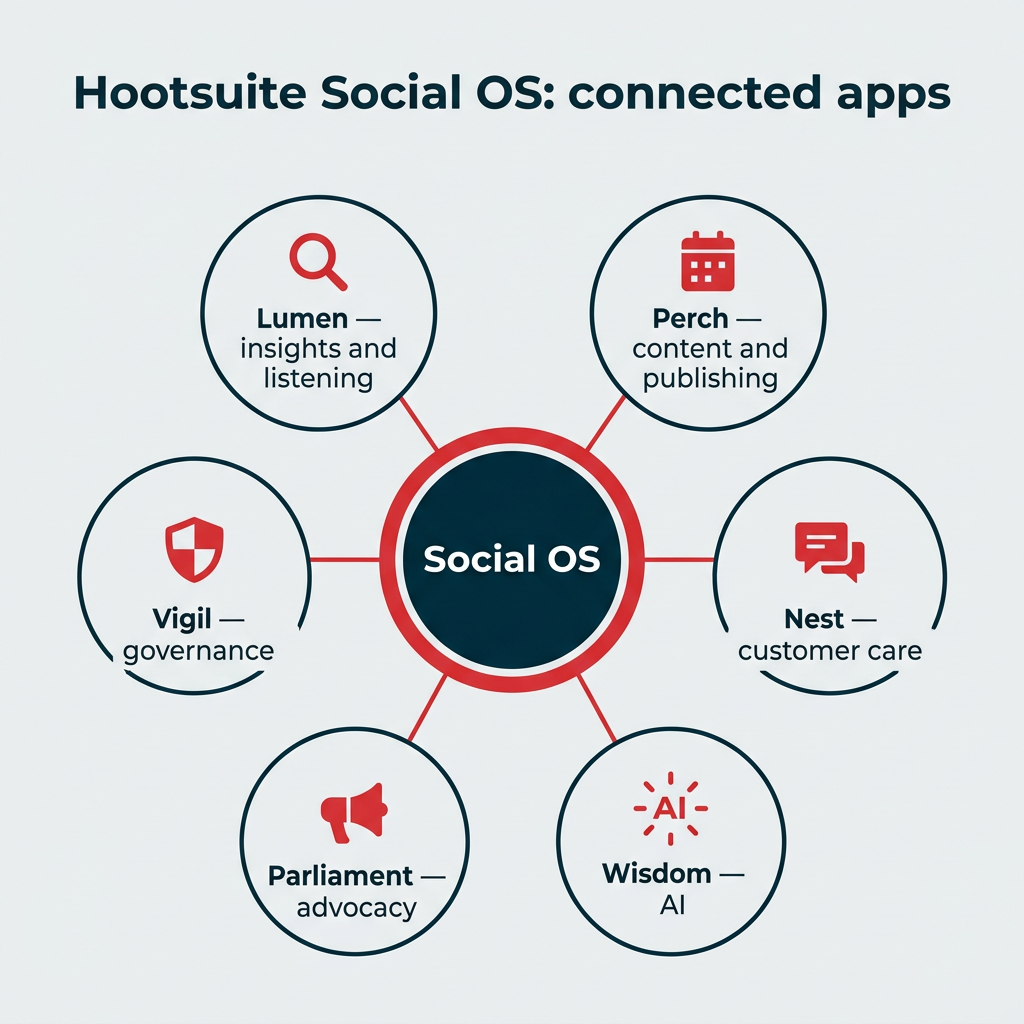
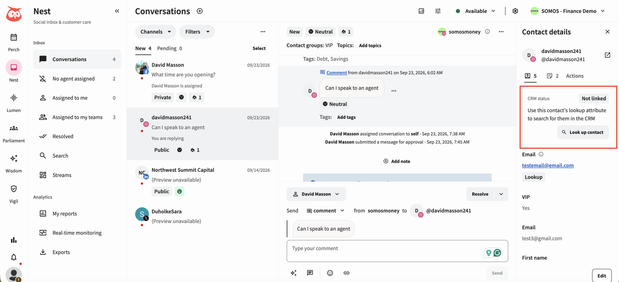
Hootsuite Social OS stands as a prominent example in this category, positioning itself as a social operating system built around interconnected applications. This integration means that publishing, listening, customer care, advocacy, governance, and AI capabilities operate within a unified data environment. Its publishing tools facilitate bulk scheduling, offer optimal posting time recommendations, and allow for direct asset integration from content libraries or connected design accounts. For insights, its Lumen app reportedly analyzes over 150 million sources across 187 languages, tracking brand sentiment, emerging trends, and early crisis signals through AI analysis. The Nest app unifies messages and interactions, enabling faster responses, tracking conversation history, and leveraging DM automations, alongside integration with ticketing platforms like Zendesk for formal support desks. Such comprehensive platforms are particularly suited for larger marketing teams managing complex operations across multiple brands and regions, with pricing structured to accommodate various organizational scales.
HubSpot also offers built-in social media management capabilities as part of its broader CRM platform. Its unique selling proposition lies in its ability to tie social interactions directly to customer contact records, offering a holistic view of customer journeys. For B2B organizations or teams with extended sales cycles, this contextual data—where a LinkedIn comment can be linked to a later form submission—provides invaluable insights for sales and service teams. While its social features may be less extensive than dedicated management platforms, their integration within a CRM ecosystem offers significant advantages for sales and marketing alignment. HubSpot offers a free plan with basic CRM tools, with paid tiers unlocking social publishing and advanced marketing features.
Data-Driven Strategies: Social Media Analytics and Listening Tools
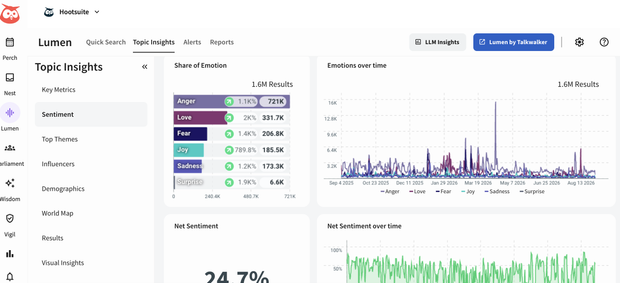
In an increasingly competitive digital landscape, understanding audience sentiment, tracking performance metrics, and monitoring competitor activity are paramount. Social media analytics and listening tools provide these deeper insights, extending beyond the basic data offered by native platforms. These tools are often the first addition for teams seeking to prove the business impact of their social efforts.
NetBase Quid is a specialized platform offering consumer and market intelligence by analyzing conversations across a vast array of online sources, including news, forums, reviews, patents, and social media. Its strength lies in its breadth of data collection and advanced sentiment analysis capabilities, making it valuable for comprehensive brand health monitoring, crisis management, and in-depth market research. Its integration with platforms like Hootsuite allows for a more unified approach to social data utilization. However, its custom, quote-based pricing typically targets larger enterprises.
For local businesses, Google Business Profile offers essential, free tools for reputation management. It allows businesses to respond to reviews, post updates, and track how customers discover them. This direct engagement with customer feedback is crucial for maintaining a positive online presence and can be integrated with broader social management platforms for streamlined monitoring.
Visual Impact: Content Creation and Design Tools
The visual nature of modern social media demands high-quality, engaging graphics and videos. Content creation and design tools empower marketers to produce professional visuals efficiently, often without the need for a dedicated graphic designer.
Canva has become an indispensable tool for many social media marketers due to its user-friendly interface and extensive library of templates. Its AI-powered features, such as Magic Studio for image generation and editing, further accelerate the creation of on-brand graphics, presentations, and video clips. Its direct integration with publishing platforms like Hootsuite allows for seamless workflow from creation to scheduling. While a free tier is available, multi-person teams often upgrade to paid plans for access to brand kits and more AI credits.
Adobe Stock caters to teams already embedded within the Adobe Creative Cloud ecosystem, offering a vast library of licensed stock images and videos. Its integration allows users to search for and publish assets directly within their existing workflows, ensuring access to high-quality visuals for campaigns. Pricing is typically credit-based, requiring teams to monitor usage for high-volume content needs.
The AI Imperative: Intelligent Automation for Social Media
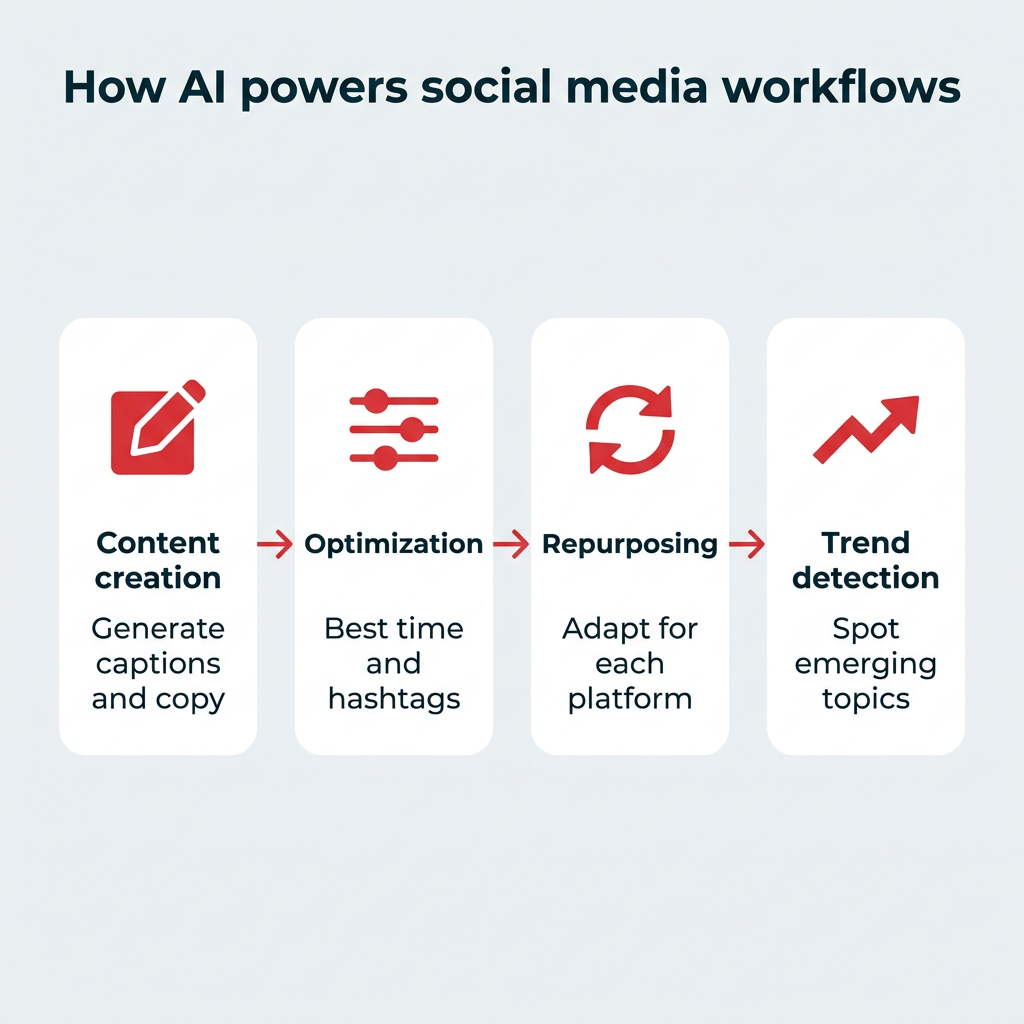
Artificial intelligence has transitioned from a novel concept to a foundational infrastructure component for social media teams. Industry reports, such as Gartner’s projections, indicate that marketing leaders expect AI-driven automation of marketing work to more than double, from 16% in 2026 to 36% by 2028. AI-powered social media tools leverage machine learning to automate, optimize, and enhance various aspects of social media marketing.
Wisdom by Hootsuite exemplifies the trend of integrated AI. Rather than operating as a standalone chatbot, Wisdom is an AI layer embedded across Hootsuite Social OS’s connected applications. This allows users to ask plain-language questions and receive answers grounded in their live social data, complete with citations traceable to original posts or mentions. This integrated approach means AI insights are directly actionable within the platform, from analyzing engagement drops to generating caption variations, ensuring AI output adheres to brand and compliance rules through governed AI features.
Lately AI specializes in repurposing long-form content. It analyzes existing materials like blog posts, podcasts, and webinars to generate optimized social media captions, tailored for engagement. This tool is particularly valuable for brands aiming to maximize the reach and utility of their extensive content libraries across social platforms.
ChatGPT, while a general-purpose AI assistant, has become a default tool for many social teams for brainstorming campaign angles, drafting initial captions, and adapting content for different platforms. Its primary limitation—a lack of direct access to a brand’s specific performance data—is being addressed by connectors that allow it to query social data from integrated platforms, enabling more relevant and data-informed outputs. ChatGPT offers both free and paid tiers, with the latter providing access to more advanced models and features.
Building Connections: Influencer and Creator Management Tools
Influencer marketing continues its trajectory of significant growth, with U.S. spending projected to surpass $10 billion in 2025. By 2026, micro- and nano-influencers are claiming a substantial portion (45.5%) of influencer spend, signaling a shift towards more authentic, niche collaborations. Tools in this category help brands discover, vet, manage, and track partnerships with creators at scale.

Upfluence is an influencer marketing platform designed to facilitate the discovery, analysis, and matching of relevant creators across multiple networks, including YouTube, Instagram, TikTok, Twitch, X, and Pinterest. It streamlines the process of connecting with influencers and can integrate with social workflow tools like Hootsuite for content scheduling and publishing. Upfluence offers a free Chrome extension, with comprehensive features available through custom-priced plans.
Insense focuses on connecting brands, particularly in e-commerce and direct-to-consumer (DTC) sectors, with creators to produce user-generated content (UGC) and ad campaigns for platforms like Instagram and TikTok. It provides an end-to-end workflow for managing creator briefs, matching, and campaign execution, leveraging the power of authentic content for product promotion.

Streamlining Operations: Collaboration and Workflow Tools
Social media marketing is rarely a solitary endeavor. As teams grow and campaigns become more intricate, robust project management and workflow tools are essential for coordinating content calendars, managing approval processes, and aligning cross-functional campaigns.

Monday.com serves as a flexible workflow and project management platform, adaptable for various marketing tasks from campaign planning to content calendar creation. Its customizable boards, automation features, and visual tracking capabilities help teams monitor progress across multiple projects. Integration with social media management platforms allows for coordinated content planning while enabling direct publishing.
Airtable combines the structure of a database with the accessibility of a spreadsheet, making it a versatile tool for social media teams. It’s used for tracking content calendars, managing creator relationships, organizing asset libraries, and coordinating complex cross-functional campaigns. Its various views (grid, calendar, Kanban) cater to diverse team workflows.

Notion functions as an all-in-one workspace, integrating notes, wikis, databases, and project management functionalities. Social media teams utilize Notion for establishing brand guidelines, brainstorming content ideas, organizing campaign briefs, and maintaining a centralized knowledge base. Its customizable structure supports the creation of tailored workflows to meet specific team requirements.
Strategic Selection: Choosing the Right Tools for Impact
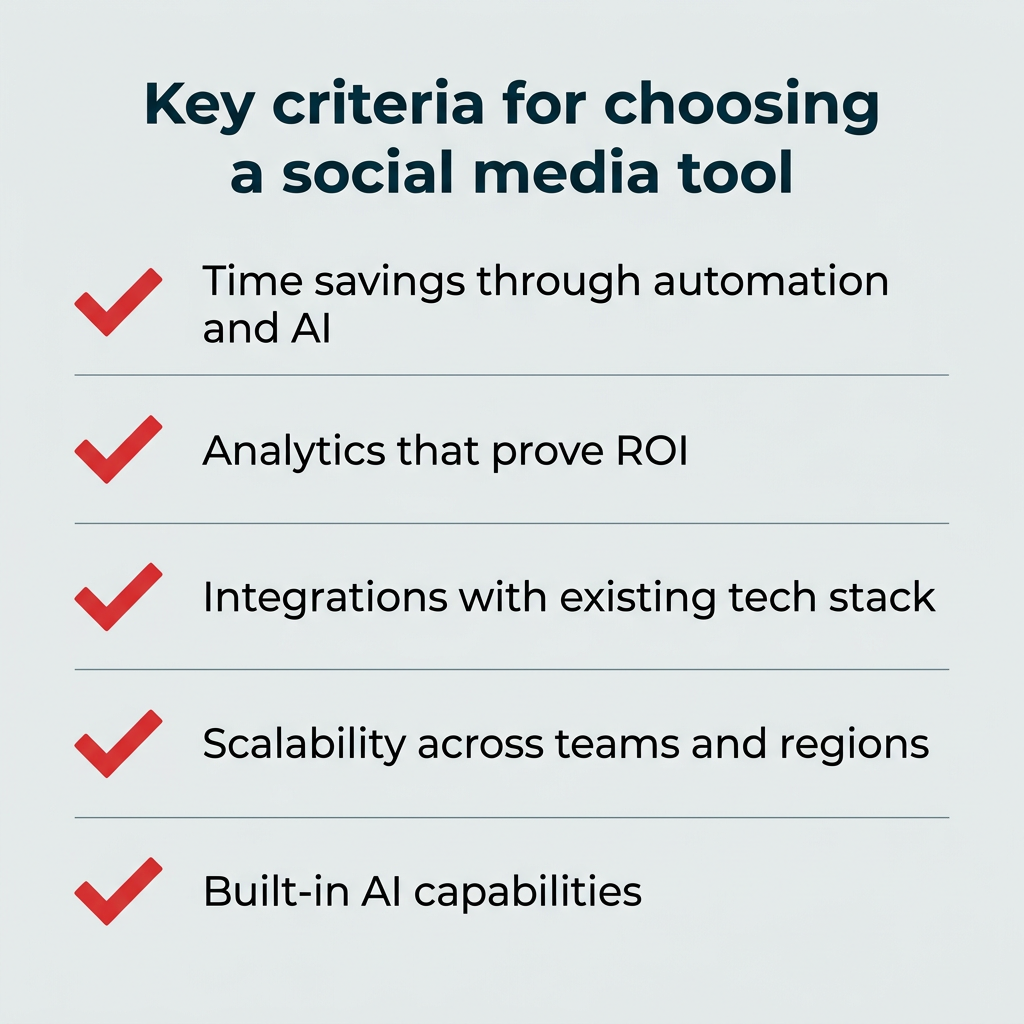
The proliferation of social media tools underscores the importance of a strategic selection process. For marketers navigating this complex ecosystem, several key criteria emerge as paramount when evaluating potential additions to their tech stack:
- Time Savings and Efficiency: A primary driver for tool adoption is the elimination of repetitive work. Platforms offering bulk scheduling, AI-generated captions, streamlined approval workflows, and multi-channel dashboards enable teams to dedicate more time to strategy and creativity. The less time spent toggling between applications, the greater the productivity.
- Analytics and ROI Measurement: Beyond basic engagement metrics, the most effective tools provide in-depth analytics that can be translated into demonstrable business impact. For enterprise teams, this often includes custom reporting, executive dashboards, and attribution models that link social activity directly to revenue and other key performance indicators, fulfilling leadership’s demand for measurable ROI.
- Integration with Existing Tech Stack: A social media tool that operates in isolation creates data silos and inefficiencies. Seamless native integrations with Customer Relationship Management (CRM) systems (e.g., Salesforce, Microsoft Dynamics), Business Intelligence (BI) platforms, Digital Asset Management (DAM) systems, and communication tools (e.g., Slack) are crucial. The emergence of Multi-Channel Platform (MCP) connectors, allowing AI assistants like Claude and ChatGPT to query social data directly, further emphasizes the need for an interconnected ecosystem.
- Scalability and Governance: Organizations managing multiple brands, regions, or business units require tools with robust scalability features. This includes role-based permissions, multi-brand dashboards, centralized content libraries, and compliance controls. Such enterprise governance features are vital for maintaining brand consistency and regulatory adherence without hindering team agility.
- Built-in AI Capabilities: AI is no longer a luxury but an essential component for optimizing social media operations. Tools that integrate AI for content creation, post optimization, trend detection, and automated recommendations directly into the workflow—rather than as an external, bolted-on feature—offer superior value. Governed AI features, including permissions and audit trails, are also critical to ensure AI output aligns with brand guidelines and compliance requirements.
- Brand Reputation Protection: Proactive monitoring of online conversations is indispensable for safeguarding brand reputation. Social listening and monitoring tools that track mentions, comments, and sentiment across diverse sources enable rapid response to potential issues and effective crisis management, protecting the brand from escalating negative sentiment.
The Free vs. Paid Spectrum: When to Invest

For solo marketers or small businesses managing one or two channels, a combination of free social media tools can cover essential needs. This often includes free tiers of design tools like Canva, Google Business Profile for review management, and native platform schedulers. However, these free solutions typically lack the advanced functionalities required for growing or complex operations.
Paid platforms offer significant advantages, including comprehensive cross-channel analytics, sophisticated approval workflows, robust governance features, dedicated social listening capabilities, and audit trails. The decision to invest in a paid platform often becomes necessary when the time spent manually stitching together disparate free tools outweighs the cost of a consolidated, efficient solution. As operations scale, the strategic value of integrated functionalities, enhanced data insights, and streamlined collaboration offered by paid platforms becomes indispensable.

Conclusion: Navigating the Future of Social Media Tools
The year 2026 marks a period of dynamic evolution in social media marketing, driven by increased platform complexity, the demand for measurable ROI, and the transformative power of artificial intelligence. The array of social media tools available reflects this intricate environment, offering solutions for every facet of digital engagement. From all-in-one management platforms that serve as central operational hubs to specialized tools for deep analytics, creative content generation, intelligent automation, and streamlined collaboration, marketers have unprecedented access to technology designed to enhance their impact. The strategic selection of these tools, based on an understanding of organizational needs, scalability requirements, and the imperative for data-driven insights, will be the cornerstone of successful social media strategies in the years to come. As the digital landscape continues to evolve, the integration of cutting-edge technology will remain critical for brands seeking to connect, engage, and thrive in the global conversation.