AWeber, a long-standing leader in email marketing and small business solutions, officially launched its advanced AI image editing features on June 30, 2026. This significant update allows users to transform single product shots and other visual assets into highly customized, contextually relevant marketing visuals through simple text prompts. Initially integrated into the AI Signup Form Builder, the company has confirmed that these powerful new tools will soon extend to its AI Landing Page Builder and AI Email Builder, marking a strategic expansion of AWeber’s artificial intelligence capabilities across its core marketing suite.
The introduction of these AI-powered editing tools represents a pivotal moment for small businesses and independent marketers who often grapple with resource constraints and the complexities of professional graphic design. With this innovation, AWeber aims to democratize access to sophisticated image manipulation, enabling users to rapidly adapt visual content to diverse marketing needs without requiring specialized design software or extensive technical skills. From integrating bespoke branding into stock photography to placing products in aspirational lifestyle scenes, or even rectifying photographic imperfections, the new suite of tools offers unprecedented flexibility and efficiency in visual content creation.
The Evolution of Visual Marketing and AWeber’s Strategic Pivot
Since its inception in 1998, AWeber has been a cornerstone for small businesses seeking effective email marketing solutions. Over the past two decades, the digital marketing landscape has undergone a profound transformation, with visual content emerging as a critical driver of engagement and conversion. Studies consistently show that visually rich content significantly outperforms text-only alternatives in capturing audience attention and conveying brand messages. For instance, reports indicate that social media posts with images receive 2.3 times more engagement than those without, and visual content is 40 times more likely to be shared. However, creating high-quality, relevant visual assets has traditionally been a time-consuming and often costly endeavor, particularly for small enterprises operating with limited budgets and personnel.
Recognizing this evolving need, AWeber has progressively integrated artificial intelligence into its platform. The company’s journey into AI began with the introduction of the AI Signup Form Builder and subsequently the AI Landing Page Builder, which leveraged AI to streamline content generation and design. The latest AI image editing features are a natural progression of this strategy, building on the foundation of AI-driven efficiency to tackle one of the most persistent challenges in digital marketing: visual asset creation and customization. This strategic pivot underscores AWeber’s commitment to providing an all-encompassing marketing platform that leverages cutting-edge technology to empower its user base.
Key Features: A Deep Dive into Creative Control
The newly launched AI image editing suite offers a comprehensive array of functionalities, each designed to address specific pain points in visual content creation:
-
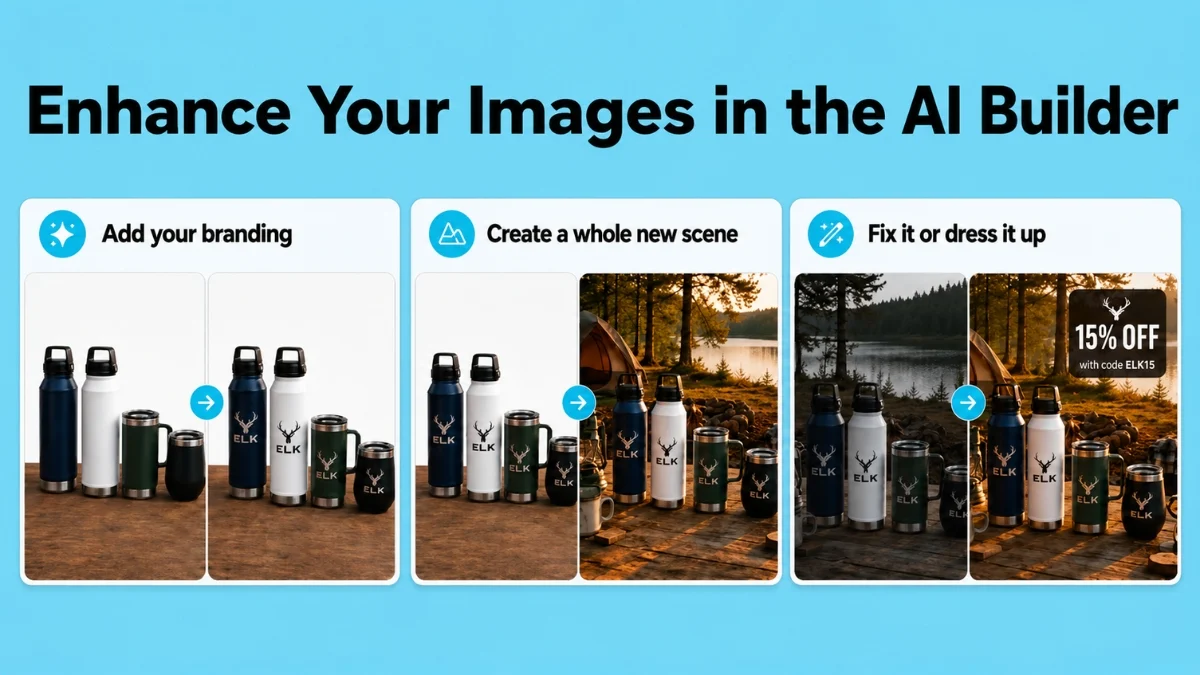
Seamless Brand Integration: One of the most common challenges for small businesses is maintaining consistent branding across all marketing materials. Stock photos, while cost-effective, rarely feature a company’s specific branding or logo. AWeber’s AI now allows users to simply describe the desired branding element, and the AI will intelligently integrate it into an existing image. This capability ensures that every visual asset, regardless of its origin, can be swiftly branded, reinforcing brand identity and professionalism across campaigns. Imagine taking a generic image of a coffee cup and, with a text prompt, having your café’s logo seamlessly appear on it, ready for an email promotion or social media post.
-
Dynamic Scene Setting: The ability to place a product within a contextually relevant scene is crucial for lifestyle marketing, where the goal is to evoke an emotional connection or demonstrate how a product fits into a customer’s life. Instead of expensive photoshoots or complex photo manipulation software, AWeber’s AI can take a plain studio shot of a product and place it into a completely new environment. A text prompt describing "a modern kitchen counter," "a bustling office desk setup," or "a serene campsite at sunset" can instantly transport the product into a narrative that resonates with target audiences. This feature drastically reduces the time and cost associated with creating diverse lifestyle imagery, allowing marketers to test various visual narratives quickly.
-
Effortless Image Correction: Imperfections in photography—ranging from poor lighting and distracting backgrounds to awkward cropping—can significantly detract from the effectiveness of a marketing visual. Traditionally, correcting these flaws required advanced photo editing skills or outsourcing to professional retouchers. AWeber’s AI eliminates this barrier by allowing users to describe the desired fix through a text prompt. Whether it’s "brighten the foreground," "blur the background," or "re-crop for a vertical format," the AI intelligently applies the necessary adjustments, transforming suboptimal images into polished, professional-grade assets. This capability is invaluable for businesses that rely on user-generated content or have limited access to professional photography services.
-
Intelligent Text Overlays: Adding promotional text, calls to action, or headlines to images is a standard marketing practice. However, simply overlaying text can often look amateurish if not designed thoughtfully to match the image’s aesthetic. AWeber’s AI goes beyond basic text placement, enabling users to add text overlays that appear "designed" and integrated into the scene. By describing the desired style—"a vintage-style promo code," "a bold headline in the top left," or "a subtle callout matching the product’s color scheme"—the AI generates text that visually complements the image, enhancing its overall appeal and impact. This feature supports dynamic campaign messaging and quick adaptation of visuals for different promotions.
-
Generative AI: Creating from Scratch: Beyond editing existing images, AWeber’s new suite also incorporates a generative AI capability that allows users to create entirely new images from scratch using only text prompts. This feature is particularly powerful when no suitable existing image can be found or when a completely unique visual is required. By describing the desired scene, objects, and style, the AI constructs a bespoke image, offering unparalleled creative freedom and addressing gaps in visual asset libraries. This capability positions AWeber not just as an editing tool, but as a full-fledged visual content creation platform.
Crucially, AWeber has designed the workflow to be iterative and non-destructive. Each AI-generated edit is saved as a new file, ensuring that the original image remains untouched in the user’s library. This allows for extensive experimentation with different visual directions without the risk of losing previous work, fostering a low-risk environment for creative exploration and A/B testing.
Strategic Vision: Empowering the Entrepreneur
While AWeber has not yet released specific statements from its executives regarding this launch, the integration of such advanced AI capabilities aligns perfectly with the company’s long-standing mission to empower small businesses. It can be logically inferred that this move is driven by a vision to level the playing field, providing small and medium-sized enterprises (SMEs) with tools previously exclusive to larger corporations with substantial marketing budgets and dedicated design teams.
An inferred statement from an AWeber spokesperson might emphasize: "Our goal at AWeber has always been to simplify complex marketing tasks for entrepreneurs. With the introduction of AI image editing, we are taking a monumental step towards democratizing professional-grade visual content creation. Small business owners can now produce stunning, on-brand imagery in minutes, transforming their marketing efforts and enabling them to compete more effectively in a visually-driven digital world. This is about giving our users back their time and creative freedom, allowing them to focus on what they do best – running their businesses."
Industry analysts concur with this assessment. "The integration of sophisticated AI image manipulation into a marketing automation platform like AWeber is a game-changer for the SME market," noted Sarah Chen, a leading MarTech analyst. "It addresses a critical bottleneck—the creation of high-quality, customized visual assets—by making it accessible and affordable. This move not only enhances AWeber’s offering but also sets a new benchmark for what small businesses should expect from their marketing technology providers."
Market Context and Industry Trends
The launch of AWeber’s AI image editing features is set against a backdrop of accelerating AI adoption across the entire marketing technology (MarTech) landscape. Companies are increasingly integrating generative AI and machine learning into various aspects of their platforms, from content creation and personalization to analytics and campaign optimization. This trend is driven by the promise of increased efficiency, enhanced personalization, and the ability to scale marketing efforts without a proportional increase in human resources.
The demand for visual content continues to grow exponentially. Social media platforms, email newsletters, websites, and digital advertisements all rely heavily on compelling imagery to capture attention and drive action. For small businesses, meeting this demand consistently with high-quality, branded visuals has been a significant hurdle. Many SMEs lack the internal design expertise or the budget to outsource graphic design work for every campaign. AWeber’s new AI tools directly address this gap, offering an in-house solution that is both powerful and user-friendly.
Furthermore, the ability to quickly iterate and A/B test different visual concepts is becoming paramount in a data-driven marketing environment. The AI’s capability to generate multiple variations of an image or place a product in various scenes with minimal effort allows marketers to rapidly experiment and identify which visuals resonate most effectively with their target audience, leading to optimized campaign performance.
Impact on Small Businesses and Marketers
The implications of AWeber’s new AI image editing capabilities for small businesses and individual marketers are profound:
- Cost Savings: Eliminates the need for expensive design software subscriptions, professional photographers for minor adjustments, or outsourcing graphic design tasks for routine visual modifications.
- Time Efficiency: Drastically reduces the time spent on creating, editing, and customizing visual content, allowing marketers to launch campaigns faster and respond to market trends more agilely.
- Professional Output: Enables users without formal design training to produce high-quality, professional-looking marketing visuals that can effectively compete with larger brands.
- Increased Agility and Flexibility: Facilitates rapid experimentation with different visual narratives and promotional strategies, fostering a more dynamic and responsive marketing approach.
- Enhanced Brand Consistency: Simplifies the process of integrating branding elements into diverse images, ensuring a cohesive brand identity across all touchpoints.
- Creative Empowerment: Lowers the barrier to creative exploration, allowing marketers to bring complex visual ideas to life with simple text prompts, fostering innovation in their campaigns.
The Road Ahead: Future Integrations and Ethical Considerations
AWeber’s commitment to rolling out these AI image editing features to its AI Landing Page Builder and AI Email Builder soon indicates a clear strategy to integrate this functionality seamlessly across its entire marketing ecosystem. This will mean that users can create and customize images directly within the platforms where they build their web pages and compose their emails, further streamlining their workflow and enhancing the overall user experience.
Looking further ahead, the successful deployment of such AI tools also opens discussions around broader implications and potential future developments. The continuous evolution of generative AI means that the capabilities of such tools will only grow. Future iterations might include more nuanced stylistic controls, advanced object manipulation, or even video generation from text prompts.
However, the rapid advancement of AI also brings ethical considerations to the forefront. Issues such as copyright ownership of AI-generated content, the potential for deepfakes, and ensuring transparency in AI’s role in content creation are ongoing discussions within the industry. AWeber, like other leading technology providers, will need to navigate these complexities, ensuring responsible AI development and deployment that prioritizes user trust and ethical standards.
In conclusion, AWeber’s launch of advanced AI image editing capabilities on June 30, 2026, marks a significant milestone in the democratization of marketing technology. By empowering small businesses with intuitive, powerful tools for visual content creation, AWeber is not only enhancing its own platform but also contributing to a broader trend of making sophisticated digital marketing accessible to all. This innovation promises to redefine how entrepreneurs approach visual branding and campaign development, ushering in an era of greater efficiency, creativity, and competitive advantage.