

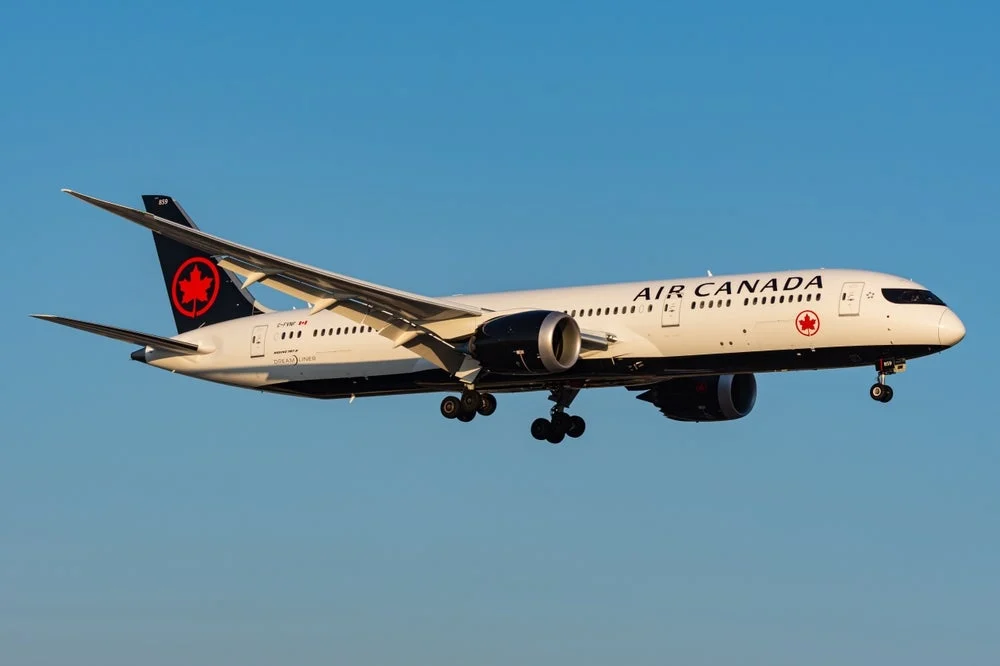
The resignation of Air Canada CEO Michael Rousseau, announced just eight days after a controversial public address, marks a significant turning point for Canada’s flag carrier. The departure follows a period of intense public and political scrutiny triggered by the airline’s handling of a tragic aviation accident at LaGuardia Airport in New York. While the immediate catalyst for the leadership change was a perceived lack of cultural sensitivity in a condolence message, the event has exposed deeper systemic vulnerabilities within the organization’s crisis management and long-term strategic planning.
The LaGuardia Incident and the Fatal Condolence Message
In March, the aviation community was shaken when an Air Canada Express flight was involved in a fatal crash at LaGuardia Airport. The accident resulted in the deaths of two pilots, a loss that resonated deeply across the airline’s global workforce and the broader Canadian public. As the face of the company, CEO Michael Rousseau was tasked with delivering a message of condolence to the grieving families and the airline’s employees.
The resulting video message, however, became the center of a national firestorm. Despite Air Canada being headquartered in Montreal, Quebec—the heart of francophone Canada—Rousseau delivered his remarks almost entirely in English. The video utilized French subtitles, but the CEO personally spoke only two words of French: "bonjour" and "merci."
The reaction was swift and overwhelmingly negative. For many in Quebec and across Canada, the brevity of the French spoken by the leader of a federally regulated institution was viewed as a dismissal of the country’s linguistic duality. Critics argued that in a moment of profound grief, the inability of the CEO to speak the primary language of nearly a third of his employees and a significant portion of the airline’s customer base was an inexcusable failure of empathy and leadership.
A Chronology of Linguistic Vulnerability
To understand the gravity of the 2026 crisis, it is necessary to examine the history of Michael Rousseau’s tenure at Air Canada. The "language story" did not begin at LaGuardia; it was a known vulnerability that had been identified years earlier.
- February 2021: Michael Rousseau is appointed CEO of Air Canada. At the time of his appointment, questions are raised regarding his proficiency in French. Rousseau pledges to improve his language skills.
- November 2021: Rousseau delivers a speech to the Montreal Board of Trade almost entirely in English. In the subsequent Q&A session, he tells reporters he has lived in Montreal for 14 years without needing to speak French. This sparks a massive backlash, including criticism from Quebec Premier François Legault and federal officials. Rousseau subsequently issues a formal apology and recommits to intensive French tutoring.
- 2022–2025: Rousseau reportedly engages in years of private language lessons. Air Canada’s communications team attempts to mitigate the risk by ensuring other senior leaders represent the company in francophone forums.
- March 2026: The LaGuardia crash occurs. The requirement for a direct, empathetic message from the CEO collapses the years of "mitigation" efforts. The resulting English-only video proves that despite five years of warning, the organization lacked a contingency plan for a high-stakes linguistic intersection.
- Eight Days Later: The Air Canada Board of Directors announces Rousseau’s retirement.
The Legal and Cultural Mandate of Air Canada
The controversy surrounding Rousseau is not merely a matter of public relations; it is rooted in the unique legal status of Air Canada. Unlike many other private corporations, Air Canada is subject to the federal Official Languages Act. This legislation mandates that the airline provide services and maintain a workplace that respects both English and French.
In Quebec, language is a cornerstone of identity and a primary driver of political discourse. The provincial government, led by the Coalition Avenir Québec (CAQ), has consistently pushed for stricter language requirements for businesses operating within the province. For a Montreal-based company that receives significant federal support and operates as a national symbol, the inability of its chief executive to navigate a bilingual environment is often interpreted as a violation of the social contract.
Data from the Office of the Commissioner of Official Languages indicates that Air Canada is frequently among the most complained-about institutions regarding language rights. The 2026 incident served as a "tipping point" where historical grievances merged with a fresh tragedy, making Rousseau’s position tenable neither politically nor socially.
Official Responses and Stakeholder Reactions
The fallout from the condolence message was exacerbated by the reactions of key stakeholders. Government officials in Ottawa and Quebec City expressed disappointment, noting that the CEO had been given ample time to rectify his linguistic shortcomings.
"It is a matter of respect," stated a high-ranking official within the Quebec Ministry of the French Language. "When people are mourning, they should be addressed in their mother tongue by the leaders of their institutions. This was a failure of the most basic duty of care."
Internally, reports suggested that the morale among Air Canada’s francophone flight crews and ground staff was significantly impacted. Unions representing airline workers pointed out that while employees are required to meet strict bilingual standards, the same expectations did not appear to apply to the highest levels of executive leadership.
The Air Canada Board of Directors, in their statement regarding Rousseau’s retirement, focused on a "transition toward new leadership to meet the evolving challenges of the global aviation industry." However, analysts noted that the timing—just over a week after the video controversy—clearly signaled that the linguistic gaffe was the primary driver of the exit.
Analysis: Mitigation vs. Contingency in Crisis Planning
The Air Canada case provides a masterclass in the difference between risk mitigation and contingency planning. In corporate strategy, mitigation refers to the ongoing efforts to reduce the likelihood or impact of a risk. Rousseau’s French lessons were a form of mitigation.
Contingency, however, is the plan for the day the risk manifests despite mitigation efforts. The central failure at Air Canada was not Rousseau’s struggle to learn a new language in his sixties; rather, it was the organization’s failure to plan for his lack of fluency during a crisis.
Professional crisis communicators suggest several "low-cost" contingencies that could have saved the CEO’s tenure:
- Bilingual Joint Statements: The CEO could have appeared alongside a senior, fluently bilingual executive (such as the Chief Operating Officer or the head of Air Canada’s Quebec operations) to deliver a shared message.
- Pre-Established Protocols: The airline could have established a protocol for grieving periods, ensuring that all major announcements are delivered in both languages by native or fluent speakers, regardless of the CEO’s personal involvement.
- Alternative Media Formats: Utilizing written statements or professionally narrated videos could have bridged the gap while maintaining the CEO’s authority.
By failing to implement these contingencies, the organization allowed a "known vulnerability" to collide with a "moment of consequence."
Broader Impact and Implications for Corporate Canada
The retirement of Michael Rousseau sends a clear message to executives across Canada and the world: technical competence and financial performance are no longer the sole metrics of leadership success. In an era of heightened social awareness and regional identity, cultural and linguistic competency are essential components of an organization’s "license to operate."
For other Montreal-based or federally regulated entities, the Air Canada incident serves as a warning. Organizations are now re-evaluating their succession planning to ensure that future leaders possess the necessary "soft skills" and cultural fluency to navigate Canada’s complex demographic landscape.
Furthermore, the incident highlights the danger of "risk fatigue." When a vulnerability (like a CEO’s lack of language skills) exists for several years without causing a total collapse, organizations tend to reclassify that risk as a "background condition." They stop planning for it, assuming they have already survived the worst of the criticism. The 2026 crash proved that a crisis does not create new vulnerabilities; it simply accelerates the timeline on which existing ones must be addressed.
Conclusion
As Air Canada begins its search for a new Chief Executive Officer, the mandate is clear. The next leader will not only need to navigate the complexities of global aviation, fuel costs, and labor relations but must also embody the bilingual identity of the nation the airline represents.
The departure of Michael Rousseau is a testament to the fact that in moments of high emotion and national tragedy, the medium is often as important as the message. For Air Canada, the cost of a few missing words proved to be the highest price of all—the loss of its leadership and a significant blow to its institutional reputation. The lesson for the corporate world is enduring: identify your known vulnerabilities today, because the luxury of time to fix them disappears the moment a crisis begins.









