For decades, digital marketers have operated under a relatively stable set of performance indicators, chief among them website traffic and search engine rankings. A high volume of visitors and a coveted first-page position on Search Engine Results Pages (SERPs) were the universally accepted hallmarks of success. However, the rapid integration of artificial intelligence into search engines has fundamentally disrupted this paradigm, rendering these once-critical metrics increasingly akin to "vanity metrics" that fail to reflect true business impact. This profound transformation necessitates an entirely new framework for measuring digital marketing effectiveness, focused on AI search visibility, attribution, and revenue contribution.
The Erosion of Traditional Benchmarks
The reliance on organic traffic and search rank began to show cracks with the advent of AI-powered search functionalities. Historically, the journey from search query to conversion was often linear: a user searched, clicked a link, visited a website, and potentially converted. The metrics perfectly captured this flow. However, the introduction of AI Overviews by Google, and the widespread adoption of conversational AI platforms like ChatGPT, Gemini, and Perplexity, have altered user behavior dramatically.
Data underscores this shift unequivocally. According to BrightEdge, AI Overviews now appear on approximately 48% of all Google searches, a significant increase from 31% just a year prior. When these AI Overviews are present, organic click-through rates (CTRs) for even the top-ranked results can plummet by as much as 61%, as reported by Seer Interactive. This means a brand holding the number one organic ranking can still be largely invisible to users whose queries are answered directly by an AI summary. The implication is clear: simply ranking high or attracting clicks to a website no longer guarantees engagement or business value in the same way it once did.
Moreover, the nature of traffic originating from AI-driven discovery is qualitatively different. Semrush data reveals that visitors arriving via AI convert at 4.4 times the rate of those from standard organic traffic. This stark differential suggests that AI-referred users are often pre-qualified and possess higher intent, having potentially received synthesized information and comparisons from the AI before even reaching a brand’s website. Consequently, a brand could experience a significant drop in raw traffic volume (e.g., 40%) yet still achieve superior conversion outcomes through optimized AI search performance.
Understanding the AI Search Revolution
The integration of AI into search is not a gradual evolution but a revolutionary shift. Google’s initial experiments with AI in search began years ago with features like RankBrain and later BERT and MUM, designed to better understand query intent. However, the launch of generative AI models in late 2022, spearheaded by ChatGPT, accelerated this integration into user-facing experiences. Google’s response with Search Generative Experience (SGE), now branded as AI Overviews, marked a definitive turning point, transforming search from a list of links to a curated, summarized, and often interactive answer engine.
Other platforms have simultaneously gained traction. Goodie’s 2026 Wave 2 report highlighted a significant diversification in B2B AI referrals, with ChatGPT’s dominant share dropping from 89% to 63% in just eight months, while Claude surged to 18.5% and Gemini reached 10.6%. This fragmentation underscores the need for a multi-platform measurement strategy, as user preferences and AI model capabilities continue to evolve. The core challenge for marketers lies in adapting their measurement practices to this new landscape, distinguishing between superficial numerical gains and metrics that genuinely drive growth and profitability.
Key Performance Indicators for the AI Age
To navigate this new environment, marketers must adopt a layered approach to AI search measurement, encompassing direct visibility, indirect influence, and bottom-line impact. These new KPIs provide a more accurate picture of a brand’s presence and effectiveness in AI-driven discovery.
Direct Visibility Metrics
These metrics quantify a brand’s actual presence within AI-generated responses.
-
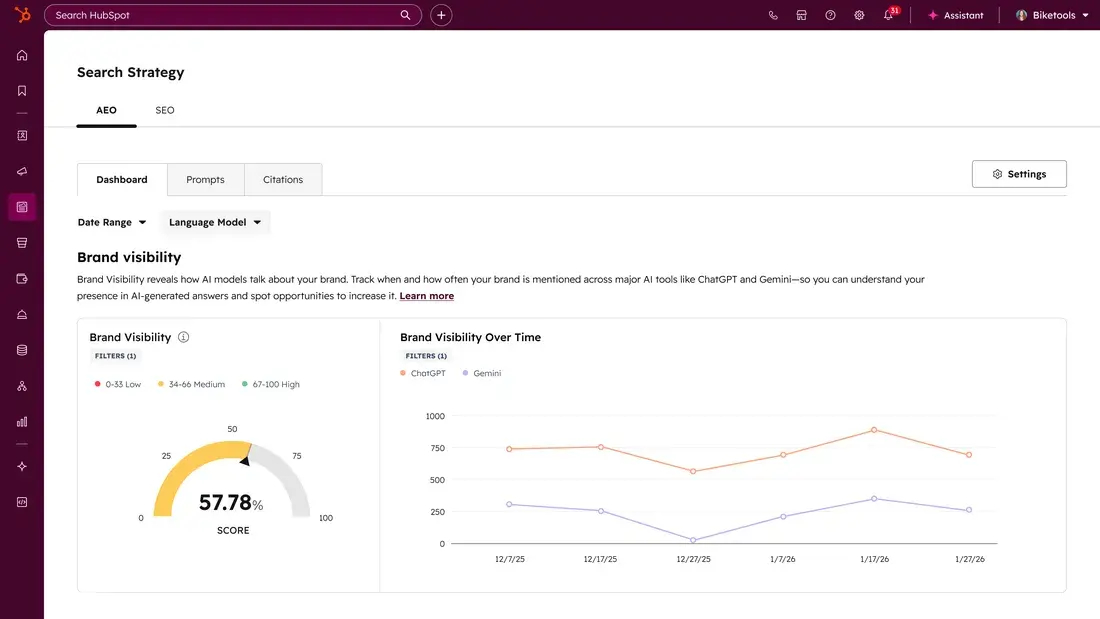
AI Visibility Rate: This foundational metric measures how often a brand appears in AI-generated answers across a defined set of prompts relevant to its target audience. It is the direct answer to whether a brand is "showing up" where potential customers are seeking information. For example, if a brand’s content is cited in 50 out of 100 relevant AI responses, its AI Visibility Rate is 50%. This metric should track not just the presence but also the placement and prominence of the citation within the AI answer.
-
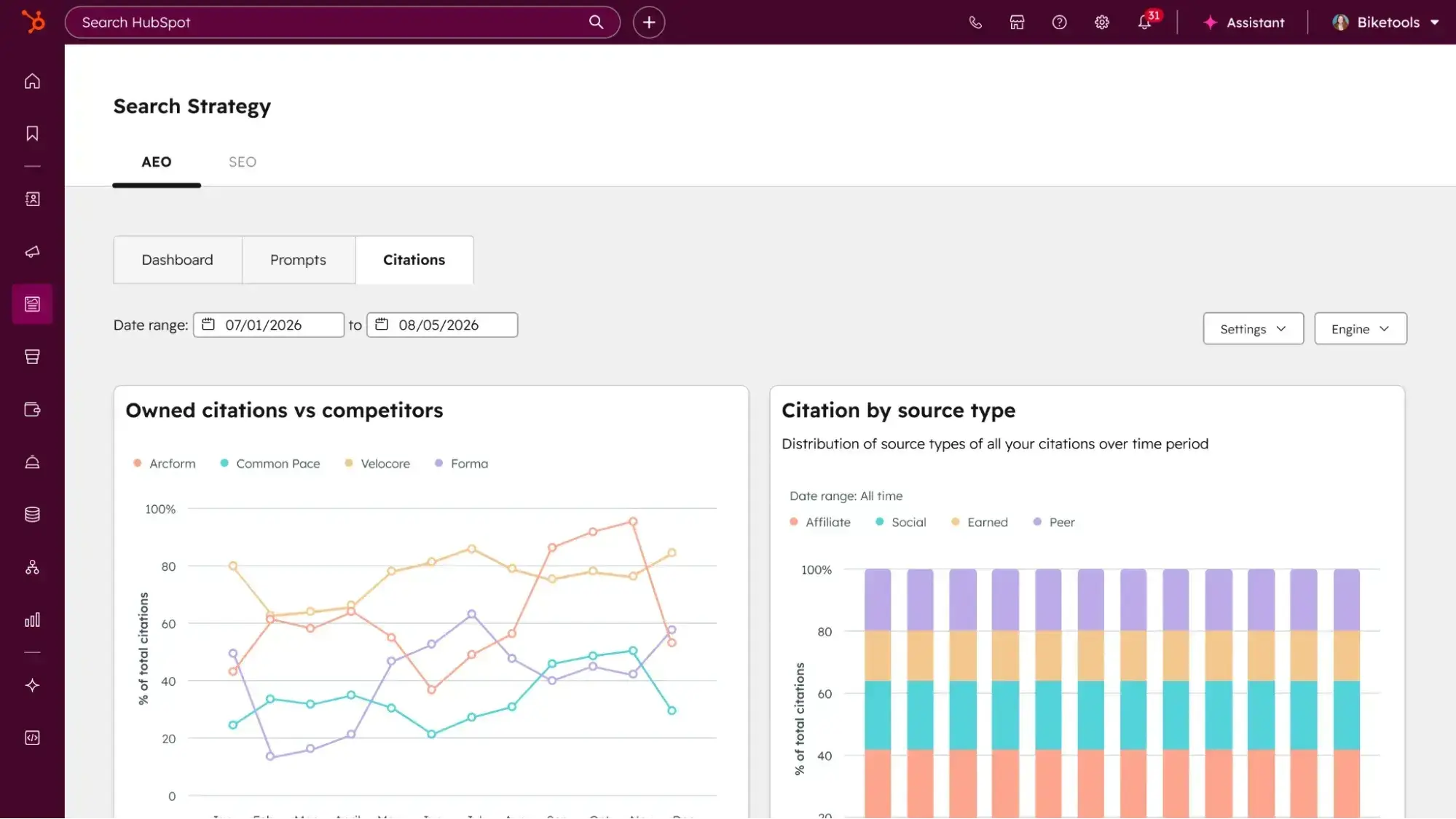
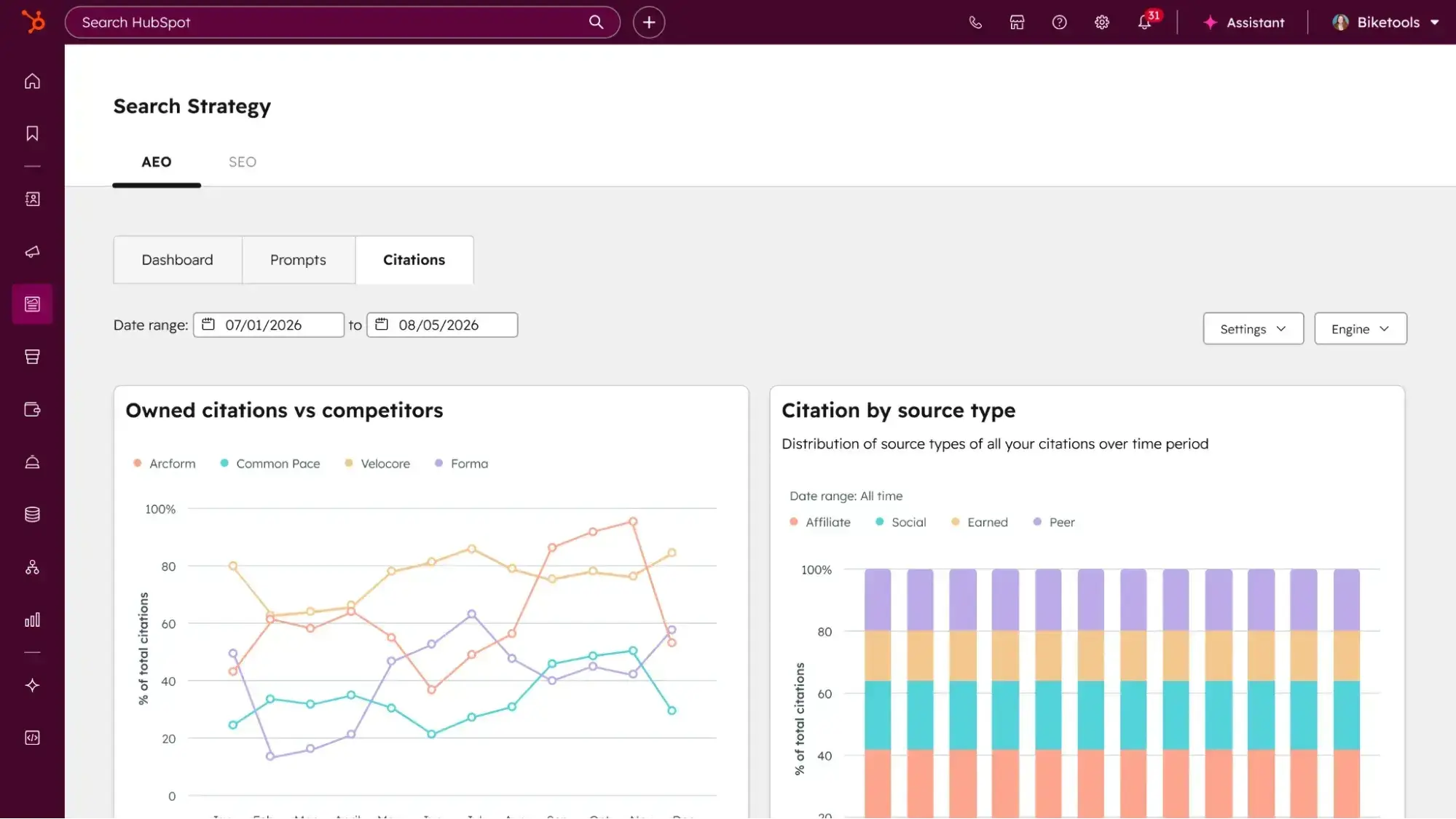
Citation Share: Complementing the AI Visibility Rate, Citation Share provides competitive context. It represents a brand’s percentage of citations relative to its competitors across the same prompt set. If a brand appears in 30% of AI answers but a key competitor appears in 60%, the brand is losing the AI "share of voice" battle. Calculating this involves running the same prompt sets for both the brand and its competitors, then comparing the number of citations. This metric is crucial for competitive analysis and strategic content development.
-
Answer Accuracy and Sentiment: While qualitative, these metrics are critical for maintaining brand reputation and conversion quality. An AI engine citing a brand frequently but with outdated information, incorrect pricing, or negative sentiment can be more detrimental than no citation at all. Tracking accuracy involves manually reviewing AI responses for factual correctness, alignment with current product offerings, and appropriate use cases. Sentiment analysis, whether manual or assisted by natural language processing tools, assesses the overall tone and favorability of brand mentions within AI answers. These qualitative insights guide content optimization to ensure AI platforms present the most current and positive brand information.
Proxy Metrics for Indirect Influence
As AI often provides "zero-click" answers, directly attributing traffic can be challenging. Proxy metrics help infer AI’s influence on user behavior.

-
Branded Search Lift: This is a crucial proxy for measuring AI search impact, often overlooked due to attribution challenges. Scrunch’s analysis of millions of search events found that when an AI platform recommends a brand to someone with no prior exposure, that individual is 182% more likely to search for the brand on Google within the following week and 117% more likely to visit the brand’s website directly. This means users often read an AI answer, close the chat, and then perform a direct branded search on Google or navigate directly to the brand’s website. Since most AI engines don’t pass referral data, this traffic appears as organic branded search or direct traffic in analytics. Marketers must monitor increases in branded search volume and direct traffic alongside improvements in AI visibility to identify this powerful, indirect influence.
-
AI-influenced Engagement: Traffic referred by AI platforms often exhibits distinct engagement patterns. Similarweb found that ChatGPT-referred visitors spent an average of 15 minutes on-site compared to Google’s 8 minutes, viewed 12 pages per session versus Google’s 9, and converted at 7% compared to 5% on transactional sites. Tracking engagement metrics—such as average session duration, pages per session, and bounce rate—specifically for AI referral traffic segments in tools like Google Analytics 4 provides insights into the quality of these visitors and the effectiveness of content in retaining them. High engagement from AI-referred traffic, even with lower volume, signals valuable, high-intent audience acquisition.
Bottom-Line Impact Metrics
Ultimately, marketing efforts must connect to revenue. These KPIs bridge the gap between AI visibility and financial outcomes.
-
AI-influenced Conversion Rate: The high intent of AI-referred visitors translates directly into superior conversion rates. Ahrefs reported that AI-referred visitors, while accounting for only 0.5% of its website sessions, drove 12.1% of all sign-ups—a 23x conversion differential. This demonstrates that AI engines often pre-qualify users, guiding them to a brand’s site with a clear intent to act. Measuring this involves segmenting conversions by AI traffic sources in GA4 and comparing their conversion rates against organic and direct traffic. This highlights the efficiency and value of AI as a referral channel.
-
AI Revenue Contribution (via CRM): This is the ultimate KPI, directly linking AI search visibility to the bottom line. Measuring this requires a robust CRM system capable of tracking "AI discovery" as a first-touch source. By implementing self-reported attribution fields in lead forms ("How did you first hear about us?") that include AI engines as options, and then tagging these contacts in the CRM, businesses can track the full lifecycle of AI-influenced leads. This enables filtering deals by "AI Discovery Source," analyzing close rates for AI-sourced contacts, and calculating the pipeline and revenue contribution directly attributed to AI search efforts. While self-reported data has inherent imprecision, it captures the "zero-click" discovery path that traditional analytics miss, providing a defensible, directional view of AI’s financial impact.
Navigating the Attribution Labyrinth
The "zero-click" nature of many AI interactions poses a significant challenge for traditional attribution models. Pixels, UTM parameters, and referral headers, the bedrock of digital analytics, often fail when a user discovers a brand through an AI summary, closes the chat, and later initiates a direct search or visit. To overcome this, marketers must combine three parallel approaches:
-
Use Self-Reported Attribution for AI Discovery: This method directly asks users how they discovered a brand. Adding a "How did you first hear about us?" field to website forms, surveys, and even sales conversations, with explicit options for AI engines (e.g., "ChatGPT," "Google AI Overview," "Perplexity"), captures invaluable first-touch data. A Semrush survey found that 55% of U.S. consumers use AI specifically for product research at least weekly, and Fairing confirmed a tenfold increase in customers naming LLMs in "how did you hear about us" surveys from January to July 2025. While imprecise, this data provides the only direct insight into the "dark funnel" of AI discovery.
-
Track Branded Search Lift and Direct Entrances: As discussed, AI exposure frequently leads to subsequent branded searches or direct website visits. By establishing a baseline for branded search volume in Google Search Console and direct traffic in GA4, and then correlating increases in these metrics with periods of improved AI visibility, marketers can infer AI’s influence. This correlation, while not providing granular last-click attribution, offers compelling evidence of AI’s role in brand awareness and demand generation.
-
Set Up Your CRM to Capture AI Discovery Signals: A CRM is instrumental in connecting AI visibility to pipeline and revenue. Marketers should create custom contact properties in their CRM (e.g., "AI Discovery Source," "AI First Touch Date"). Automation can then populate these fields based on self-reported data from forms or manual input from sales teams. Once structured, the CRM allows for filtering deals by AI Discovery Source, tracking close rates of AI-influenced leads, and calculating the exact revenue contribution over any time period. Tools like HubSpot CRM facilitate this by enabling custom properties and robust reporting features, transforming abstract visibility scores into actionable financial data for leadership.
Implementing a Robust AI Measurement Framework
Building an effective AI search measurement practice requires consistency and a systematic approach.
-
Establish Your Prompt Set for Visibility Tracking: The foundation is a carefully curated list of 30-50 prompts that accurately reflect how the target audience searches in AI engines. These should span three categories: informational (e.g., "What is [product category]?"), navigational (e.g., "Best [product/service] for [need]?"), and transactional (e.g., "Compare [brand A] vs. [brand B]"). This prompt set will be the consistent basis for all subsequent measurements.
-
Input Prompts into Your AI Visibility Tool (and Multi-Platform Tracking): While manual testing across platforms like ChatGPT, Gemini, Perplexity, and Claude is possible, specialized tools like HubSpot AEO can automate this process, providing daily updates on citations. It is crucial to track across all major AI surfaces, as user adoption varies, and each platform may have different retrieval logic and citation behaviors. Goodie’s report highlights the diversifying landscape, reinforcing the need for broad coverage beyond just one dominant AI.
-
Evaluate and Document Findings: Regular analysis of prompt results is essential. Marketers must track increases or decreases in citations for their brand and competitors, noting the specific content cited, the context of the citation, and the prominence within the AI answer. This data informs content strategy, highlighting what resonates with AI models and identifying content gaps. Running competitor prompt sets helps uncover their strengths and weaknesses, informing strategies to gain a larger citation share.
-
Repeat: Consistency is paramount. After implementing strategic changes based on insights, the prompt set must be re-run, tracked, and analyzed on a regular schedule (e.g., weekly or bi-weekly). This iterative process allows for continuous optimization and adaptation to the evolving AI search landscape.
Addressing Practical Challenges and Future Directions
The AI search measurement landscape is still nascent, presenting several challenges. AI answers are often non-deterministic, meaning the same prompt can yield different results based on session, user, or location. Marketers can mitigate this by running prompts at consistent times, from fixed locations (or using VPNs), and repeating each prompt multiple times to average results. Tracking trends over weeks, rather than individual sessions, helps smooth out these variations.
Referral data remains a significant hurdle. While some platforms like ChatGPT have begun appending UTM parameters, many still do not fully pass referral headers. This reinforces the necessity of proxy metrics (branded search lift, direct traffic) and self-reported attribution.
For businesses short on resources, a phased approach to tool adoption is advisable. Starting with Google Search Console (for branded search lift), Google Analytics 4 (for direct traffic and engagement segmentation), and implementing self-reported attribution on lead forms provides a solid foundation. As measurement practices mature, integrating specialized AI visibility tools and robust CRM capabilities becomes the next logical step.
Ultimately, the key to preventing vanity metrics from derailing reporting lies in always pairing visibility metrics with tangible business outcomes. An impressive AI visibility rate is only meaningful when linked to conversion rates, pipeline data, or revenue contribution. If a metric cannot demonstrably connect to leads, deals, or revenue, it should serve as a supporting signal, not a headline number. The goal is to build a measurement framework that informs strategic decisions and demonstrates tangible value to organizational leadership.
Conclusion
The era of relying solely on organic traffic and search rank to gauge digital marketing success is rapidly drawing to a close. The transformative power of AI in search has ushered in a new epoch, demanding a sophisticated and nuanced approach to performance measurement. By embracing new KPIs such as AI Visibility Rate, Citation Share, Branded Search Lift, AI-influenced Engagement, Conversion Rate, and critically, AI Revenue Contribution through CRM integration, marketers can accurately assess their impact. This shift is not merely a technical adjustment but a strategic imperative, ensuring that marketing efforts are not just visible, but truly impactful in driving business growth in an increasingly AI-driven world. The ability to measure, attribute, and demonstrate the tangible value of AI search performance will define the next generation of digital marketing leaders.