rifanmuazin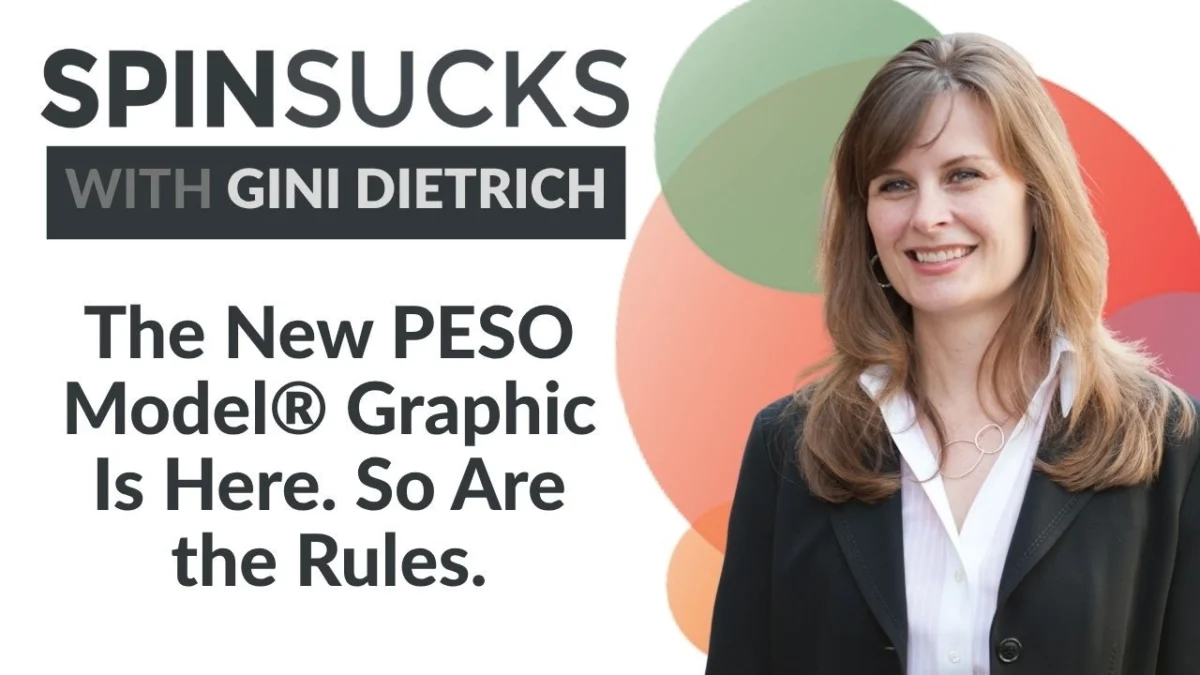
Spin Sucks, the professional development destination for public relations and marketing communications, has announced a comprehensive update to the PESO Model®, a widely adopted industry framework that integrates Paid, Earned, Shared, and Owned media. This latest evolution marks a significant shift from a tactical and strategic overview to an outcome-based "operating system." Along with the visual and conceptual refresh, the organization is implementing a more rigorous intellectual property (IP) enforcement strategy, requiring formal licensing for commercial applications of the model while maintaining free access for non-commercial educational and internal use.
The PESO Model® has served as the standard for integrated communications for more than 12 years. However, the rise of artificial intelligence, changes in search engine behavior, and the increasing demand for measurable business outcomes have necessitated a realignment of the framework. According to Gini Dietrich, the creator of the model and founder of Spin Sucks, the update is designed to move communications professionals away from simply checking off tactical boxes and toward producing specific, compounding results that impact a company’s bottom line.
The Evolution of the PESO Model: A 12-Year Chronology
The PESO Model® was first introduced to provide a structured approach to the fragmenting media landscape of the early 2010s. Since its inception, it has undergone several iterations to reflect the changing nature of digital communication.
The initial version of the graphic, released roughly a decade ago, was heavily focused on specific platforms and tactics. It included mentions of now-defunct or legacy platforms such as Google+ and Vine, emphasizing where content should be placed. This era was characterized by the industry’s need to define what "digital PR" actually entailed.
By the mid-2010s, the model transitioned into a tactical list. While this version gained the most traction among working professionals, it inadvertently led many to view PESO as a checklist rather than a cohesive strategy. This period saw the model being "glommed onto" as a way to organize tasks, but often without the necessary integration between the four media types.
In the early 2020s, a strategic refresh introduced the concept of interlocking circles, emphasizing that Paid, Earned, Shared, and Owned media must work in tandem to be effective. This version was instrumental in teaching a generation of marketers that these disciplines are not silos but mutually reinforcing components of a larger strategy.
The 2026 refresh represents the fourth major iteration. This version is built entirely around outcomes—specifically Authority, Credibility, Discovery, and Growth. It acknowledges that in a modern business environment, boards of directors and executive leadership are less interested in "strategy" for its own sake and more interested in how communications contribute to pipeline, retention, and enterprise valuation.
Understanding the Outcome-Based Framework
The new PESO Model® graphic is organized into four primary pillars, each responsible for a specific business outcome. This restructuring is intended to provide a clearer roadmap for professionals to justify their budgets and demonstrate ROI.
The Four Primary Outcomes
- Authority (Owned Media): This pillar focuses on the content a brand creates and controls. In the new model, Owned media is the foundation of authority. By producing high-quality, original content, brands establish themselves as thought leaders in their respective niches.
- Credibility (Earned Media): Traditionally the heart of PR, Earned media remains the primary driver of credibility. This involves third-party validation through media relations, influencer mentions, and expert positioning.
- Discovery (Paid Media): Paid media is no longer viewed just as advertising but as a mechanism for discovery. It ensures that the right audiences find the brand’s authoritative content and credible endorsements.
- Growth (Shared Media): Shared media, encompassing social media and community engagement, is the engine for growth. It focuses on distribution, engagement, and the expansion of the brand’s reach through user interaction.
The Compound Effect of Integrations
The most sophisticated aspect of the refreshed model lies in the overlaps between the four circles. These intersections represent "compound outcomes" that occur when two or more media types are integrated effectively.
- Trust (Earned + Owned): When a brand’s own authoritative content is validated by third-party media coverage, it creates a high level of trust that neither can achieve alone.
- Influence (Earned + Shared): The combination of third-party validation and social distribution builds significant market influence.
- Community (Shared + Owned): Engaging with an audience on shared platforms and bringing them into owned ecosystems fosters a loyal community.
- Engagement (Shared + Paid): Using paid promotion to boost shared content drives higher levels of interactive engagement.
- Distribution (Paid + Owned): Paid channels ensure that owned content reaches a wider, targeted audience, maximizing the investment in content creation.
- Search (Paid + Earned): The synergy between paid search and earned media mentions improves visibility in "answer engines" and traditional search results.
The center of the graphic, where all four circles overlap, is designated as the "PESO Operating System." This is the point at which all integrations run simultaneously, creating a compounding effect that sustains long-term brand equity and business results.
Intellectual Property and Licensing Requirements
A major component of the 2026 announcement is the formalization of licensing for the PESO Model®. Over the past decade, the framework has been widely adopted, but also frequently plagiarized or used commercially without authorization. Spin Sucks has stated that while the model was created to benefit the industry, the "dilution" caused by unauthorized commercial use has become a risk to the framework’s integrity.
Free Use with Attribution
For the majority of professionals and students, the PESO Model® remains free to use. Non-commercial uses that do not require a paid license include:
- Internal team training and reporting.
- Classroom slides for educators.
- Blog posts, podcast episodes, and social media content (with proper attribution).
- Non-paid conference talks or panel decks.
- Academic citations and journalistic references.
Users are required to download the graphic directly from Spin Sucks, providing an email address to ensure they receive annual license updates. Proper attribution must include a link to the Spin Sucks website and the use of the registered trademark (®) on the first mention.
Commercial Licensing Categories
Spin Sucks has established clear boundaries for what constitutes commercial use. Organizations or individuals must obtain a commercial license if they are:
- Selling paid courses or certifications based on the model.
- Including the model in a published book or paid newsletter.
- Offering paid workshops or commercial training programs.
- Integrating the model into software products or AI tools.
- Delivering paid speaking engagements where the model is the primary teaching tool.
- Using the model for branded "re-use" where it is repackaged as a proprietary agency framework.
The organization offers a "PESO Model Certification®" in partnership with the S.I. Newhouse School of Public Communications at Syracuse University. This certification is currently the only path that automatically grants commercial use rights, providing a "cleanest path" for agencies and consultants who wish to sell PESO-based services.
Industry Implications and the AI Landscape
The decision to refresh the model and tighten IP controls comes at a time when the communications industry is facing an existential shift due to generative AI. "Answer engines" like Perplexity, SearchGPT, and Google’s AI Overviews are changing how information is consumed, making the "dilution" of frameworks a significant competitive risk.
When multiple versions of a framework exist under different names or with varying definitions, AI models may struggle to provide accurate or consistent information. By centralizing the "official" version of the PESO Model® and requiring attribution, Spin Sucks aims to ensure that AI-driven information environments surface the most accurate and integrated version of the system.
Furthermore, the shift toward an "outcome-based" model reflects a broader trend in corporate leadership. Chief Marketing Officers (CMOs) and Chief Communications Officers (CCOs) are increasingly under pressure to prove that their activities contribute to the "pipeline"—a term more common in sales than in traditional PR. By aligning the PESO Model® with outcomes like "Growth" and "Discovery," Spin Sucks is providing a language that allows communicators to speak the same dialect as the C-suite.
Conclusion and Future Outlook
The launch of the new PESO Model® graphic is the first part of a six-part series titled The PESO Operating System, which will continue through the second quarter of the year. Upcoming segments are expected to address the "telephone game" of content dilution and how AI is impacting the efficacy of integrated communications.
As the industry moves toward 2027 and beyond, the PESO Model® appears to be positioning itself not just as a way to organize work, but as a defensible intellectual asset. For agencies, the new rules mean a shift away from "borrowed" frameworks toward certified expertise. For brands, it offers a more measurable way to view the compounding value of their communication efforts.
By formalizing the "Operating System" approach, Spin Sucks is attempting to standardize the way integration is practiced across the globe. Whether this move will successfully curb plagiarism or if it will lead to the emergence of competing, non-licensed frameworks remains to be seen. However, for now, the message from Spin Sucks is clear: integration is no longer a tactical choice—it is a business requirement that demands professional-grade execution and proper legal standing.