rifanmuazin
Canva, the ubiquitous online design platform boasting over 265 million users across 190 countries, has masterfully navigated the complex terrain of global brand presence by championing a deeply localized social media strategy. This innovative approach, spearheaded by Lachlan Stewart, Canva’s Social Lead, eschews generic, one-size-fits-all campaigns in favor of culturally resonant content that fosters genuine connection and drives significant business growth. Stewart’s insights reveal a philosophy centered on entertainment, cultural conversation, and early integration of social media into core marketing initiatives, setting a new benchmark for enterprise-level brand engagement.
The Paradox of Scale: Thinking Local for Global Impact
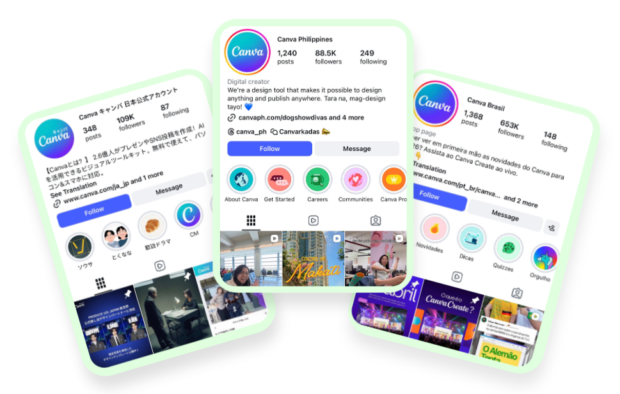
At its immense scale, Canva faces the unique challenge of maintaining intimacy and relevance with diverse user bases spread across nearly every corner of the globe. Stewart emphasizes that the brand’s success lies in its commitment to being "truly local." This means more than just translating content; it involves embedding the brand within local cultures, reflecting real people and real stories from specific markets. This localization strategy initially focused on international markets but has since been adopted for Canva’s global channels, demonstrating its effectiveness in transcending geographical boundaries while retaining a personalized feel. The outcome is a brand presence that feels less like a corporate giant and more like a community member, fostering deeper engagement and loyalty.

The shift towards localization is a response to evolving consumer expectations. Research consistently shows that consumers are more likely to engage with brands that reflect their local values, language nuances, and cultural references. A 2023 study by Statista indicated that 70% of consumers prefer brands that offer personalized experiences, with localization being a critical component of this personalization at a macro level. For a platform like Canva, which empowers individual creativity, enabling users to see themselves reflected in the brand’s marketing efforts is paramount. This strategy directly combats the impersonality often associated with large global enterprises, turning a potential weakness into a significant strength.
An Entertainment-First Philosophy for Social Engagement
Canva’s social media philosophy is increasingly centered on entertainment. While not every piece of content aims for slapstick humor, the underlying principle is to infuse all communications with an engaging, shareable quality. Stewart elaborates on this, explaining that even educational content, such as tutorials, is crafted with "entertainment principles" in mind. This might involve cheeky captions, visually appealing design elements, or interactive formats that encourage sharing rather than passive consumption. The goal is to make learning and brand interaction enjoyable, transforming what could be mundane instructional content into a memorable brand experience.
This entertainment-driven approach aligns with broader trends in digital marketing. As social media platforms mature, users are increasingly bombarded with content. To cut through the noise, brands must offer value beyond mere product promotion. Entertainment serves as a powerful magnet, capturing attention and encouraging voluntary engagement. Platforms like TikTok and Instagram Reels have underscored the power of short-form, entertaining video, pushing brands to become content creators in their own right, rather than just advertisers. Canva’s strategy embraces this by making its content inherently interesting, whether it’s an announcement, a feature demonstration, or a design tip.

Driving Cultural Conversation: Crafting Trends, Not Chasing Them
A defining characteristic of Canva’s social media success is its preference for "driving cultural conversation" rather than merely "jumping into an existing one." This proactive stance means identifying clear cultural insights and leveraging social media to amplify them, often creating new trends in the process. This strategy requires a deep understanding of local nuances and the courage to innovate.
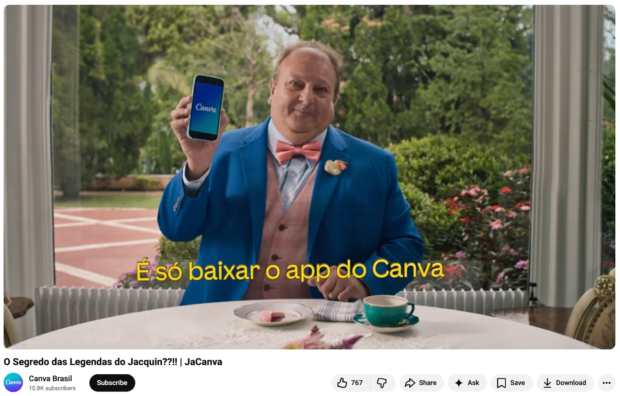
One compelling example comes from Canva’s Brazil marketing efforts. Recognizing a widespread cultural joke about the French MasterChef judge’s accent, which often required subtitles for Brazilian viewers, Canva collaborated with him. They integrated this insight into a campaign promoting their auto-captions feature, effectively turning a local running gag into a relevant and humorous product demonstration. The campaign resonated deeply because it acknowledged and played into an existing cultural touchstone, transforming a niche joke into a viral social media moment. The campaign’s success was not in initiating the joke, but in skillfully integrating Canva’s product into a pre-existing, widely understood cultural context, thereby making the brand feel more relatable and clever.
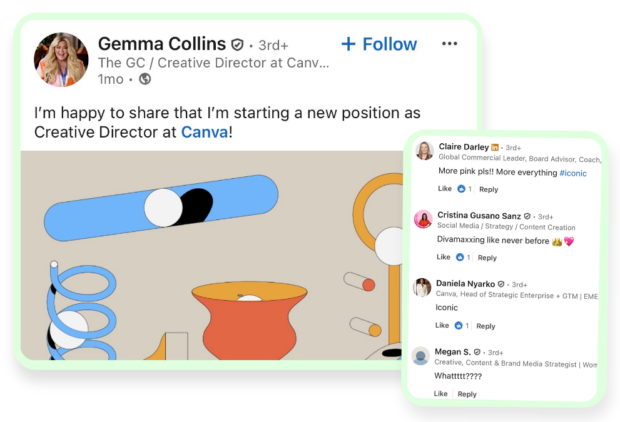
Similarly, in the United Kingdom, Canva partnered with reality television star Gemma Collins, a figure known for her larger-than-life personality and meme-worthy moments. The campaign was audacious: Canva not only added Collins’ distinctive voice to its product’s voice functionality but also appointed her as its "UK Creative Director." A crucial element of this campaign involved creating a legitimate-looking LinkedIn profile for Collins, pretending she was an actual Canva employee. This unconventional use of a professional networking platform for a celebrity endorsement sparked widespread discussion and quickly became a trendsetter. Marks & Spencer, for instance, was later observed adopting a similar strategy by appointing a "Chief Compliments Officer," showcasing the ripple effect of Canva’s innovative approach. These campaigns exemplify Canva’s sweet spot: leveraging social media to ignite conversations by doing something genuinely new and culturally pertinent.
The Power of Being First: Innovation as a Core Metric
Lachlan Stewart highlights a crucial insight: successful marketing moments often stem from "trying something that doesn’t exist already." The Gemma Collins LinkedIn initiative is a prime example. By being the first to creatively leverage LinkedIn in this manner, Canva generated significant buzz. This emphasis on originality extends beyond grand campaigns; it also applies to being the first to react to unfolding events or cultural shifts, demonstrating agility and relevance. This "first-mover advantage" in social media content creation allows Canva to capture attention and establish thought leadership, distinguishing itself in a crowded digital landscape.
The strategy of "being first" is supported by marketing research indicating that novel and unique content is significantly more likely to be shared and remembered. When a brand introduces a new format, a fresh take on an old idea, or a pioneering use of a platform feature, it naturally stands out. This doesn’t mean inventing entirely new technologies, but rather creatively applying existing tools and cultural insights in unprecedented ways. It requires a keen eye on emerging trends, an understanding of platform mechanics, and a willingness to take calculated risks.
Social Media at the Strategy Table: An Integrated Approach

Canva’s internal structure reflects its commitment to social media’s strategic importance. Unlike many organizations where social teams are brought in late to amplify pre-determined campaigns, Canva integrates its social media specialists from the earliest stages of planning. Stewart, drawing on his background in creative agencies where early inclusion was a constant battle, praises Canva’s collaborative environment. This empowers the social team to contribute suggestions and insights from the very beginning, ensuring that campaigns are inherently social-first rather than being retrofitted for various platforms.
This early integration is critical for maximizing campaign impact. When social media considerations are woven into the initial creative and strategic discussions, campaigns are designed with shareability, engagement, and platform nuances in mind. This prevents situations where a brilliant traditional marketing concept falls flat on social because it wasn’t conceived for that medium. It also allows the social team to identify and leverage nascent trends or cultural insights that might otherwise be missed by teams focused solely on broader marketing objectives. The result is a more cohesive and effective campaign that speaks directly to digital audiences.
Building Momentum: Teasers and Sustained Engagement
Successful social media campaigns are rarely "launch and forget." Canva employs a sophisticated approach to building and sustaining momentum. This includes strategic "teaser" content released prior to a main campaign launch. The Gemma Collins LinkedIn profile, for example, generated curiosity and discussion before her role as UK Creative Director was officially announced. These pre-campaign moments are vital for priming the audience, generating anticipation, and creating an initial wave of conversation.
Equally important is the post-launch phase. Canva ensures a robust suite of assets is available to roll out on social media long after the initial announcement. As a visual company, this means continually leveraging compelling visuals, key messages, and engaging elements of the campaign in innovative ways. This sustained effort prevents campaigns from fizzling out quickly, instead allowing them to evolve and remain relevant over a longer period. This phased approach, from teasing to launch to sustained engagement, ensures maximum reach and impact, turning a single marketing event into an ongoing dialogue.
Cross-Functional Collaboration for Campaign Success
Bringing Canva’s ambitious social media campaigns to life requires extensive cross-functional collaboration. Stewart outlines a typical team structure involving in-house specialists across various disciplines: creative, social, campaign management, production, and communications, all supported by leadership. This multi-faceted team ensures that all angles are covered, from the initial creative spark to the final execution and communication.
This collaborative model underscores the complexity of modern digital marketing. No single team can operate in a silo and expect optimal results. The integration of diverse skill sets—from creative ideation to data analysis, technical execution, and strategic communication—is essential for crafting campaigns that are both innovative and effective. This holistic approach ensures that social media is not just an appendage but a core, integrated component of Canva’s overall marketing machinery.
Advice for Enterprise Teams: Embrace Experimentation
Stewart’s advice for enterprise and B2B teams seeking more integrated marketing efforts is clear: "Don’t be afraid of trying things that are a bit different, or not yet tried and tested." The success of Canva’s UK campaign on LinkedIn, a platform often perceived as more formal, demonstrates that even in B2B contexts, experimental and innovative approaches can yield significant results. The integration between social media and other marketing functions is more crucial than ever, particularly as platforms like LinkedIn evolve beyond pure professional networking into vibrant content ecosystems.
For large organizations, the perceived risk of experimentation can be a deterrent. However, Canva’s experience suggests that calculated risks, especially when backed by cultural insights and a strong understanding of the platform, can lead to breakthroughs. The benefit of having a large audience, as Canva does, is the ability to test ideas and iterate quickly, using social media as a living laboratory for campaign creative.
Beyond Vanity Metrics: Measuring True Impact

In evaluating social performance, Canva looks beyond superficial metrics like likes and comments. Stewart advocates for aligning measurement with the specific objective of the creative. For an entertaining two-minute video, metrics like view-through rate and shares provide a more accurate picture of engagement than simple likes. For a tutorial, saves might be a more pertinent indicator of value, signifying that users intend to refer back to the content.
This nuanced approach to measurement is a critical shift in modern social media marketing. Vanity metrics, while easy to track, often fail to capture the true business impact of social efforts. By focusing on metrics that directly correlate with content objectives – be it brand awareness, education, lead generation, or community building – organizations can gain deeper insights into what truly resonates with their audience and refine their strategies accordingly. This ensures that social media is not just busywork but a quantifiable contributor to overarching business goals.
The Evolving Role of Social Media in Marketing
Stewart foresees an even larger role for social media in future marketing campaigns, particularly in its capacity for testing and experimentation. The ability to rapidly test ideas with an existing audience before a full campaign launch offers an invaluable advantage, allowing brands to refine their messaging and creative for maximum impact. This iterative approach, fueled by social media’s immediate feedback loops, will increasingly shape campaign development.

His final counsel to marketing leaders underscores the importance of embracing new approaches: "If you continue to just create content that your audience is comfortable with, you’re not going to make an impact beyond them." Growth, he argues, comes from taking risks and exploring uncharted territory. This philosophy has enabled Canva to not only grow its user base exponentially but also to cultivate a vibrant, globally diverse community that feels genuinely connected to the brand.
Canva’s journey illustrates that in an increasingly globalized and digitally connected world, the path to widespread brand resonance might just lie in the strategic application of local insights, bold experimentation, and an unwavering commitment to cultural authenticity. By empowering its social team and fostering a culture of innovation, Canva continues to redefine what it means for a global brand to truly "feel local," setting a powerful precedent for integrated marketing success.