rifanmuazin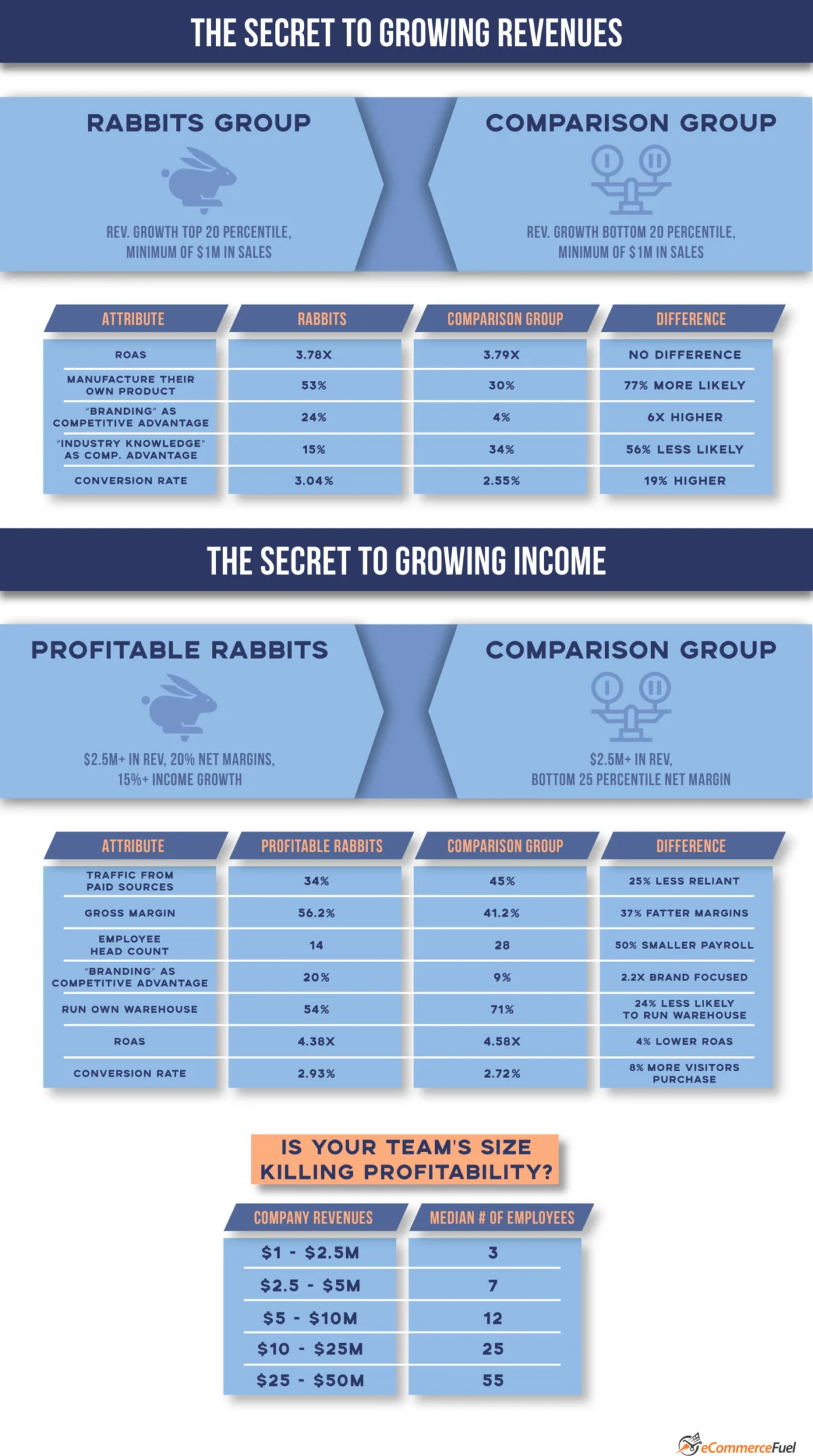
A paradigm shift is underway in the e-commerce landscape, challenging long-held assumptions about business growth and profitability. While the prevailing narrative often equates scaling with increased revenue and, consequently, a larger workforce, emerging data and anecdotal evidence suggest a more nuanced approach. The focus is increasingly shifting from aggressive marketing spend and expansive payrolls to operational leanness and strategic financial management. This evolution is driven by a growing understanding that true profitability is not solely a function of top-line growth, but a delicate balance achieved through meticulous cost control, intelligent outsourcing, and proactive financial planning.
The Case for Operational Efficiency: A Store Owner’s Transformation
The journey of a particular e-commerce store owner, who wishes to remain anonymous, serves as a compelling illustration of this evolving business philosophy. At his peak, this entrepreneur managed a team of 35 employees. While his business generated solid revenue, profitability remained a persistent challenge. The sheer act of managing such a large team, on top of the daily operational demands of running an e-commerce business, created significant stress and diminished overall efficiency. This scenario is not uncommon, as managing a substantial workforce can consume a disproportionate amount of an owner’s time and energy, diverting focus from strategic growth initiatives.
In response to these persistent challenges, the owner made a series of strategic, albeit difficult, decisions. He embraced a remote-first operational model, significantly reducing overhead associated with physical office space. Crucially, he partnered with a third-party logistics (3PL) provider to manage warehousing and fulfillment. This move not only streamlined operations but also leveraged the expertise and economies of scale offered by specialized logistics companies. Furthermore, he transitioned from a model heavily reliant on full-time employees to one that incorporated a more flexible workforce of freelancers and independent contractors.

The results of these strategic adjustments have been transformative. The business now operates with a core team of just one full-time employee, supported by a network of eight contractors. This leaner structure has led to unprecedented profit margins and a significant reduction in the owner’s stress levels. This anecdote directly challenges the conventional wisdom that business expansion necessitates a proportional increase in headcount, suggesting that strategic restructuring can yield superior financial outcomes.
Empirical Evidence: What the Data Reveals
This individual experience is not an isolated incident. A comprehensive analysis of hundreds of e-commerce businesses, aimed at identifying the key differentiators between highly profitable operations and those struggling to gain traction, has yielded striking insights. Contrary to initial expectations that marketing prowess would be the primary determinant of success, the research indicated otherwise.
The study found that the difference in Return on Ad Spend (ROAS) between top-performing and bottom-performing e-commerce businesses was negligible. This suggests that even highly effective marketing campaigns may not translate directly into superior profitability if the underlying operational structure is inefficient. Similarly, stores excelling in profitability were not necessarily those with the most sophisticated Facebook advertising or Search Engine Optimization (SEO) strategies.
The true differentiator, according to the research, lay in operational leanness. Top performers in terms of profitability consistently exhibited significantly lower payroll expenses, with many having approximately half the headcount of their less profitable counterparts. Furthermore, these successful businesses were 25% more likely to outsource their warehouse operations, a clear indication of their strategic embrace of external expertise for core logistical functions. Perhaps most surprisingly, they were also 25% less reliant on paid traffic, suggesting a greater emphasis on organic growth, customer retention, and efficient conversion strategies. The overarching conclusion drawn from this research is that operational leanness consistently outperforms marketing cleverness when it comes to driving sustainable profitability.

Defining "Lean": Beyond Headcount Reductions
The term "lean" in a business context is often mistakenly equated solely with workforce reductions. However, true operational leanness extends far beyond headcount. It encompasses a holistic evaluation of all overhead costs and their strategic alignment with the business’s core competencies. This includes examining expenditures on physical infrastructure, such as office spaces that may have become underutilized in a post-pandemic remote work environment, or warehouse facilities that could be more cost-effectively managed by a 3PL.
Furthermore, the proliferation of Software as a Service (SaaS) subscriptions presents another area where hidden costs can accumulate. Many businesses find themselves paying for recurring services that are either forgotten, underutilized, or no longer essential to their operations. A diligent review of these subscriptions, often amounting to small, incremental charges, can reveal significant opportunities for cost savings.
A critical filter for identifying areas for leanness is to assess what is truly core to a brand’s unique value proposition. For instance, if a brand’s competitive advantage lies in its distinctive product design, retaining in-house design talent would be a strategic imperative. Conversely, if the core competency is not in the intricate process of packing and shipping boxes, then outsourcing fulfillment to a specialized 3PL provider becomes a logical and financially prudent decision. Profitable e-commerce businesses are not merely cutting costs indiscriminately; they are making intentional decisions about which resources are essential for their brand’s differentiation and which can be optimized or outsourced to more efficient providers.
The Uncomfortable Necessity of Difficult Conversations

A fundamental aspect of achieving sustained success, both in business and in life, is the willingness to engage in difficult conversations. Many entrepreneurs, understandably, tend to postpone these challenging discussions until external pressures, such as economic downturns, cash flow crises, or a precipitous drop in profitability, force their hand. However, businesses that consistently achieve high profitability are those that proactively address these critical issues before they escalate into existential threats.
These forward-thinking owners regularly pose challenging questions to themselves and their teams: Is this role truly essential, or was it a hire made out of a perceived need for busyness? Are we paying for this software tool out of necessity, or simply out of habit? If faced with a mandatory 25% cost reduction tomorrow, what would be the first items on the chopping block? By engaging in these hypothetical scenarios and proactively making necessary adjustments, these businesses maintain a state of intentionality and resilience, rather than reacting to crises.
The Second Unsexy Lever: Strategic Tax Management
While marketing and operational efficiency often dominate business discussions, the strategic management of taxes represents another significant, yet frequently overlooked, lever for enhancing profitability. Many entrepreneurs, much like the author of the original piece, initially perceive taxes as a fixed cost – a percentage of income to be paid regardless of strategic choices. However, a deeper examination reveals that substantial savings can be realized through deliberate tax planning.
Consider the example of two identically performing e-commerce businesses, each generating $2.5 million in revenue and $250,000 in profit, with owners in similar personal financial situations. Owner A, who engages in minimal tax planning, might pay as much as $75,000 in annual taxes. In stark contrast, Owner B, who actively employs strategic tax-saving measures, could reduce their tax liability to as little as $21,000. This substantial difference, amounting to over $54,000 annually, is not achieved through illicit means but through a thoughtful application of various tax-advantaged strategies.

A Tale of Two Owners: Illustrating Tax Savings
Let’s break down how Owner B achieves these remarkable savings, assuming a roughly 30% marginal tax rate:
- Profit Sharing Contributions: Owner B contributes $45,000 into retirement accounts via profit sharing, significantly exceeding standard 401(k) limits. This strategy alone yields approximately $13,500 in tax savings.
- Appreciated Stock Donations: When donating to charitable organizations, Owner B strategically donates stock that has appreciated in value rather than cash. This allows them to avoid capital gains tax on the appreciation while still receiving a full deduction for the fair market value of the stock, saving an estimated $3,500.
- Maximized Health Savings Account (HSA): By contributing the maximum family limit of $8,500 to an HSA, Owner B leverages a triple tax-advantaged account (deductible contributions, tax-free growth, and tax-free withdrawals for qualified medical expenses), resulting in savings of approximately $2,550.
- Paying Children for Services: Owner B employs their three children for legitimate work within the business, paying each $7,000 annually. These payments are deductible for the business, and the children can invest these earnings in Roth IRAs, allowing for decades of tax-free growth. This strategy generates an estimated $6,300 in tax savings.
- Inventory Donations: A particularly impactful strategy involves donating slow-moving inventory to charities. Owner B donated $60,000 worth of old inventory at its fair market value, rather than liquidating it at a loss. This deduction can yield significant savings, estimated at $18,000 in this scenario. This is a vastly underutilized strategy within the e-commerce sector.
These examples highlight that while marketing drives revenue, strategic financial management, particularly in tax optimization, can dramatically improve net profitability. The cumulative effect of these deliberate actions can free up tens of thousands of dollars annually, funds that can be reinvested in growth, used for personal financial security, or simply retained as increased profit.
The Invisibility of Tax Optimization Opportunities
The reason these tax-saving opportunities often remain invisible to many e-commerce owners is the fragmented nature of tax management. Personal tax returns, business filings, brokerage account statements, and payroll tax reports are often handled separately. This lack of a unified view prevents owners from seeing their total tax burden and identifying areas for optimization. Consequently, they may not even consider asking if they could be paying less.

Owner A in the example is not necessarily unintelligent; they simply have not consolidated and analyzed their tax obligations comprehensively. While they may have a competent accountant who ensures accurate filing, these "decent" accountants typically process information rather than proactively offering strategic tax-saving ideas. This passive approach, while compliant, can lead to significant missed financial opportunities.
A Simple Test for Your CPA: Proactive vs. Reactive
A straightforward method for assessing the effectiveness of one’s Certified Public Accountant (CPA) is to consider the last time they proactively presented a new idea or strategy. It is common for CPAs to answer questions and ensure accurate tax return preparation. However, truly valuable CPAs go beyond this reactive role. They actively reach out to clients, demonstrating an understanding of their business and personal financial situations, and proposing strategies for improvement. If you cannot recall your CPA initiating such a conversation, it may indicate that while they are competent in basic compliance, they may not be maximizing your financial potential. The $54,000 difference between Owner A and Owner B is not a result of complex financial engineering but rather the outcome of intentional, proactive planning.
Conclusion: Two Levers Most People Ignore
In the hyper-competitive e-commerce arena, marketing metrics like ROAS, Customer Acquisition Cost (CAC), and Lifetime Value (LTV) command significant attention and discussion. These are undoubtedly important for driving growth. However, the businesses that consistently achieve superior profitability often do so by focusing on less glamorous, yet profoundly impactful, financial levers. These include maintaining leaner operational structures, characterized by significantly smaller teams and strategic outsourcing, and implementing proactive tax management strategies that dramatically reduce tax liabilities.

While enhancing marketing efforts is a valuable pursuit, the ability to retain a larger portion of the revenue already earned through operational efficiencies and smart financial planning often represents a more immediate and sustainable path to increased profitability. For e-commerce entrepreneurs seeking to elevate their businesses, a shift in focus from solely chasing top-line growth to optimizing both operational costs and tax burdens may prove to be the most strategically astute approach.