rifanmuazin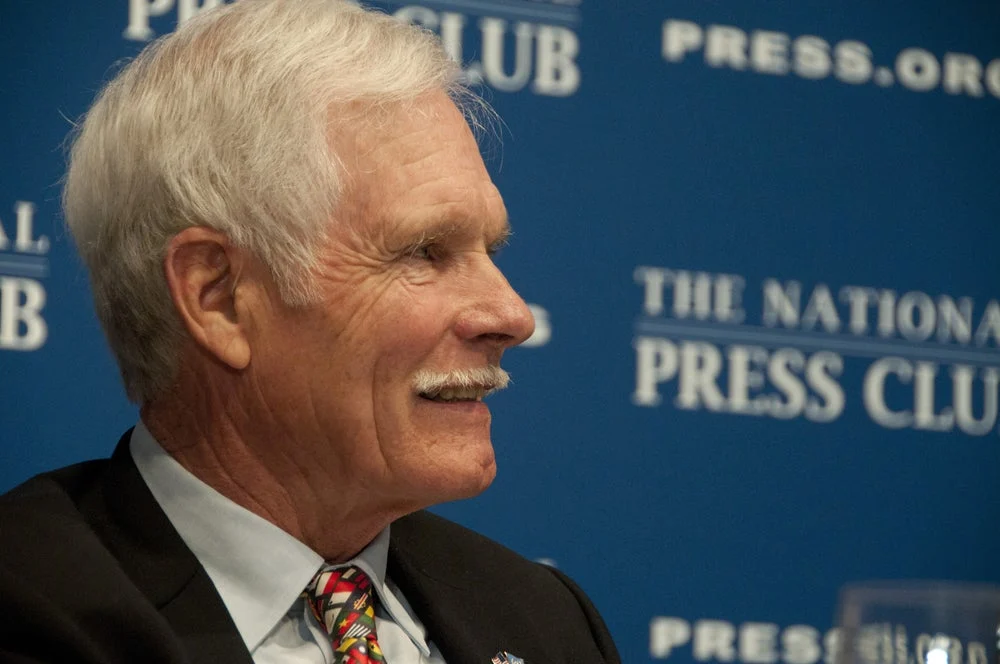
The communications and media landscapes are undergoing a profound transformation this week, marked by the passing of one of the industry’s most influential architects and a significant realignment in how both global commodities and digital content are managed. The death of CNN founder Ted Turner has prompted a widespread reflection on the foundational principles of modern media, while concurrently, the global economy faces a "communications stress test" as gasoline prices surge due to geopolitical instability in the Middle East. Simultaneously, new data suggests a definitive shift in digital strategy, with LinkedIn officially surpassing YouTube as the primary video hub for B2B marketers.
The Passing of a Media Maverick: Ted Turner’s Enduring PR Legacy
Ted Turner, the visionary who fundamentally altered the trajectory of global news and entertainment, died this Wednesday at the age of 87. Turner, who had been living with Lewy body dementia since 2018, leaves behind a legacy that is being studied not just for its industrial impact, but for its profound lessons in public relations and brand building.
Turner’s career was defined by a refusal to adhere to the status quo. In 1970, he purchased a struggling UHF station in Atlanta, which he eventually transformed into the "superstation" WTBS. This served as the springboard for the 1980 launch of CNN (Cable News Network), the world’s first 24-hour news channel. At the time, industry incumbents dismissed the idea of a "round-the-clock" news cycle as unsustainable. Turner’s success proved that demand for immediate information was global and insatiable, a realization that birthed the modern media environment.
Beyond the newsroom, Turner’s influence extended into sports and conservation. As the owner of the Atlanta Braves and an America’s Cup-winning yachtsman, he was a fixture in the public eye. His environmental efforts were equally ambitious; he became one of the largest private landowners in the United States, utilizing his resources to save the American bison from the brink of extinction.
Strategic Takeaways for Modern Communicators
For public relations professionals, Turner’s career offers a blueprint for "authentic leadership" long before the term became a corporate buzzword. Industry experts point to several key strategies that defined his approach:
- Creating the Conversation: Michelle Bonner, Vice President of Public Relations at Adams & Knight and a former CNN anchor, notes that Turner’s primary strength was his ability to command attention. "He understood attention before attention became currency," Bonner observed. His strategy was never to wait for an invitation to the cultural dialogue but to force the dialogue to center around his initiatives.
- The Power of Consistency: CNN’s success was not the result of a single viral moment but of a "constant presence." In PR terms, this reinforces the idea that a single headline rarely shifts public perception; rather, it is the cumulative effect of consistent storytelling over years and decades.
- Language as a Tool for Inclusion: Turner famously banned the word "foreign" from CNN’s broadcasts, mandating the use of "international" instead. This subtle linguistic shift was a strategic move to position CNN as a global entity rather than an American one looking outward. Meredith Eaton, Managing Director of North America at Red Lorry Yellow Lorry, argues that this shift avoided marginalizing international audiences and helped build a truly global brand.
- Strategic Visibility: Michael Adorno, Partner at Hot Paper Lantern, highlights Turner’s habit of sitting in the stands at Atlanta Braves games rather than in a luxury box. By being "strategically out front," Turner became the face of his brand. His body language and presence during games became part of the media narrative, proving that for high-profile leaders, the person is often the most valuable asset the brand possesses.
Economic Volatility: Navigating the 50% Spike in Gas Prices
While the media world reflects on the past, the global economy is grappling with a volatile present. Gasoline prices in the United States have reached an average of $4.48 per gallon, representing a 50% increase since the onset of the conflict in Iran two months ago. This surge is largely attributed to the effective closure of the Strait of Hormuz, a critical maritime chokepoint through which approximately 20% of the world’s crude oil supply flows.
The International Energy Agency (IEA) has characterized this as the most significant supply disruption in the history of oil markets. Crude oil prices have fluctuated wildly, peaking at $112 a barrel. Although a brief window of optimism appeared in mid-April during ceasefire talks, the resumption of hostilities and the U.S. administration’s decision to block Iranian ports have removed essential supply from the market, driving prices back to near-record highs.
The PR Challenge of Economic Strain
For brands, the spike in energy costs is more than an operational hurdle; it is a communications crisis. Because fuel costs impact the entire supply chain—from manufacturing to last-mile delivery—consumers are feeling the "ripple effect" through price hikes on nearly all finished goods.
Nicole Tidei, Vice President at Pinkston, warns that the greatest mistake a brand can make during such periods is silence. "In moments of economic uncertainty, transparency and empathy matter more than ever," Tidei stated. She suggests that brands must:
- Communicate Early: Explain the impact of rising costs before the consumer sees the change on their receipt.
- Maintain a Calm Tone: Avoid opportunistic messaging or "fear-mongering." The goal is to provide stability and clarity.
- Coordinate Internally: Ensure that HR, operations, and customer-facing teams are all delivering a consistent message. This "communications stress test" determines whether a company’s internal culture can support its external promises.
Analysts suggest that even if the conflict were to resolve immediately, the "risk premium" attached to shipping and insurance in the region would keep prices elevated for months. This suggests that "inflation-focused messaging" will remain a necessity for the foreseeable future.
The B2B Video Evolution: LinkedIn Dethrones YouTube
In the digital sphere, the "2026 State of Video Report" by Wistia has revealed a landmark shift in B2B marketing strategy. For the first time, LinkedIn has overtaken YouTube as the primary channel for B2B video content. This transition marks a departure from a "reach-first" mentality toward an "engagement-first" strategy.
The report, which analyzed data from over 900 marketing professionals and 13 million videos, found that social engagement rates have nearly doubled in the last two years, rising from 12% to 22%. While YouTube remains a powerhouse for consumer entertainment and broad-reach brand awareness, LinkedIn has become the "main stage" for professional thought leadership and executive visibility.
Key Drivers of the Platform Shift
Several factors have contributed to LinkedIn’s dominance in the B2B sector:
- Democratization of Production: There has been a significant increase in non-video professionals (such as PR managers and CEOs) participating in content creation. The rise of AI-assisted editing tools has allowed in-house teams to produce high-quality content without the massive overhead of traditional production houses.
- Contextual Relevance: B2B buyers are increasingly seeking content that is tailored to their professional challenges. LinkedIn’s professional context provides a "filtered" environment where educational and industry-specific video content performs better than on more cluttered platforms.
- The Rise of In-House Capabilities: Rather than outsourcing all video needs to agencies, companies are leaning on freelancers and AI to maintain a constant stream of content.
Sam Balter, Head of Content at Wistia, notes that "engagement is the new currency." For B2B communicators, the goal is no longer just to get eyes on a video, but to spark a conversation within a specific professional community.
Analysis: The Intersection of Leadership, Economy, and Technology
The convergence of these three news cycles—the death of a media titan, a global energy crisis, and a shift in digital platforms—highlights the evolving role of the modern communicator. Ted Turner’s legacy reminds the industry that "boldness" and "authenticity" are the bedrock of any enduring brand. However, the current economic climate demonstrates that this boldness must be tempered with "empathy" and "transparency" when consumers are under financial pressure.
Furthermore, the shift toward LinkedIn video illustrates that the "constant presence" Turner advocated for is now being achieved through new, decentralized technologies. The 24-hour news cycle he created has evolved into a 24-hour "engagement cycle," where every executive has the tools to be their own broadcaster.
As the industry moves forward, the lessons from Turner’s era remain relevant: language matters, visibility is essential, and the ability to pivot in response to global events is the hallmark of a successful organization. Whether navigating a geopolitical crisis or a platform algorithm change, the fundamental objective of PR remains the same: to build and maintain trust through consistent, authentic storytelling.