rifanmuazin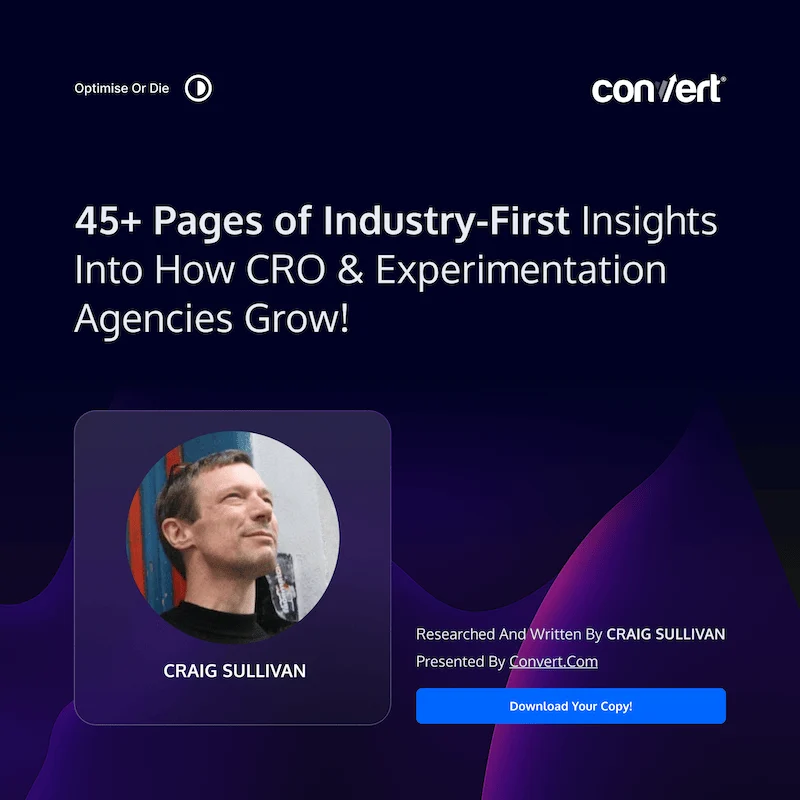
The global digital landscape has reached a point of saturation where customer acquisition costs are rising and organic reach is dwindling, forcing organizations to look inward at their existing traffic to drive growth. This shift has placed Conversion Rate Optimization (CRO) and experimentation at the forefront of corporate strategy. However, as businesses move to adopt these methodologies, a critical structural dilemma emerges: how to resource the program. While many organizations instinctively default to hiring external agencies, industry veterans and recent data suggest that this "one-size-fits-all" approach often leads to dependency rather than development. The decision between hiring an agency, engaging a freelancer, building an in-house team, or adopting a hybrid model is not merely a resourcing choice but a strategic one that dictates how a company learns and evolves.
The Strategic Shift from Execution to Ownership
For over a decade, the CRO industry has evolved from a niche technical discipline into a core business function. Historically, companies viewed A/B testing as a series of isolated tactical fixes—changing button colors or headlines to see what "won." Today, experimentation is recognized as a systematic approach to risk mitigation and product development. Despite this evolution, the most common mistake companies make is framing the CRO investment as a question of who will run the tests.
Industry experts argue that the more vital question is who owns the experimentation strategy and the resulting institutional knowledge. When a company outsources the entirety of its CRO efforts without a plan for internalization, it risks creating a "black box" where insights are generated but never integrated into the company’s cultural DNA. The objective of any optimization program should be the creation of a permanent experimentation capability, ensuring that every test contributes to a compounding library of customer insights.
The Agency Model: A Catalyst for Early Momentum
Agencies remain a popular entry point for companies looking to validate the ROI of experimentation without the immediate overhead of full-time hires. A standard CRO agency provides a multidisciplinary team including researchers, designers, developers, Quality Assurance (QA) specialists, and data analysts. This "team-as-a-service" model allows organizations to kickstart programs with high-quality execution from day one.

Recent research conducted by Convert, a leading experimentation platform provider, reveals a complex reality regarding agency partnerships. While 90% of agencies claim to offer "strategy," the depth of this service varies significantly. For some, strategy is limited to prioritizing a backlog of tests; for others, it involves restructuring how a client makes product decisions. Furthermore, the Convert report indicates that 60% of agency practitioners run two or fewer tests per month. This low velocity is often not a reflection of agency incompetence but rather a symptom of internal bottlenecks within the client organization, such as slow approval processes or limited developer access.
Lucia van den Brink, founder of The Initial, emphasizes that the most effective agencies are those that view their role as temporary. According to van den Brink, the goal should be to internalize experimentation as a capability. A successful agency partnership should ideally have a defined trajectory where the agency enables the internal team to eventually take the reins, rather than creating a permanent reliance on external billable hours.
The Freelance Model: Specialized Guidance and Upskilling
For organizations that possess some internal execution capacity but lack high-level strategic direction, the freelance or consultant model offers a middle ground. Freelancers typically work with a smaller roster of clients, allowing for a deeper integration into the client’s Slack channels and internal meetings.
The primary advantage of the freelancer is the lack of "account management" layers, which often leads to sharper, more direct strategic thinking. However, the model has limitations. A single freelancer is rarely an expert in every facet of the CRO lifecycle. While they may excel at strategy and analysis, they often require the client to provide the design and development resources to bring experiments to life.
Ruben de Boer, an independent leader in experimentation strategy, suggests that freelancers are best utilized when an organization already has a team but needs to improve its decision-making framework. The freelancer acts as a mentor, upskilling internal staff and helping the organization avoid common pitfalls in statistical analysis and hypothesis development. In this scenario, the freelancer is not an outsourced service but a strategic architect building an internal foundation.

The In-House Model: Building Long-Term Competitive Advantage
As an experimentation program matures, the case for an in-house team becomes overwhelming. In-house teams possess a level of institutional context that no external partner can replicate. They understand the nuances of the brand, the technical debt of the codebase, and the long-term roadmap of the product.
At Audible, the Amazon-owned audiobook giant, experimentation is treated as a fundamental component of the corporate mindset. Beatriz Tavares, Global Acquisition & Experimentation Manager at Audible, notes that customer obsession—a core principle of the organization—requires internalizing experimentation to learn faster and apply those learnings directly to the customer experience.
The financial logic of the in-house model is also compelling in the long term. While the upfront costs of salaries and tooling are high, the per-experiment cost decreases as the team becomes more efficient. More importantly, the "learning dividends" stay within the company. When an agency contract ends, the expertise often leaves with them; with an in-house team, every experiment builds the company’s collective intelligence.
A Chronology of CRO Maturity: When to Choose Which Model
The effectiveness of a CRO setup is largely determined by the company’s stage of growth. A chronological framework for decision-making typically follows these four phases:
-
Pre-Product-Market Fit: At this earliest stage, A/B testing is often premature due to low traffic volumes. The focus should be on qualitative research—user interviews, heatmaps, and session recordings. No formal CRO structure is needed; instead, founders and early product managers should lead the learning process.

-
Early Growth: Once a company has traction but limited traffic, a freelance strategist can provide the necessary guidance to set up lightweight experiments. The goal here is to identify major friction points rather than fine-tuning micro-conversions.
-
Scaling: This is the critical junction where companies must choose between an agency or an initial in-house hire. If the organization needs to prove the value of CRO to leadership quickly, an agency can provide the necessary "wins." If the value is already recognized, hiring a dedicated CRO manager to coordinate internal resources is the more sustainable path.
-
Mature: At the mature stage, experimentation is a core capability. The organization should maintain a full in-house squad. External agencies or specialist freelancers may still be used, but only for discrete, high-complexity projects or to fill temporary gaps in specialized skills.
Data-Driven Analysis of Implementation Challenges
Transitioning between these models is rarely seamless. Organizations often face "hidden costs" that are not reflected in the initial contract or salary negotiation. These include:
- Tooling and Infrastructure: The cost of experimentation platforms (such as Convert, Optimizely, or VWO) and data warehouses must be factored into the budget regardless of the model.
- QA and Technical Debt: External teams may inadvertently create technical debt if their code is not aligned with internal development standards.
- Organizational Friction: Every external partner requires internal management. If the internal "owner" of the relationship is overstretched, the ROI of the external partner will plummet.
Furthermore, the Convert research highlighting low test velocity (two or fewer tests per month) serves as a warning. Low velocity often means the cost per test is prohibitively high, making it difficult to achieve statistical significance across a broad range of hypotheses. Organizations must ensure that whichever model they choose, the infrastructure is in place to support a cadence that allows for meaningful learning.

Broader Impact and Industry Implications
The choice of a CRO model has implications that extend far beyond the marketing department. It influences the company’s entire approach to risk and innovation. Organizations that successfully build an internal experimentation DNA tend to be more resilient to market shifts because they have a system for rapidly testing new ideas and discarding what doesn’t work.
Conversely, companies that view CRO as a "set-it-and-forget-it" outsourced service often find themselves stuck in a cycle of incremental gains without ever achieving a breakthrough in customer understanding. The industry is moving toward a "hybrid" reality, where agencies evolve into consultancy-style partners that help build internal centers of excellence, rather than just executing tests.
In conclusion, there is no single "correct" model for CRO. The "best" setup is the one that facilitates the most rapid learning for the organization at its current stage of development. Whether through the multidisciplinary power of an agency, the strategic precision of a freelancer, or the deep context of an in-house team, the ultimate goal remains the same: transforming data into a sustainable competitive advantage through a culture of continuous experimentation. Only when learning is internalized does CRO move from a tactical expense to a strategic asset.