
 rifanmuazin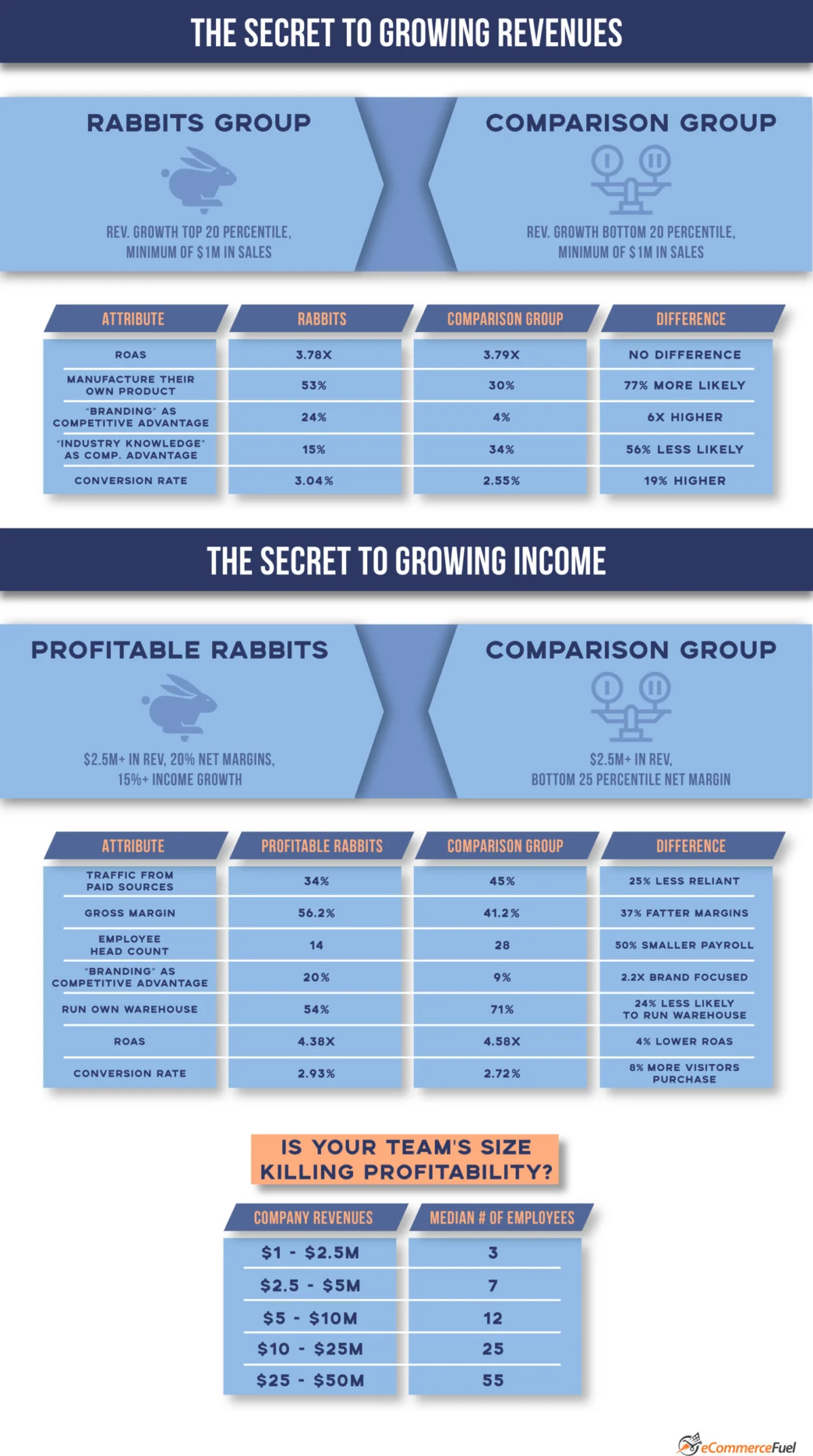
A recent analysis of high-performing e-commerce businesses reveals a counterintuitive truth: sustainable profitability is often driven not by aggressive marketing tactics, but by operational leanness and astute tax management. While the prevailing narrative in business growth emphasizes scaling through increased headcount and expanded marketing budgets, data suggests that a more strategic approach, focusing on efficiency and after-tax outcomes, yields superior long-term financial health. This revelation challenges conventional wisdom and points to two often-overlooked "unsexy levers" that can significantly impact a business’s bottom line.
The genesis of this perspective stems from an observation of a prominent store owner who, despite a solid revenue stream and a team of 35 employees, consistently struggled with profitability. The sheer overhead of managing a large workforce, coupled with the inherent stresses of constant oversight, presented a significant drag on his business. His situation was not unique; many business owners find themselves in a similar predicament, where growth in revenue does not translate proportionally to an increase in profit.
In a decisive move to address these challenges, this entrepreneur implemented a series of strategic changes. He transitioned to a remote operational model, outsourced fulfillment to a third-party logistics (3PL) provider, and strategically replaced many full-time employees with freelancers and independent contractors. The outcome was dramatic: his team was reduced to a single full-time employee and eight contractors. This restructuring not only slashed operational costs but also significantly reduced his management burden. Today, his business boasts unprecedented profit margins and a substantially lower stress level. This anecdote serves as a powerful case study, illustrating that scaling does not always equate to an expansion of full-time headcount.
This particular story resonated deeply because it directly contradicts the widely held belief that business growth is intrinsically linked to increased personnel. The common assumption is that scaling necessitates hiring more people, thereby expanding the workforce to meet rising demand. However, this belief often overlooks the substantial overhead associated with full-time employment, including benefits, office space, and the extensive management required.

What the Research Actually Shows: Operational Leanness as a Profitability Driver
A comprehensive study examining hundreds of e-commerce businesses sought to identify the key differentiators between highly profitable enterprises and those that struggled. The initial hypothesis anticipated that marketing proficiency would be the primary determinant of success. However, the findings revealed a different reality. The research indicated that the return on ad spend (ROAS) between top-performing and underperforming businesses was negligibly different. This suggests that superior marketing strategies, such as more effective Facebook advertising or advanced SEO techniques, were not the defining factor for exceptional profitability.
Instead, the study identified a stark correlation between profitability and operational efficiency. Top performers in terms of profit margins were found to have, on average, half the payroll of their less profitable counterparts. Furthermore, these businesses were 25% more likely to outsource their warehouse operations and 25% less reliant on paid traffic. This data unequivocally supports the notion that operational leanness consistently outperforms marketing cleverness when it comes to maximizing profit.
The forthcoming eComFuel Trends Report is set to refresh this data, providing further validation or refutation of these patterns. Business owners are encouraged to participate in this ongoing research to contribute to a more accurate understanding of industry trends.
Lean Means More Than Headcount: Re-evaluating Overhead

The concept of "staying lean" is often narrowly interpreted as reducing headcount through layoffs. However, a more holistic view of operational costs reveals that overhead is pervasive, extending far beyond salaries. This includes expenses such as underutilized office spaces, which may have been deemed necessary in previous economic climates but are now a drain on resources. Similarly, maintaining in-house fulfillment operations can be significantly more expensive than leveraging the services of a 3PL, which can handle logistics more efficiently and cost-effectively.
Beyond physical infrastructure, recurring software subscriptions, often forgotten after initial sign-ups, can accumulate into substantial, unnecessary expenses. These seemingly small, recurring charges—$50 here, $200 there—can collectively represent a significant financial burden if not regularly reviewed.
A critical filter for evaluating overhead is to identify what is truly core to a brand’s unique value proposition. For instance, if a company’s competitive advantage lies in its distinctive product design, retaining in-house design talent might be a strategic necessity. However, if the core competency is not in the intricate process of packing and shipping boxes, then managing an in-house fulfillment operation becomes an unnecessary expense. Profitable businesses are not merely cutting costs indiscriminately; they are making deliberate decisions about which resources are essential to their brand’s success and which can be optimized or outsourced.
The Uncomfortable Truth About Hard Conversations: Proactive Decision-Making
A widely recognized principle suggests that success in life, and by extension in business, is often measured by the willingness to engage in difficult conversations. Many individuals and organizations tend to postpone these crucial discussions until they are compelled to act by external pressures, such as economic downturns, cash flow crises, or a significant decline in profitability that threatens the business’s survival.

However, business owners who consistently achieve high levels of profitability tend to be proactive in addressing these potentially uncomfortable conversations. They initiate these discussions before they are forced into them by circumstances. This involves critically assessing the necessity of each role within the organization, questioning whether positions were created out of genuine need or simply due to a perception of busyness. Similarly, they scrutinize the ongoing use of various tools and software, distinguishing between essential necessities and ingrained habits.
A key exercise for these forward-thinking leaders is to contemplate what they would cut if faced with an immediate 25% reduction in their budget. By posing these questions and then acting on the insights gained, they are not reacting to a crisis but rather engaging in intentional strategic planning. This proactive approach to cost management and resource allocation is a hallmark of highly profitable enterprises.
The Second Unsexy Lever: Strategic Tax Planning
Taxes are often viewed as a fixed cost of doing business—a percentage of income that must be paid regardless of strategic considerations. However, this perspective overlooks the significant opportunities for tax optimization that can dramatically impact net profit. This is not about engaging in illicit activities or complex offshore schemes; rather, it involves being deliberate about tax planning, an area many business owners treat as an afterthought.
Consider the scenario of two store owners with identical businesses: $2.5 million in revenue, $250,000 in profit, and similar personal financial situations. Owner A pays approximately $75,000 in annual taxes. Owner B, through intentional strategies, pays only $21,000, representing a substantial difference of $54,000 per year. This disparity is achieved not through evasion but through strategic utilization of various tax-advantaged mechanisms.

Assuming a marginal tax rate of roughly 30%, Owner B’s savings are realized through several key actions:
- Profit Sharing: Contributing $45,000 into retirement accounts via profit sharing, exceeding standard 401(k) limits. This yields approximately $13,500 in tax savings.
- Appreciated Stock Donations: Donating appreciated stock to charities instead of cash. This strategy avoids capital gains tax on the stock’s growth and still allows for a full deduction, saving an estimated $3,500.
- Maxed Health Savings Account (HSA): Contributing the maximum family limit of $8,500 to an HSA, which offers triple tax advantages (deductible contributions, tax-free growth, and tax-free withdrawals for qualified medical expenses). This results in savings of approximately $2,550.
- Paying Children for Work: Employing children for legitimate tasks within the business and paying them each $7,000. These payments are deductible for the owner, and the children can invest the earnings in Roth IRAs, allowing for tax-free growth for decades. This strategy can save around $6,300 in taxes.
- Inventory Donations: Donating slow-moving inventory to charities at fair market value instead of liquidating it at a loss. This is a particularly powerful, yet underutilized, strategy in e-commerce. Donating $60,000 worth of inventory could result in tax savings of approximately $18,000.
Collectively, these deliberate actions can generate annual tax savings exceeding $54,000, significantly boosting net profit without altering revenue or operational costs in other areas.
Why This Stays Invisible: The Fragmented Nature of Tax Information
The reason these tax optimization opportunities are often missed is the fragmented nature of tax information. Personal tax returns, business filings, brokerage statements, and payroll tax reports are scattered across various documents and platforms. Without a consolidated view, it is difficult for business owners to ascertain their total tax liability and identify potential areas for reduction. Consequently, the question of whether they could be paying less often goes unasked.
Owner A in the example is not necessarily uninformed or unintelligent. He likely has a competent accountant who ensures his tax filings are accurate and compliant. However, "competent" accountants typically focus on processing information and ensuring compliance, rather than proactively identifying and proposing tax-saving strategies. This passive approach can lead to significant missed opportunities for substantial financial gains.

A Simple Test for Your CPA: Proactive Guidance vs. Reactive Service
A simple yet revealing test for any business owner is to consider the last time their Certified Public Accountant (CPA) proactively approached them with a new idea or strategy. This is distinct from answering questions or accurately filing tax returns. The crucial distinction lies in the CPA initiating a conversation based on their understanding of the client’s situation, suggesting a specific course of action to consider.
If a business owner cannot recall such a proactive engagement, it likely indicates they have a "fine" accountant—one who handles the basics competently. However, fine accountants often come at a cost: missed opportunities for significant tax savings. The $54,000 difference between Owner A and Owner B is not a result of complex financial engineering but of intentionality and proactive engagement. If a CPA is not actively bringing forward innovative ideas, it may be time to seek one who will.
Two Levers Most People Ignore: The Power of Retention
The prevailing focus in the business world is heavily skewed towards marketing metrics: Return on Ad Spend (ROAS), Customer Acquisition Cost (CAC), and Lifetime Value (LTV). These are the metrics that dominate discussions, the problems that everyone is striving to solve, and the areas that attract the most attention and investment.

However, the store owners who consistently achieve exceptional profitability are often those who have mastered two often-overlooked "unsexy levers." They have leaner teams, meaning lower payroll expenses. They pay a significantly smaller fraction of their income in taxes through strategic planning. These actions directly contribute to keeping more of the money they earn.
While improved marketing can undoubtedly drive revenue growth, the ability to retain a larger portion of that earned revenue through operational efficiency and tax optimization is frequently the more impactful and sustainable path to long-term profitability. This shift in focus from solely acquiring more to strategically keeping more is a fundamental differentiator for the most successful businesses.
For those seeking to delve deeper into building leaner, more profitable operations, insights drawn from the experiences of established 7- and 8-figure business owners are invaluable. Regular updates and strategic guidance on these topics are available through ongoing community discussions and newsletters, offering a pathway to enhanced financial performance.









