
 rifanmuazin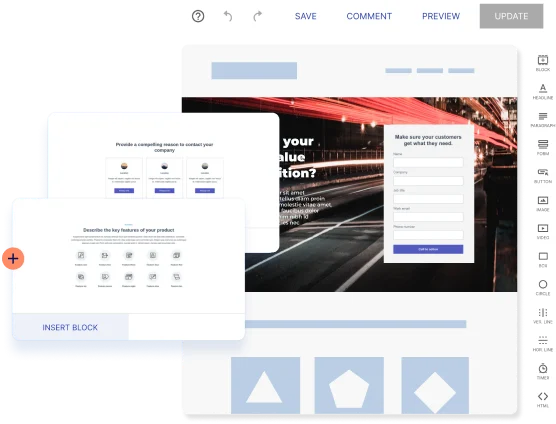
In an increasingly competitive global labor market, enterprises are finding that traditional recruitment methods are no longer sufficient to secure top-tier talent or high-volume workforces. As digital advertising costs climb, with some industries seeing a cost-per-click (CPC) as high as $5.00 to drive traffic to job postings, the efficiency of the post-click experience has become a critical focal point for talent acquisition departments. Industry data suggests that a significant portion of recruitment budgets is currently being liquidated through "leaky" conversion funnels where candidates click on advertisements but fail to complete the application process. The primary culprit is not the quality of the job offer itself, but rather the structural deficiencies of the generic corporate career sites to which these candidates are directed.
The Shift from Generic Career Sites to High-Conversion Landing Pages
Historically, companies have utilized their primary corporate career portals as the destination for all recruitment traffic. These sites are often designed as broad repositories, featuring dozens of disparate job listings, complex multi-level navigation menus, and exhaustive "About Us" sections. For a candidate who has clicked a specific ad for a "Remote Software Engineer" or a "Delivery Driver," landing on a generic homepage creates immediate cognitive load. When the specific role advertised is not immediately visible, or when the user is forced to navigate through layers of corporate bureaucracy, the "bounce rate"—the percentage of visitors who leave after viewing only one page—skyrockets.
To combat this, leading firms in the gig economy and tech sectors are pivoting toward recruitment landing pages. Unlike a full career site, a recruitment landing page is a standalone, single-purpose destination built with one objective: converting a visitor into an applicant. By removing distractions such as global navigation menus and secondary links, these pages guide the candidate through a streamlined narrative that culminates in a call to action (CTA). This strategy mirrors successful e-commerce methodologies, applying the principles of Conversion Rate Optimization (CRO) to the human resources sector.
The Chronology of Digital Recruitment Evolution
The evolution of digital recruitment can be categorized into three distinct eras. In the early 2000s, the "Job Board Era" dominated, where companies posted static listings on third-party sites like Monster or Craigslist. This was followed by the "Social and Search Era" in the 2010s, where platforms like LinkedIn and Indeed allowed for targeted advertising. However, the current era is defined by "Performance Recruitment Marketing," where the focus has shifted from merely generating impressions to optimizing the entire candidate journey.
In this current phase, the landing page serves as the critical bridge. Statistics from recruitment marketing platforms indicate that while a standard career site might see a conversion rate of 2% to 5%, a well-optimized recruitment landing page can achieve conversion rates exceeding 15% to 20%. This delta represents a massive reduction in the cost per applicant (CPA), allowing companies to scale their hiring efforts without a linear increase in ad spend.
Supporting Data: The Impact of Friction on Candidate Drop-off
The necessity for streamlined landing pages is underscored by recent data regarding candidate behavior. According to research by the Society for Human Resource Management (SHRM) and various HR technology providers, approximately 92% of candidates who start a digital job application never finish it. The reasons cited for this attrition are primarily related to "application friction."
Key data points include:
- Form Length: Every additional field in a recruitment form can decrease the conversion rate by as much as 5% to 10%.
- Mobile Accessibility: Over 70% of job seekers now use mobile devices to search for roles. Pages that are not mobile-optimized or have slow load times (exceeding 3 seconds) see a 50% higher abandonment rate.
- Message Match: There is a 25% increase in conversion when the headline of the landing page exactly matches the text of the advertisement that brought the user there.
Structural Best Practices for Recruitment Landing Pages
To maximize the Return on Investment (ROI) of recruitment campaigns, industry experts recommend several core architectural principles for landing pages.
1. The Principle of Message Match
The transition from the advertisement to the landing page must be seamless. If an ad promises a "Flexible Work Schedule and $25/hour," those specific details must be the first thing the candidate sees upon landing. This "message match" confirms to the user that they are in the right place and that the promise of the ad is legitimate.
2. Above-the-Fold Prioritization
In digital marketing, "above the fold" refers to the content visible without scrolling. High-performing recruitment pages place the job title, the primary value proposition (benefits), and a clear "Apply Now" button within this immediate view. This caters to the "skimmer" behavior of modern web users who decide within seconds whether to stay or leave.
3. Reduction of Cognitive Friction
The application form should be as brief as possible, often limited to 3-5 essential fields: name, email, phone number, and a resume upload. For high-volume roles, such as delivery drivers or warehouse staff, some companies have moved toward "two-step" forms. The first step captures basic contact information, ensuring the lead is saved even if the candidate does not complete the more detailed second step of the process.
4. Strategic Use of Social Proof
Trust is a significant factor in the candidate’s decision-making process. Incorporating employee testimonials, glassdoor ratings, or company awards provides the necessary social proof to validate the employer brand. Journalistic analysis of successful pages shows that testimonials with photos and specific details about career growth are more effective than generic corporate quotes.
Analysis of Industry Leaders: Uber, Lyft, and the Gig Economy
The gig economy has pioneered the use of recruitment landing pages due to the constant need for high-volume onboarding.
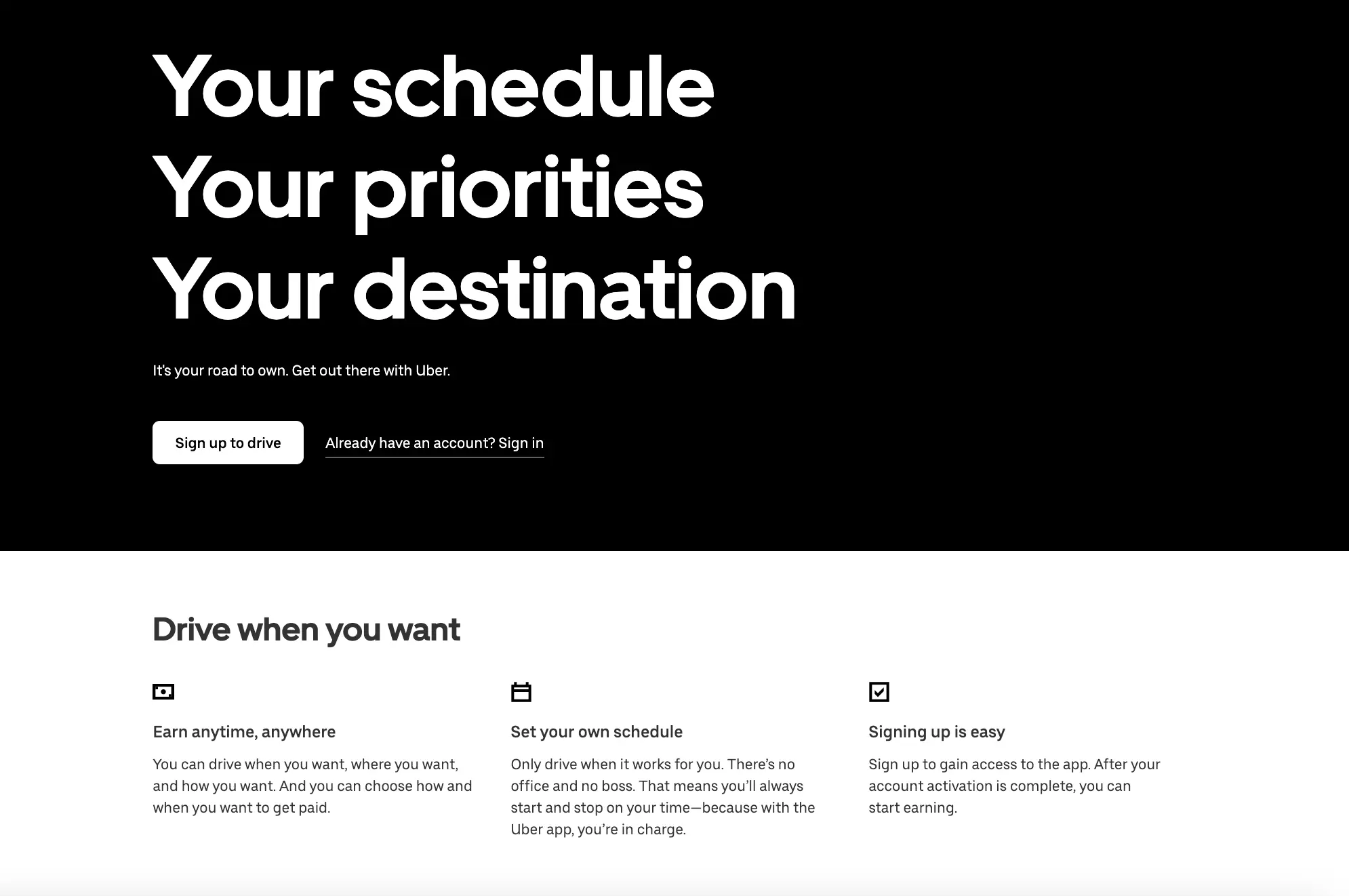
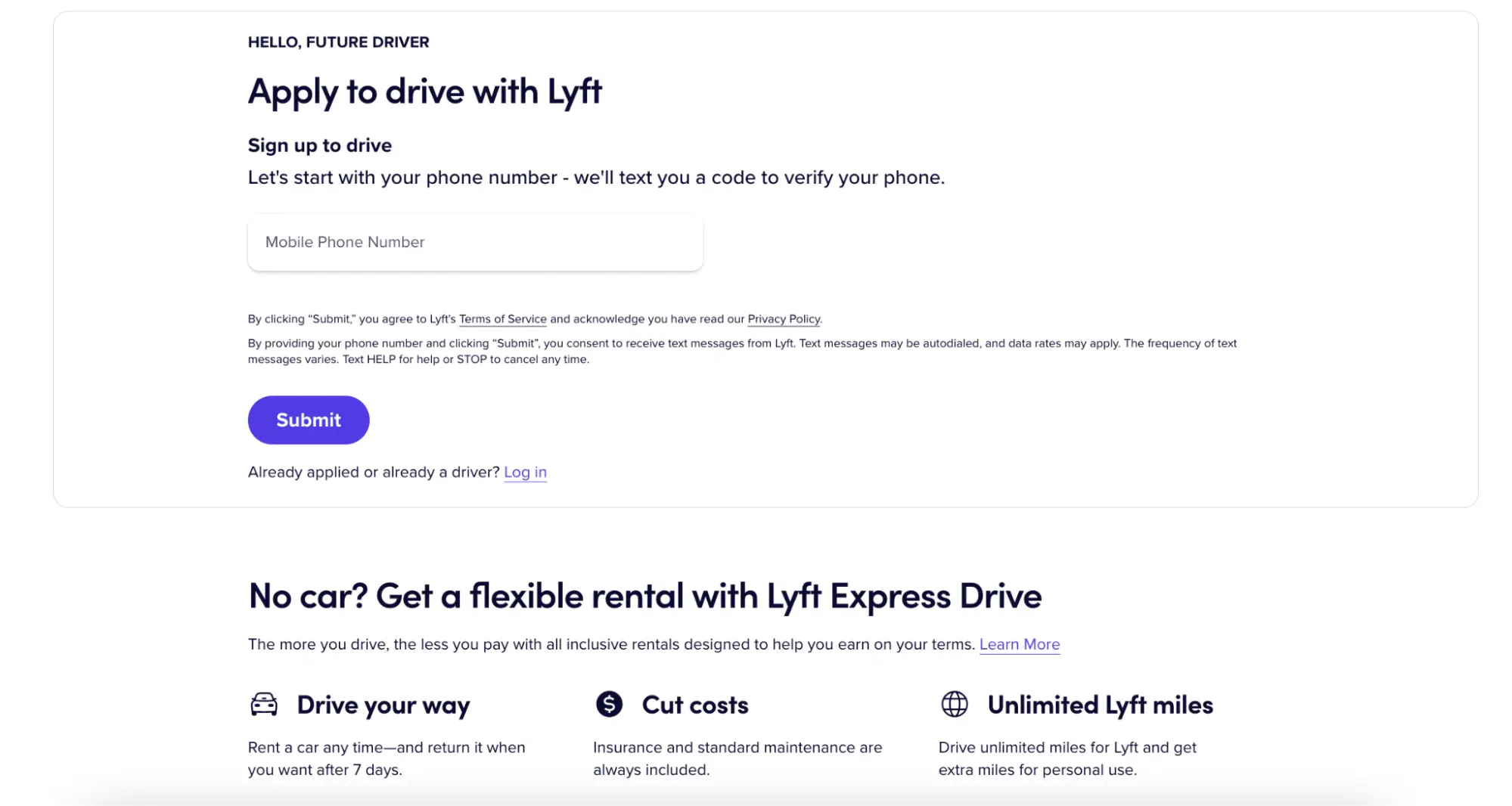
- Uber and Lyft: Both rideshare giants utilize minimalist landing pages that focus heavily on the "earnings potential" and "flexibility." Their pages often feature a simple zip code entry or phone number field right at the top. Analysis of their strategy reveals a focus on speed; they recognize that their target demographic is often looking for immediate income opportunities.
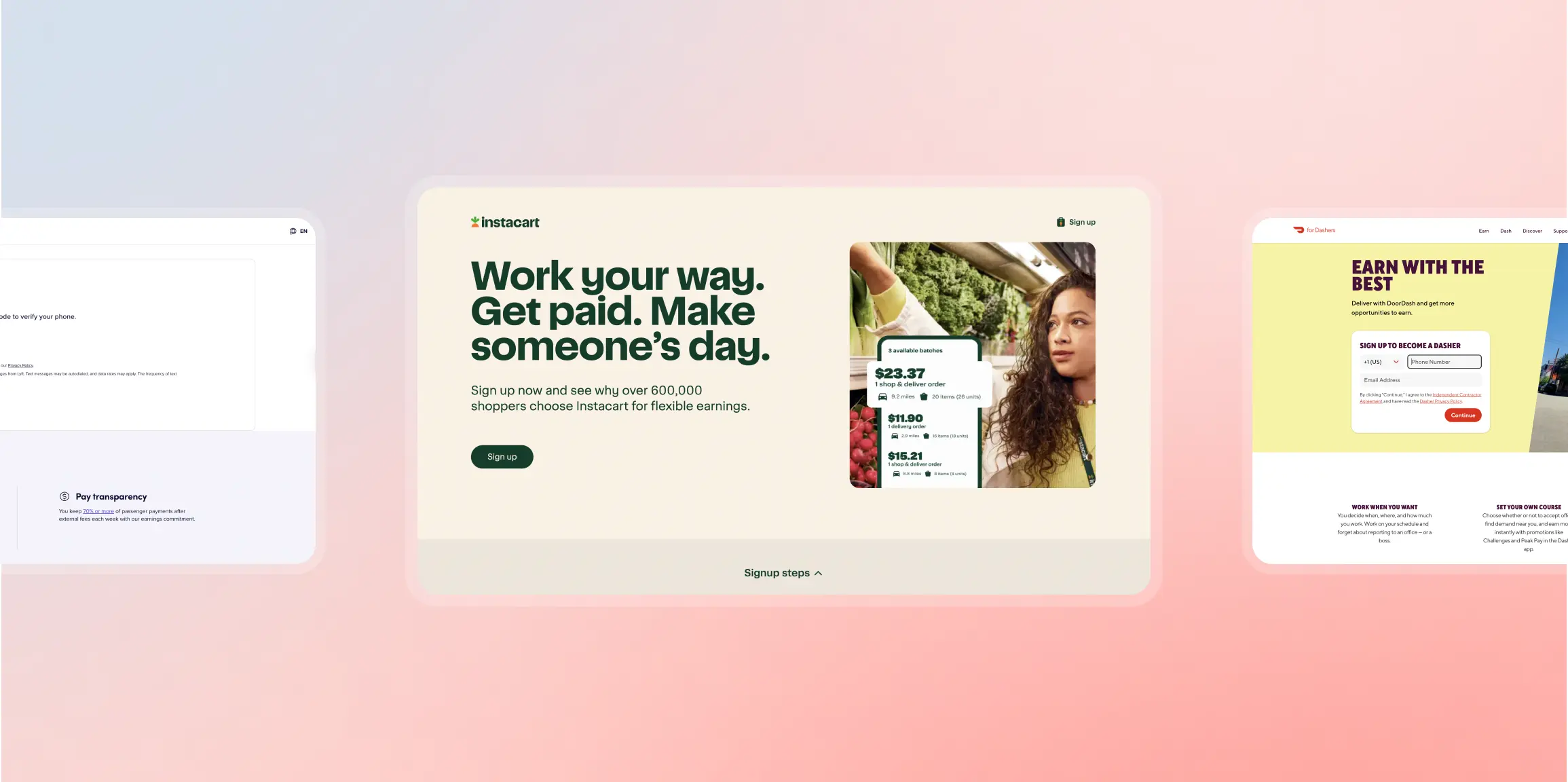
- DoorDash and Instacart: These platforms emphasize the ease of getting started. Their landing pages often include a "How it Works" section that breaks the process down into three simple steps, reducing the perceived barrier to entry.
- Writers Work: For specialized freelance platforms, the focus shifts to the tools and ecosystem provided to the worker. Their landing pages act as a "sales page" for the career itself, highlighting the benefits of the freelance lifestyle and the specific support the platform offers.
The Role of A/B Testing and AI in Modern Hiring
A critical component of modern recruitment landing pages is the use of A/B testing (split testing). This involves running two versions of a page simultaneously to see which performs better. Talent acquisition teams are now testing variables such as:
- Headlines: "Earn Money Driving" vs. "Be Your Own Boss."
- Imagery: Static photos of employees vs. short video clips of the workplace.
- CTA Buttons: "Apply Now" vs. "Get Started" vs. "Join the Team."
Advanced platforms like Instapage have introduced AI-powered experimentation. These systems use machine learning to automatically route traffic to the best-performing version of a page in real-time. This "Multi-Armed Bandit" approach to testing ensures that the recruitment budget is always being spent on the most effective conversion path, further driving down the cost per applicant.

Institutional Reactions and Economic Implications
The shift toward specialized recruitment marketing has drawn reactions from various stakeholders in the HR ecosystem. Industry analysts suggest that this trend is a response to the "consumerization" of the candidate experience. Candidates now expect the same ease of use when applying for a job that they experience when shopping online.
Hiring managers at Fortune 500 companies have noted that while the initial setup of these landing pages requires more effort than a standard job posting, the quality of the candidate pipeline is often higher. By providing a clear, focused message, companies attract individuals who are a better fit for the specific role advertised, rather than a flood of generic applications.
From an economic perspective, the optimization of recruitment funnels contributes to greater labor market liquidity. When companies can more efficiently match with potential workers, the "time-to-fill" for critical roles decreases, reducing the productivity loss associated with vacant positions. For the worker, the reduction in application friction means they can explore more opportunities with less effort, leading to better career alignment.
Future Outlook and Broader Impact
As the digital landscape continues to evolve, the integration of data analytics and recruitment marketing will only deepen. We are likely to see increased personalization, where recruitment landing pages dynamically change their content based on the candidate’s geographic location, previous job search history, or even the specific platform (e.g., TikTok vs. LinkedIn) they arrived from.

The broader implication is a fundamental shift in the power dynamic of hiring. Companies can no longer rely on their brand name alone to attract talent; they must actively "sell" the role through optimized digital experiences. Those who fail to adopt these high-conversion strategies risk being priced out of the market as their cost per applicant becomes unsustainable compared to more agile, data-driven competitors.
In conclusion, the transition from generic career sites to dedicated recruitment landing pages is not merely a technical adjustment; it is a strategic necessity in the modern economy. By focusing on message match, reducing friction, and leveraging continuous testing, organizations can transform their recruitment process from a budgetary drain into a high-performance engine for growth. The data is clear: in the battle for talent, the company that provides the most seamless path from "click" to "apply" will ultimately emerge victorious.








