
 rifanmuazin
Opening an inbox on a Monday morning often elicits a sigh, confronting a deluge of messages, many destined for later — or never. In the hyper-competitive landscape of digital communication, the precise moment an email lands in a recipient’s inbox can dictate its fate, determining whether it is read promptly or buried beneath an endless scroll. This strategic importance of timing in email marketing is not merely anecdotal; it is a critical factor supported by years of extensive data and analytics, pointing to clear trends that can significantly elevate open, read, and action rates.
The quest for the "best" email send time is a perennial challenge for marketers, acknowledging that a universal, one-size-fits-all answer remains elusive. However, aggregated industry data consistently reveals patterns that offer invaluable guidance. For the majority of businesses, a golden window typically emerges between 9:00 AM and 11:00 AM in the recipient’s local time zone. This period aligns with a common workday rhythm, when individuals are settling into their tasks, clearing initial communications, and actively engaging with their digital inboxes before the day’s primary distractions set in. Understanding these trends and leveraging personal audience data is paramount for any effective email strategy.
The Digital Deluge: Why Email Timing is Paramount
The sheer volume of digital communication today makes strategic timing an imperative, not a luxury. Industry reports frequently highlight that the average professional receives over 120 emails daily, with consumer inboxes often facing similar pressure. In such a crowded environment, an email’s visibility and immediate impact are heavily influenced by when it arrives. Sending an email during peak activity hours means it is more likely to appear at the top of the inbox, capture attention before competing messages, and align with the recipient’s natural inclination to engage with digital content. Conversely, sending during off-peak hours risks immediate archival or deletion without ever being opened, irrespective of the content’s quality or relevance.
Moreover, email timing influences not just open rates but also click-through rates (CTR) and conversion rates. An email received when the recipient is receptive and has the cognitive bandwidth to process information is more likely to prompt further action, such as visiting a website, making a purchase, or registering for an event. This principle is fundamental across various email marketing objectives, from promotional campaigns to educational newsletters and transactional updates.
Industry Benchmarks: Identifying the Prime Windows
While individual audience behavior is the ultimate determinant, industry-wide benchmarks provide a robust starting point for optimizing email send schedules. These benchmarks, compiled from millions of emails sent across diverse sectors, indicate general patterns of engagement throughout the week.
The Mid-Morning Sweet Spot: A General Rule
As previously noted, the period between 9:00 AM and 11:00 AM local time consistently stands out. This window capitalizes on a few key behavioral factors:
- Post-Commute Engagement: Many individuals check emails after their morning commute, having settled at their desks or workspaces.
- Pre-Lunch Focus: This time slot often precedes the lunch break, a period when attention may shift away from work-related or deeper engagement.
- Reduced Overwhelm: It allows recipients to clear the initial rush of early morning emails, making them more receptive to new, non-urgent communications.
This general guideline serves as a foundational strategy, particularly for businesses reaching broad audiences or those new to advanced timing optimization.
A Detailed Look: Best Send Times by Day of the Week
Delving into specific days provides a more nuanced understanding of audience behavior and how to tailor email delivery for maximum impact. These recommendations are based on cumulative data, serving as strong baselines for initial strategy before refinement with proprietary analytics.
Monday: Navigating the Week’s Onslaught
- Recommended Time: 10:00 AM – 12:00 PM local time
- Rationale: Monday mornings are notorious for overflowing inboxes, as weekend accumulations merge with new communications. Sending too early (e.g., 8-9 AM) risks being immediately lost in this initial rush. By aiming for late morning, marketers allow recipients to process urgent communications before presenting new content. This window often sees a slight dip in email volume compared to the very early hours, increasing the chances of visibility.
- Strategic Content: Mondays are ideal for setting the tone for the week. Weekly newsletters, goal-oriented content, or summaries of recent industry news can perform well if timed correctly. For B2B audiences, a concise update around 10:30 AM can catch attention without overwhelming.
Tuesday: The Peak Performance Day
- Recommended Time: 9:00 AM – 11:00 AM local time
- Rationale: Numerous large-scale studies consistently identify Tuesday as the day with the highest email open and click-through rates. By Tuesday, individuals have typically settled into the workweek, productivity is often at its peak, and the initial Monday stress has subsided. This creates an environment where recipients are more likely to engage with new information or offers.
- Strategic Content: Tuesday is often considered prime real estate for crucial communications. Major announcements, key promotional campaigns, or high-value educational content are well-suited for this day. For B2B audiences, targeting 9:30 AM can be highly effective, while consumer-focused emails might see better engagement closer to 11:00 AM as individuals take a short break before lunch.
Wednesday: Sustaining Mid-Week Engagement
- Recommended Time: 8:00 AM – 11:00 AM local time
- Rationale: Wednesday remains a reliably strong day for email engagement, closely following Tuesday’s performance. The mid-morning window continues to be effective, often experiencing slightly lower inbox competition than Tuesday, which can sometimes translate to marginally higher individual email visibility.
- Strategic Content: This day is excellent for follow-up communications, mid-week promotions, or deeper dives into content themes introduced earlier in the week. It’s also a good day for surveys or feedback requests, as recipients are still in a productive, responsive mindset.
Thursday: Driving End-of-Week Action
- Recommended Time: 9:00 AM – 12:00 PM local time
- Rationale: Thursday mirrors Tuesday in its effectiveness, particularly for driving conversions and orders. Activity remains high before the mental shift towards the weekend begins. Recipients are still focused and amenable to taking action on relevant offers or information. Data from various e-commerce platforms often shows Thursday ranking highly for email-driven purchases.
- Strategic Content: Promotional emails, last-chance offers for the week, or content designed to drive immediate action (e.g., sign-ups, downloads) perform well. A timely, relevant email can stand out and capitalize on the pre-weekend planning mentality without being overshadowed by weekend leisure thoughts.
Friday: The Weekend Wind-Down
- Recommended Time: 9:00 AM – 10:00 AM or 1:00 PM – 2:00 PM local time
- Rationale: Engagement typically drops off significantly by late Friday afternoon as people transition into weekend mode. To counter this, an early morning send captures attention before minds wander. Alternatively, a post-lunch send can be effective for consumer-based audiences (e.g., retail, hospitality, entertainment), tapping into weekend planning or impulse purchases.
- Strategic Content: For B2B, urgent updates or short, impactful messages are best sent early. For B2C, content related to weekend activities, special offers for the upcoming days, or inspirational pieces can perform well in the early afternoon.
Saturday: Niche Engagement
- Recommended Time: 10:00 AM – 12:00 PM local time
- Rationale: Generally, Saturday is the lowest-performing day for most business types due to the prevalent weekend mindset. However, for specific consumer-focused industries (e-commerce, entertainment, fitness, personal development), a late morning send can still yield decent engagement. People are often up, checking their devices, but not yet engrossed in major weekend plans.
- Strategic Content: Emails during the weekend should be light, engaging, and directly relevant to leisure activities or personal interests. Avoid heavy, work-related content. Offers that encourage weekend shopping or event attendance can find success.
Sunday: The Pre-Week Prep and Leisure Scroll
- Recommended Time: 9:00 AM – 12:00 PM or after 8:00 PM local time
- Rationale: Sundays present a unique duality. Many individuals engage in a leisurely morning scroll through emails while having coffee. There’s also the "Sunday night effect," where engagement can surprisingly peak around 9:00 PM. This later window captures individuals who are preparing for the upcoming workweek, checking their inboxes, and often feeling a slight sense of urgency or planning.
- Strategic Content: Morning sends can include inspirational content, light entertainment, or summaries of the week ahead. Late evening sends are suitable for "get ready for the week" content, productivity tips, or gentle reminders for upcoming events or tasks. Experimentation with the late Sunday evening slot can reveal unexpectedly high open rates for certain audiences.
Beyond Generalities: Strategic Timing by Campaign Goal
While daily benchmarks offer a macro view, the specific objective of an email campaign should further refine send times. Different goals elicit different recipient behaviors.
- Sales or Promotional Campaigns: Early in the week (Tuesday, Wednesday, Thursday) and mid-morning are generally strongest. For immediate conversions, late afternoon (around 4:00 PM) has shown strong order rates for e-commerce, as people might be winding down and browsing. Avoid major promotions late Friday or Saturday afternoon unless your target audience is primarily consumer-based and leisure-focused.
- Event Reminders: A strategic sequence is key. Send an initial reminder 24-48 hours before the event, followed by a "last call" or "starting soon" reminder one to two hours prior. For multi-day events, daily updates can be timed to coincide with morning check-ins.
- Newsletters or Educational Content: Tuesday or Thursday late morning consistently delivers the highest engagement. These days and times align with periods when recipients are most receptive to absorbing new information and have dedicated time for reading.
- Lead Nurturing Sequences: These are often drip campaigns triggered by user actions, so timing is less about specific days and more about immediate relevance. However, if a nurture email is part of a scheduled series, aligning with general peak engagement times can enhance its impact.
- Re-engagement Campaigns: These require careful testing. Sometimes, sending during off-peak hours can catch dormant subscribers when their inboxes are less crowded.
- Welcome Series: These should be immediate upon sign-up to capitalize on high initial interest. Subsequent emails in the series can then follow general best practices or be triggered by further user actions.
The Power of Personalization: Leveraging Data for Optimal Delivery
Industry averages provide a helpful starting point, but the most powerful insights come from an organization’s own audience data. Understanding when your subscribers are most active and receptive is the ultimate goal.
Using Google Analytics 4 (GA4) for Audience Activity:
One effective method to pinpoint your audience’s peak activity is by analyzing their website engagement patterns using GA4:
- Access GA4 and Create an Exploration: From the left-hand navigation in GA4, select "Explore" and initiate a new blank exploration.
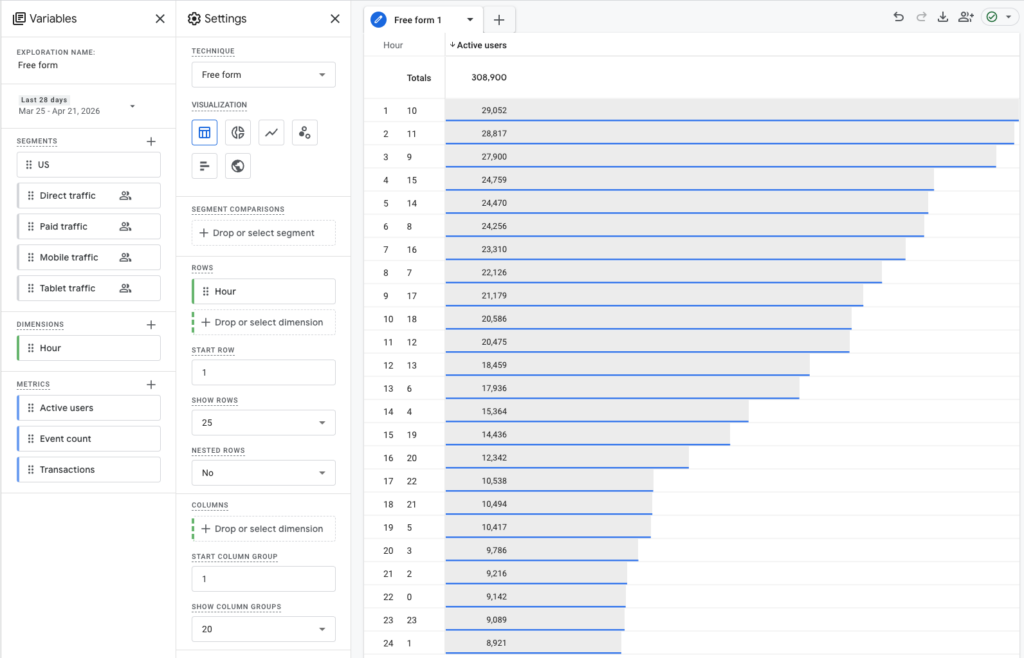
- Add the ‘Hour’ Dimension: In the "Variables" panel, click the "+" icon next to "Dimensions." Search for "Hour." GA4 records hour values from 0 (midnight) to 23 (11 PM). Add this dimension to your exploration. For a more granular view, consider adding "Day + hour" to cross-reference activity by day of the week.
- Select a Relevant Metric: Choose "Sessions" or, more precisely, "Engaged sessions" as your metric. "Engaged sessions" better reflects active user interaction with your site. This metric will illustrate the hourly distribution of your website visitors’ activity.
- Analyze and Interpret: The resulting visualization, often a bar chart, will clearly show peak times of website traffic and engagement. For instance, if your GA4 data reveals that website traffic is highest between 9 AM and 11 AM, this strongly suggests that your audience is most active and receptive during those hours, making them ideal for email sends.
This straightforward analysis, which typically takes about 15 minutes, provides invaluable audience-specific data, moving beyond generic industry averages to inform a truly tailored email strategy.
Leveraging Email Service Provider (ESP) Analytics:
Most robust Email Service Providers (ESPs) like AWeber offer built-in analytics that track open rates and click-through rates by day and hour. Marketers should regularly consult these reports to observe actual subscriber behavior, identifying specific peaks and troughs in engagement for their unique audience segments. These internal metrics are often the most direct indicators of successful send times.
Segmenting by Time Zone:
For audiences spread across multiple geographical regions, sending emails in the recipient’s local time zone is a critical best practice. Advanced ESPs offer features to automatically schedule emails to deliver at a specific local time, ensuring that the message lands during the optimal window regardless of the subscriber’s location. This dramatically enhances relevance and engagement for a geographically diverse audience.
The Iterative Process: Testing, Refining, and Adapting
Email timing optimization is not a static endeavor; it requires continuous testing, monitoring, and adaptation. Audience behavior can evolve due to various factors, including seasonal changes, new work patterns, or shifts in digital habits.
- A/B Testing: Regularly conduct A/B tests by sending identical emails to two different, equally sized segments of your audience at varying times. Compare key metrics like open rates, click-through rates, and conversion rates to identify the superior send time. For instance, test a Tuesday 9 AM send against a Tuesday 11 AM send.
- Continuous Monitoring: Consistently review your email analytics. Pay attention to how different campaigns perform at different times. Are there specific content types that resonate better at certain hours? Do weekends show unexpected spikes for particular segments?
- Adaptation: Be prepared to adjust your strategy based on real-world results. If your analytics show that a significant portion of your opens occur at 8 PM on a Sunday, despite industry averages, schedule accordingly. Your audience’s actual behavior is the ultimate authority.
- Consider External Factors: Holidays, major local or national events, and even global news cycles can temporarily alter audience behavior. Be mindful of these external influences when planning your email calendar.
The Broader Impact: A Competitive Edge in the Inbox
Optimizing email send times delivers tangible business benefits that extend beyond mere vanity metrics.
- Enhanced ROI: Higher open and click-through rates directly translate to better return on investment for email marketing efforts. More engagement means more opportunities for conversions, sales, and lead generation.
- Improved Sender Reputation: Emails that are opened and engaged with positively contribute to a sender’s reputation. ISPs (Internet Service Providers) note high engagement and are more likely to deliver future emails to the primary inbox rather than spam folders.
- Reduced Unsubscribe Rates: Delivering relevant content at the right time improves the overall subscriber experience, reducing frustration and the likelihood of unsubscribes.
- Stronger Customer Relationships: By respecting subscribers’ time and delivering messages when they are most receptive, businesses build trust and foster stronger, more positive relationships with their audience. This thoughtful approach signals that the brand values the recipient’s attention.
In conclusion, mastering email send times is a cornerstone of effective digital communication. While industry benchmarks provide a valuable compass, the true north lies in understanding and responding to the unique behavioral patterns of your specific audience. By combining proven windows (such as mid-morning on weekdays) with the precise insights gleaned from tools like Google Analytics 4 and your Email Service Provider’s reports, marketers can craft a send schedule that dramatically increases visibility, engagement, and ultimately, conversions. The goal is not merely to send an email, but to ensure it is read, acted upon, and contributes meaningfully to both the recipient’s experience and the business’s objectives. That is when your emails truly get read.









